
Reviewed · DOTONBORI TOURS
Osaka: Food Tour Kuromon Market & Dotonbori with Guide
Osaka makes a strong first impression through its food. This walk takes you from Kuromon Market to Hozenji and Dotonbori, with takoyaki, dango, okonomiyaki, kushikatsu, and a custard tart along the way. You also get the classic Glico-sign photo at Ebisu Bridge.
I like the mix of small tastings and famous sights, since you get more than a meal and more than a neighborhood walk. I also like the English and Spanish guide option, with guides such as Paula and Angeles bringing useful city commentary as you move between stops.
The main consideration is culinary perspective. The guide may be a fluent and energetic international guide rather than a Japanese food specialist, so you may want a different tour if local cooking knowledge is your top priority. One serious service problem has also been reported: a group once waited more than 30 minutes when the guide did not arrive.
Key points to know before booking
- Kuromon Market sets the tone: Expect fresh ingredients, local specialties, and a food-focused walk through one of Osaka’s best-known market areas.
- Five named tastings are included: Takoyaki, three-colour dango, okonomiyaki, kushikatsu, and custard tart form the core of the route.
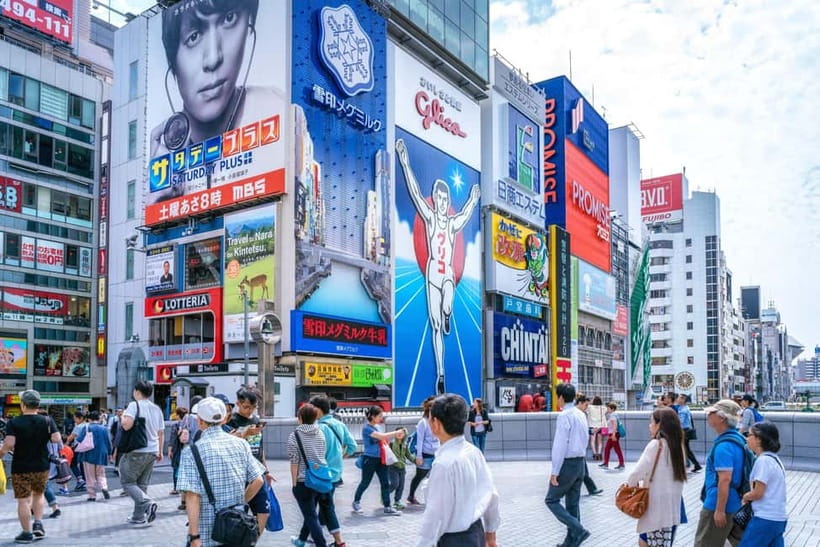
- Dotonbori supplies the big Osaka spectacle: Neon signs, busy streets, Glico advertising, and a photo stop at Ebisu Bridge.
- The guide adds practical context: Paula and Angeles are named examples of guides who have led this route, with English and Spanish available.
- The $84 price is best for samplers: It covers emblematic dishes and guiding, but not extra food, drinks, or attraction admissions.
- Prepare for a walking food tour: Wear comfortable shoes, bring weather protection, and note that the route is not suitable for wheelchair users.
Kuromon Market: Osaka starts with a bite
You meet outside Hotel Royal Classic Osaka, where the guide waits with an Amigo Tours sign. Arrive at least 10 minutes early for check-in. The activity ends back at the same meeting point, which is useful if you want a clear start and finish without figuring out a separate return route.
The first major stop is Kuromon Market. This is the right place to begin because the market gives you a quick look at Osaka’s food culture before the tour moves into entertainment districts. You can expect stalls and shops selling fresh ingredients and local specialties, with the guide helping you focus on the foods chosen for the route.
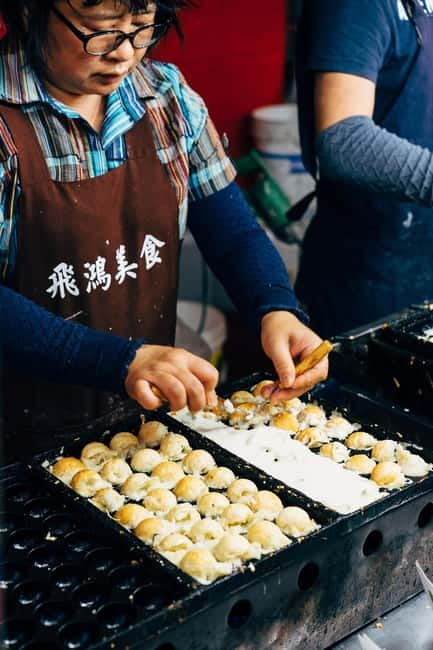
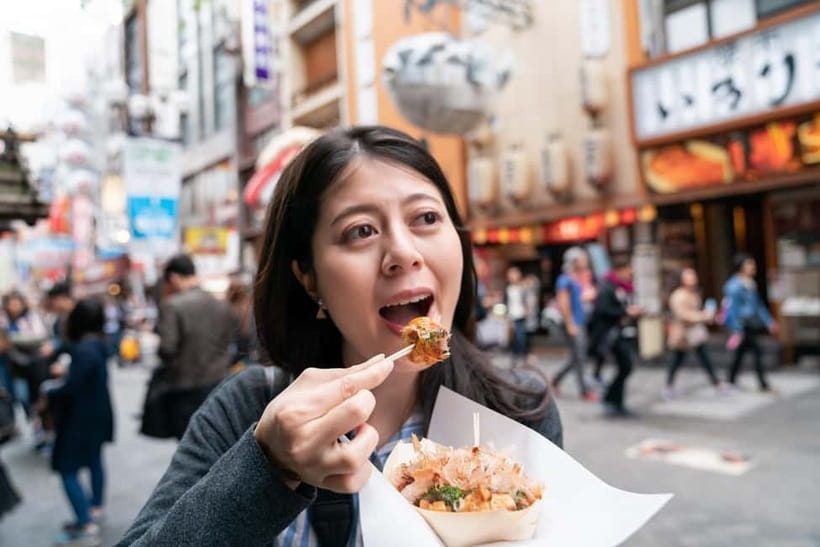
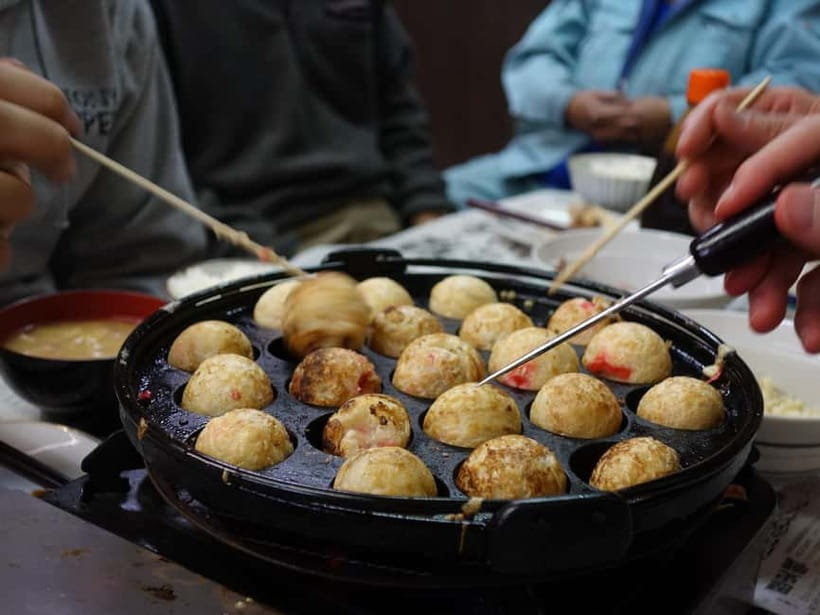
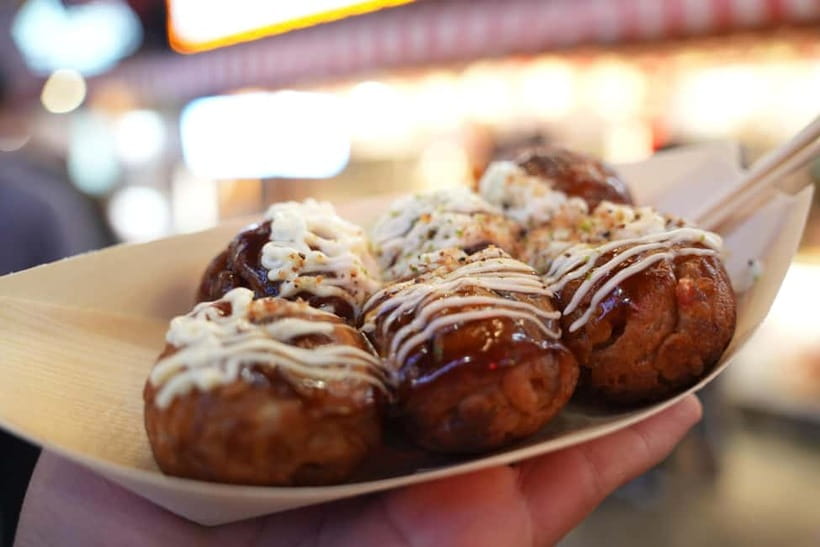
At Wanaka, you try takoyaki, Osaka’s famous octopus-filled batter balls. The appeal is in the contrast: a browned exterior with a soft, creamy center. Takoyaki is easy to eat, but it can be hot inside, so take a careful first bite rather than rushing for the perfect photo.
This stop is valuable for first-time visitors because takoyaki can be confusing when you see it everywhere. A guide can explain what you are eating and help you place it within Osaka’s street-food culture. It is also a good introduction to the tour’s format: you sample a signature dish, keep moving, and leave room for what comes next.
More Kuromon Market food walks:
- Kuromon Market Food Walking Tour in Osaka (6 stops, 6 tastes)
★ 5.0 · 550 reviews - Osaka: Kuromon Market Food Walking Tour (6 stops, 6 tastes)
★ 4.6 · 272 reviews - Kuromon Market Tour: All inclusive 6~8 Dishes & 3~4 samplings
★ 5.0 · 103 reviews
Three-colour dango at Mitoya
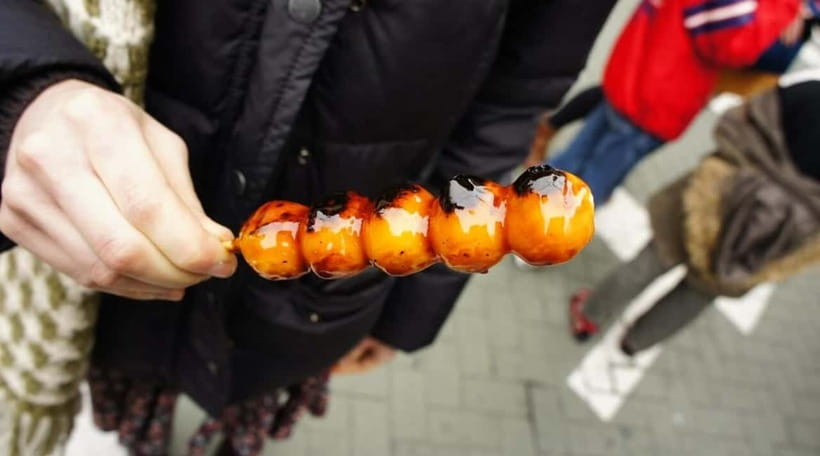
The next tasting is at Mitoya, where you receive three-colour dango. These are chewy rice-flour dumplings served on a skewer, with the colors adding a simple visual charm. The texture is quite different from takoyaki, so this stop broadens the tasting rather than repeating the same kind of snack.
Dango is a useful reminder that Osaka food is not only about fried or savory dishes. The portion is a small sweet, not a full dessert course, but it gives you another familiar Japanese treat to compare with the richer foods later in the walk.
If you have strong food allergies or dietary restrictions, ask the guide about ingredients before eating. The tour description does not provide an allergy list, vegetarian substitutions, or a detailed menu beyond the named tastings. The safest approach is to bring your questions before the first bite.
Hozenji brings a quieter change of pace
After the market, the route continues through the Hozenji area. This part gives the walk a change of mood. Instead of focusing only on shops and food counters, you pass through a historic neighborhood before reaching the larger entertainment streets.
That transition matters. Osaka is not just bright signs and quick snacks. Hozenji helps connect the food stops with older local streets and traditions. You will not spend the whole activity inside the market, and the route has enough neighborhood walking to make the food feel tied to the city around it.
The available details do not specify how long the group remains in Hozenji or whether a specific temple visit is included. Think of it as a walking area and cultural stop, not a separate attraction ticket or formal sightseeing visit. Any entrance fees to specific attractions are not included.
Okonomiyaki and kushikatsu near Gigo
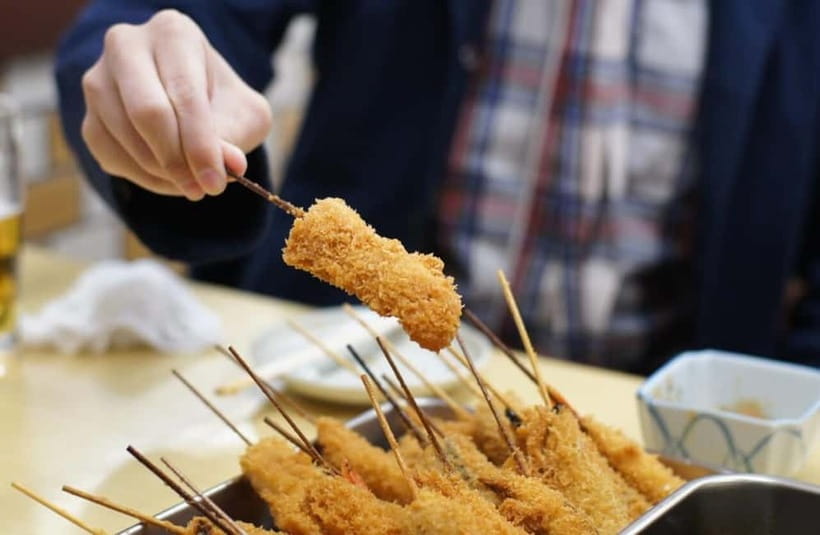
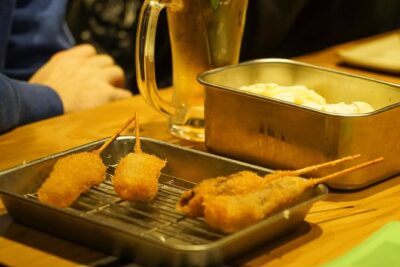
At Kushikatsu Yokozuna, located in front of Gigo, you try two of Osaka’s best-known savory specialties. The first is okonomiyaki, a savory pancake filled with flavor. The second is kushikatsu, deep-fried skewers served with a dipping sauce.
These dishes work well together. Okonomiyaki is substantial and savory, while kushikatsu offers crisp, bite-sized pieces. You get a better sense of Osaka’s comfort-food style by tasting both rather than choosing only one.
The name kushikatsu refers to the skewer format and frying method. The dipping sauce is part of the experience, but follow the guide’s instructions about how to use it. The tour description does not specify the exact skewer ingredients, portion sizes, or sauce arrangements, so do not treat this as a full restaurant dinner.
This is one reason the $84 price needs a little thought. If the included tastings are generous, the food can form a satisfying meal. If you prefer larger portions or want drinks and extra dishes, you will spend more. The tour includes the listed Osaka specialties, but additional meals and drinks are your responsibility.
More Dotonbori walks and food stops:
- Osaka Local Foodie Walking Tour in Dotonbori and Shinsekai
★ 5.0 · 985 reviews - Osaka: Dotonbori District River Cruise with Drink Discount
★ 4.2 · 876 reviews - Ultimate Osaka Walking Tour: Castle, Dotonbori & Hidden Gems
★ 5.0 · 862 reviews - Tea Ceremony Experience in Osaka Doutonbori
★ 5.0 · 754 reviews
Custard tart for a sweet finish
The final food stop is Egg Tart, a dessert shop known for custard tarts with flaky pastry and a creamy filling. It is a smart finish after several savory foods. The tart gives you a clear dessert course without asking you to commit to another large dish.
I like this kind of ending because it leaves the walk with a distinct final taste. You move from market snacks to fried foods and then finish with pastry, so the route has a natural progression.
Again, the details do not state the tart size or whether alternative desserts are available. If you have a specific dietary need, ask before the tasting. The included foods are fixed enough that this is not the tour to book if you need a fully customized menu.
Dotonbori and the Glico sign
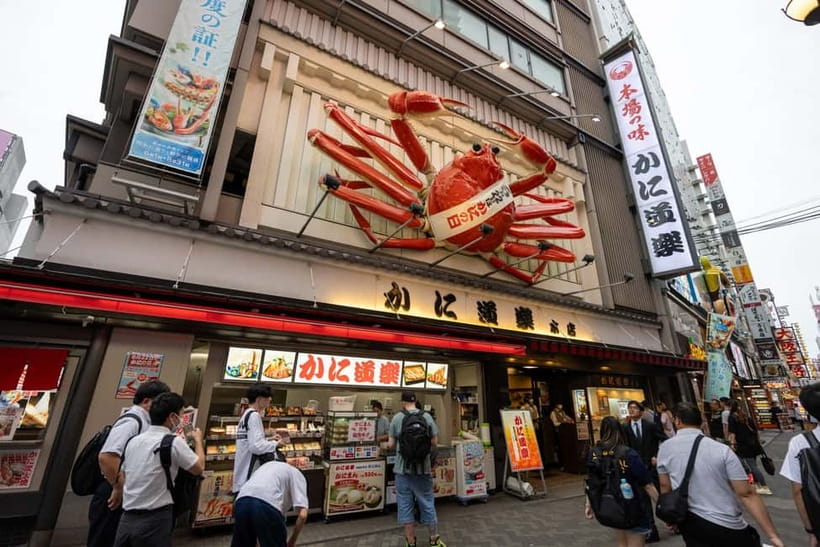
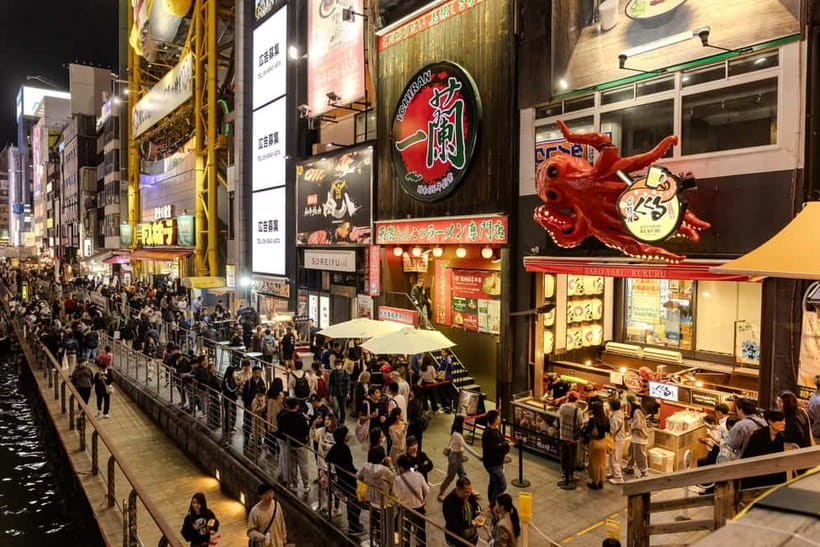
After the food stops, the route moves into Dotonbori. This is Osaka at its most theatrical, with neon-lit streets, large advertising signs, and a constant sense of motion. The area is famous for its food and nightlife, but you do not need a separate attraction ticket to enjoy the street atmosphere.
The timing matters here. The description emphasizes the neon lights, and the reviews refer to a great night exploring Osaka, but no exact departure time is provided. Ask for the start time when booking so you know how much of the route will be after dark.
At Ebisu Bridge, you stop for a photo with the Glico sign. This is the classic Osaka picture, and the bridge gives you a simple landmark to mark the end of the sightseeing portion. It can be crowded, so your guide’s help with the meeting point and photo timing may be useful.
The Dotonbori portion is not a quiet cultural walk. Expect bright signs, active streets, and the city’s entertainment energy. That will suit you if you want an iconic Osaka scene. If you prefer small lanes and long explanations at each stop, the pace and setting may feel more commercial.
What the guides add to the walk
The tour offers bilingual guiding in English and Spanish. Paula and Angeles are named guides associated with the experience. Paula is described as energetic and well informed about local attractions encountered along the route, while Angeles is also singled out for providing a strong guiding experience.
That city commentary is one of the tour’s best features. You are not simply handed food and sent on your way. The route connects the market, Hozenji, Dotonbori, and Ebisu Bridge, so the guide can help explain how these parts of Osaka fit together as you walk.
There is a fair point to consider. One participant felt the food experience would be more authentic with a Japanese guide, even while recognizing that an international guide could speak good English and Spanish. I think that criticism is useful rather than decisive. If you mainly want help finding food and understanding the route, the bilingual format is practical. If you want detailed instruction on Japanese culinary traditions, regional ingredients, or restaurant customs, check the guide arrangement before committing.
The feedback is mostly strong, but reliability deserves mention. One group reported that its guide did not arrive and that six people waited for more than 30 minutes. That is a serious failure, even though other comments praise Paula and Angeles. Arrive early, keep the meeting instructions handy, and contact the provider promptly if the guide is not present at the stated time.
Is $84 a fair price?
At $84 per person, this is not the cheapest way to eat around Osaka. You could buy individual snacks on your own for less, especially if you choose small portions and skip guiding.
The price makes more sense if you value structure. You receive a bilingual guide, a route through three well-known areas, and tastings of several signature foods: takoyaki, dango, okonomiyaki, kushikatsu, and custard tart. You also get the Dotonbori and Ebisu Bridge sightseeing portion without having to plan the sequence yourself.
The value depends on your appetite and expectations. Consider it a guided tasting walk, not an unlimited food tour or a full restaurant meal. Extra drinks, extra dishes, personal purchases, and attraction fees are not covered.
For a first visit to Osaka, the convenience may justify the cost. For confident eaters who already know Kuromon Market and Dotonbori, self-guiding will probably cost less and allow more freedom. The tour earns its price through orientation, translation, food selection, and local route planning.
Practical preparation for the walking route
Wear comfortable shoes. You will be walking through a market, neighborhood streets, and Dotonbori, and the food stops do not replace the walking between them.
Bring a camera for Ebisu Bridge and the Glico sign. A small umbrella or raincoat is also sensible, since the route is outdoors and the provider specifically recommends rain protection. In hot weather, bring sunglasses and sunscreen. In cold weather, wear warm layers and consider extra socks and shoes in case snow or wet conditions leave your feet damp.
Pets are not allowed. The tour is not suitable for wheelchair users, so mobility needs should be considered before booking. The route ends where it begins, outside Hotel Royal Classic Osaka.
You can reserve now and pay later, which helps if your Osaka schedule is still changing. Cancellation is allowed up to 24 hours before the activity for a full refund.
Who should book this Osaka food walk?
I would recommend it to a first-time Osaka visitor who wants a guided introduction to the city’s classic foods and best-known streets. It is also a good fit for couples, small groups, and English or Spanish speakers who prefer to have the route explained as they go.
Families with older children may enjoy the variety, especially takoyaki, dango, fried skewers, and custard tart. Keep in mind that the walking, crowds, hot food, and fixed tastings may not suit very young children or anyone needing a slower pace.
Food-focused visitors should book if they want a sampler of famous Osaka dishes rather than a long sit-down meal. You should look elsewhere if you need Japanese culinary expertise from a local chef, a wheelchair-accessible route, a fully adjustable menu, or guaranteed guide reliability without checking the meeting details.
Should you book it?
Book this tour if you want an easy introduction to Osaka through its most recognizable foods and districts. The combination of Kuromon Market, Hozenji, Dotonbori, and the Glico sign gives you a strong first look at the city, while the five tastings keep the route focused.
At $84, you are paying for guidance and convenience as much as for food. That is fair for a visitor who wants the planning handled, but less attractive if you already know the neighborhoods or prefer ordering freely. Check the departure details, arrive early, and confirm your dietary needs with the guide. For a first Osaka evening built around famous local bites, this is a practical and enjoyable choice.
FAQ
Where does the tour start?
The tour starts outside Hotel Royal Classic Osaka. The guide waits with an Amigo Tours sign.
Where does the tour end?
The activity ends back at the meeting point outside Hotel Royal Classic Osaka.
How early should I arrive?
Arrive at least 10 minutes before the departure time for check-in.
What foods are included?
The listed tastings include takoyaki at Wanaka, three-colour dango at Mitoya, okonomiyaki, kushikatsu, and a custard tart at Egg Tart.
Is the guide available in English?
Yes. The tour is offered in English and Spanish.
Are Paula and Angeles guides for this experience?
Paula and Angeles are named guides associated with this tour. Guide assignment can vary.
Are drinks included?
No. Additional drinks and meals that are not specifically mentioned are not included.
Is the tour suitable for wheelchair users?
No. The activity is listed as not suitable for wheelchair users.
What happens if I need to cancel?
You can cancel up to 24 hours in advance for a full refund.
More Food and Drink Tours in Osaka
- Osaka: Guided Food Tour with 12 Dishes at 4 Local Eateries
★ 5.0 · 533 reviews - Absolute Osaka Food Tour
★ 5.0 · 309 reviews - Osaka: Traditional Mochi Pounding Experience with Tasting
★ 4.9 · 306 reviews - Osaka After Dark: Small-Group Night Food Tour (Max 6)
★ 4.5 · 245 reviews
More Street Food Tours in Osaka
- Osaka: Shinsekai Food Tour with 13-15 Dishes at 5 Eateries
★ 4.8 · 2,204 reviews - Osaka Food Tour: 13 Dishes at 5 Local Eateries
★ 5.0 · 2,149 reviews - Hungry Osaka Street Food Tour:15 Tastings & 3 Drinks with a Local
★ 5.0 · 1,727 reviews - Hungry Osaka Street Food Tour: 15 Dishes & 3 Drinks
★ 4.9 · 694 reviews
Just added in Osaka
- Urban Canvas: Osaka Street Art Bike Tour★ 5.0 · 10 reviews
- Anime Cosplay Photshoot-50 Digital Photos Provided★ 5.0 · 8 reviews
- TeamLab Botanical Garden Osaka Ticket★ 3.5 · 6 reviews
- Umeda Sky Building & Kuchu Teien Observatory Ticket in Osaka★ 4.5 · 3 reviews
- Immerse in Judo Martial Arts Class from Japan★ 5.0 · 4 reviews
- Cherry Blossom Buddha and Mt.Yoshino with Strawberry Picking Tour★ 4.5 · 5 reviews
- Traditional Home cooking Experience in Osaka, Japan★ 5.0 · 14 reviews
- Traditional Calligraphy Experience near Dotonbori★ 5.0 · 3 reviews
Dotonbori Tours, compared.
Osaka Local Foodie Walking Tour in Dotonbori and Shinsekai
Read our review →
Dotonbori District River Cruise with Drink Discount
Read our review →
Ultimate Osaka Walking Tour: Castle, Dotonbori & Hidden Gems
Read our review →
Roll and Authentic Sushi Making Class in Dotonbori
Read our review →
Osaka Local Bar Crawl in Dotombori & Uranamba Area
Read our review →
Browse the lists this tour appears in