
Reviewed · KYOTO DAY TRIPS FROM OSAKA
Osaka & Kyoto & Nara Top Hightlights English Speaking Tour
Fushimi Inari’s endless orange gates, Nara’s friendly deer, and Kyoto’s old temple streets make this a strong one-day introduction to Japan’s Kansai region. I like the wide mix of sights and the fact that fuel, tolls, transport, and guide service are wrapped into a $54 price. I also like the generous free time at several stops, which lets you wander instead of following a flag all day.
The trade-off is simple: this is a fast sightseeing circuit, not a slow cultural tour. Some guides provide lively explanations, while others mainly point you toward the site and the meeting place. You also finish in Osaka, not Kyoto, so anyone staying in Kyoto must plan the return train.
Key points to know before booking
- Six major stops in about nine hours: Kyoto temples, two shrines, Nara Park, Todai-ji, and Osaka shopping.
- Kiyomizu-dera gets the longest visit: about two and a half hours, including lunch and the old streets below the temple.
- Fushimi Inari is free to enter: you get about 70 minutes to see part of the famous Senbon Torii gates.
- Nara Park is the emotional high point: plan for deer, walking, and a short visit to the Todai-ji area.
- The tour ends in Osaka: the final drop-off is around Nihonbashi Exit 2 in the Namba and Shinsaibashi area.
- The best guides add real value: Anna, Amy Ono, Lou, Yang, Jason, Liu, and Kou Ran, also called Kosa, have received especially warm praise for clear explanations and practical help.
What this $54 day actually gives you
At $54 per person, this tour is priced as a practical transport solution rather than a private cultural lesson. You are paying to cover a large amount of ground between Osaka, Kyoto, and Nara without arranging several train journeys, checking bus routes, or working out the most efficient order of stops.
The price includes vehicle service, fuel, highway tolls, the driver, and a tour guide. Food, drinks, temple admission, and personal spending are extra. That matters at Kiyomizu-dera and Todai-ji, where admission is not included, while Fushimi Inari and Nara Park are free.
I see good value here if you have only one spare day and want the big sights. You can see deer, a giant Buddha, bright shrine gates, temple neighborhoods, and Osaka shopping in one sweep. The price is less attractive if you prefer two or three hours at each place, detailed lectures, and time for quiet meals.
The tour has a maximum of 45 people, so the experience can feel more like a small coach outing than a private tour. A clean bus and a punctual driver can make the long day comfortable, but traffic and parking can shape the schedule. On busy weekends and public holidays, road delays are possible.
More Nara day trips from Osaka:
- Ancient Capital Tour: Kyoto and Nara Highlights from Kyoto/Osaka
★ 4.5 · 332 reviews - Kyoto and Nara Day Trip from Osaka
★ 4.0 · 175 reviews - Discover Himeji, Kobe and Nara from Osaka
★ 5.0 · 101 reviews
Kiyomizu-dera and Kyoto’s old lanes
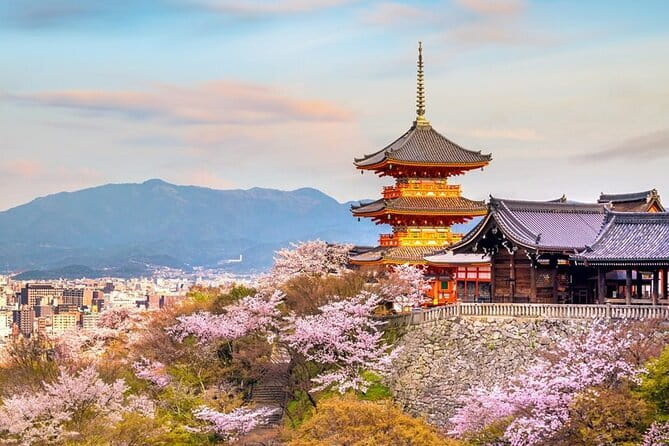
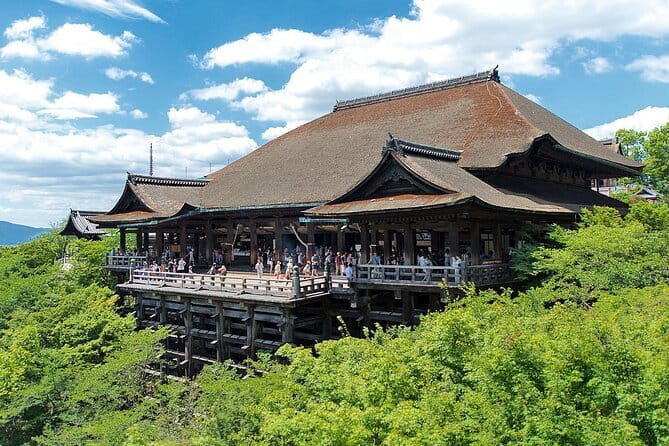
Kiyomizu-dera receives about two and a half hours, including lunch. This is the fullest stop of the day, and it combines a famous temple with some of Kyoto’s most appealing walking streets.
The route takes you through Kiyomizu-dera, Nineizaka and Sanneizaka, Ishibei-koji Alley, Hanamikoji Street, and Yasaka Shrine. That sequence gives you several different views of old Kyoto: temple grounds, sloping stone lanes, traditional-looking buildings, small shops, and the Gion area.
Kiyomizu-dera is the place to spend your admission money if you want one classic Kyoto temple visit. The approach streets can be crowded, but the walk is part of the appeal. Wear shoes with good grip, since you will be walking uphill and over uneven surfaces.
The route toward Hanamikoji Street brings you into Gion, the district associated with geisha culture. The description says you may encounter geisha here, but you should treat that as a possibility, not a promise. If you do see one, keep your distance and avoid blocking the street for a photograph.
Lunch is not provided, so use the available time sensibly. You can buy food near the temple area, but the schedule is tight enough that a long sit-down meal may cost you walking time. I would choose something quick unless food is a major part of your Kyoto plans.
One point needs attention: Kiyomizu-dera admission is excluded. Bring enough Japanese yen or a payment method accepted at the entrance, and check the current fee before departure because prices can change.
Fushimi Inari and the first orange gates
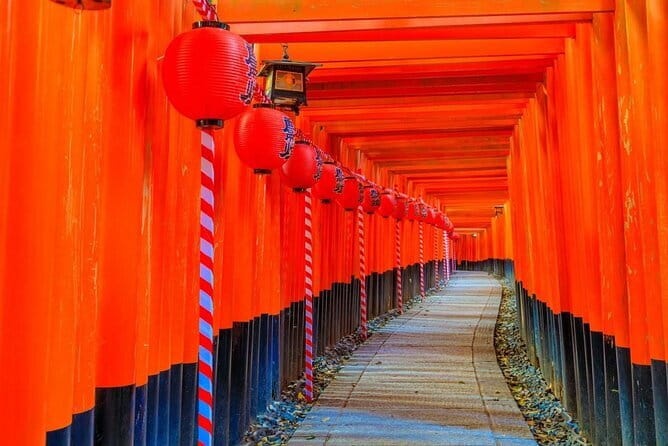
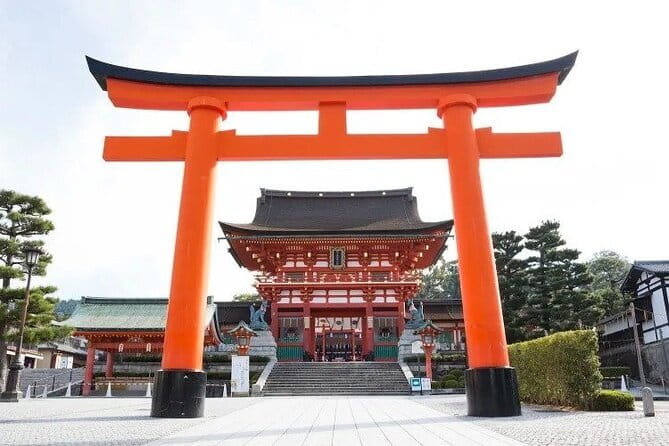
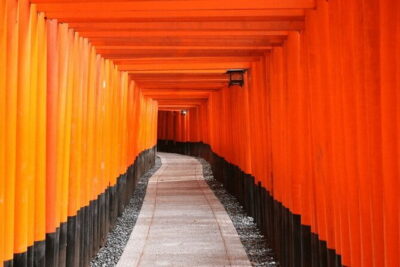
Fushimi Inari Taisha gets about 70 minutes. Entry is free, and the shrine is famous for its Senbon Torii, the long rows of orange gates that climb into the wooded hills.
You will not have time to explore every gate on the mountain. That is not a problem for a first visit, but you should set expectations correctly. The most recognizable section is near the lower approach, and it can be crowded. If the group gives you a clear meeting time, keep track of it carefully before walking farther uphill.
Fushimi Inari is more than a photo stop. The gates were donated by individuals and businesses, and each one carries a name and date on its rear side. Even without a long talk from the guide, you can appreciate how the shrine changes from a busy entrance to a more peaceful wooded path as you walk upward.
This is one stop where your own preparation helps. Read a little about Inari worship and the fox figures associated with the shrine before you go. A guide may explain the basics, but the short visit means you will get more from the site if you already know what to look for.
The shrine is a good fit for people who enjoy walking and taking photographs. It is less suitable if you need a flat, slow-paced stop or want to reach the mountain summit. The tour gives you a useful taste, not a full hike.
Nara Park, deer, and Todai-ji
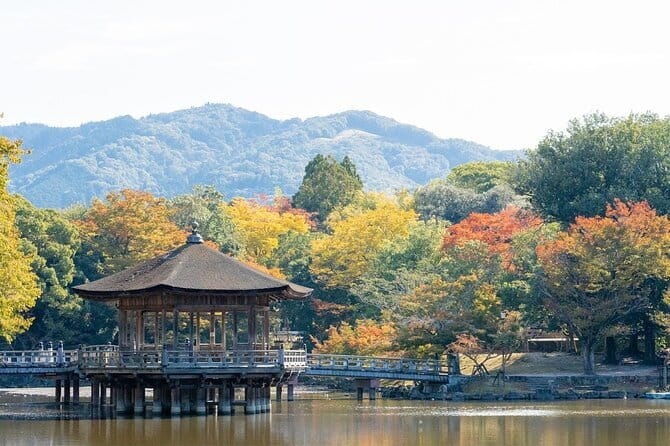
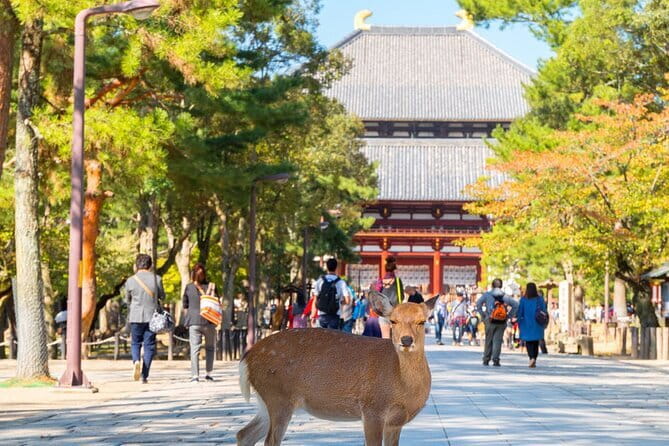
Nara Park allows about an hour and a half of free time, followed by roughly 20 minutes at Todai-ji Temple. This part of the day is built around the deer and the Great Buddha.
The deer are accustomed to people and are one of Japan’s most memorable encounters. You may feed them with special crackers sold in the park, though you should follow local instructions and finish the crackers quickly. Deer can become very persistent once they know you have food, so keep maps, tickets, and loose papers out of reach.
Nara Park also gives you a break from the enclosed feel of the bus. You can walk among open park paths and choose how to use your time. The park sits near major sights including Todai-ji and Kasuga Taisha, but the tour does not give you time to explore every one.
Todai-ji is famous for its enormous bronze Buddha and its important place in Japanese Buddhism. The temple was built in 752 to house the Great Buddha, and the present complex is one of Nara’s essential sights. Admission is not included, and the scheduled temple visit is short.
Here is the main practical warning: parking may be some distance from the temple. On one reported summer departure, the walk from the bus took about 20 minutes, leaving very little time inside Todai-ji. That may not happen on every departure, but you should be ready for a brisk walk from the parking area.
If Todai-ji is your main reason for visiting Nara, an independent visit may suit you better. On this tour, the deer can receive more of your attention than the temple, especially when traffic, parking, or crowds eat into the schedule.
More Kyoto day trips from Osaka:
- Osaka/Kyoto: Hiroshima Miyajima Bus Tour & Shinkansen Ticket
★ 4.7 · 919 reviews - From Kyoto/Osaka: Kyoto Top Highlights 1-Day Guided Bus Tour
★ 4.5 · 714 reviews - Osaka/Kyoto: Amanohashidate & Miyama Tour with Boat & Lunch
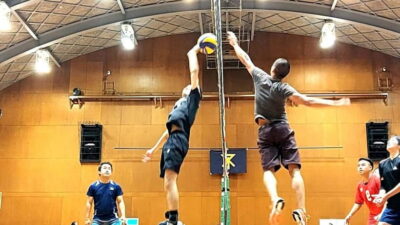
★ 4.6 · 207 reviews - Volleyball in Osaka, Kobe & Kyoto with locals!
★ 4.8 · 131 reviews
Shinsaibashi is the final Osaka stop
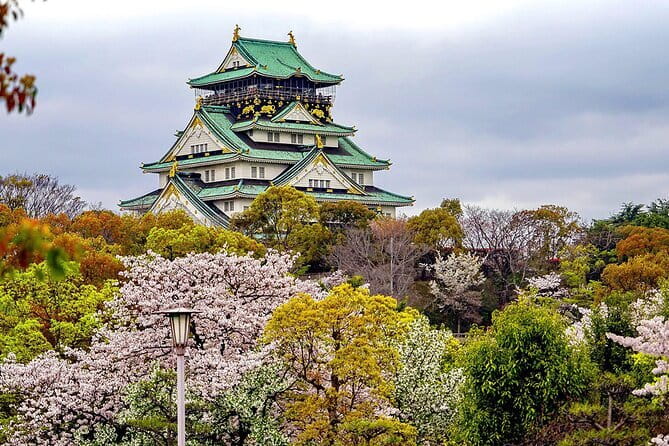
The tour allows about one hour in the Shinsaibashi area of Osaka. This gives you a chance to shop, find a snack, or continue into Namba after the organized sightseeing ends.
Shinsaibashi is useful as a final stop because it places you in one of Osaka’s most convenient entertainment and shopping districts. You can finish with food or shopping rather than returning to a quiet suburban meeting point.
The exact end point matters. The group is dropped at Osaka Nihonbashi Exit 2, in the Namba and Shinsaibashi area. It does not return to Kyoto, and the final location may not be identical to the morning pickup point.
If you boarded in Kyoto, you must arrange your own return by train. Several people have misunderstood this point, so treat it as a firm planning detail. Check the train route back to Kyoto before the tour, keep your phone charged, and do not assume a shuttle will take you back.
The guide can shape the whole day

The strongest version of this tour depends heavily on the person leading it. Guides named Anna, Amy Ono, Lou, Yang, Jason, Liu, and Kou Ran, also called Kosa, have been praised for being friendly, clear, funny, efficient, and helpful with historical questions.
A good guide can explain what you are seeing, give you a smart route through each site, and make sure you know when and where to return to the bus. Amy Ono, for example, was praised for answering historical questions with descriptive detail. Anna was described as energetic and informative, while Yang was noted for clear instructions during a quick visit.
The weaker version feels more like transport with directions. Some departures have offered little explanation at the sites, leaving people to use Google Maps and find the bus on their own. Instructions at the meeting point have also caused confusion, especially for those boarding in Kyoto.
That makes your preparation important. Save the guide’s contact details and vehicle registration number from the reminder email. The email arrives the night before and gives the pickup time, vehicle number, and guide contact information. Guides do not normally initiate contact, so you are expected to wait at the stated location.
Do not wander off without telling the guide. If you leave the group on your own, the booking becomes invalid and no refund is offered. This is a strict group outing, not a flexible hop-on, hop-off arrangement.
Walking, weather, and the pace of the bus
You should expect a lot of walking. Kiyomizu-dera has slopes and old lanes, Fushimi Inari has stairs and uphill paths, Nara Park spreads across a large area, and the bus may park away from Todai-ji.
The schedule is also affected by Japanese bus regulations, traffic, and road conditions. The advertised duration is about nine hours and 20 minutes, but the actual rhythm can change. Remaining time is used for driving and lunch, so every stop cannot receive a long visit.
Summer deserves extra care. One departure had weak air conditioning, which made the ride uncomfortable. You cannot control the bus conditions, but you can carry water, a small towel, and clothing that works in heat. In cooler months, layers help, especially during open-air walks in Nara.
New Year’s Day can be especially difficult. Temples and shrines may be extremely crowded with people visiting for the first prayers of the year, and access can become slow. If your priority is seeing several temple interiors, avoid dates when major religious sites are likely to be overwhelmed.
Do not bring large luggage. The tour recommends traveling light, and one piece per person is allowed only if you note it when booking. A charge of 100 yuan per extra or undeclared piece may apply. Foldable strollers are allowed only with advance notice, and the driver may refuse boarding if you do not arrange this first.
Who should book this tour?

I would choose this tour if you are staying in Osaka, have only one day, and want a broad first look at Kyoto and Nara. It is also useful if you dislike changing trains and buses or want highway travel, fuel, tolls, and a guide bundled into one booking.
It suits energetic first-time visitors who are happy to trade depth for range. Families with older children may enjoy the deer and the variety of sights, though the walking and tight timing can test younger children. Children occupy a seat and are charged the adult price on small-group tours. On bus tours, children from age zero to two ride free if they do not occupy a seat.
I would not choose it for a slow Kyoto visit, a serious temple study, or anyone who needs predictable long stops. I would also hesitate if you are staying in Kyoto and want an easy return, since the day ends in Osaka.
The cancellation policy is friendly if you make plans carefully: cancel at least 24 hours before the start time for a full refund. Late cancellations, changes within 24 hours, lateness, and no-shows are not refunded.
Should you book the Osaka, Kyoto, and Nara tour?
Book it if your goal is to see the famous sights efficiently and you accept a packed day. The combination of Kiyomizu-dera, Fushimi Inari, Nara Park, Todai-ji, and Shinsaibashi is hard to match at $54 when transport and tolls are included.
Go in with realistic expectations. You may receive an excellent guide such as Anna, Amy, Lou, or Yang, but the amount of explanation can vary. You will walk a lot, spend limited time at Todai-ji, pay some entrance fees yourself, and find your own way back to Kyoto if that is where you are staying.
For a first taste of the region, I see real value here. For a relaxed Kyoto and Nara visit, take the trains independently and give each place the time it deserves.
FAQ
How long does the tour last?
The advertised duration is approximately 9 hours and 20 minutes. The schedule can change because of weather, traffic, road conditions, and other factors.
Where does the tour start?
The listed starting point is 1-chōme-3-6 Nipponbashi, Chuo Ward, Osaka, 542-0073, Japan.
Where does the tour end?
The tour ends in Osaka near Osaka Nihonbashi Exit 2, in the Namba and Shinsaibashi area. It does not return to Kyoto.
Is transportation included?
Yes. Vehicle service, fuel, highway tolls, the driver, and guide service are included.
Are temple entrance fees included?
No. Admission to Kiyomizu-dera and Todai-ji is not included. Fushimi Inari Taisha and Nara Park are listed as free.
How much time is provided at Kiyomizu-dera?
You receive about two and a half hours at Kiyomizu-dera and the nearby historic streets, including lunchtime.
How much time is provided at Fushimi Inari?
The visit to Fushimi Inari Taisha lasts about 70 minutes, with free time to explore.
Can I feed the deer in Nara Park?
Deer food can be purchased in Nara Park, but food costs are not included. Follow local instructions when feeding the deer.
Can I bring luggage?
One piece of luggage per person is allowed if you clearly note it when booking. An extra 100 yuan per piece may apply if you fail to declare luggage or bring more than one piece.
Can I cancel for a full refund?
Yes, if you cancel at least 24 hours before the experience start time. Cancellations or changes made less than 24 hours in advance are not refunded or accepted.
Just added in Osaka
- Urban Canvas: Osaka Street Art Bike Tour★ 5.0 · 10 reviews
- Anime Cosplay Photshoot-50 Digital Photos Provided★ 5.0 · 8 reviews
- TeamLab Botanical Garden Osaka Ticket★ 3.5 · 6 reviews
- Umeda Sky Building & Kuchu Teien Observatory Ticket in Osaka★ 4.5 · 3 reviews
- Immerse in Judo Martial Arts Class from Japan★ 5.0 · 4 reviews
- Cherry Blossom Buddha and Mt.Yoshino with Strawberry Picking Tour★ 4.5 · 5 reviews
- Traditional Home cooking Experience in Osaka, Japan★ 5.0 · 14 reviews
- Traditional Calligraphy Experience near Dotonbori★ 5.0 · 3 reviews
Kyoto Day Trips from Osaka, compared.
Hiroshima Miyajima Bus Tour & Shinkansen Ticket
Read our review →
Ancient Capital Tour: Kyoto and Nara Highlights from Kyoto/Osaka
Read our review →
Full Day Tour of Kyoto with Private Transportation
Read our review →
Kyoto & Nara Private customized tour with English speaking Guide
Read our review →Browse the lists this tour appears in