
Reviewed · DOTONBORI TOURS
Osaka Castle & Dotonbori Lively One-Day Walking Tour
Osaka’s appeal is its sharp contrast: samurai fortifications in the morning, old shopping arcades at midday, and neon-lit Dotonbori by afternoon. This tour links those pieces in one well-planned day, with guides such as Tomoko, Noriko, Taka, and Saori praised for clear explanations, patience, and adjusting the pace to each group.
I like the maximum five-person group, which should make questions and conversation easy, and I like that public transport is part of the day rather than something hidden behind a tour bus window. The main thing to consider is the walking: seven hours, subway transfers, and several large sites call for comfortable shoes. One person even admitted that boots were a poor choice.
Key points to know before booking
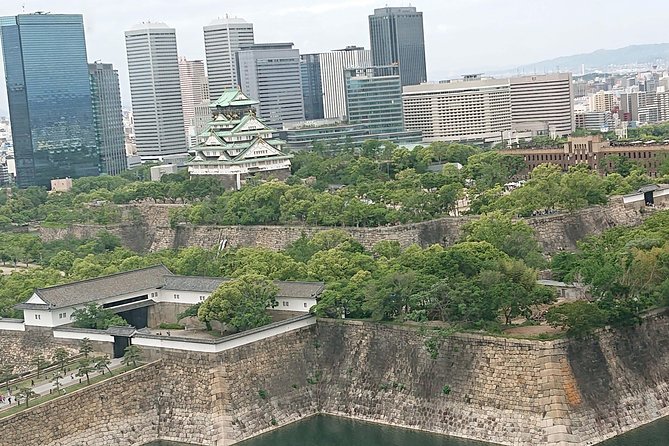
- Osaka Castle begins the day, with entry to the castle and a useful view from the nearby Osaka Museum of History.
- Tenjinbashi-suji stretches 2.6 kilometers and packs about 600 shops into Japan’s longest shopping street arcade.
- The Osaka Museum of Housing and Living recreates an Osaka townscape from about 180 years ago, allowing you to walk through it.
- The group is limited to five people, giving the tour a private feel without the cost of a fully private booking.
- Public transportation is included, so you get practical help using Osaka’s subway system.
- Food, drinks, and lunch are extra, with 30 minutes set aside at Kuromon Market for browsing and eating.
A seven-hour introduction to Osaka’s two personalities
This is a city tour built around contrast. In the morning, you focus on Osaka’s political and samurai past. Later, the subject shifts to ordinary homes, shopping streets, food, and entertainment.
That mix is the tour’s strongest feature. A day spent only at Osaka Castle can feel narrow, while a day spent only in Dotonbori gives you plenty of neon but little sense of how Osaka developed. Here, you move from old power centers to daily life and then to the city’s famous food and nightlife districts.
The day begins at 9:00 a.m. and lasts about seven hours. The stated meeting point is Osaka Station at 3-chōme-1-1 Umeda, though hotel pickup is also described as part of the experience. Past arrangements have included guides meeting people at a hotel lobby or even at a ship. I would confirm the exact pickup plan before the morning of the tour, especially if you are not staying near Osaka Station.
The price is $141.23 per person. That is not a cheap walk, but it covers the professional guide, public transport, and admission fees. With a maximum of five people, the cost buys more personal attention than a large group tour. You still need to pay for anything you eat or drink, and the tour’s value depends heavily on how much you enjoy guided context rather than simply seeing places on your own.
More Dotonbori walks and food stops:
- Osaka Local Foodie Walking Tour in Dotonbori and Shinsekai
★ 5.0 · 985 reviews - Osaka: Dotonbori District River Cruise with Drink Discount
★ 4.2 · 876 reviews - Ultimate Osaka Walking Tour: Castle, Dotonbori & Hidden Gems
★ 5.0 · 862 reviews
Osaka Museum of History: a strong first view
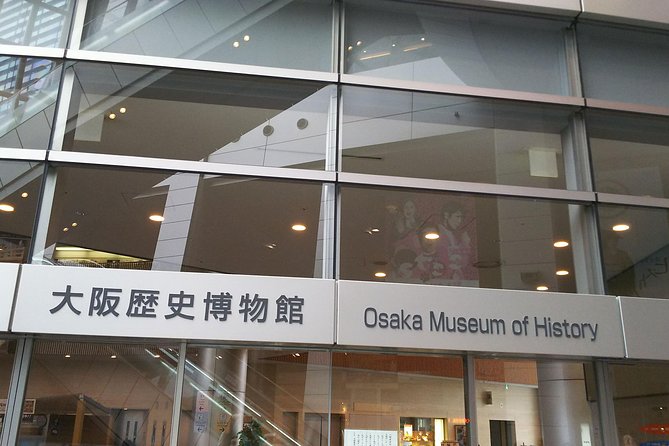
The Osaka Museum of History sits in front of Osaka Castle on the site of an ancient palace. The visit lasts about an hour, and admission is included.
The practical highlight is the 10th-floor view toward Osaka Castle. It gives you a useful visual introduction before you walk through the castle grounds. Instead of seeing the castle as an isolated monument, you begin to understand its position within the modern city.
The museum also helps frame Osaka’s long role as a center of government and commerce. Your guide can connect what you see inside with the castle that comes next, which is one reason this tour works better with a guide than as a quick photo stop.
The hour is enough for an introduction, not a full museum study. If you enjoy reading every display in detail, you may wish for more time. On a seven-hour schedule, though, the brief visit keeps the day moving.
Osaka Castle and its broad stone defenses
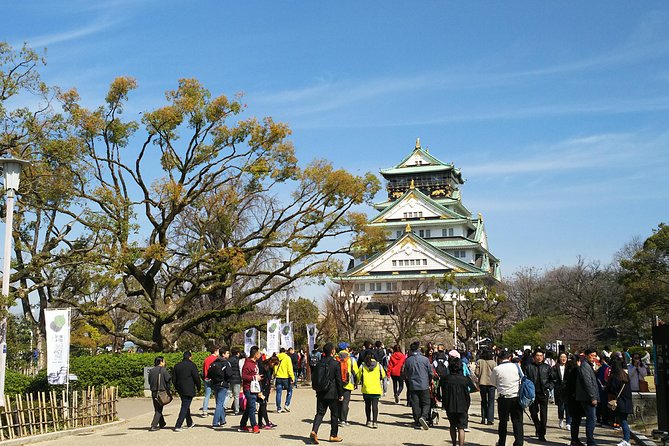
You spend about 90 minutes at Osaka Castle, with admission included. The castle was built in the 17th century by the Tokugawa Shogunate and was designed as a heavily protected stronghold, with double moats, high stone walls, and turrets.
This is the tour’s main historic sight. The scale matters. The walls and moats give you a feel for the castle as a military center, not just the familiar decorated tower seen in photographs. Your guide can explain the castle’s connection to samurai power and to the political changes that shaped Osaka.
One practical advantage is that the guide handles the visit as part of a planned route. A past guide, Mizuho, was praised for arranging direct entry and giving a great deal of historical explanation inside the castle. That matters on a busy day, though the exact entry process can change.
Allow some energy for this stop. The castle grounds are large, and the visit follows an hour in the history museum. You will be walking outdoors, so weather can affect your comfort. The tour requires good weather and may be moved or refunded if poor conditions cause cancellation.
Tenjinbashi-suji and the everyday side of Osaka
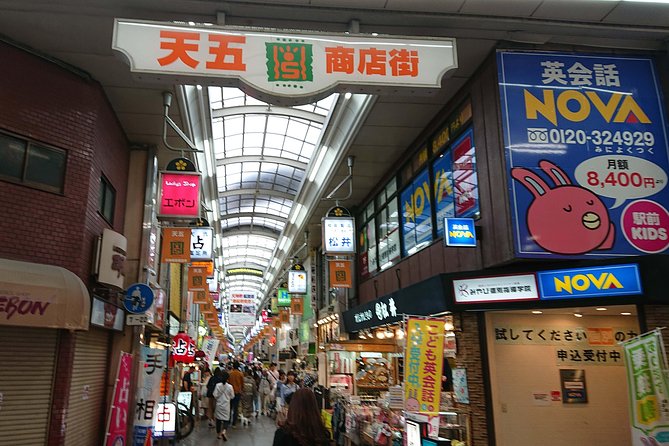
After the castle, the tour heads to Tenjinbashi-suji Shopping Street for about an hour. The arcade runs 2.6 kilometers and contains around 600 shops, making it Japan’s longest shopping street.
This is one of the most useful stops for seeing Osaka as a lived-in city. The street is not only a sightseeing backdrop. It is a place to look at local shops, food businesses, clothing, small household goods, and the steady rhythm of daily errands.
You will not cover the full 2.6 kilometers in an hour. That is not a problem. The point is to walk a representative stretch with someone who can explain what you are seeing and steer you toward details you might miss alone.
This stop also gives the day a welcome change of pace. Osaka Castle is grand and formal. Tenjinbashi-suji is close to street level, practical, and full of small distractions. If browsing shops is not your interest, this may feel less exciting than the castle. For most people, it is a useful pause between major sights.
More ways to see Osaka Castle:
- Osaka Castle: Museum and Tower Entry Ticket
★ 4.5 · 2,380 reviews - Osaka Castle Walking Tour and Castle Tower Admission
★ 5.0 · 561 reviews - 5-Hour Osaka Bike Tour to the Neighborhood of Osaka Castle
★ 5.0 · 319 reviews - Osaka Castle Guided Tour
★ 4.7 · 249 reviews
Osaka Museum of Housing and Living: walking through old Osaka
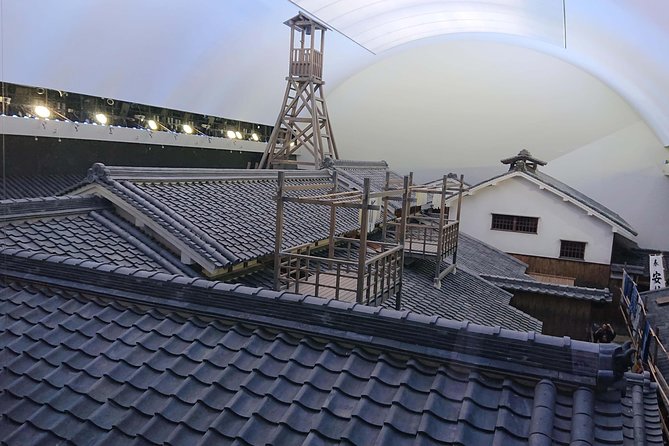
The Osaka Museum of Housing and Living receives about 40 minutes of the schedule, and admission is included. Its main feature is a full-size recreation of Osaka as it looked about 180 years ago.
You can walk through the old townscape and look at the structure of the houses, the goods sold at the time, and the way the streets were arranged. This makes the museum more direct than a row of objects behind glass. You are looking at a recreated neighborhood rather than only reading about one.
I especially like this stop because it shifts attention away from rulers and castles. The Osaka Museum of History and Osaka Castle explain power. This museum shows how ordinary people lived and worked. Together, the three stops create a fuller picture of the city.
Forty minutes is a short visit. It works best if you let the guide point out the main features rather than trying to inspect every part. If reconstructed environments are not your thing, this will likely be the least essential stop, but it adds useful context to the rest of the day.
Kuromon Market and Osaka’s food culture
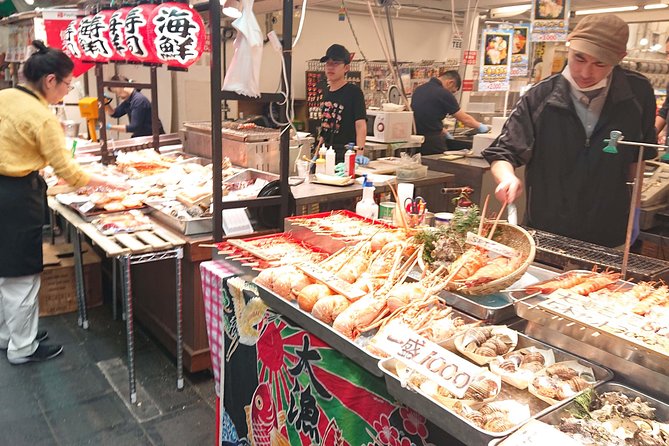
The tour spends about 30 minutes at Kuromon Market. Admission is free, and food and drinks are not included.
Osaka has long been linked with a strong food culture, and Kuromon is the place to see that interest in action. The market has many food sellers, so this is the natural point to buy a snack or a small meal. You should budget extra money here if sampling food is part of your plan.
Thirty minutes is enough for a quick look and a purchase, but it is not a leisurely market lunch. You may need to choose between browsing and eating. The tour does not promise a meal, so do not arrive expecting lunch to be covered in the price.
One guide, Toshi, took a group to a reasonably priced lunch during the day. That suggests some guides may help with food choices, but it is not something guaranteed by the stated inclusions. Ask your guide about timing and options when the day begins.
Dotonbori: finishing among the lights
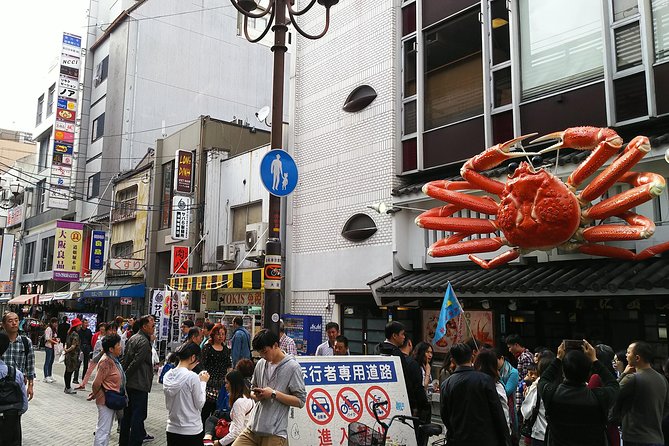
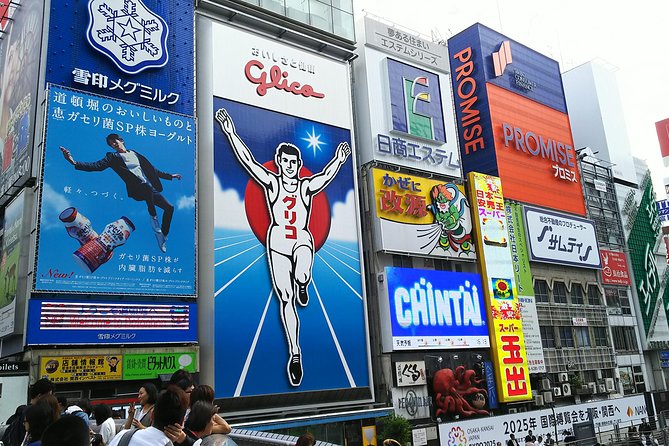
The final sightseeing stop is Dotonbori, with about 30 minutes set aside. The district grew as a local entertainment area with theaters along the canal. Today, it is known for restaurants, colorful signs, and a busy nightlife atmosphere.
This is the most immediately recognizable part of the day. The canal, signs, and restaurant fronts give you the classic Osaka scene, but the guide adds the older story behind the entertainment district. That connection makes the stop more than a quick photo opportunity.
Half an hour is enough to get oriented, see the main canal area, and decide where you might return later. It is not enough for a full evening of eating and exploring. If Dotonbori is a major reason for your Osaka visit, treat this visit as an introduction and come back independently after the tour.
The ending is listed as returning to the meeting point. Since Dotonbori and Osaka Station are not the same area, confirm how the return journey is handled and how much time remains for the trip back.
The guides make the small group useful
The strongest part of this experience is the guide service. Names attached to especially positive feedback include Chuji, Tomoko, Noriko, Taka Sakai, Yoko, Mizuho, Leo, Satomi, Nick, Toshi, Saori, and Mizuho again in another account.
The praise is consistent in practical ways. Guides explain clearly, answer questions, manage public transport, and adjust the pace. Noriko was especially helpful for hotel pickup and subway travel. Satomi explained the subway system while answering questions about Osaka Castle. Saori adjusted the schedule for a three-generation family, while Leo avoided rushing the day.
That flexibility matters because the group may include people with different walking speeds and interests. A maximum of five people gives the guide a reasonable chance to respond to those needs. It also makes the experience feel closer to a private tour than a standard large-group outing.
English ability can vary by guide, but the available feedback describes guides as clear and easy to understand. You can also expect the guide to do more than recite dates. The best parts of this tour involve linking the castle, market, shopping street, and subway into a picture of how Osaka works.
Walking, public transport, and what to pack
The title says walking tour, and you should take that seriously. The tour uses public transportation, but trains do not remove the walking between stations, museums, castle grounds, markets, and shopping streets.
Wear comfortable walking shoes. This is the clearest practical lesson from the day. A guide may be able to adjust the pace, but no guide can make uncomfortable footwear feel better after several hours.
The tour requires a moderate level of physical fitness. Bring clothing suited to the weather, since parts of the day are outdoors. A small bag is useful for market purchases, though no specific luggage advice is provided.
The transport fare is included. That is helpful if Osaka’s subway system is new to you, and it gives you a practical skill you can use after the tour. You are not simply being moved from sight to sight. You are learning how the city connects.
Who should book this Osaka tour?
I would choose this tour for a first visit to Osaka when you want a structured overview in one day. It suits people who like history but also want shopping, markets, local neighborhoods, and Dotonbori.
It is also a good fit for families or mixed-age groups because the guide can adjust the pace. The small group helps if you have questions or need assistance using public transport.
I would be more cautious if you dislike walking, prefer long unstructured meals, or want to explore each museum at length. The schedule covers a lot of ground, and Kuromon Market and Dotonbori receive only 30 minutes each.
The tour is also less useful for someone who has already spent several days visiting Osaka’s main sights. In that case, you may prefer a food-focused or neighborhood-specific experience rather than a broad introduction.
Should you book it?
Book this tour if you want Osaka’s main historic, commercial, and entertainment areas connected by a guide who can explain the links. The small group, included admissions, and public transport make the $141.23 price easier to justify, especially for a first-time visit.
Skip it if your priority is independent wandering or long meals. You will need to pay for food, keep moving, and stay ready for a full day on foot.
For the best experience, confirm the pickup details, wear comfortable shoes, and tell the guide early if your group needs a slower pace or has a particular interest. With those points handled, this is a practical way to get your bearings in Osaka without reducing the city to only a castle and a neon canal.
FAQ
How long does the Osaka Castle and Dotonbori tour last?
The tour lasts about seven hours. It begins at 9:00 a.m.
How many people can join the tour?
The group has a maximum of five travelers.
Is hotel pickup included?
Hassle-free pickup from an Osaka hotel is described as part of the experience. The stated meeting point is Osaka Station, and some arrangements have also involved hotel lobby or ship pickup. Confirm your exact meeting location when booking.
Are admission fees and public transportation included?
Yes. The professional guide fee, public transportation fare, and admission fees are included.
Are food and drinks included?
No. Food and drinks are not included. You have time at Kuromon Market to buy food if you wish.
What happens if the tour is canceled because of bad weather?
If poor weather causes cancellation, you will be offered a different date or a full refund. For other cancellations, you can receive a full refund if you cancel at least 24 hours before the start time.
More Walking Tours in Osaka
- Osaka: Deep Backstreets Walking Tour with Dinner Option
★ 4.9 · 902 reviews - Osaka: Main Sights and Hidden Spots Guided Walking Tour
★ 4.9 · 702 reviews - Private Osaka Walking Tour: Highlights & Hidden Gems
★ 5.0 · 569 reviews - Kuromon Market Food Walking Tour in Osaka (6 stops, 6 tastes)
★ 5.0 · 550 reviews
Just added in Osaka
- Urban Canvas: Osaka Street Art Bike Tour★ 5.0 · 10 reviews
- Anime Cosplay Photshoot-50 Digital Photos Provided★ 5.0 · 8 reviews
- TeamLab Botanical Garden Osaka Ticket★ 3.5 · 6 reviews
- Umeda Sky Building & Kuchu Teien Observatory Ticket in Osaka★ 4.5 · 3 reviews
- Immerse in Judo Martial Arts Class from Japan★ 5.0 · 4 reviews
- Cherry Blossom Buddha and Mt.Yoshino with Strawberry Picking Tour★ 4.5 · 5 reviews
- Traditional Home cooking Experience in Osaka, Japan★ 5.0 · 14 reviews
- Traditional Calligraphy Experience near Dotonbori★ 5.0 · 3 reviews
Dotonbori Tours, compared.
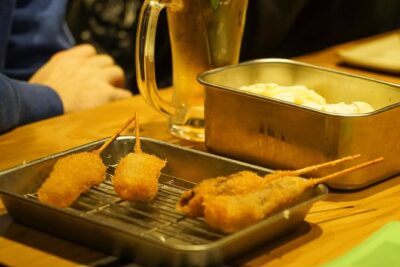
Osaka Local Foodie Walking Tour in Dotonbori and Shinsekai
Read our review →
Dotonbori District River Cruise with Drink Discount
Read our review →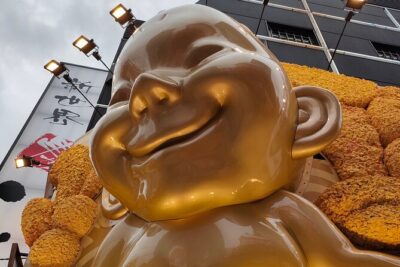
Ultimate Osaka Walking Tour: Castle, Dotonbori & Hidden Gems
Read our review →


Roll and Authentic Sushi Making Class in Dotonbori
Read our review →
Osaka Local Bar Crawl in Dotombori & Uranamba Area
Read our review →
Browse the lists this tour appears in