
Reviewed · OSAKA BIKE TOURS
Osaka: Bike Adventure with Lunch
Osaka is easiest to understand when you cover ground, and this small-group bike tour does exactly that. In about five and a half hours, you ride from the Japan Mint and Nakanoshima to Osaka Castle, Shin-Sekai, Tsutenkaku Tower, and Japan’s oldest temple, with a local lunch along the way. It is a useful way to connect the city’s history, food, and modern streets in one outing.
I like the limited group of eight, which gives your guide room to explain things and keep the pace friendly. I also like the food stop, especially since the lunch can include a local favorite such as Japanese curry rather than a standard tourist meal. The drawback is simple: you need to be comfortable on a bike, and the route is not suitable for children under 13, pregnant women, or anyone who cannot ride.
Key points to know
- Five and a half hours on two wheels: You cover far more of central Osaka than you would on foot.
- A well-rounded route: The ride links the Japan Mint, Nakanoshima, Osaka Castle, Shin-Sekai, Tsutenkaku Tower, and Japan’s oldest temple.
- Local lunch included: Your guide takes you to a favorite local eatery, with Japanese curry among the possible food experiences.
- Small English-speaking group: The tour is limited to eight people, with guides including Matt, Joel, and Danyk.
- A manageable ride for many adults: One 70-year-old couple found the cycling easy, though you should still be in decent shape.
- Weather matters: If the chance of rain is above 60 percent, the operator offers another date or a full refund.
Why cycling gives you a better look at Osaka
Osaka is a spread-out city, and its main sights do not sit in one neat historic quarter. A bike lets you connect them without spending much of the day changing trains or walking long stretches between stations.
You also see the ordinary spaces between the headline sights. The route moves through central streets, past riverside scenery, and into neighborhoods with different moods. That matters in Osaka, where the shift from grand castle grounds to old entertainment streets can happen quickly.
The tour runs for 330 minutes, or five and a half hours. That is long enough to make the ride worthwhile, but not so long that it becomes a full-day endurance test. You get a bicycle, helmet, water, and an English-speaking guide. You will need comfortable clothes and shoes, plus enough energy for several hours in the saddle.
The small size is a real advantage. With no more than eight participants, the guide can usually keep track of the group and answer questions without turning the ride into a lecture. Guides such as Matt, Joel, and Danyk have each brought a different personal touch, with a focus on Osaka’s past, local culture, and food.
More bike tours in Osaka:
- 5-Hour Osaka Bike Tour to the Neighborhood of Osaka Castle
★ 5.0 · 319 reviews - One-Day Osaka Bike Adventure: 5–6 Hours
★ 5.0 · 246 reviews - Eat, Drink & Cycle: Osaka Foodie Bike Tour
★ 5.0 · 224 reviews
Starting near Tenmabashi Station
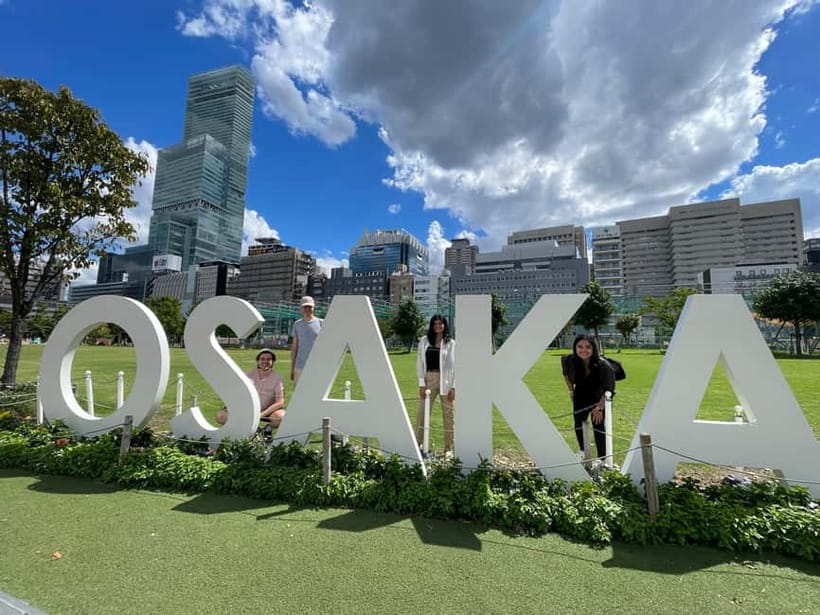
The meeting point is about a 10-minute walk from Tenmabashi Station, served by the Osaka Metro and Keihan train lines. There is no hotel pickup, so give yourself time to find the base and arrive at least 15 minutes before departure.
This is one of those tours where arriving early helps. You can get settled, provide the heights of everyone in your group, and discuss dietary restrictions before the ride starts. Height information matters because the operator needs to prepare suitable bicycles.
The tour is offered in English. You are not simply handed a bike and sent off behind a guide. The point is to hear how Osaka developed, how it fits into the story of feudal Japan, and why its dialect and food traditions differ from those of other Japanese cities.
Smoking is not allowed during the activity. The route is intended for riders who can manage a bike comfortably, not for people hoping for a sightseeing ride without physical effort.
The Japan Mint and Nakanoshima’s formal side
The first major area is the Japan Mint. It gives the ride an early look at Osaka’s role as a center of commerce and government, rather than beginning only with the city’s famous tourist sights.
From there, you cruise toward Nakanoshima Island. This central island is known for its European-style buildings and gardens, offering a change from Osaka’s dense commercial streets. The contrast is part of the appeal: one moment you are riding through a busy urban setting, and soon you are looking at older civic architecture and open riverside spaces.
You should not expect a long museum visit at each stop. This is a moving tour, so the guide’s commentary and the changing view are the main attractions. If you prefer detailed interior visits, a bicycle tour cannot replace a separate day at Osaka Castle or a museum. If you want an overview of several districts, the format works well.
Nakanoshima also helps you get your bearings. Osaka can feel like a maze when you first arrive, especially around its large stations. Seeing the river, major roads, and central districts by bike gives you a clearer sense of how the city fits together.
Lunch at a local Osaka eatery
After riding through the central area, you turn south for lunch at one of the guide’s favorite local eateries. The meal is included, which makes the $103 price easier to assess. You are not paying only for bicycle rental and transport. You are also getting a prepared food stop, local guidance, and a route that links several parts of the city.
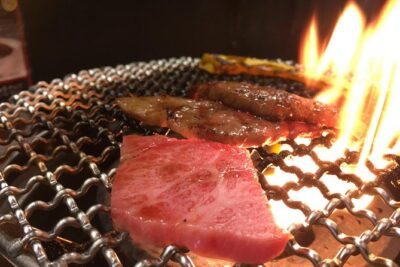
Japanese curry has been one particularly well-received lunch choice. It is filling without being fussy, which suits a mid-tour meal before more cycling. The exact eatery and menu may vary, so provide dietary restrictions when booking rather than waiting until the day of the tour.
The stop is described as a quick lunch, not a long restaurant experience. That is useful if your goal is to see Osaka, but less ideal if you want a slow meal with many courses. Think of it as a chance to taste a familiar local dish, rest your legs, and ask your guide about Osaka’s food scene.
Food is one of the strongest reasons to choose this tour. Osaka has a reputation for practical, generous, street-oriented eating, and a guide can explain the habits and dishes in a way that a restaurant menu cannot. You get a taste of the city without giving up several hours to a formal food tour.
Same city, a completely different kind of afternoon:
- Osaka Go Karting Tour with Funny Costume
★ 5.0 · 2,658 reviews - Osaka Castle: Museum and Tower Entry Ticket
★ 4.5 · 2,380 reviews - Osaka: Shinsekai Food Tour with 13-15 Dishes at 5 Eateries
★ 4.8 · 2,204 reviews - Osaka Food Tour: 13 Dishes at 5 Local Eateries
★ 5.0 · 2,149 reviews
Japan’s oldest temple and the city’s tallest building
After lunch, the route takes you to Japan’s oldest temple and Japan’s tallest building. The pairing makes sense because it shows two very different sides of Osaka.
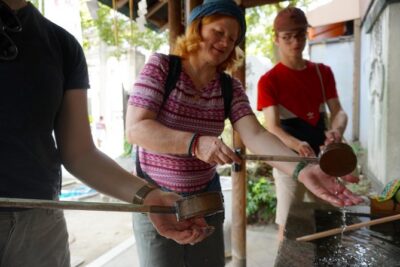
The temple connects the city to Japan’s long religious and political past. Your guide can place it within the broader story of Osaka and feudal Japan, giving the stop more meaning than a quick photograph. The tour does not promise an extended temple visit, so expect an outside look and historical explanation within the wider bike route.
The tallest building provides the opposite view: modern Osaka, built upward and shaped by contemporary business and city life. The itinerary does not include an observation deck visit, so you are seeing the building as part of the city rather than buying a separate attraction ticket.
Together, these stops help explain why this is more than a simple ride between landmarks. Osaka’s appeal comes from its layers. Old religious sites, major commercial structures, riverside civic buildings, entertainment streets, and castle grounds all sit within the same large city.
Entering Shin-Sekai and seeing Tsutenkaku Tower
The ride then reaches Shin-Sekai, one of Osaka’s most recognizable neighborhoods. The name means New World, but the district is famous for its older entertainment atmosphere and strong local identity. It is a place where the city’s food culture and humor are especially important to the experience.
Tsutenkaku Tower is the area’s visual marker. You will see the tower as you pedal through the neighborhood, along with the streets and businesses that make Shin-Sekai different from the more polished central districts.
This is a good part of the tour for paying attention to your guide. Osaka is known for a distinctive dialect and a direct, playful local character. A guide can explain the tone behind the signs, food traditions, and neighborhood customs that might otherwise pass too quickly.
There is a practical tradeoff here. You see more of Shin-Sekai by bike, but you do not get a long, unhurried food crawl or a detailed stop at every shop. If you want to sample many individual dishes, plan another visit. If you want a lively introduction and a sense of place, the bike route gives you a useful first look.
Finishing at Osaka Castle
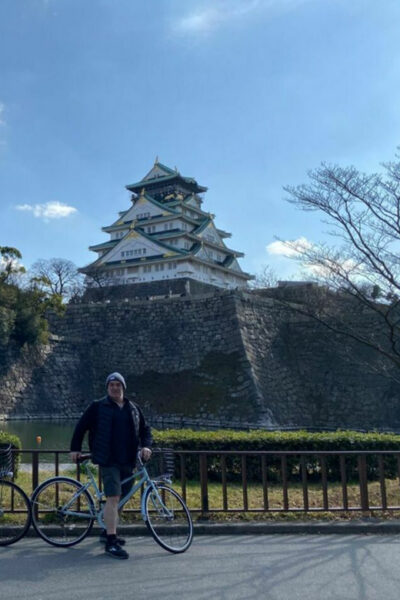
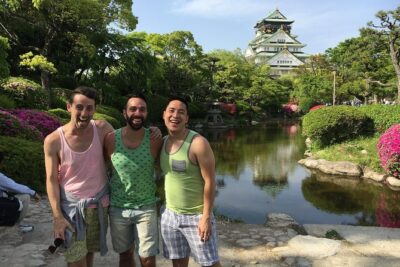
Osaka Castle is the final major sight and the natural climax of the route. It is the city’s best-known symbol, and reaching it after seeing the Mint, Nakanoshima, the temple, the modern tower, and Shin-Sekai gives the castle more context.
You are not viewing Osaka Castle in isolation. By this point, you have seen the city’s commercial center, formal civic buildings, religious heritage, modern skyline, and working entertainment districts. The castle becomes part of a larger story about Osaka’s role in Japanese history.
The exact amount of time spent at the castle depends on the group and the day’s pace. This tour is designed around cycling and outdoor sightseeing, so it is not a substitute for a dedicated castle museum visit. If you want to explore the interior in detail, you should schedule separate time.
Still, arriving by bike has an advantage. You have watched the city change as you crossed it, rather than stepping from a train directly into a single attraction. That gradual approach helps you understand why Osaka Castle remains such a strong point of reference.
How difficult is the ride?
The tour is described as manageable for people in decent shape, and a 70-year-old couple found the cycling easy. That is encouraging, but it is not a guarantee that every rider will find the route effortless.
You should be able to ride for several hours with breaks for sightseeing and lunch. Comfortable shoes and clothes are essential. Bring a camera if you want photographs, but keep your hands free while riding and follow the guide’s instructions.
The tour is not suitable for anyone who cannot ride a bike. It is also not suitable for children under 13 or pregnant women. The minimum age is 13, and the group format works best when every participant can maintain the pace without repeated assistance.
Rain can affect the schedule. If the chance of rain is higher than 60 percent, the operator will contact you and offer a different date or a full refund. Make sure the contact details attached to your booking are current.
What the $103 price gets you
At $103 per person, this is not the cheapest way to see Osaka. The value comes from combining several services in one half-day outing: bicycle rental, helmet, water, a local English-speaking guide, lunch, and a carefully planned route.
If you tried to visit all these areas by public transport, you would need to plan several train or subway connections and work out how much time to allow at each stop. You would also miss the guide’s explanation of the city’s dialect, food, and place in Japanese history.
The price is easier to justify for a first visit, especially if your time in Osaka is limited. You see central areas, southern Osaka, and the castle district in one continuous experience. It is also useful early in your stay because it gives you ideas for places to revisit on your own.
The value is lower if you already know Osaka well, dislike cycling in cities, or want long visits inside museums and historic buildings. In that case, individual sightseeing by train may give you more control.
Free cancellation up to 24 hours before the start adds some flexibility, and you can reserve now and pay later. Those policies do not change the physical demands of the ride, but they reduce some risk when your plans are still moving.
Who should book this Osaka bike tour?
I would choose this for an active first-time visitor who wants a broad look at Osaka rather than a single attraction. It suits couples, friends, and small families with teenagers aged 13 or older, provided everyone can ride comfortably.
It is also a good fit if food matters to you. The included lunch gives the day a local flavor, and the guide can connect what you eat with Osaka’s wider food culture.
Older adults should judge their own stamina, but the ride is not automatically off-limits. A 70-year-old couple managed it comfortably, which suggests that reasonable fitness matters more than age alone.
I would skip it if you are pregnant, cannot ride a bicycle, want hotel pickup, or prefer a slow walking tour with lots of indoor visits. You should also think twice if wet weather would spoil your day, even though a high rain forecast brings the option of a new date or refund.
Final verdict: book it for an active city overview
Book this tour if you want to see many sides of Osaka in one well-paced outing. The strongest features are the small group, local lunch, English-speaking guide, and route that links major landmarks with neighborhoods you might not connect on your own.
It is especially appealing when guides such as Matt, Joel, or Danyk bring the history and local humor to life. You cover a lot of ground, but the ride remains focused on understanding Osaka rather than simply collecting photographs.
Skip it if you need a very gentle pace, extensive time inside attractions, or complete control over meals and stops. For most confident riders, though, $103 is a fair price for five and a half hours of transport, food, local context, and a much clearer picture of Osaka.
FAQ
How long does the Osaka bike tour last?
The tour lasts 330 minutes, which is five and a half hours.
What sights are included on the route?
The route includes the Japan Mint, Nakanoshima Island, Osaka Castle, Shin-Sekai, Tsutenkaku Tower, Japan’s oldest temple, and Japan’s tallest building.
Is lunch included?
Yes. Lunch at a local eatery is included, along with water.
What does the tour price include?
The $103 price includes bicycle rental, a helmet, a local English-speaking guide, lunch, and water.
Where does the tour meet?
The meeting point is about a 10-minute walk from Tenmabashi Station, which is served by the Osaka Metro and Keihan train lines. Hotel pickup and drop-off are not included.
What is the minimum age?
The minimum age is 13. The tour is not suitable for children under 13, pregnant women, or people who cannot ride a bike.
What happens if it rains?
If the chance of rain is higher than 60 percent, the operator will contact you and offer a different date or a full refund. You should provide current contact details and arrive 15 minutes before the scheduled start.
More Lunch Experiences in Osaka
- Osaka: Five Must-See Highlights Walking Tour & Ramen Lunch
★ 4.7 · 411 reviews - Osaka/Kyoto: Amanohashidate & Miyama Tour with Boat & Lunch
★ 4.6 · 207 reviews - Walking Tour of Osaka’s 5 Must-See Sights, with Ramen for Lunch
★ 5.0 · 158 reviews - 5-Hour Osaka Highlights Bike Tour with Lunch
★ 4.8 · 146 reviews
Just added in Osaka
- Urban Canvas: Osaka Street Art Bike Tour★ 5.0 · 10 reviews
- Anime Cosplay Photshoot-50 Digital Photos Provided★ 5.0 · 8 reviews
- TeamLab Botanical Garden Osaka Ticket★ 3.5 · 6 reviews
- Cherry Blossom Buddha and Mt.Yoshino with Strawberry Picking Tour★ 4.5 · 5 reviews
- Umeda Sky Building & Kuchu Teien Observatory Ticket in Osaka★ 4.5 · 3 reviews
- Immerse in Judo Martial Arts Class from Japan★ 5.0 · 4 reviews
- Traditional Home cooking Experience in Osaka, Japan★ 5.0 · 14 reviews
- Traditional Calligraphy Experience near Dotonbori★ 5.0 · 3 reviews
Osaka Bike Tours, compared.
5-Hour Osaka Bike Tour to the Neighborhood of Osaka Castle
Read our review →
Browse the lists this tour appears in