
Reviewed · OSAKA BIKE TOURS
One-Day Osaka Bike Adventure: 5–6 Hours
Osaka opens up nicely from a bicycle seat. In five to six hours, you can ride from the old business district and riverside Nakanoshima to Osaka Castle, Shitennoji, Shinsekai, and Namba Yasaka Shrine, with quieter streets and local corners in between. Guides such as Matt, Mayco, Yuki, and Akira add plenty of history, culture, and useful city context.
I like the small maximum group of eight, which makes city riding easier to manage, and I like the gentle pace. Lunch is another strong point: you choose from local options on the day, with vegetarian food available. The main drawback is simple: this is a real ride, often around 13 miles or 20 kilometers, so it is not suited to anyone seeking a seated sightseeing tour.
Key points to know before you book
- A full Osaka loop in one morning and afternoon: See major sights across several districts without relying on trains between every stop.
- Mostly flat cycling: The ride is comfortable for reasonably fit riders, with only slight hills around Osaka Castle.
- Lunch is part of the day: Food is included, and the tour discusses local choices on the day. Vegetarian options are available.
- Strong guide-led storytelling: Matt is praised for his background in Japanese history and theatre, while guides including Mayco, Yuki, and Akira bring local knowledge and an easygoing style.
- Not a museum tour: You see the Mint Museum grounds but do not enter, and most stops are outdoor visits.
- Age and height limits matter: Children aged 12 and under are not recommended, and riders must be at least 140 centimeters tall.
Why a bicycle works so well in Osaka
Osaka is large enough that walking between its main sights can eat up a day. Trains solve the distance problem, but they also hide the changing character of the city between stations. A bicycle lets you connect the pieces: office streets, river paths, temple grounds, castle park, old shopping districts, and neighborhood shrines.
The route covers about 13 miles or 20 kilometers, depending on the exact ride. That sounds substantial, but the pace is described as leisurely, with regular stops for photos, explanations, and short breaks. You are not racing from one attraction to the next.
I especially like this format for your first full day in Osaka. You get a working map of the city, hear which areas are worth returning to, and can mark restaurants or neighborhoods for later. The ride also gives you a sense of Osaka beyond its best-known shopping streets.
The tour begins at 9:30 am at 1-chōme-10-7 Tenma in Kita Ward. It ends back at the same meeting point. The group can include no more than eight people, a useful limit when riding through busy city streets.
More bike tours in Osaka:
- 5-Hour Osaka Bike Tour to the Neighborhood of Osaka Castle
★ 5.0 · 319 reviews - Eat, Drink & Cycle: Osaka Foodie Bike Tour
★ 5.0 · 224 reviews - Osaka E-Bike Tour with a Local Guide
★ 5.0 · 219 reviews
Nakanoshima starts the ride beside Osaka’s rivers
The first stop is Nakanoshima Park, where the ride moves through landscaped gardens and past old buildings from Osaka’s former business district. You spend about 20 minutes here, with time to enjoy the river air and the city views.
This is a calm way to begin. You are not thrown straight into Osaka’s densest streets, and the river setting gives your guide room to explain how the city developed around water, trade, and business. You also begin to see why a bike is practical here. The ride is not limited to one attraction, but follows the spaces connecting them.
A short riverside section follows. The views and breeze offer a pleasant change from the traffic, though exact conditions depend on the day and the route your guide uses.
The Mint Museum area adds modern Osaka context
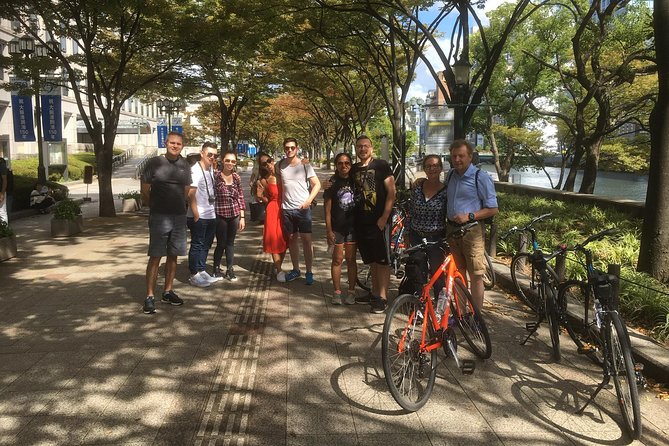
The next pause is near the Mint Museum. You do not have time to enter the museum, so you should treat this as an outdoor history stop rather than a museum visit. The group spends about 10 minutes in the grounds while the guide explains the area’s role in Japan’s modernization.
That distinction matters if you hoped to see museum exhibits. You will not get an indoor collection or a long visit here. Still, the stop gives the route more substance than a simple list of photo points. The guide can connect the older parts of Osaka with the city’s later industrial and civic development.
The short timing also keeps the day moving. This is a sightseeing ride, not a series of lengthy attraction visits.
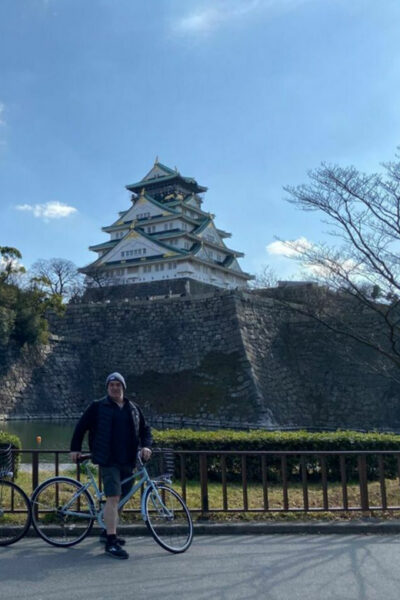
Osaka Castle Park gives you the big postcard view
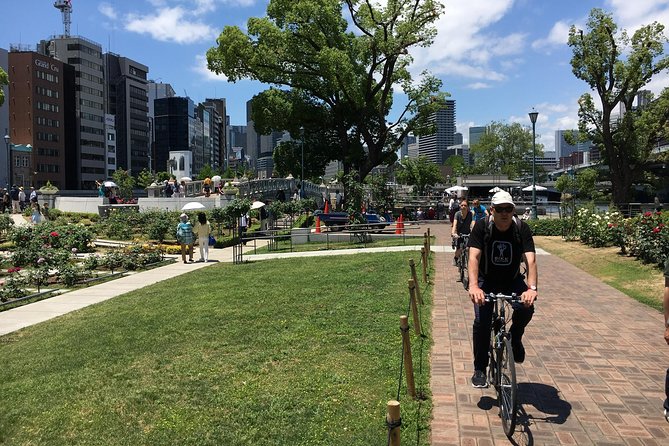
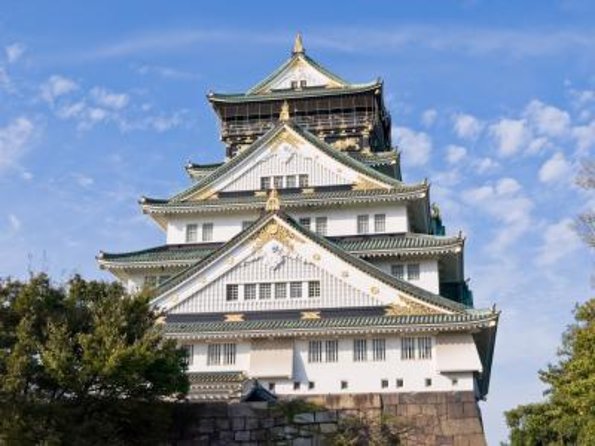
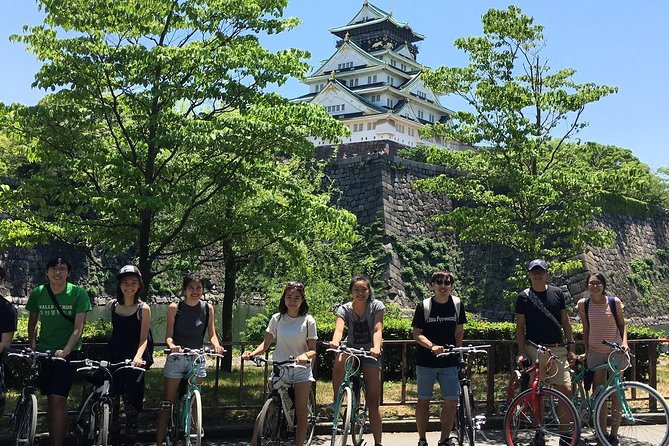
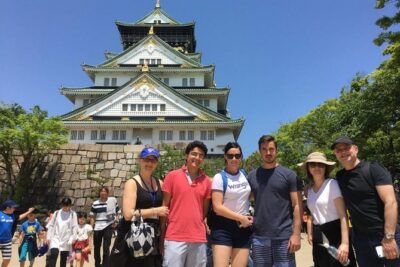
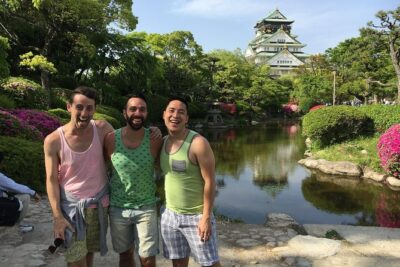
Osaka Castle Park receives about 30 minutes, making it one of the longer stops. You ride through the greenery, pause for photographs, and hear about the castle’s role in Japanese history and culture. There may also be time for an ice cream.
The park is a highlight because it gives you both open space and a major landmark. The castle itself is not listed as an interior visit, so do not book this expecting a full castle museum tour. The focus is the park, the exterior views, and the story behind the site.
Some riders note slight hills around the castle. They are not described as difficult, but this is the point where you may notice the effort more than on the flatter sections. Your guide sets the pace, and several accounts praise the way guides adjust for different cycling strengths.
Allow yourself a moment to look beyond the standard castle photograph. The park shows Osaka in a different mood, with broad paths and trees replacing the tight streets of the central districts.
Same city, a completely different kind of afternoon:
- Osaka Go Karting Tour with Funny Costume
★ 5.0 · 2,658 reviews - Osaka Castle: Museum and Tower Entry Ticket
★ 4.5 · 2,380 reviews - Osaka: Shinsekai Food Tour with 13-15 Dishes at 5 Eateries
★ 4.8 · 2,204 reviews - Osaka Food Tour: 13 Dishes at 5 Local Eateries
★ 5.0 · 2,149 reviews
Shitennoji brings a quieter temple stop
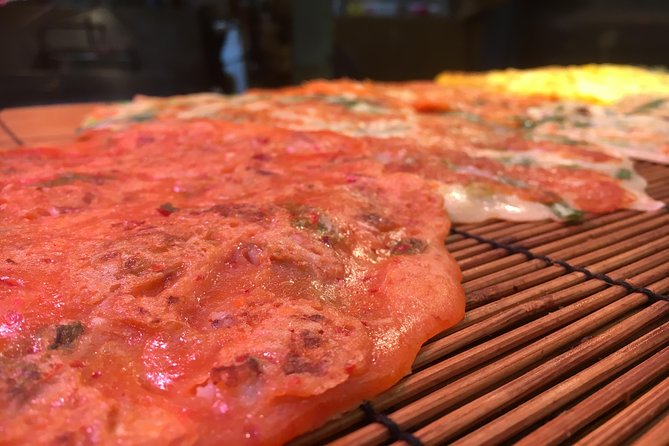
The route then reaches Shitennoji, described as Japan’s oldest Buddhist temple. The stop lasts about 15 minutes and centers on the temple’s calm setting and place in Japan’s development.
This is a useful contrast with Osaka Castle. The castle represents power and political change, while Shitennoji gives the day a religious and cultural pause. Fifteen minutes is enough for an introduction and a look around, but not for a slow, detailed temple visit.
If you enjoy historic sites, listen closely here. The guide’s explanations are a major part of the experience, since the schedule does not allow long independent exploration at every stop. Guides including Matt and Akira are praised for making Japanese history approachable, with stories and personal context rather than only dates and names.
Shinsekai shows Osaka’s old working-class character
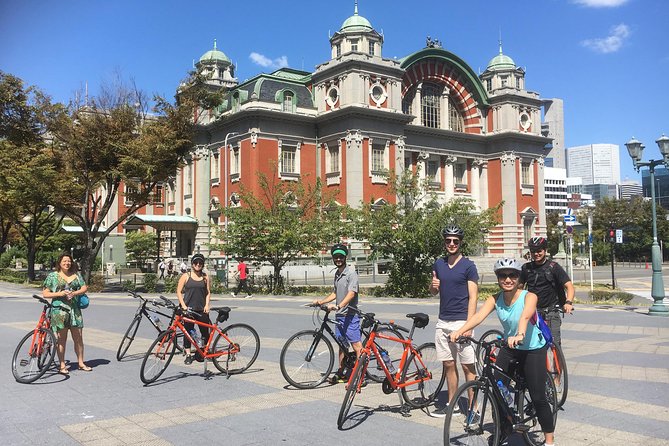
Shinsekai is one of the more atmospheric parts of the route. You stop for about 15 minutes near Tsutenkaku tower, take photographs, and see the colorful streets of this well-known Osaka district. There may also be a chance to pick up street food.
This stop is not polished in the same way as a formal park or temple. That is part of its appeal. Shinsekai gives you a look at a different side of Osaka, one tied to casual food, local life, and the city’s older working-class identity.
The time here is short, so you should not expect a long food crawl. You may have time for a quick taste or photo, but lunch later is the more substantial food break. Still, even a short visit can help you decide if you want to return to Shinsekai on your own.
Riding through crowded areas can require more attention than cycling in a park. The guides are responsible for leading the group, and several accounts specifically praise their handling of city traffic and groups with different riding abilities. You should still be comfortable stopping, starting, and steering around other people.
Tower Knives adds a hands-on local trade
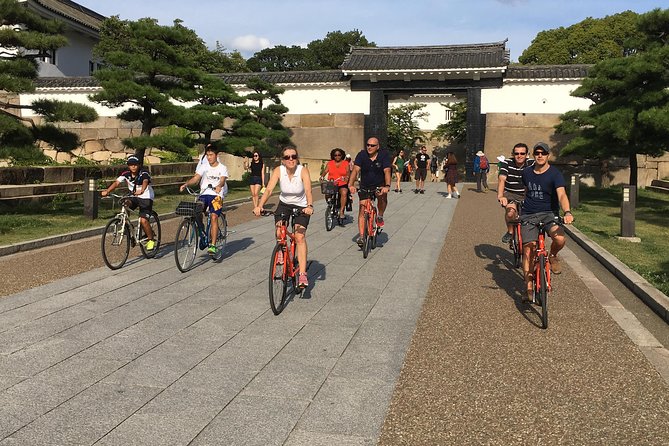
At Tower Knives Osaka, you receive a personal introduction to one of Japan’s well-known knife exporters. The stop lasts around 15 minutes and covers knife making in the area. You also get a chance to use one of the tools yourself.
This is one of the more unusual parts of the tour. It moves beyond temples and towers and shows a living craft connected to Osaka’s food culture. The visit is brief, but it gives you a concrete link between the city’s restaurant reputation and the tools used in professional kitchens.
You do not need to be a chef to enjoy this stop. If you have been thinking about buying a Japanese kitchen knife, it may also help you understand what makes the local trade distinctive. The provided details do not promise a purchase or a dedicated shopping session, so consider the stop an introduction rather than a full knife-shopping appointment.
Lunch is a useful pause, not an afterthought
Lunch is included, and the guide discusses the available options on the day. Vegetarian choices are available if you advise the provider at booking. The food can be sushi, curry, or another local choice, depending on the arrangement for your date.
This part adds real value to the ride. A 20-kilometer city cycle is much more enjoyable when you can stop for a proper meal rather than simply grabbing a snack. Several accounts single out lunch as one of the best parts of the day, with sushi and curry receiving particular praise.
The exact restaurant and menu are not fixed in the information provided, so do not book this expecting a named restaurant or a specific dish. If you have dietary needs, state them before the tour. The guide can then help plan a suitable option.
Bring an appetite, but remember that lunch takes time from sightseeing. That is a fair trade. You get a chance to sit, eat, and talk with the guide instead of spending every minute on the road.
Namba Yasaka Shrine finishes with a memorable photo
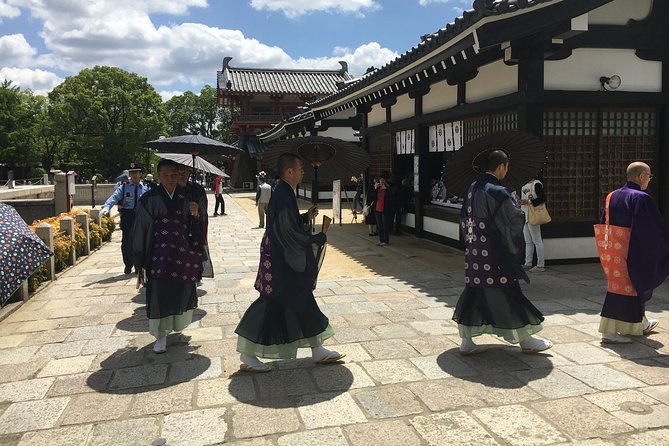
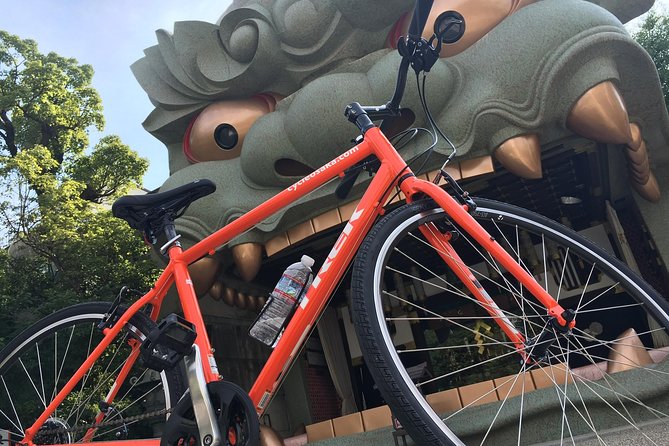
Near the end, the route makes a quick five-minute stop at Namba Yasaka Shrine. Its large lion-shaped structure makes it one of Osaka’s most unusual photo opportunities. You can also see prayers written on wooden plaques and pick up a good-luck charm.
Five minutes is enough for a look and a photograph, but not a long visit. The shrine works well as a final small surprise after the larger sights. It also places you near Namba, one of Osaka’s key areas, even though the activity finishes back at the Tenma meeting point.
The final stop is a reminder that Osaka’s character often appears in compact, unexpected places. You do not need a full hour at every shrine for it to become a useful memory or a place you might revisit.
The guides shape the quality of the day
The strongest part of this experience is the guiding. Matt is repeatedly praised for his clear explanations, humor, and background in Japanese history and theatre. He has lived in Japan for many years and brings personal stories to the route.
Other guides receive strong praise too. Mayco is described as friendly and well informed, Yuki as personable and helpful with historical details, and Akira as warm, enthusiastic, and able to create a relaxed group mood. Danik and Ikura are also mentioned positively for making the ride engaging and educational.
Guide assignments can change, so you cannot count on one particular person. What you can reasonably expect is an English-speaking guide who leads the route, explains the sights, helps manage the group, and answers questions about Osaka and Japanese customs.
This matters because several stops are short. The guide’s explanation supplies much of the meaning. Without it, Osaka Castle Park or the Mint grounds would still be pleasant, but the day would feel more like a sightseeing checklist.
Physical effort, bikes, and group size
The tour supplies a bicycle, helmet, and bottled water. The ride is described as comfortable and mostly flat, with some gentle hills near Osaka Castle. You need a moderate level of fitness and must be at least 140 centimeters tall.
The activity is not recommended for children aged 12 and under. A 14-year-old rider has taken part with a well-fitting bike, but height and cycling ability remain important. If you are unsteady on a bicycle, uncomfortable in city traffic, or unused to a ride of around 20 kilometers, this may not be the right choice.
The maximum of eight riders is a practical advantage. Smaller groups are easier to keep together and allow the guide to adjust the pace. The route still passes through busy sections, so pay attention to instructions and be ready for changes in traffic and pedestrian flow.
Wear comfortable clothes and shoes suitable for several hours of riding. The tour provides water, but Osaka can feel hot and humid depending on the season, so sensible clothing and sun protection are worth considering.
Is $106.12 a fair price?
At $106.12 per person, this is not the cheapest way to see Osaka. You could use trains and visit many sights independently for less. But the comparison is not quite even.
The price includes the English-speaking guide, bicycle, helmet, bottled water, and lunch. You also receive a structured route through several districts, local history, traffic guidance, and help choosing food. If you value speed, context, and a ready-made plan, the cost is reasonable.
The value is strongest for a first visit, especially if you want to understand how the city’s districts connect. It is also useful if you prefer active sightseeing and would otherwise spend money on separate meals, transport, and guided visits.
The value is weaker if you want long museum visits, private touring, or a slow food-focused day. The Mint Museum is not entered, and each landmark receives a short stop. You are paying for range and local interpretation, not deep time inside each attraction.
Who should book this Osaka ride?
I would choose this tour if you are reasonably fit, enjoy bicycles, and want a fast introduction to Osaka’s major districts. It suits couples, friends, solo riders, and families with older children who meet the height and age guidance.
It is especially helpful early in a trip. You can return later to Shinsekai, Osaka Castle, Namba, or another area that caught your attention. The ride also gives you practical orientation without forcing you to study a transport map on your first morning.
I would skip it if cycling in traffic makes you anxious, if you need frequent long rests, or if your main goal is entering museums and spending an hour at each historic site. A walking tour or train-based sightseeing day would give you more time at individual attractions.
The weather policy is worth noting. The tour requires good weather, and a cancellation for poor conditions brings an alternative date or a full refund. You can cancel for a full refund up to 24 hours before the start time, but late cancellations are not refunded.
With a 4.9 rating from 246 reviews and a 98 percent recommendation rate, the experience has a strong record. The most consistent strengths are the guides, the comfortable pace, the range of neighborhoods, and the meal. Book it if you want Osaka to feel like a connected city rather than a set of isolated sights.
FAQ
How long does the Osaka bike tour last?
The activity lasts approximately five to six hours and starts at 9:30 am. It ends back at the meeting point in Tenma.
Where does the tour start?
The meeting point is 1-chōme-10-7 Tenma, Kita Ward, Osaka, 530-0043, Japan. The activity returns to this same location.
What is included in the price?
The price includes an English-speaking guide, bicycle, helmet, bottled water, and lunch. Lunch options are discussed on the day, and vegetarian food is available if requested at booking.
Which Osaka sights does the route visit?
The route includes Nakanoshima Park, the Mint Museum grounds, Osaka Castle Park, Shitennoji, Shinsekai, Tower Knives Osaka, and Namba Yasaka Shrine.
Is the ride difficult?
The tour requires a moderate level of physical fitness. The route is described as mostly flat, with slight hills around Osaka Castle, and covers roughly 13 miles or 20 kilometers.
Can children join the tour?
The activity is not recommended for children aged 12 and under. Riders must be at least 140 centimeters tall, and the tour has a maximum of eight participants.
What happens if the weather is poor?
If poor weather causes the tour to be canceled, you are offered a different date or a full refund. You can also cancel at least 24 hours before the start time for a full refund.
Just added in Osaka
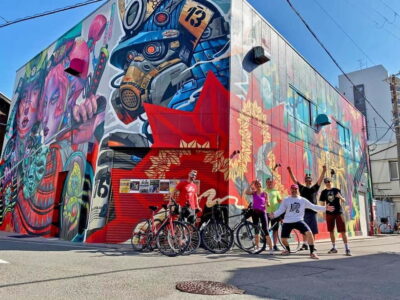
- Urban Canvas: Osaka Street Art Bike Tour★ 5.0 · 10 reviews
- Anime Cosplay Photshoot-50 Digital Photos Provided★ 5.0 · 8 reviews
- TeamLab Botanical Garden Osaka Ticket★ 3.5 · 6 reviews
- Umeda Sky Building & Kuchu Teien Observatory Ticket in Osaka★ 4.5 · 3 reviews
- Immerse in Judo Martial Arts Class from Japan★ 5.0 · 4 reviews
- Cherry Blossom Buddha and Mt.Yoshino with Strawberry Picking Tour★ 4.5 · 5 reviews
- Traditional Home cooking Experience in Osaka, Japan★ 5.0 · 14 reviews
- Traditional Calligraphy Experience near Dotonbori★ 5.0 · 3 reviews
Osaka Bike Tours, compared.
5-Hour Osaka Bike Tour to the Neighborhood of Osaka Castle
Read our review →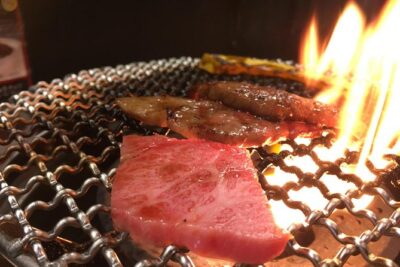
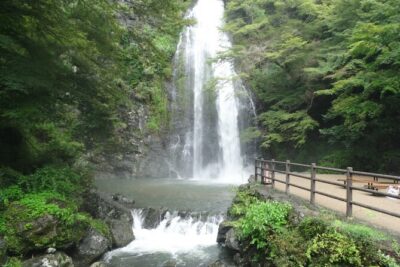
Osaka Half-day E-bike Adventure: Minoh Falls & Katsuoji Temple
Read our review →Browse the lists this tour appears in