Reviewed · TOURS
Mount Koya from Osaka: Cultural Small Group Day Tour
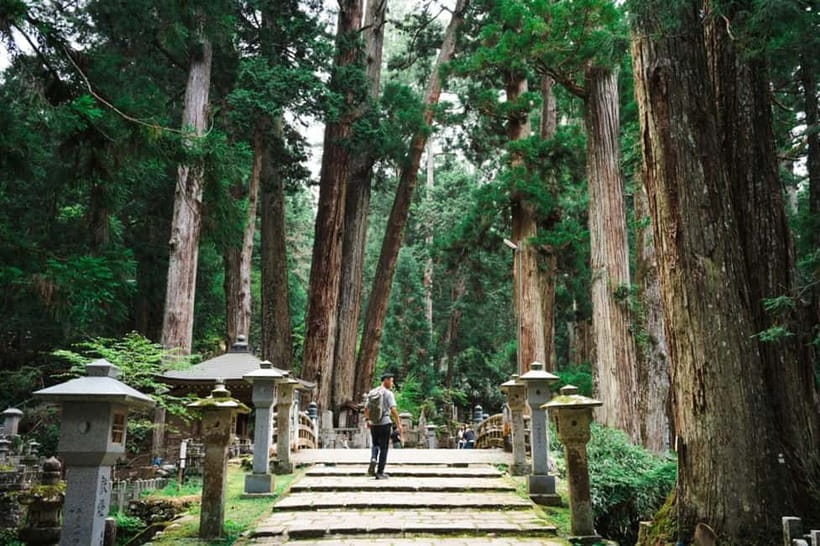
Mount Koya’s Okunoin Cemetery is the heart of this outing. You walk beneath ancient cedars past thousands of moss-covered tombstones to Kobo Daishi’s mausoleum, in a place where the quiet feels more powerful than any speech. I like the cedar-lined trail and the chance to eat a proper Shojin Ryori lunch, rather than rush through another sightseeing stop.
I also like that the day includes more than temples: you may copy a Buddhist sutra, watch a Goma fire ritual, and see Japan’s largest Zen rock garden. The drawback is the long 12-hour schedule and plenty of walking, with mountain weather that can feel cooler than Osaka.
Key points at a glance
- Okunoin’s ancient cedar path: Walk through Japan’s largest and most revered cemetery toward Kobo Daishi’s mausoleum.
- Shojin Ryori lunch: Eat a meat-free Buddhist meal built around seasonal vegetables and careful preparation.
- Kongobuji’s Banryutei garden: See a dramatic rock garden symbolizing dragons rising through clouds.
- Hands-on Buddhist practice: Copy a sutra, or possibly observe a Goma fire ritual if temple scheduling allows.
- Private transport from Osaka: Travel by comfortable vehicle with hotel pickup and an English-speaking guide.
- A full mountain day: Expect 12 hours, substantial walking, and a minimum of four participants.
Why Mount Koya makes a powerful day trip from Osaka
Mount Koya, or Koyasan, is not simply a collection of old buildings. It is a major center of Shingon Buddhism, with temples, religious ceremonies, cemeteries, and quiet paths woven into one mountain town.
The journey from central Osaka takes much of the day, but the private vehicle makes the distance easier. You do not need to manage connections or work out the mountain route yourself. Your guide introduces the religious meaning of Koyasan before you begin, which helps turn a series of temple visits into a connected experience.
This is best for you if you want cultural context, not just photographs. The English-speaking guide explains what you are seeing and helps you understand why practices such as sutra copying, memorial prayer, and fire rituals matter.
The day is long enough to feel substantial. At the same time, it is not a relaxed stroll with endless free time. You will cover several sites, walk on stone paths, and spend much of the day moving between religious buildings and the cemetery.
Other Osaka bookings people put this one up against:
- Osaka Go Karting Tour with Funny Costume
★ 5.0 · 2,658 reviews - Osaka Castle: Museum and Tower Entry Ticket
★ 4.5 · 2,380 reviews - Osaka: Shinsekai Food Tour with 13-15 Dishes at 5 Eateries
★ 4.8 · 2,204 reviews
Walking through Okunoin Cemetery
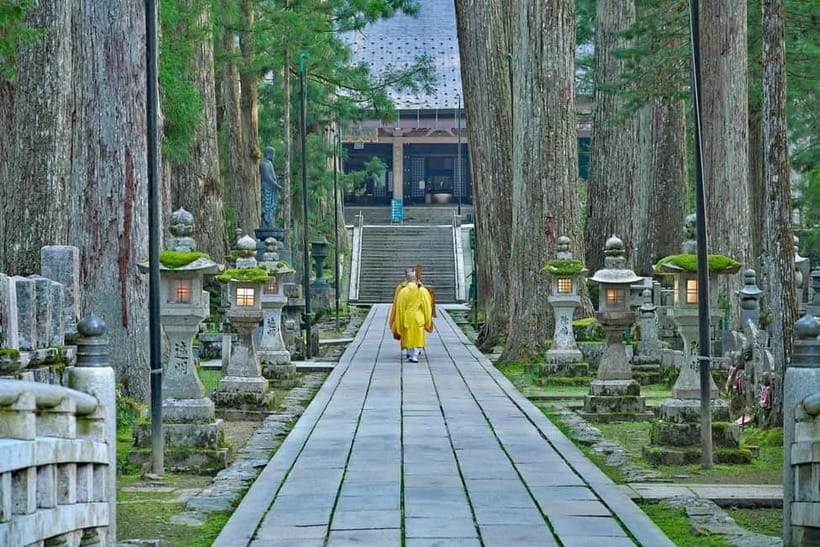
Okunoin is the emotional center of the tour. A stone-paved trail runs beneath tall cedar trees, passing thousands of tombstones and memorials covered with moss. The route leads toward Kobo Daishi, the founder associated with Koyasan, who is believed to remain in eternal meditation at the mausoleum.
The setting asks for a quieter pace. You will likely hear less city noise and more of your own footsteps. The scale is striking, but the feeling is not grand in a showy way. It is solemn, wooded, and reflective.
Your guide can explain the symbols and customs along the route, but this is also a place where silence matters. I would resist trying to fill every pause with questions or photos. Some of the value comes from simply walking beneath the cedars and taking in the age of the place.
The ground is not entirely effortless. The trail is stone-paved, and the tour involves a fair amount of walking. Wear shoes with good support, especially if you are not used to long days on uneven paths.
Okunoin suits visitors who enjoy atmosphere as much as architecture. If your main interest is bright city culture, shopping, or fast sightseeing, this section may feel slow. If you value quiet places with a strong sense of ritual, it may be the most memorable part of the day.
What to expect from a Shojin Ryori lunch
The included lunch introduces you to Shojin Ryori, the vegetarian cooking tradition associated with Buddhist practice. The meal contains no meat or fish and avoids strong seasonings, focusing instead on seasonal vegetables and simple preparation.
This is not a substitute meal designed for people who happen to avoid meat. It is part of the cultural experience. The food reflects Buddhist ideas of restraint, harmony, compassion, and gratitude, and the meal gives you a practical way to connect with the religious setting.
You should approach lunch with curiosity rather than expect familiar comfort food. Textures and flavors may be subtler than those in many Japanese restaurant meals. That is part of the point, though it may not suit every palate.
Special dietary substitutions are not included. If you have allergies or strict dietary needs, check the arrangements before booking rather than assuming the menu can be changed. The tour information specifically notes that substitutions are not provided.
The 75-minute lunch period gives you more time than a quick meal stop. It lets you eat without turning the experience into a race, which matters on a 12-hour day.
Kongobuji and Japan’s largest Zen rock garden
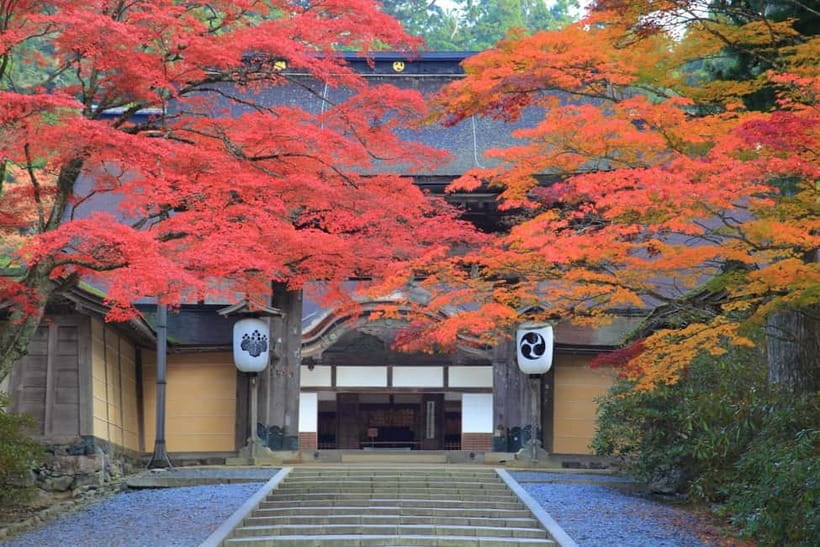
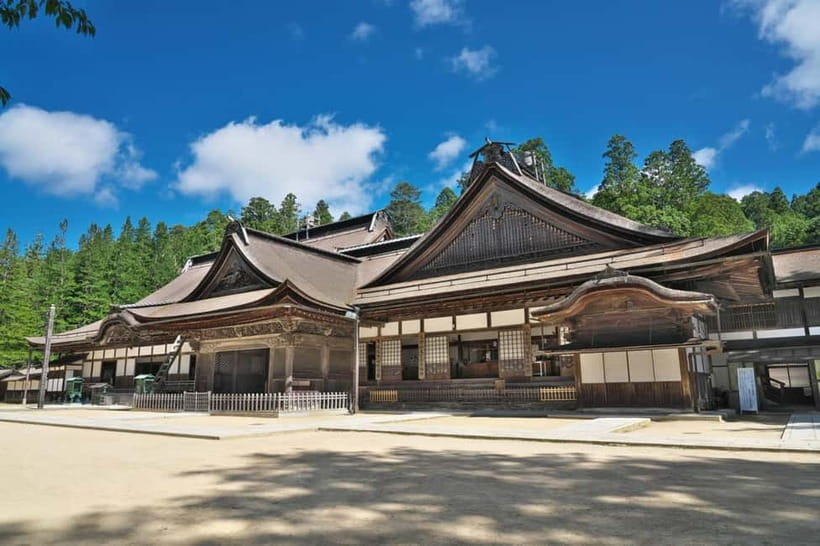
Kongobuji is the head temple of Shingon Buddhism and one of the tour’s most important buildings. Inside, you can see elegant sliding doors decorated with traditional ink paintings, a detail that rewards close attention.
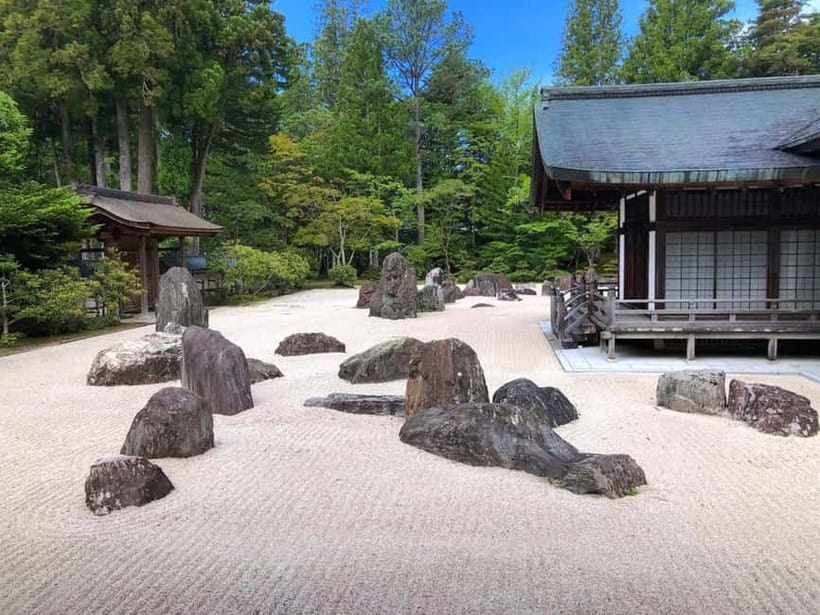
The temple is also home to Banryutei, described as Japan’s largest rock garden. Its rocks are arranged to suggest dragons emerging from clouds. The design is symbolic rather than decorative in the ordinary sense, so your guide’s explanation adds real value here.
I would give yourself time to look at the garden as a whole, then notice how the individual rocks and surrounding gravel create movement. There is no need to search for a single correct image. The arrangement invites a slower reading.
Kongobuji contrasts nicely with Okunoin. The cemetery gives you forest, stone, and silence. The temple offers architecture, painted screens, and a carefully ordered garden. Together, they show two different sides of Koyasan’s religious character.
The schedule allows about 45 minutes for the guided Kongobuji visit after lunch. That is enough for a focused introduction, but not for a detailed study of every room. If temple interiors are your main interest, you may wish the visit were longer.
Same city, a completely different kind of afternoon:
- Osaka Food Tour: 13 Dishes at 5 Local Eateries
★ 5.0 · 2,149 reviews - Hungry Osaka Street Food Tour:15 Tastings & 3 Drinks with a Local
★ 5.0 · 1,727 reviews - Osaka: Tea Ceremony Experience
★ 4.9 · 1,426 reviews - Osaka Kickstart: Hotspots & Hidden Gems Tour
★ 5.0 · 1,306 reviews
Sutra copying or a Goma fire ritual
A major strength of this tour is the chance to take part in a Buddhist practice rather than only observe one. Depending on temple availability, you may copy a sutra, known as Shakyo, or watch a Goma fire ritual.
Sutra copying is a quiet activity. You slow down and carefully reproduce sacred text, turning writing into a form of concentration. You do not need to be an artist. The value lies in the attention required, not in producing perfect calligraphy.
The Goma ritual offers a different mood. It uses fire during prayer and is associated with cleansing negative energy. It is more dynamic than sutra copying, but it is still a religious ceremony, not a staged show for entertainment.
The important practical point is that you should not assume you will receive both experiences. Temple availability determines which activity takes place. The included experience is described as sutra copying, while the schedule also allows for a Goma ritual when available.
This portion can take around two hours, making it one of the longer sections of the day. That is useful if you want a genuine cultural activity, but it may test your patience if you prefer quick visits and constant movement.
Danjo Garan and the mandala-like temple complex
Danjo Garan is a symbolic temple complex filled with pagodas, statues, and halls arranged in a mandala-like pattern. The site helps explain how Koyasan is organized as a sacred center rather than a single isolated temple.
You will see a different rhythm here from the wooded route at Okunoin. Buildings, religious images, and open temple grounds create a more structured setting. The guide’s commentary is useful because the meaning of the arrangement may not be obvious from the architecture alone.
The visit also helps balance the schedule. Okunoin is about a long approach and a powerful final destination. Danjo Garan gives you a broader look at the religious community and its symbolic layout.
The supplied schedule also includes about 90 minutes at Reihokan Museum. The museum visit is a chance to see religious art and objects connected with Koyasan, although the exact exhibits can change. If you are interested in Buddhist sculpture, paintings, and temple history, this adds useful depth to the day.
Free time for incense and quiet corners
Before returning to Osaka, you have time to shop or pause on your own. Common purchases mentioned for the town include incense and prayer beads, both closely tied to the religious setting.
This free time is welcome after a structured day. You can browse without needing to keep up with the group, or simply sit somewhere quiet and let the experience settle. Do not expect a long shopping session, since this is still a full-day program.
Bring cash. It is specifically listed as something to have with you, and it is useful for personal purchases. Souvenirs are not included in the $251 price.
Is $251 a fair price for this Mount Koya tour?
At $251 per person, this is not a budget day trip. The price makes more sense when you count what it covers: hotel pickup in central Osaka, private transport, a professional English-speaking guide, the main temple and cemetery visits, the Shojin Ryori lunch, and the sutra copying experience.
You are paying for convenience as much as admission and food. Mount Koya is a long outing from Osaka, and arranging transport, timing, temple visits, and a meal independently would require planning. A private vehicle also removes the need to navigate the journey while tired at the end of the day.
The value is strongest for you if you want an organized cultural experience and will use the guide’s explanations. It is weaker if you prefer to travel slowly, choose your own meals, or spend most of the day independently.
The tour requires at least four participants. If fewer than four join, it will be canceled. That condition is worth checking when you are arranging a fixed Osaka schedule.
Timing, comfort, and who should book
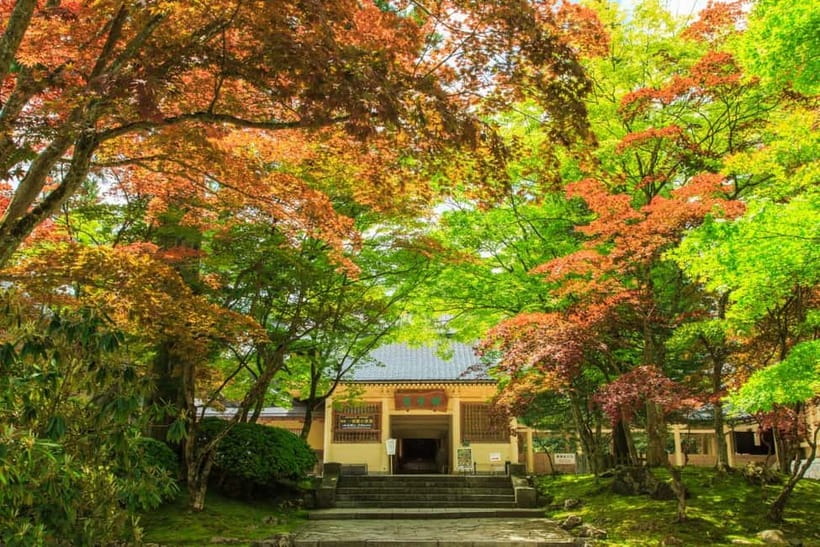
The tour lasts 12 hours, beginning with pickup at your central Osaka hotel and ending back in Osaka. Wait at the hotel’s front entrance at the stated pickup time. The exact starting time depends on availability.
Wear comfortable clothes and practical shoes. You will walk through a cemetery, temple grounds, and mountain areas, so this is not a day for dress shoes or footwear with poor support.
Mountain weather can be cooler than in Osaka. Bring an extra layer, even if the city feels mild when you leave. Smoking, pets, food in the vehicle, alcohol, and drugs are not allowed.
The tour is not suitable for people with mobility impairments, babies under one year, or people over 95. The walking and length of the day are the main concerns, not just the number of temples.
I would recommend it most to:
- First-time visitors who want a clear introduction to Koyasan
- People interested in Buddhist practice and Japanese religious culture
- Visitors who value a guide’s historical explanations
- Couples and small groups comfortable with a full day on foot
- Anyone who would rather pay for simple transport than manage a complicated mountain excursion
A Dutch participant described the day as worth the money, especially praising the guide’s clear explanations, the imposing cemetery, the traditional lunch, and the sutra copying. Those are also the tour’s strongest features: the guide gives the sites meaning, while the activities keep the day from becoming a string of passive photo stops.
Should you book this Mount Koya day tour?
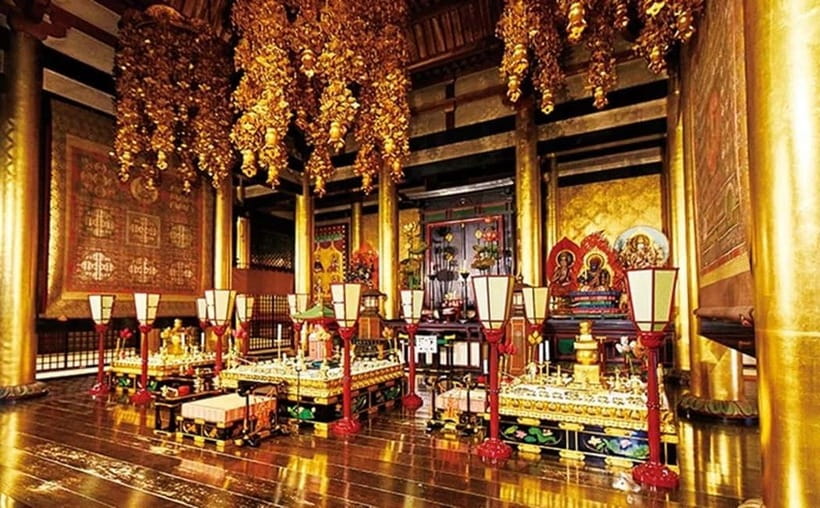
Book it if you want Mount Koya presented as a living religious center, not just a scenic mountain stop. Okunoin, Shojin Ryori, Kongobuji, Danjo Garan, and the sutra activity give you a broad and thoughtful introduction in one day.
Skip it if you dislike long excursions, cannot manage substantial walking, or want total freedom over your schedule. Also think twice if dietary substitutions are essential, since they are not included.
For most able walkers with one open day in Osaka, the combination of private transport, a strong English-speaking guide, a meaningful cemetery walk, and Buddhist activities gives the $251 price a reasonable case. It is a serious cultural day, not a light sightseeing outing, and that is exactly why it can be worth choosing.
FAQ
How long does the Mount Koya tour from Osaka last?
The experience lasts 12 hours, including hotel pickup in central Osaka and the return journey.
Is hotel pickup included?
Yes. Pickup is included from hotels in central Osaka. Wait at the front entrance of your hotel at the scheduled pickup time.
What language does the guide speak?
The tour provides a live guide in English or Japanese. The professional guide gives an introduction to Mount Koya and explains the religious sites during the day.
Is transportation included?
Yes. The tour includes private transport in a comfortable vehicle between Osaka and Mount Koya.
What food is served for lunch?
You receive a traditional Shojin Ryori lunch. It is prepared without meat or fish and focuses on seasonal vegetables and simple preparation.
Can I choose between sutra copying and the Goma fire ritual?
The activity depends on temple availability. You may copy a sutra, or you may have the chance to observe a Goma fire ritual. The included experience specifically lists sutra copying.
How much walking is involved?
The tour involves a fair amount of walking, including the stone-paved trail through Okunoin Cemetery and walks around temple grounds. Comfortable shoes are recommended.
Can I cancel the booking?
You can cancel up to 24 hours in advance for a full refund. The tour also requires a minimum of four participants, and it may be canceled if fewer people join.
Just added in Osaka
- Urban Canvas: Osaka Street Art Bike Tour★ 5.0 · 10 reviews
- Anime Cosplay Photshoot-50 Digital Photos Provided★ 5.0 · 8 reviews
- TeamLab Botanical Garden Osaka Ticket★ 3.5 · 6 reviews
- Umeda Sky Building & Kuchu Teien Observatory Ticket in Osaka★ 4.5 · 3 reviews
- Immerse in Judo Martial Arts Class from Japan★ 5.0 · 4 reviews
- Cherry Blossom Buddha and Mt.Yoshino with Strawberry Picking Tour★ 4.5 · 5 reviews
- Traditional Home cooking Experience in Osaka, Japan★ 5.0 · 14 reviews
- Traditional Calligraphy Experience near Dotonbori★ 5.0 · 3 reviews
Tours, compared.

Shinsekai Food Tour with 13-15 Dishes at 5 Eateries
Read our review →
Osaka Food Tour: 13 Dishes at 5 Local Eateries
Read our review →
Hungry Osaka Street Food Tour:15 Tastings & 3 Drinks with a Local
Read our review →
Deep Backstreet Osaka Tours (Option to add Dinner)
Read our review →
Osaka Local Foodie Walking Tour in Dotonbori and Shinsekai
Read our review →