
Reviewed · KYOTO DAY TRIPS FROM OSAKA
Kyoto & Nara & Uji: Full Day Sightseeing Tour from Osaka or Kyoto
Kyoto, Nara, and Uji make an ambitious trio for one day. You get bowing deer, Japan’s great temple sights, Uji tea shops, and the red gates of Fushimi Inari without having to piece together several train rides. The appeal is simple: a lot of Japan in nine hours.
I like the choice of starting from either Osaka or Kyoto, and I like the mix of major sights with a smaller tea-town stop. Guides including Amy, Amanda, Eve, John, and Candy have been singled out for clear directions, cultural explanations, kindness, and good group management.
The tradeoff is time. With up to 45 people, traffic between cities, and several short stops, this is a highlights tour, not a leisurely visit. Some stops may feel rushed, and the guide’s English can vary from one departure to another.
Key points at a glance
- Three distinct places in one day: Nara’s deer and temples, Uji’s tea culture, and Kyoto’s Fushimi Inari.
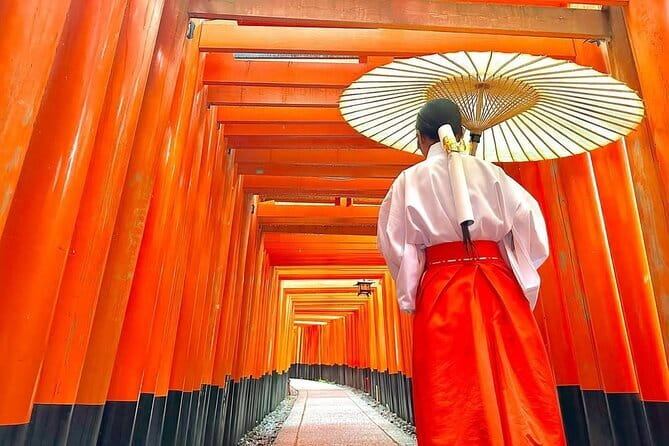
- Fushimi Inari gets the longest visit: You have about 1 hour and 20 minutes to walk among the famous vermilion torii gates.
- Uji is more than a photo stop: Byodo-in, the Uji River, and Byodoin Omotesando give you temple, scenery, and matcha.
- Temple admission costs extra: Plan on ¥800 for Todai-ji and ¥700 for Byodo-in.
- The tour is partly self-guided: Your guide manages transport, timing, and introductions, then you explore each site on your own.
- A practical choice for a first visit: At $67 per person, air-conditioned transport and an organized route offer useful value if you have only one free day.
A full day across Nara, Uji, and Kyoto
The clever part of this tour is its route. Nara gives you Japan’s famous deer and one of its grandest Buddhist temples. Uji slows the pace with river views and green tea. Kyoto finishes with Fushimi Inari, one of the country’s most recognizable Shinto shrines.
That variety matters. You are not spending nine hours looking at similar temple roofs. You move through three different settings and get a taste of how each place feels. The day also works well if you are based in Osaka and want to see Kyoto-area sights without planning every connection yourself.
Still, this is a long-distance day by road. The listed sightseeing time adds up to about four hours and 10 minutes, leaving the rest for transport, transitions, and independent lunch. You should expect a busy schedule rather than long visits inside each site.
More Nara day trips from Osaka:
- Ancient Capital Tour: Kyoto and Nara Highlights from Kyoto/Osaka
★ 4.5 · 332 reviews - Kyoto and Nara Day Trip from Osaka
★ 4.0 · 175 reviews - Discover Himeji, Kobe and Nara from Osaka
★ 5.0 · 101 reviews
Nara Park and the deer
Nara Park is the first big change of scene. Its 660 hectares include open parkland, old temples, paths, and the famous free-roaming deer. The animals are accustomed to people and are known for bowing when they hope for food.
You get about 50 minutes here, with no admission charge for the park itself. That is enough to find the deer, take photos, and enjoy the setting, but it is not enough for a slow walk across the whole park. Stay aware around the animals, especially if you have food in your hands. One guide, Brian, was praised for explaining how to stay safe near the deer, a useful point because the animals can be eager once treats appear.
The deer are fun, but do not treat them like tame pets. Follow the guide’s instructions and pay attention to your belongings. If you are traveling with children, this is likely to be one of the day’s most memorable stops, but it also requires a little care.
Todai-ji and the great Buddha hall
Todai-ji is one of Japan’s most important Buddhist temples and part of the UNESCO-listed Historic Monuments of Ancient Nara. The temple is famous for its enormous wooden hall and giant Buddha image, though your time inside is limited to about 30 minutes.
Admission is not included. The stated fee is ¥800 per person, so bring enough Japanese yen or a suitable payment method for the temple entrance. At this pace, you will have time to enter, see the main hall, and take in its scale, but not to explore every corner of the wider temple grounds.
This is the stop where the guide’s directions matter. One poor experience involved a participant being told to remain near Nara’s main entrance and missing Todai-ji altogether. That appears to have been a problem with communication rather than the planned route, but it is a good reason to confirm the meeting point and return time before walking away from the group.
Uji Park and the Uji River
Uji changes the mood. The park sits around the Uji River, with bridges connecting the island area to the banks. You have about 30 minutes in Uji Park and another 20 minutes near the river, so the emphasis is on scenery and orientation rather than a long riverside walk.
The Uji River has long been an important water route between the Lake Biwa area, Shiga, and Osaka. You do not need a history lecture to enjoy it. The water, bridges, trees, and traditional town nearby give you a welcome break after Nara’s crowds and before the final Kyoto stop.
Keep your expectations realistic. This is a short scenic pause, not a full nature outing. You may have enough time for photos and a quick walk, but the schedule does not invite lingering beside the river.
More Kyoto day trips from Osaka:
- Osaka/Kyoto: Hiroshima Miyajima Bus Tour & Shinkansen Ticket
★ 4.7 · 919 reviews - From Kyoto/Osaka: Kyoto Top Highlights 1-Day Guided Bus Tour
★ 4.5 · 714 reviews - Osaka/Kyoto: Amanohashidate & Miyama Tour with Boat & Lunch
★ 4.6 · 207 reviews - Volleyball in Osaka, Kobe & Kyoto with locals!
★ 4.8 · 131 reviews
Byodo-in and the Phoenix Hall
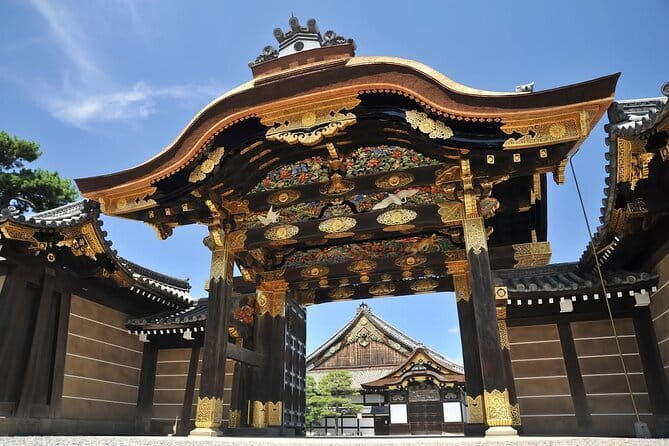
Byodo-in is Uji’s main cultural prize. This UNESCO World Heritage Site is one of Japan’s best-preserved national treasures, and its Phoenix Hall dates to 1053. The hall is also shown on the reverse side of Japan’s 10-yen coin, giving you a fun detail to look for before or during your visit.
You get about 30 minutes here, and the ¥700 admission fee is extra. The short visit can work if your priority is to see the famous hall, pond, and temple setting. It is less suitable if you want to study the buildings, enter every available area, or spend time at a museum.
I would treat this as a focused stop. Walk directly toward the main temple view, take in the reflection and winged corridors, and keep an eye on the bus meeting time. The temple deserves more time than the schedule allows, but the tour gives you a useful first look and a clear reason to return to Uji on a slower day.
Byodoin Omotesando and Uji matcha
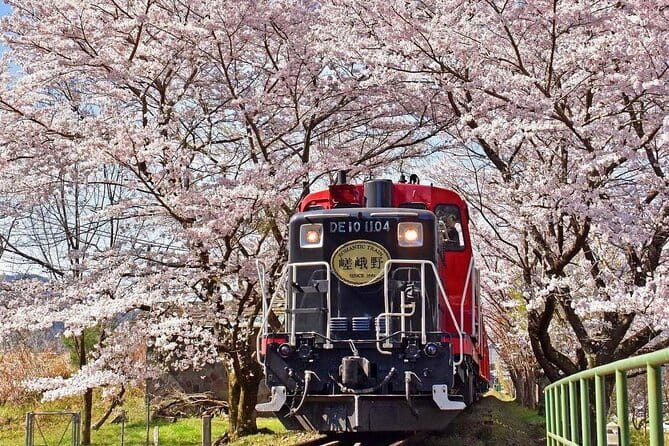
Byodoin Omotesando is where Uji’s tea identity becomes practical and delicious. The cobblestone street is lined with shops selling green tea, matcha sweets, tea drinks, and related products. You have about 40 minutes here, making it one of the better chances to browse and buy something.
If you love matcha, this may be the tour’s most enjoyable section. Uji is renowned for green tea production, and the street gives you a direct connection to that local tradition rather than just another temple photograph. You can browse at your own speed, but do not let shopping make you late for the meeting point.
This is also where the tour’s priorities become clear. Some people would prefer an extra hour at a temple. Others are happy to trade a little temple time for tea shops and local treats. If you are not interested in matcha, the stop may feel longer than necessary. If you are, the 40 minutes can pass quickly.
Fushimi Inari’s thousand gates
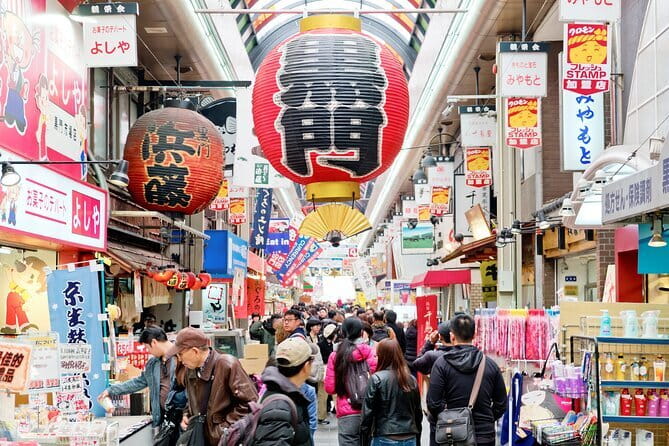
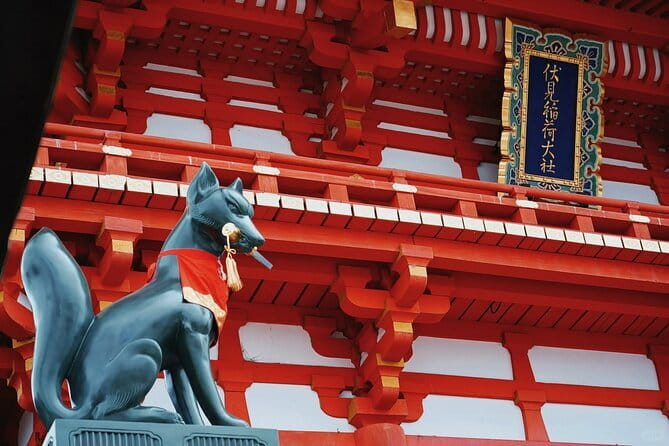
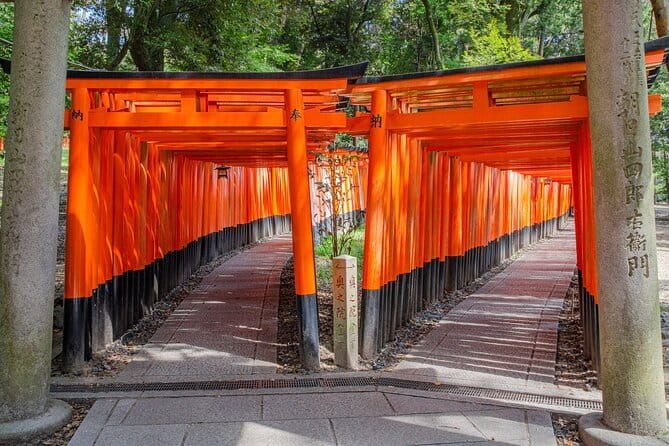
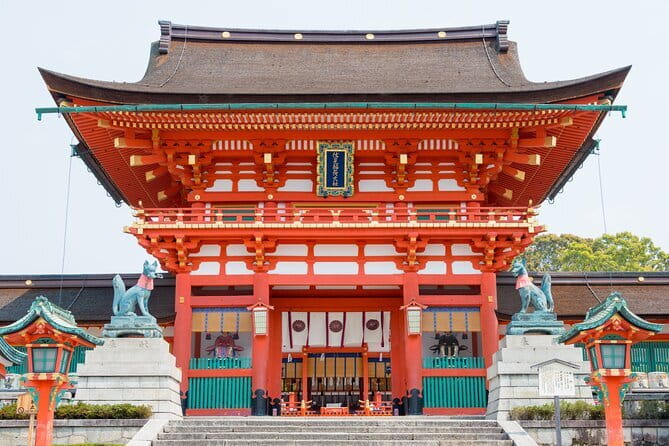
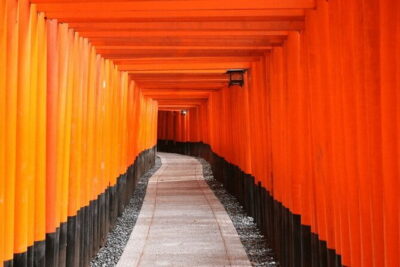
The final major stop is Fushimi Inari Taisha, head shrine of the Inari shrines dedicated to the Shinto deity associated with rice. The shrine is famous for Senbon Torii, the long routes of vermilion gates climbing the wooded hillside.
You have about 1 hour and 20 minutes here, the longest scheduled visit of the day. That is helpful because Fushimi Inari is not a single building you see in five minutes. You can pass through the lower gates, take photos, and walk uphill for a section before returning to the meeting point.
Do not assume you can complete the entire mountain route in this time. The practical goal is to experience the main torii paths and shrine area, not to reach every upper shrine. Wear comfortable shoes and remember that the ground can be uneven and sloped. The red gates are especially striking when you get far enough from the entrance to leave the busiest section behind.
This is a good final stop because it gives you movement after the bus rides and a memorable visual finish. It is also the place most likely to tempt you into losing track of time. Set a personal turnaround point before you start walking.
What the guide actually does
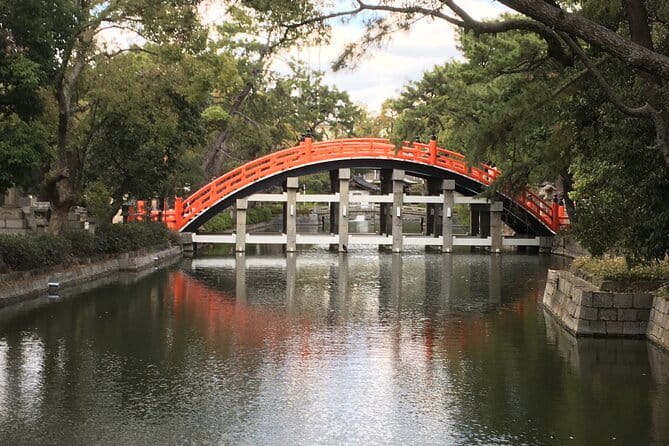
This is best understood as a guided transport and orientation service with independent sightseeing at each stop. The guide explains the next location, gives meeting instructions, manages the group, and may offer cultural information during the day. Once you arrive, you generally have freedom to explore on your own.
That arrangement suits you if you like structure but do not want to follow a guide through every gate and exhibit. It is less satisfying if you expect a detailed lecture at each temple or a fully escorted walk.
Guide quality can shape the day. Amy has been praised for clear English, thoughtful organization through a WhatsApp group, helpful photo-taking, and small touches such as snacks. Amanda has been noted for sending instructions before the tour and making meeting locations easy to follow. Eve, Candy, John, Laura, Cicy, Brian, and Joy have also received strong praise for organization, patience, explanations, or personal care.
At the same time, English fluency is not guaranteed at the same level on every departure. Some people found explanations too fast or difficult to follow, and one guide reportedly switched between English and Mandarin often. If your understanding of spoken English is important, ask for clarification early and keep the written meeting instructions handy.
Transport, group size, and the pace
The tour uses air-conditioned transportation and can carry up to 45 people. That is a practical advantage over arranging separate train trips, especially for a route involving Nara, Uji, and Kyoto in one day. You can sit back between stops instead of checking platforms and transfers.
The group size also explains some of the day’s limits. Loading and unloading 45 people takes time. A late return by even a few people can affect everyone, and a large group is harder to keep together at crowded sights. The best approach is to treat every meeting time as firm.
The bus reportedly has no bathroom, so plan your restroom breaks at the temples, shops, and sightseeing stops. One person also found the back seats tight and wished for cleaner bus windows. These are small issues for some people, but they matter on a nine-hour day.
Starting from Osaka can add travel time. One departure arrived more than an hour late because the vehicle first had to leave Osaka. The listing allows departure from Osaka or Kyoto, which is useful, but you should read the exact meeting information carefully and allow extra margin around the start.
Is $67 a fair price?
At $67 per person, the value comes from the route and transportation rather than from included meals or admissions. You receive an air-conditioned vehicle and a guide, while lunch and temple entry fees are separate.
Your known extra admission costs are ¥800 for Todai-ji and ¥700 for Byodo-in, for ¥1,500 total. You also need to pay for your own lunch and any tea, snacks, or souvenirs in Uji. That still makes the tour a reasonable option if you place a high value on saving planning time and reaching three areas in one day.
The comparison is not simply tour versus train fare. You are also paying for someone else to coordinate the route, keep the schedule, and give you a reliable way back to your starting area. If you are comfortable using Japan’s rail system and prefer long visits at fewer places, independent travel may give you better control.
For a first taste of the region, the price is sensible. For a slow cultural day, it is less ideal.
Who should book this day trip?
I would recommend it for you if:
- You have only one open day for Nara, Uji, and Kyoto.
- You want transport handled for you.
- You enjoy seeing major sights even when each visit is brief.
- You are especially interested in deer, matcha, and Fushimi Inari.
- You are comfortable exploring independently after a short orientation.
- You are traveling with family and value a fixed route.
I would skip it if you want long temple visits, quiet photography, extended shopping, or a detailed guided talk at every site. It is also a poor fit if you dislike fixed departure times or crowded group transport.
The mobile ticket is convenient, confirmation arrives at booking, and most people can participate. Tell the operator in advance if you have a stroller or large luggage. If you booked separately from relatives or friends, notify the provider at least one day ahead so you can try to be assigned to the same vehicle.
Should you book it?
Book this tour if your goal is to collect a strong first set of impressions from Nara, Uji, and Kyoto in one organized day. The deer, Todai-ji, Byodo-in, matcha street, and Fushimi Inari give you a fine spread of Japanese culture, nature, food, and architecture for the price.
Do not book it expecting a relaxed pace. You will make compromises, especially at Todai-ji and Byodo-in, and the quality of spoken explanations can vary by guide. Bring comfortable shoes, keep your meeting times visible, budget for ¥1,500 in temple fees plus lunch, and use the free-cancellation window if your plans change. You can cancel up to 24 hours before the start for a full refund.
FAQ
How long does the tour last?
The tour lasts approximately nine hours.
Can I start the tour from Osaka or Kyoto?
Yes. The experience offers departure from Osaka or Kyoto.
What transportation is provided?
Air-conditioned transportation is included.
Are admission fees included?
No. Todai-ji costs ¥800 per person, and Byodo-in costs ¥700 per person. Nara Park, Uji Park, Byodoin Omotesando, the Uji River, and Senbon Torii have no listed admission fee.
Is lunch included?
No. Lunch is not included. Time is provided for independent dining.
How many people can join the tour?
The maximum group size is 45 people.
Is the tour fully guided at every sight?
The guide provides transportation, introductions, directions, and group management, but sightseeing at the stops is largely independent.
Does the vehicle have a bathroom?
One practical account reported that the bus did not have a bathroom, so plan to use facilities during the sightseeing stops.
Can I cancel for a full refund?
Yes. You can cancel at least 24 hours before the experience start time for a full refund. Changes or cancellations made less than 24 hours before the start are not accepted for a refund.
More Full-Day in Osaka
- Osaka: Minoh, Katsuoji Temple, & Minoh Falls Full-day Tour
★ 4.9 · 172 reviews - Osaka’s Best and Brightest: Private Full-Day Tour by Vehicle
★ 5.0 · 147 reviews - Full Day Tour of Kyoto with Private Transportation
★ 5.0 · 130 reviews - Full Day Hiroshima and Miyajima Tour by Bullet Train from Osaka
★ 4.5 · 117 reviews
Just added in Osaka
- Urban Canvas: Osaka Street Art Bike Tour★ 5.0 · 10 reviews
- Anime Cosplay Photshoot-50 Digital Photos Provided★ 5.0 · 8 reviews
- TeamLab Botanical Garden Osaka Ticket★ 3.5 · 6 reviews
- Umeda Sky Building & Kuchu Teien Observatory Ticket in Osaka★ 4.5 · 3 reviews
- Immerse in Judo Martial Arts Class from Japan★ 5.0 · 4 reviews
- Cherry Blossom Buddha and Mt.Yoshino with Strawberry Picking Tour★ 4.5 · 5 reviews
- Traditional Home cooking Experience in Osaka, Japan★ 5.0 · 14 reviews
- Traditional Calligraphy Experience near Dotonbori★ 5.0 · 3 reviews
Kyoto Day Trips from Osaka, compared.
Hiroshima Miyajima Bus Tour & Shinkansen Ticket
Read our review →
Ancient Capital Tour: Kyoto and Nara Highlights from Kyoto/Osaka
Read our review →
Full Day Tour of Kyoto with Private Transportation
Read our review →
Kyoto & Nara Private customized tour with English speaking Guide
Read our review →Browse the lists this tour appears in