
Reviewed · KYOTO DAY TRIPS FROM OSAKA
Kyoto Full Day Sightseeing Tour from Osaka or Kyoto
Kyoto’s biggest sights are spread across the city, and this tour links them in one long day: Nijo Castle, Kinkaku-ji, Fushimi Inari, and Arashiyama. I like the smart mix of history, religion, river views, bamboo, and modern Kyoto touches such as the Kimono Forest. I also like having air-conditioned transport from Osaka or Kyoto, since reaching all four areas by local transit takes time and planning.
The trade-off is pace. You will cover a lot, but you will not linger everywhere. Guide quality can vary, too. Guides such as Jackson, Allan, Theodore, Saki, and Amy have been praised for clear explanations and strong organization, while some departures have felt more like transport between sights than a guided tour.
Key points to know before booking
- Four major Kyoto areas in one day: Nijo Castle, Kinkaku-ji, Fushimi Inari, and Arashiyama are difficult to connect efficiently on your own.
- Arashiyama gets several short stops: You see the bamboo forest, Nonomiya Shrine, Togetsukyo Bridge, and Kimono Forest, but each visit is tightly timed.
- The two main admission fees are extra: Budget ¥1,300 for Nijo Castle and Ninomaru Palace, plus ¥500 for Kinkaku-ji.
- The vehicle may hold up to 45 people: This is a group outing, not a private tour, and meeting the group after each stop matters.
- Guiding is not always continuous: Some guides escort the group only to an entrance, while others offer useful explanations, photo tips, and lunch advice.
- Wear proper shoes and expect a full day: Walking, crowds, heat, weather, and distant parking areas can make the day tiring.
What this Kyoto day tour is really offering
At $67 per person, this is best understood as a sightseeing circuit with a guide, not a traditional guided museum tour. The value comes from covering far-flung parts of Kyoto without arranging several train, subway, bus, and taxi connections.
The route moves from the shogun’s former residence to a gold-covered Zen temple, then to an enormous Shinto shrine and the natural sights of western Kyoto. That variety is the day’s strongest feature. You get a useful first look at Kyoto’s different faces instead of spending the whole day in one district.
The air-conditioned vehicle matters, especially in Kyoto’s hot summer months or during rain. It also helps if you are visiting from Osaka and have only one free day. Still, transport time includes group pickups and drop-offs, and a large vehicle cannot always stop close to each attraction.
The advertised duration is about nine hours. Plan for a long day, since some departures have lasted closer to 11 hours. A national holiday, heavy traffic, weather, or extra pickup points can affect the schedule.
More Kyoto day trips from Osaka:
- Osaka/Kyoto: Hiroshima Miyajima Bus Tour & Shinkansen Ticket
★ 4.7 · 919 reviews - From Kyoto/Osaka: Kyoto Top Highlights 1-Day Guided Bus Tour
★ 4.5 · 714 reviews - Ancient Capital Tour: Kyoto and Nara Highlights from Kyoto/Osaka
★ 4.5 · 332 reviews
Nijo Castle and the world of the shoguns
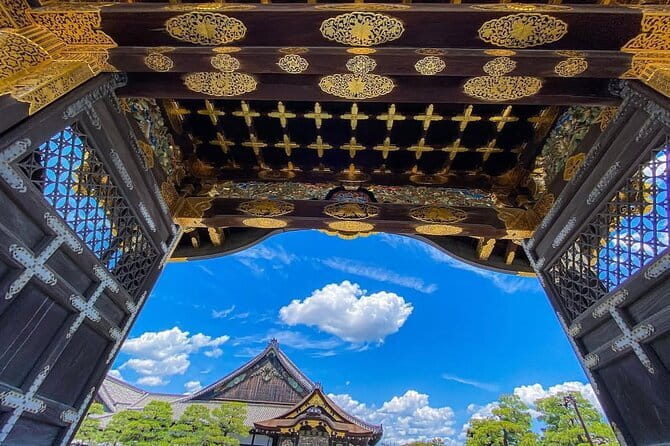
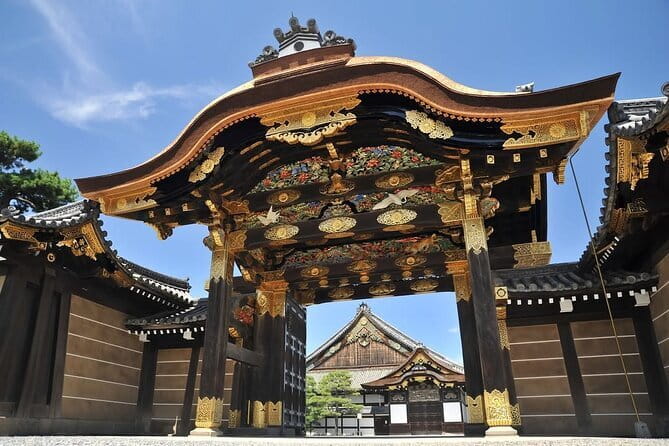
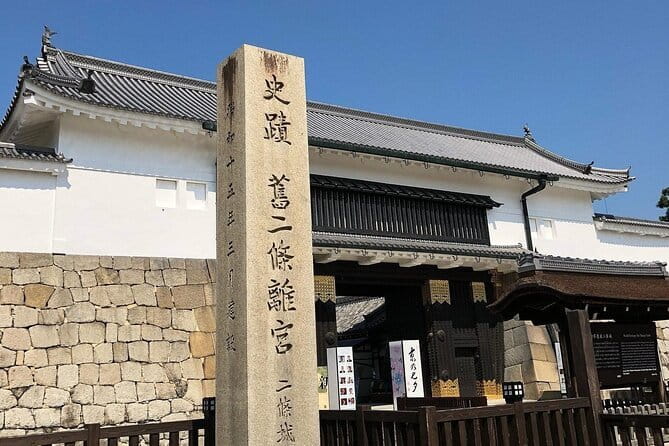
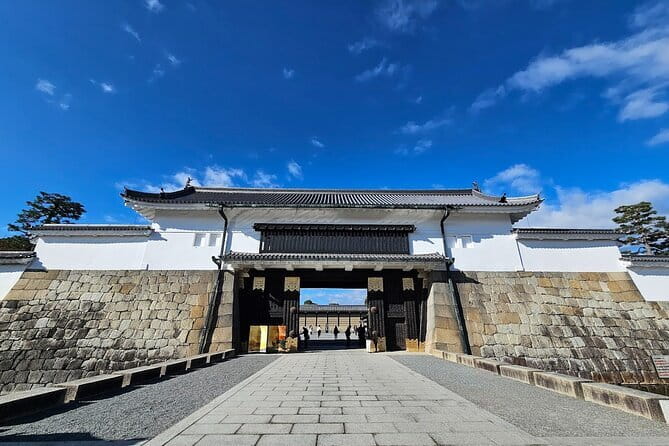
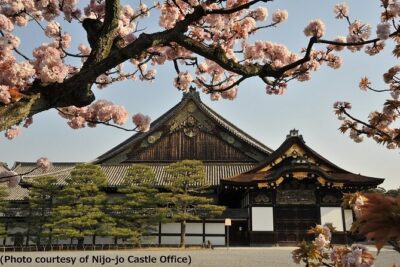
Nijo Castle is a strong opening stop. Tokugawa Ieyasu built it in 1603 as his Kyoto residence, at the start of the Edo Period. The castle is less about towering defensive walls than about political power, formal rooms, gardens, and the careful design of a shogun’s residence.
The palace buildings are among Japan’s best surviving examples of castle-palace architecture from the feudal era. Nijo Castle also witnessed important events during its 400-year history and became a UNESCO World Heritage site in 1994.
You have about one hour here. That is enough to get a good sense of the grounds and palace area, but not enough for a slow, detailed visit. The admission fee is not included. Expect to pay ¥1,300 per person for Nijo Castle and the Ninomaru Goten Palace.
One practical point: some group parking areas are a five to 10-minute walk from the attractions. That walk may sound minor, but it cuts into a short stop and can be tiring for anyone with mobility concerns. Tell the operator at booking if you are bringing a stroller or large luggage, and ask the guide where the vehicle will wait before you leave it.
Arashiyama’s bamboo, shrine, bridge, and Kimono Forest
Arashiyama receives several separate stops, but together they form the most varied part of the day. This western Kyoto district has long been associated with scenic views, temples, shrines, and seasonal beauty.
The general Arashiyama stop lasts about 20 minutes. That is mainly time to get oriented before moving into the specific sights. You may want to use this window for a quick look at the area or to follow the guide’s directions about where to meet later.
The Bamboo Forest
The bamboo forest gets about 40 minutes. The tall stalks create one of Kyoto’s most recognizable scenes, but the path is popular and can be crowded. Forty minutes gives you time to walk through a section, take photographs, and enjoy the cool green shade. It does not give you much freedom to wander beyond the main route.
This is one of the places where the tour’s guiding style matters. Some guides walk with the group or explain the route. Others simply point out the entrance and arrange a meeting time. Before setting off, make sure you know the exact meeting point and departure time.
A few more Osaka half-days worth pricing up
- Osaka: Minoh, Katsuoji Temple, & Minoh Falls Full-day Tour
★ 4.9 · 172 reviews - Osaka’s Best and Brightest: Private Full-Day Tour by Vehicle
★ 5.0 · 147 reviews - Full Day Tour of Kyoto with Private Transportation
★ 5.0 · 130 reviews - Full Day Hiroshima and Miyajima Tour by Bullet Train from Osaka
★ 4.5 · 117 reviews
Nonomiya Shrine
Nonomiya Shrine is a small Shinto shrine in Arashiyama, with about 20 minutes allotted. It is easy to recognize by its black torii gate, unlike the vermilion gates found at many other shrines.
The shrine is closely linked to the traditional atmosphere of the bamboo area. You will not need a long visit, but it adds cultural context to the walk. If your guide explains the shrine’s role and the meaning of its unusual gate, this short stop becomes more worthwhile.
Kimono Forest
The Kimono Forest is a modern art installation near the Arashiyama train area. About 600 clear acrylic cylinders, each around two meters tall, contain pieces of colorful kimono fabric. The arrangement gives you a quick look at Japanese textile design without requiring a long museum visit.
You have about 20 minutes here. It is an easy stop for photographs and a change of mood after the natural scenery. It also shows that Kyoto is not only about old wooden buildings and temples. The city continues to use traditional design in newer public spaces.
Togetsukyo Bridge
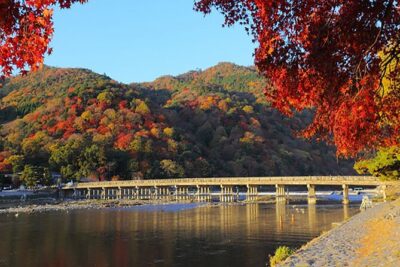
Togetsukyo Bridge is Arashiyama’s best-known river crossing. The present bridge was most recently rebuilt in the 1930s, though the original dates to the Heian Period, from 794 to 1185. It crosses the Katsura River and gives you a clear view of the area’s hills and water.
The scheduled visit is about 20 minutes. That is enough to cross part of the bridge, take photographs, and look along the river. It is not enough for a long riverside walk or a relaxed meal nearby, so save shopping and extended café time for another visit.
Arashiyama is the section most likely to feel rushed. The advantage is variety. The cost is that you get a sample of several places rather than a slow afternoon in the district.
Kinkaku-ji and Kyoto’s Golden Pavilion

Kinkaku-ji, the Golden Pavilion, is one of Kyoto’s essential sights. The Zen Buddhist temple is famous for its gold-covered exterior and the garden setting around it. The building reflected over the pond is the image most people expect, and the view is genuinely striking.
The visit lasts about 40 minutes, with a ¥500 admission fee not included. That time usually works for entering the grounds, following the visitor path, seeing the pavilion from the main viewpoints, and browsing the exit area. It is not a long temple visit, and you should not expect extended time for quiet reflection.
This is another stop where the tour’s pace creates a choice. If you care most about photographs and seeing the pavilion, 40 minutes can be enough. If you want to study the garden or explore at a slow pace, you may wish for more time. Some tour participants have specifically wanted a longer stay here and a shorter one at Fushimi Inari.
Fushimi Inari’s red torii gates
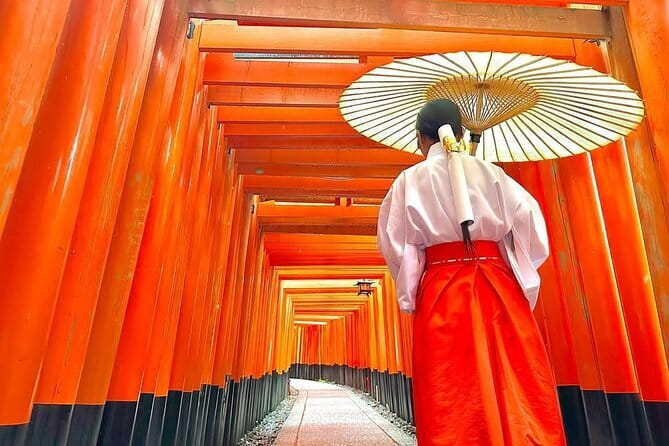
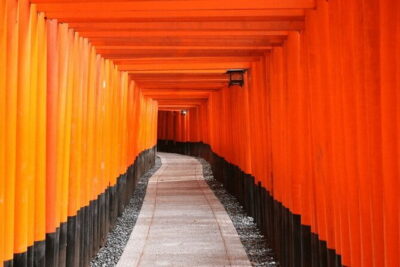
Fushimi Inari Taisha is the head shrine of about 30,000 Inari shrines across Japan. Inari is associated with rice, and the shrine is famous for its Senbon Torii, or thousands of vermilion gates running up the wooded hillside.
The tour allows about one hour and 10 minutes, the longest single stop. That sounds generous, but the shrine grounds extend far beyond the first gate-lined paths. You can walk through the lower section, take photographs, and begin the climb. You will not reach every part of the mountain in this time.
Fushimi Inari is free to enter. The paths can be crowded near the entrance, then grow quieter as you walk farther uphill. If you have limited time, focus on moving beyond the first cluster of gates rather than stopping at every photo point.
This stop can also be physically demanding. The route includes steps and inclines, and the heat can be serious in summer. Comfortable shoes, water, and a clear meeting time are essential. The guide may offer a shorter option for people who cannot keep up with the full walk, but confirm the plan before separating from the group.
How good is the guiding?
This is the biggest question to ask before booking. The experience includes a guide, but the amount of on-site explanation has not been consistent.
Several guides have received especially strong praise. Jackson has been credited with timely WhatsApp messages, clear instructions, good photo advice, and careful attention to meeting times. Allan has been described as friendly, experienced, and helpful. Theodore has been praised for organizing the day, sharing restaurant and photo tips, and taking care of families. Saki and Amy have also been singled out for clear explanations and a warm approach.
Anson has been praised for quick communication when someone had trouble finding the bus. Other positive accounts describe guides handing out snacks, organizing small raffles, and helping people through the day’s timing.
But you should not assume every guide will lead you inside each attraction. Some departures have involved brief facts on the bus followed by a drop-off at the entrance. Complaints have also involved guides walking ahead, comments that were hard to hear, or explanations focused more on transportation than the sights.
That variation matters because the tour description may sound like a fully guided sightseeing experience. In practice, it can range from a well-managed guided day to a bus service with useful instructions. If you want detailed history at every stop, a private guide or smaller walking tour may suit you better.
Group size, walking, and the daily pace
The maximum group size is 45 people. That is a sizable group, and it affects nearly every part of the day. You may wait for people to leave the vehicle, gather at meeting points, or move through crowded entrances.
A large group can still work well when the guide is organized. Jackson and Theodore, for example, have been praised for sending clear messages and keeping people on schedule. But a group of this size leaves little room for delays. If one person is late, the whole day can feel tighter.
You will walk at Nijo Castle, around Arashiyama, through the bamboo forest, at Kinkaku-ji, and at Fushimi Inari. Some parking areas are not directly beside the sights. Anyone with mobility limits should ask questions before booking and tell the operator in advance.
Weather can change the experience sharply. Rain can make the day wet and uncomfortable, while summer heat makes Fushimi Inari’s uphill paths harder. Bring suitable clothing, a compact umbrella, water, and shoes that are comfortable for several hours.
What the $67 price includes and leaves out
The $67 price includes air-conditioned transportation and a guide. For a day connecting Osaka or Kyoto with four widely separated sightseeing areas, that is a reasonable price, especially if you value convenience more than independence.
You still need to pay for two admission fees:
- Nijo Castle and Ninomaru Goten Palace: ¥1,300
- Kinkaku-ji: ¥500
That adds ¥1,800 per person, before lunch and drinks. Lunch is not included, and the schedule may leave you with limited time for a leisurely meal. Follow the guide’s suggestions, but keep your expectations practical. This is a sightseeing day first, not a food tour.
The tour has free cancellation up to 24 hours before the start time. Changes or cancellations made less than 24 hours in advance are not accepted for a refund.
Who should book this tour?
I would choose this tour if you have one free day, want the major Kyoto highlights, and do not want to manage the city’s transport system. It is especially useful from Osaka, where independent travel to all these locations can eat up much of the day.
Families may like the straightforward vehicle transport and the number of sights covered, though younger children may tire from the walking and waiting. First-time visitors will appreciate the broad introduction to Kyoto. People who enjoy taking photographs will have plenty of strong subjects, from the Golden Pavilion to the torii gates and Togetsukyo Bridge.
I would be cautious if you want long visits, quiet temple time, detailed commentary, or full freedom to change the plan. The tour is also a poor match for anyone who finds long walking days difficult unless the operator confirms suitable arrangements.
Should you book this Kyoto day tour?
Book it if your priority is seeing a lot in one day with transport handled for you. The route is well chosen, and the combination of Nijo Castle, Arashiyama, Kinkaku-ji, and Fushimi Inari gives you a useful sense of Kyoto’s culture and scenery.
Skip it if you would rather spend half a day in Arashiyama, climb farther at Fushimi Inari, or study Nijo Castle and Kinkaku-ji at your own pace. Also book with realistic expectations about the guide. With a strong guide such as Jackson, Allan, Theodore, Saki, or Amy, the day can feel organized and informative. With limited on-site guiding, it may feel like convenient transport between famous places.
FAQ
Does the tour depart from Osaka or Kyoto?
Yes. The experience is offered with departure from Osaka or Kyoto. The exact meeting arrangements are provided at booking.
How long does the tour last?
The stated duration is approximately nine hours. You should plan for a full day, since traffic, group pickups, and the timing of the route can make some departures longer.
Are admission fees included?
No. Nijo Castle and Ninomaru Goten Palace cost ¥1,300 per person, and Kinkaku-ji costs ¥500 per person. Fushimi Inari, Arashiyama’s listed outdoor sights, and the other free stops do not require an admission fee.
Is lunch included?
No. Lunch is not included in the tour price.
How large can the group be?
The tour can have a maximum of 45 travelers.
Can I cancel for a full refund?
Yes, if you cancel at least 24 hours before the experience start time. Cancellations or changes made less than 24 hours before the start time are not accepted for a refund.
Just added in Osaka
- Urban Canvas: Osaka Street Art Bike Tour★ 5.0 · 10 reviews
- Anime Cosplay Photshoot-50 Digital Photos Provided★ 5.0 · 8 reviews
- TeamLab Botanical Garden Osaka Ticket★ 3.5 · 6 reviews
- Umeda Sky Building & Kuchu Teien Observatory Ticket in Osaka★ 4.5 · 3 reviews
- Immerse in Judo Martial Arts Class from Japan★ 5.0 · 4 reviews
- Cherry Blossom Buddha and Mt.Yoshino with Strawberry Picking Tour★ 4.5 · 5 reviews
- Traditional Home cooking Experience in Osaka, Japan★ 5.0 · 14 reviews
- Traditional Calligraphy Experience near Dotonbori★ 5.0 · 3 reviews
Kyoto Day Trips from Osaka, compared.
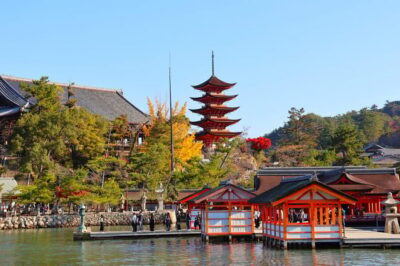
Hiroshima Miyajima Bus Tour & Shinkansen Ticket
Read our review →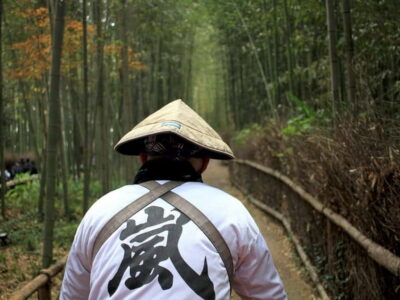
Ancient Capital Tour: Kyoto and Nara Highlights from Kyoto/Osaka
Read our review →
Full Day Tour of Kyoto with Private Transportation
Read our review →
Kyoto & Nara Private customized tour with English speaking Guide
Read our review →Browse the lists this tour appears in