
Reviewed · KYOTO DAY TRIPS FROM OSAKA
From Osaka: Kyoto, Nara, Fushimi Inari & Arashiyama Day Tour
Nara’s bowing deer, Fushimi Inari’s red torii gates, and Arashiyama’s bamboo grove make this a powerful first look at Japan’s cultural heartland. The tour covers three famous places in one day, with round-trip bus transport from Osaka doing the hard work between them.
I like the easy price, $56 per person, and the chance to see places that would take more planning by train. I also like the mix of wildlife, shrine architecture, and wooded scenery. The catch is the clock: this is a long day with about four hours of road time, and Arashiyama gets only about two and a half hours before the return to Osaka.
Key points to know
- Three major sights in one day: Nara Park, Fushimi Inari Taisha, and Arashiyama.
- Bowing deer up close: Buy deer crackers and offer them carefully, since the animals know exactly what you are holding.
- A guided visit to Fushimi Inari: You get about 80 minutes among the famous red gates.
- Free time in Arashiyama: Walk the bamboo grove, see Kimono Forest, and visit the station footbath.
- Optional scenic rail ride: The Sagano Romantic Train costs extra and may use much of your Arashiyama time.
- Strict morning meeting: Arrive by 7:45 AM for the 8:00 AM departure at Nipponbashi Exit 2.
Why This Osaka Day Trip Works
This is a sightseeing sprint, not a slow Kyoto stay. You leave Osaka in the morning, visit Nara first, then move on to Fushimi Inari and Arashiyama before returning to Nipponbashi.
That pace has a real benefit. Instead of arranging three separate train journeys, finding lockers, checking connections, and working out local buses, you sit back in an air-conditioned coach. Expressway tolls, fuel, parking, a professional driver, and a multilingual guide are included.
At $56, the tour offers good value if your goal is to collect the major sights efficiently. Public transportation can be less expensive, but it asks more from you, especially when fitting Nara and western Kyoto into one day. Here, you pay for convenience and a guide who keeps the day moving.
The tradeoff is personal freedom. You cannot linger at Nara until sunset, spend half a day hiking Mount Inari, or explore every temple in Arashiyama. If you have several Kyoto days, I would visit these districts independently. If Osaka is your base and time is short, this tour makes a sensible shortcut.
More Nara day trips from Osaka:
- Ancient Capital Tour: Kyoto and Nara Highlights from Kyoto/Osaka
★ 4.5 · 332 reviews - Kyoto and Nara Day Trip from Osaka
★ 4.0 · 175 reviews - Discover Himeji, Kobe and Nara from Osaka
★ 5.0 · 101 reviews
Meeting the Deer at Nara Park
After roughly one hour on the bus, you reach Nara Park for about an hour of walking and sightseeing. More than a thousand deer roam freely through the park, often near paths, trees, and shrine approaches.
The deer are treated as sacred animals, but they are not shy. You can buy special crackers and feed them by hand. Many have learned to bow for a snack. Hold the cracker out, enjoy the photo, and keep your fingers clear once it is gone. It is a fun encounter, but remember that these are still animals, not tame pets.
An hour gives you enough time to see deer, take photographs, and get a taste of the park. It does not leave room for a full visit to every major building in the Nara area. The schedule focuses on the park experience rather than a long temple tour.
Nara changes character with the seasons. Spring and summer bring leafy surroundings, autumn adds colorful foliage, and winter can give the trees a dusting of snow. The deer remain the main attraction in every season, though the amount of greenery and the comfort of the walk will vary.
Bring cash for small purchases, including deer crackers. Credit cards are not guaranteed at every stop. Sunscreen, water, and shoes with good support will help, since the day includes a fair amount of walking.
Walking Under the Torii at Fushimi Inari
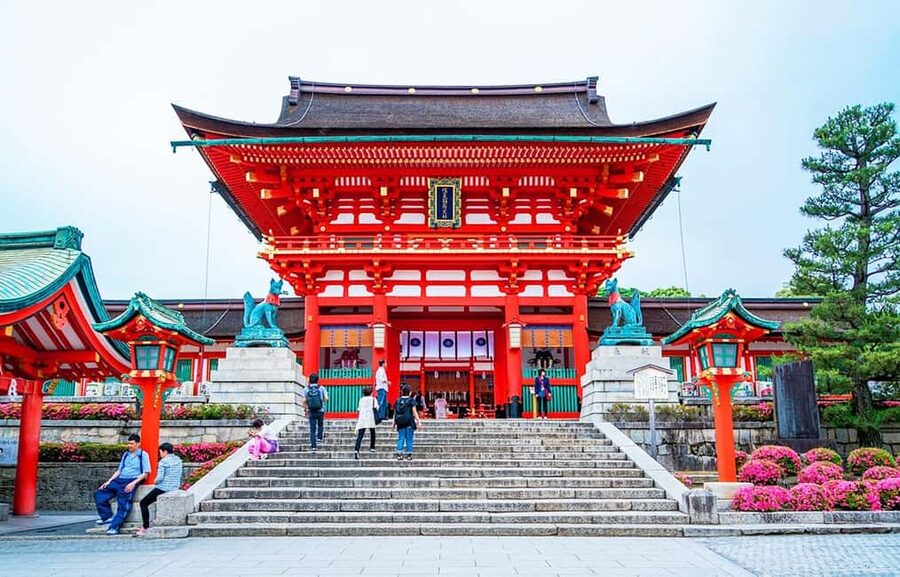
The bus ride from Nara to Fushimi Inari takes about an hour. You then have around 80 minutes at Fushimi Inari Taisha, one of Japan’s most recognizable Shinto shrines.
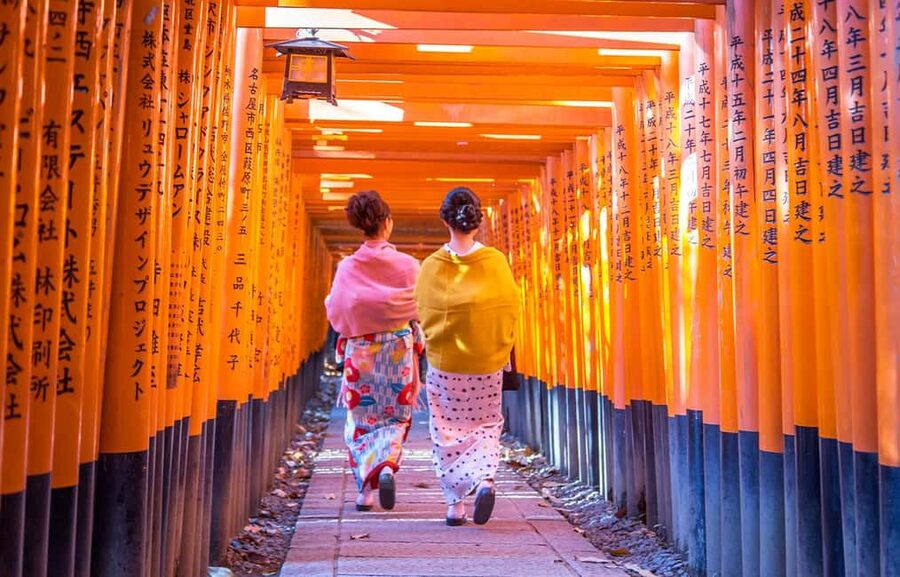
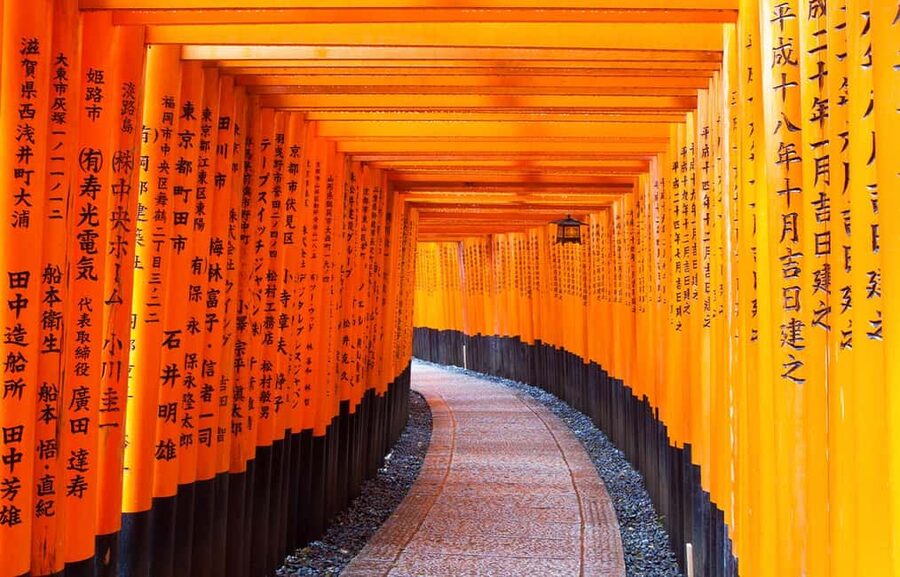
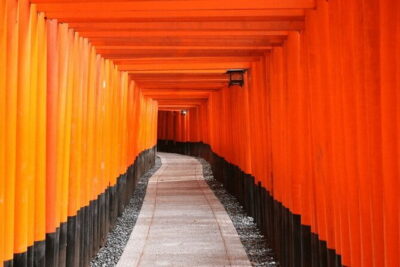
The main visual treat is the long tunnel of orange-red torii gates climbing Mount Inari. Businesses and individuals donate these gates, and their names are written on the reverse side. The gates begin close together, creating the famous enclosed walkway, then spread out as you climb higher.
With 80 minutes, you can walk through the lower section and make a modest climb. You will not have time to explore the full mountain trail at a relaxed pace. That is not necessarily a problem. The lower gates provide the classic photographs, while the upper paths offer more quiet and woodland.
Your guide provides explanations and points out meeting details, which matters here. Fushimi Inari has many paths and can feel confusing when crowded. Keep track of the time and return point. Missing the bus is not a small inconvenience on a tightly scheduled day.
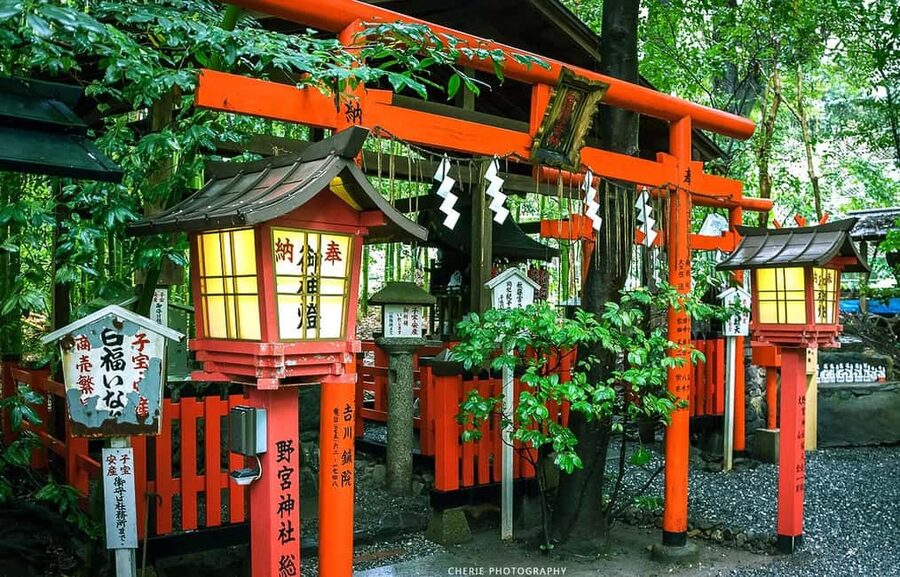
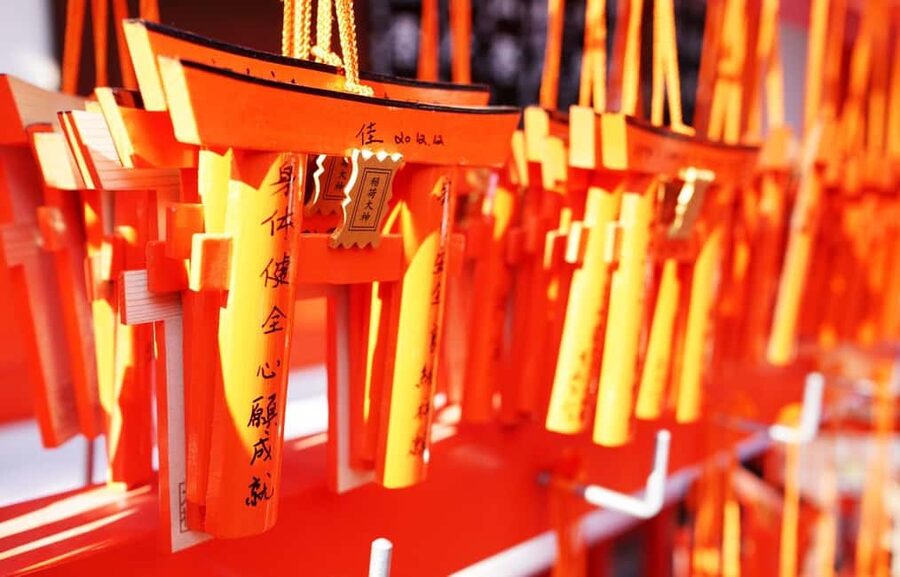
You can make a wish at the main shrine and purchase a fox-shaped ema, a wooden prayer plaque. Foxes are linked with Inari, the Shinto deity associated with rice, prosperity, and business. Even if you do not follow the religious customs, the shrine gives the stop more meaning than a quick photo backdrop.
Wear shoes you can walk uphill in. The torii path includes steps and slopes, and the surface can be uneven. Comfortable clothing matters more here than dressing for a polished city outing.
Your Arashiyama Window
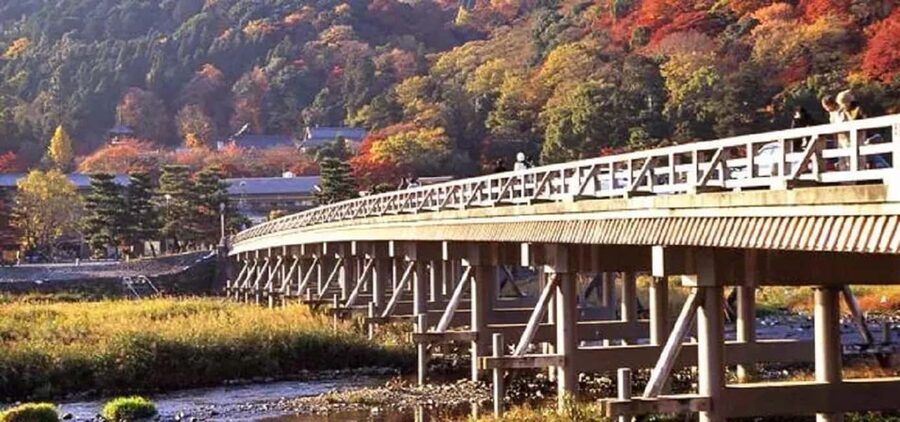
A 40-minute drive brings you to Arashiyama, where you have about two and a half hours. This is the most flexible part of the day, but it is also where your choices matter most.
Arashiyama combines river views, temples, shops, wooded paths, and the famous bamboo grove. You will not see everything in one short visit, so decide before you arrive what matters most. If bamboo is your priority, walk there first. If you want the optional train, confirm the timing with the guide before you commit.
The bamboo grove is a short but memorable walk among tall stalks that filter the light and create a distinctive rustling sound. It is one of Japan’s top 100 Sounds of Nature locations. The walk is not a long wilderness hike. It is a popular public path, and the experience depends heavily on crowd levels and the amount of time available.
Arashiyama is especially appealing in different seasons. Cherry blossoms color spring, summer brings full green growth, autumn adds maple leaves, and winter offers a quieter mood with occasional snow. The tour runs year-round, so expectations should match the season.
The schedule calls this a photo stop and sightseeing period rather than a full guided tour of Arashiyama. That means you have room to choose, but you also need to manage your own time. I would take a quick photo at the bamboo grove, then spend the remaining time on the area that interests you most.
More Kyoto day trips from Osaka:
- Osaka/Kyoto: Hiroshima Miyajima Bus Tour & Shinkansen Ticket
★ 4.7 · 919 reviews - From Kyoto/Osaka: Kyoto Top Highlights 1-Day Guided Bus Tour
★ 4.5 · 714 reviews - Osaka/Kyoto: Amanohashidate & Miyama Tour with Boat & Lunch
★ 4.6 · 207 reviews - Volleyball in Osaka, Kobe & Kyoto with locals!
★ 4.8 · 131 reviews
The Sagano Romantic Train Choice
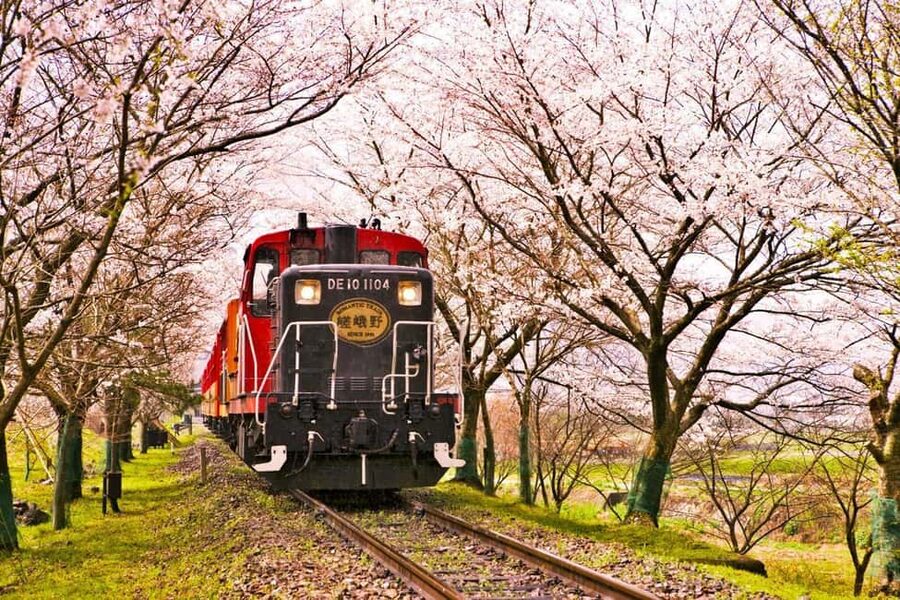
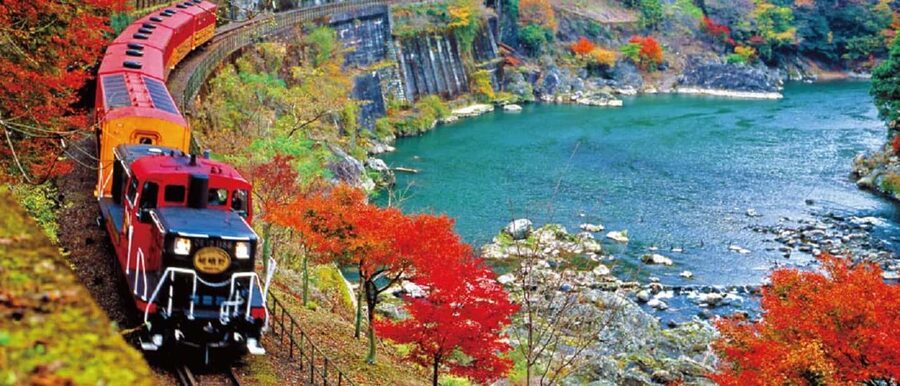
The itinerary includes Torokko Saga Station and about 25 minutes for a panoramic train ride, but the Sagano Romantic Train is optional and costs extra. Treat it as an add-on, not part of the $56 base price.
The route is known for views of the Hozugawa River Gorge, the countryside around Kameoka, and the Arashiyama area. Spring blossoms and autumn leaves are especially attractive from the train.
The key question is time. A train ride can add a lovely scenic view, but it may reduce your chance to walk the bamboo grove, visit the station area, or stop at other Arashiyama sights. Ask the guide how the day’s traffic and train timing are working before buying a ticket.
If you have already seen bamboo or prefer moving scenery to walking, the train may be worth the added cost. If this is your only Arashiyama visit, I would protect time for the bamboo grove first. The tour may adjust the order or length of stops when traffic, weekends, holidays, or peak seasons cause delays.
Footbath and Kimono Forest
Near Arashiyama Station, the footbath offers a simple way to rest after several hours on your feet. It is an onsen-style foot spa, not a full bath. You can sit, soak your feet, and recover before the final part of the visit.
This small stop is easy to underestimate. Nara, Fushimi Inari, and Arashiyama all involve walking, so a short foot soak can make the return journey more comfortable. Bring cash, since payment methods can vary at individual locations.
Kimono Forest is another quick stop near the station. Around 600 pillars covered in kimono textiles form a colorful art installation. The cylinders are lit after dark, but they are also worth seeing in daylight.
Together, the footbath and Kimono Forest add variety to Arashiyama. You are not limited to temples and natural scenery. You get a place to rest and a modern design feature that works well for photographs.
The Bus Ride Back to Osaka
The return drive is listed at about two hours, though actual timing can change. Weekend traffic, public holidays, and busy travel seasons may stretch the journey. Do not schedule a dinner reservation, airport transfer, or another fixed activity immediately after the tour.
The bus is air-conditioned and includes a professional driver. That is a major part of the tour’s value. After walking on slopes, steps, and crowded paths, you can sit rather than navigate another series of train connections.
Food is not allowed inside the vehicle, so eat during the day’s breaks and carry water. Meals are not included, and personal expenses are your responsibility. A little cash is useful because some shops and facilities may not accept cards.
This is a shared tour, and the group may include people using English, Japanese, and Chinese. The guide may explain in more than one language, which can make the pace feel less personal. On smaller departures, if fewer than 13 people book, the driver may also serve as the guide and provide simple explanations.
Guides, Group Pace, and What to Expect
The guide can shape this kind of day. Yang has led departures with friendly small talk, location facts, photo help, and patient assistance. Jack has also guided the route with clear explanations, professional organization, and reminders about where to meet.
You should still expect a group-tour rhythm. The guide needs to account for different walking speeds, languages, and interests. Stay close to the meeting point instructions, listen for time reminders, and do not assume the bus can wait if you are late.
The most important morning detail is the meeting point: 1-chome-3-6 Nipponbashi, near Nipponbashi Exit 2 in the Namba and Shinsaibashi area. Meet at 7:50 AM for the 8:00 AM departure, and arrive at least 15 minutes early. Look for the guide holding a yellow flag, since several tour groups may gather nearby.
You receive an email the evening before with guide and driver information. Check your inbox and spam folder. Late arrivals and no-shows are not refunded, so this is not a morning to cut things close.
Who Should Book This Tour
I would recommend this day trip to first-time visitors based in Osaka who want to see several famous sites without arranging complicated transport. Families may especially like the deer, and the bus reduces the strain of moving children between cities.
It also suits people with limited time in Japan. You will see three very different settings in a single day: Nara’s open park, Fushimi Inari’s shrine paths, and Arashiyama’s wooded district.
I would be cautious if you dislike early starts, long bus rides, or fixed schedules. People with animal allergies should not book, and the tour is not suitable for wheelchair users. Anyone wanting a slow Kyoto experience should give each area its own day instead.
The walking is manageable for many active visitors, but it is not a passive sightseeing ride. You need comfortable shoes, water, sunscreen, and clothes suitable for outdoor walking. Fushimi Inari includes uphill sections, and Arashiyama may involve plenty of standing and walking before the bus returns.
Is This $56 Day Trip Worth It?
Yes, if you value coverage and convenience over extra time at each stop. The price includes transport, tolls, parking, fuel, driver, and a multilingual guide, which makes the package a strong deal for a full day from Osaka.
The best parts are the clear variety and the simple transport plan. Feeding deer in Nara feels different from walking through Fushimi Inari’s torii, and both differ again from the bamboo grove and station features in Arashiyama.
The main weakness is the packed schedule. Nara receives about an hour, Fushimi Inari about 80 minutes, and Arashiyama about two and a half hours, with long drives between them. Traffic can also change the order or shorten stops.
Book it if you want a practical introduction and understand that you are sampling, not fully exploring, each place. Skip it if you have enough time to build your own Kyoto and Nara visits at a slower pace. For a first day out of Osaka, the combination is hard to beat for the money.
FAQ
Where does the tour meet in Osaka?
Meet near Nipponbashi Exit 2 at 1-chome-3-6 Nipponbashi, Chuo Ward, Osaka, 542-0073. Arrive by 7:45 AM for the 8:00 AM departure and look for a guide holding a yellow flag.
What places does the tour visit?
The tour visits Nara Park, Fushimi Inari Taisha, and Arashiyama. The Arashiyama portion includes the bamboo grove, Kimono Forest, and an Arashiyama Station footbath.
Is the Sagano Romantic Train included?
No. The Sagano Romantic Train is optional and costs extra. It offers views of the Hozugawa River Gorge, Kameoka countryside, and the Arashiyama area.
Are meals included?
No. Meals and personal expenses are not included. Bring water and some cash because credit cards may not be accepted at every stop.
What languages are available?
The tour offers live guidance in English, Japanese, and Chinese. Since it is a shared tour, people speaking different languages may travel together.
Is the tour suitable for wheelchair users or people with animal allergies?
No. The tour is not suitable for wheelchair users or people with animal allergies. It also involves a fair amount of walking, including slopes and steps at some sites.
Just added in Osaka
- Urban Canvas: Osaka Street Art Bike Tour★ 5.0 · 10 reviews
- Anime Cosplay Photshoot-50 Digital Photos Provided★ 5.0 · 8 reviews
- TeamLab Botanical Garden Osaka Ticket★ 3.5 · 6 reviews
- Umeda Sky Building & Kuchu Teien Observatory Ticket in Osaka★ 4.5 · 3 reviews
- Immerse in Judo Martial Arts Class from Japan★ 5.0 · 4 reviews
- Cherry Blossom Buddha and Mt.Yoshino with Strawberry Picking Tour★ 4.5 · 5 reviews
- Traditional Home cooking Experience in Osaka, Japan★ 5.0 · 14 reviews
- Traditional Calligraphy Experience near Dotonbori★ 5.0 · 3 reviews
Kyoto Day Trips from Osaka, compared.
Hiroshima Miyajima Bus Tour & Shinkansen Ticket
Read our review →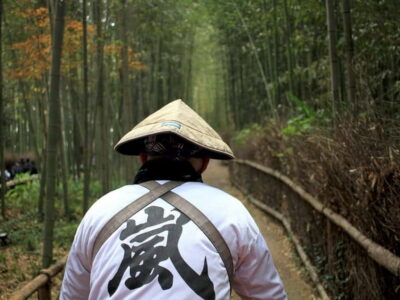
Ancient Capital Tour: Kyoto and Nara Highlights from Kyoto/Osaka
Read our review →

Full Day Tour of Kyoto with Private Transportation
Read our review →
Kyoto & Nara Private customized tour with English speaking Guide
Read our review →Browse the lists this tour appears in