
Reviewed · OSAKA STREET FOOD TOURS
Eat Osaka: Street Food Cooking in an Authentic Kitchen!
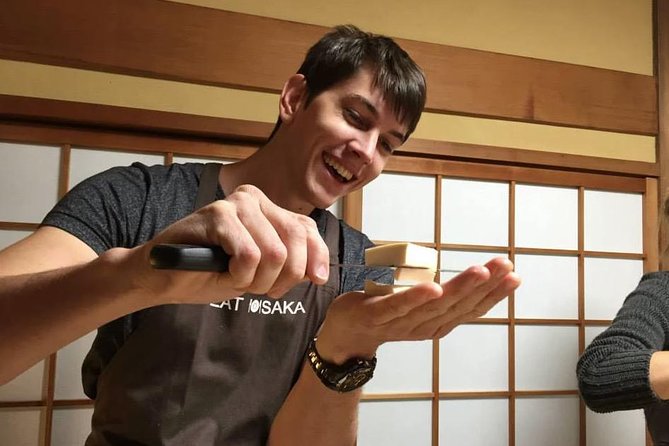
The most interesting part of this Osaka cooking class is the setting: you learn street-food recipes inside an old Japanese house with a restaurant-style kitchen, not in a large, polished demonstration room. A bilingual chef guides you through hands-on preparation, then you sit down and eat what you made.
I like the small maximum of eight people, which gives you room to ask questions and get help with knives, batter, noodles, and sauces. I also like the friendly drink-and-meal finish, with beer, sake, or green tea included rather than sending you off hungry after the lesson.
One point needs clearing up before you book: the menu description gives two versions. One lists Osaka-style tempura, handmade udon, pickled cucumber, and mochi, while another describes okonomiyaki, udon, and yakitori. The food theme is clear, but confirm the exact dishes for your date.
Key points to know before you go
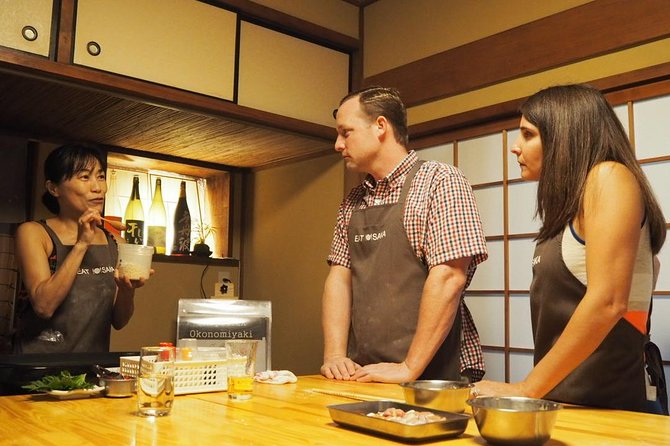
- Cook in an old Osaka house: The class takes place at Eat Osaka in Higashinari, in a traditional-style setting used as a purpose-built cooking studio.
- Expect a hands-on lesson: You prepare the dishes yourself with professional tools, ingredients, and step-by-step help.
- The menu may vary: Udon appears in both descriptions, while tempura, okonomiyaki, yakitori, cucumber, and mochi are listed in different combinations.
- A bilingual local chef leads the class: Miki, Niki, and Natalie are named in the available guest feedback, so your instructor may differ by date.
- The meal includes drinks: Finish with your cooking and choose from local beer, sake, or green tea.
- The price is $79.28 per person: For 2 hours and 30 minutes of instruction, ingredients, drinks, and a meal, the value is strongest if you want culture as well as dinner.
Cooking Osaka food in an old Higashinari house
Eat Osaka meets at 1丁目-2-10 東中本, in Osaka’s Higashinari Ward. The class ends at the same place, and the meeting point is near public transportation. That makes this a simple add-on to an Osaka day, though you should allow time to find the address and arrive ready to cook.
The setting is part of the appeal. You are not simply watching a chef prepare a few sample dishes from behind a counter. You work in an old Japanese house that has been set up for cooking instruction. That gives the class a more personal feel and helps connect the food to ordinary home and restaurant traditions.
I would not book this expecting a grand tour of Osaka’s famous food streets. The class is about making the food, not walking through Dotonbori or sampling from several vendors. The reward is a closer look at how familiar Osaka dishes are built, seasoned, and served.
The group limit of eight matters here. In a larger class, a lesson involving noodles and frying can turn into a wait for your turn. With fewer people, you have a better chance to ask why a technique matters, check your work, and get help from the chef before the food reaches the table.
More cooking classes in Osaka:
- Matcha Making Class in Osaka with Authentic Japanese Sweets Set
★ 5.0 · 509 reviews - Osaka Sushi Making Experience
★ 5.0 · 400 reviews - Osaka: Ramen and Gyoza Cooking Class in Dotonbori
★ 5.0 · 378 reviews
What the 2.5-hour cooking class includes
The activity lasts about two hours and 30 minutes. That is long enough for a proper lesson and a sit-down meal, but short enough to fit into a busy Osaka itinerary.
You receive the ingredients and instruction, so you do not need to shop beforehand or bring cooking supplies. Professional-level tools are available, and the chef takes you through the steps. The class is aimed at participation, not at testing your culinary skill. The experience is designed so you can follow along even if you rarely cook.
The exact sequence can change, but the listed dishes point to a varied lesson:
- Handmade udon gives you a chance to work with dough and see how a basic staple is prepared.
- Tempura introduces batter and frying, with attention to the texture that makes the dish light rather than heavy.
- Okonomiyaki brings in Osaka’s famous savory pancake style, made from scratch.
- Yakitori adds skewers and a signature sauce to the possible menu.
- Pickled cucumber and mochi may provide a simple side dish and a sweet finish.
Because the descriptions do not match perfectly, I would treat this as a rotating menu rather than a fixed promise of every dish listed. Udon appears in both versions, so it seems to be a reliable part of the class. Tempura, okonomiyaki, yakitori, cucumber, and mochi are all associated with the experience, but not necessarily served together on every date.
Making the noodles, batter, and Osaka-style dishes
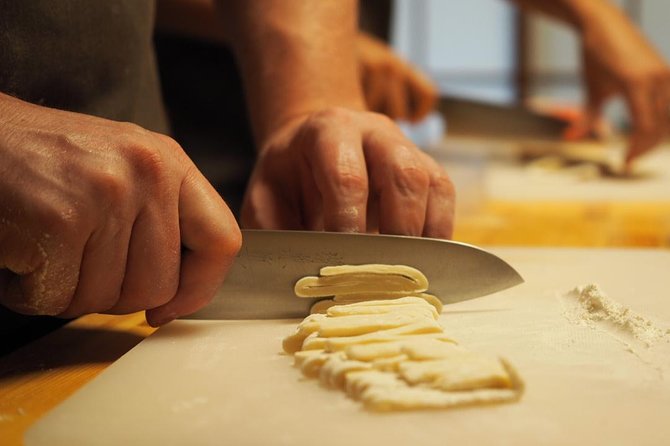
Handmade udon is one of the most useful parts of the lesson. It is a familiar Japanese food, but the process gives you a better sense of how simple ingredients become a chewy noodle with the right texture. You are not just eating a bowl placed in front of you. You are handling the dough and learning the method behind it.
The tempura portion is also practical. You prepare vegetables and work with batter, then cook the food under guidance. This is the sort of technique that can look easy until you try it. Having the chef nearby is helpful when you need advice on consistency, timing, or safe use of the equipment.
If your class includes okonomiyaki, expect a distinctly Osaka-centered dish. The pancake is made from scratch, and the lesson shows how several ordinary ingredients come together into a hearty meal. It is a good choice for anyone who wants a dish connected directly to the city’s food identity.
Yakitori offers a different lesson, built around skewers and sauce. The menu description calls the sauce a signature recipe, though the exact ingredients are not provided. If this dish matters to you, ask about it when booking, especially since the other menu description emphasizes tempura instead.
The lighter items, such as pickled cucumber or mochi, help balance the meal. The cucumber adds a fresh side, while mochi gives the class a sweet element if it appears on your date. Again, do not assume you will prepare every item listed in the promotional details.
Learning with Miki, Niki, or Natalie
The instructor is one of the strongest parts of this experience. Miki is praised for explaining not only what to do, but why each step matters, while also making it easy to ask questions. That teaching style is valuable in a cooking class because you leave with more than a recipe.
Niki is also named as a friendly and well-informed teacher, with particular attention to the old townhouse setting and the cooking techniques. Natalie is described as patient, kind, and able to create a calm environment. She also accommodated a vegetarian participant, which is useful information for anyone with dietary needs.
That said, a specific chef is not guaranteed from the information provided. You may meet Miki, Niki, Natalie, or another Eat Osaka instructor. The class is bilingual, and the available feedback points to a welcoming teaching style, but you should communicate dietary requirements before the start rather than waiting until ingredients are being prepared.
The cultural side is another reason to choose this over a recipe video. The chef explains Osaka cooking culture while you work. You get context for the dishes, the tools, and the way the food fits into local life. It is a modest lesson, not a formal food lecture, but the conversation adds value.
More street food tours in Osaka:
- Osaka: Shinsekai Food Tour with 13-15 Dishes at 5 Eateries
★ 4.8 · 2,204 reviews - Osaka Food Tour: 13 Dishes at 5 Local Eateries
★ 5.0 · 2,149 reviews - Hungry Osaka Street Food Tour:15 Tastings & 3 Drinks with a Local
★ 5.0 · 1,727 reviews - Osaka Local Foodie Walking Tour in Dotonbori and Shinsekai
★ 5.0 · 985 reviews
Eating what you prepare with beer, sake, or tea
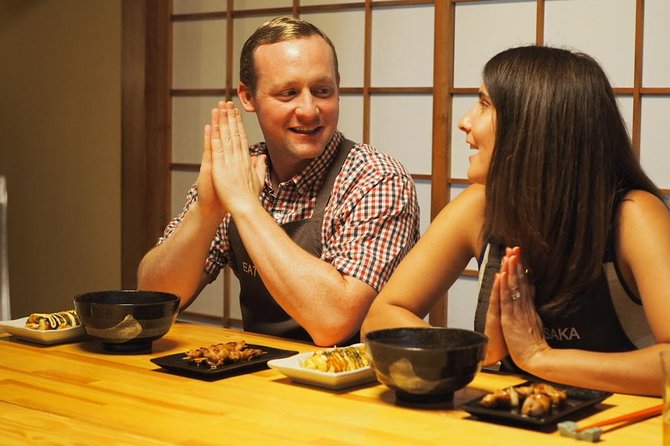
After the cooking, you sit down and enjoy the food. Welcome drinks are included, and the choices listed are local beer, sake, or green tea. This finish turns the class into a complete meal rather than a short kitchen demonstration followed by a search for lunch.
I like this part because it gives the lesson a natural ending. You can compare your finished dishes, ask final questions, and enjoy the food while it is fresh. It also gives families and mixed-age groups an easy choice, since green tea works for people who do not want alcohol.
The meal is likely to be satisfying, but you should keep your expectations in proportion. This is a cooking class with a meal, not a multi-course restaurant tasting. You are paying for instruction, ingredients, equipment, drinks, and time with a local chef. The food you make may not look perfect, and that is part of the point.
Why the $79.28 price can be fair
At $79.28 per person, this is not the cheapest way to eat Osaka food. You can buy noodles, tempura, or okonomiyaki for much less. The question is whether you want dinner alone or a guided activity that includes dinner.
For two and a half hours, the price covers the ingredients, professional tools, instruction, welcome drinks, and the finished meal. The small group also improves the value. You have more direct contact with the chef than you would in a large class, and that personal help is especially useful when working with dough, hot oil, or unfamiliar kitchen equipment.
I think the price works best for first-time visitors who want one structured cultural activity during their Osaka stay. It is also a sensible choice for families, couples, and friends who prefer doing something together instead of sitting through another restaurant meal.
The value is weaker if you already cook Japanese food often or only want a quick taste. You may find the 2.5-hour commitment too long if your schedule is tight. Since the menu can vary, ask for the dishes planned on your date before deciding if the cost fits your interests.
Who should book this Osaka cooking class?
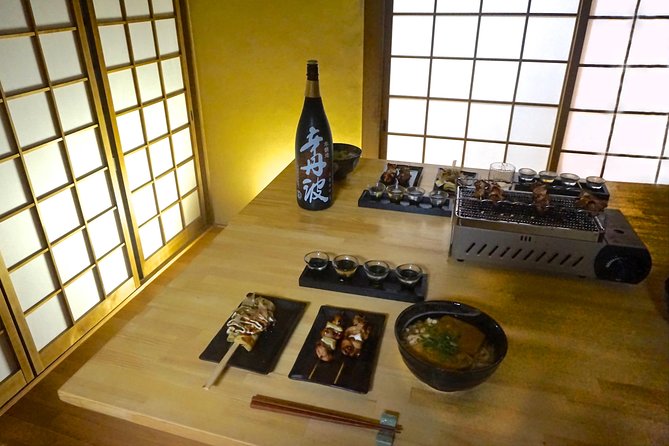
This suits you if you want to:
- Learn practical Japanese cooking methods instead of only watching a chef.
- Eat Osaka-style food while understanding more about how it is made.
- Meet a local bilingual instructor in a small group.
- Travel with children or relatives who enjoy hands-on activities.
- Add an indoor experience to a day of sightseeing.
- Eat a meal that includes both food and drink.
It may not suit you if you want a walking tour of Osaka’s street-food districts, a fixed menu with no changes, or a formal restaurant experience. It is also worth checking the menu if you have strict dietary restrictions, since only one vegetarian accommodation is specifically described and full ingredient information is not provided.
The class has received a 5-star rating from 87 ratings, with 99 percent recommending it. That high score fits the main strengths: warm instruction, a relaxed atmosphere, tasty food, and a setting that feels more personal than a standard tourist kitchen.
Booking, transport, and cancellation details
The activity uses a mobile ticket, and confirmation is provided when you book. The meeting point is near public transportation in Higashinari, and the activity returns to that same point.
The maximum group size is eight people. A minimum number of participants is required, so the provider may cancel if that number is not reached. If that happens, you are offered another date or experience, or a full refund.
You can cancel for a full refund up to 24 hours before the start time. Cancellations or changes made less than 24 hours before the local start time are not accepted for a refund. Keep that deadline in mind if your Osaka plans are still shifting.
Should you book Eat Osaka?
I would book this class if you want a friendly, hands-on introduction to Osaka food and like the idea of cooking in an older Japanese house rather than sitting in a large studio. The small group, included drinks, and patient teaching style make the experience feel like good value for a visitor who wants food and cultural context in the same two and a half hours.
Before paying, confirm the menu. If you are excited about tempura and udon, one description suits you. If you specifically want okonomiyaki and yakitori, check that those dishes are scheduled. Once that is clear, this is an easy choice for families, couples, and curious eaters who want to make their Osaka meal themselves.
FAQ
Where does the Eat Osaka cooking class take place?
The class meets at Eat OsakaHigashinari, 1丁目-2-10 東中本, Higashinari Ward, Osaka, Japan. The location is near public transportation.
How long does the experience last?
The cooking class lasts approximately 2 hours and 30 minutes.
Where does the activity end?
The activity ends back at the meeting point in Higashinari.
What dishes will I cook?
The listed dishes include handmade udon, Osaka-style tempura, pickled cucumber, mochi, okonomiyaki, and yakitori. The menu descriptions differ, so confirm the exact dishes for your date.
Are ingredients included?
Yes. The ingredients and cooking instruction are included in the experience.
Are drinks included?
Yes. Welcome drinks are included, and after cooking you can enjoy local beer, sake, or green tea.
How many people can join the class?
The maximum group size is eight people.
Is the class taught in English?
The experience is assisted by a local bilingual chef. The specific language mix and instructor may vary by date.
Can vegetarians join?
A vegetarian participant was accommodated by Natalie, but complete dietary information is not provided. Contact Eat Osaka before booking to discuss your needs.
Can I cancel for a full refund?
Yes. You can cancel at least 24 hours before the local start time for a full refund. Cancellations or changes made less than 24 hours before the start time are not accepted for a refund.
More Food and Drink Tours in Osaka
- Hungry Osaka Street Food Tour: 15 Dishes & 3 Drinks
★ 4.9 · 694 reviews - Kuromon Market Food Walking Tour in Osaka (6 stops, 6 tastes)
★ 5.0 · 550 reviews - Osaka: Guided Food Tour with 12 Dishes at 4 Local Eateries
★ 5.0 · 533 reviews - Absolute Osaka Food Tour
★ 5.0 · 309 reviews
Just added in Osaka
- Urban Canvas: Osaka Street Art Bike Tour★ 5.0 · 10 reviews
- Anime Cosplay Photshoot-50 Digital Photos Provided★ 5.0 · 8 reviews
- TeamLab Botanical Garden Osaka Ticket★ 3.5 · 6 reviews
- Umeda Sky Building & Kuchu Teien Observatory Ticket in Osaka★ 4.5 · 3 reviews
- Immerse in Judo Martial Arts Class from Japan★ 5.0 · 4 reviews
- Cherry Blossom Buddha and Mt.Yoshino with Strawberry Picking Tour★ 4.5 · 5 reviews
- Traditional Home cooking Experience in Osaka, Japan★ 5.0 · 14 reviews
- Traditional Calligraphy Experience near Dotonbori★ 5.0 · 3 reviews
Osaka Street Food Tours, compared.

Shinsekai Food Tour with 13-15 Dishes at 5 Eateries
Read our review →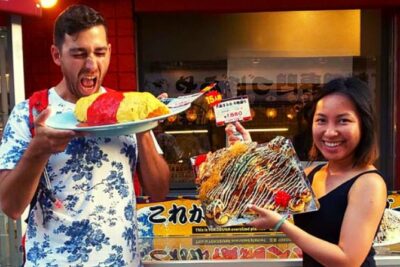
Osaka Food Tour: 13 Dishes at 5 Local Eateries
Read our review →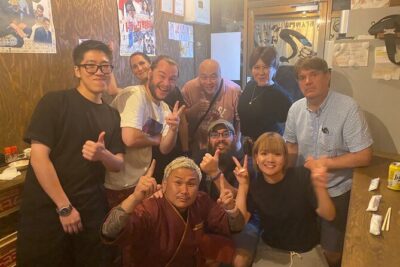
Hungry Osaka Street Food Tour:15 Tastings & 3 Drinks with a Local
Read our review →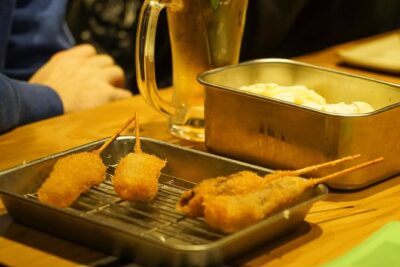
Osaka Local Foodie Walking Tour in Dotonbori and Shinsekai
Read our review →
Hungry Osaka Street Food Tour: 15 Dishes & 3 Drinks
Read our review →
Guided Food Tour with 12 Dishes at 4 Local Eateries
Read our review →
Osaka After Dark: Small-Group Night Food Tour (Max 6)
Read our review →Browse the lists this tour appears in