
Reviewed · DOTONBORI TOURS
Nostalgic Osaka, walk in totally different from Dotonbori
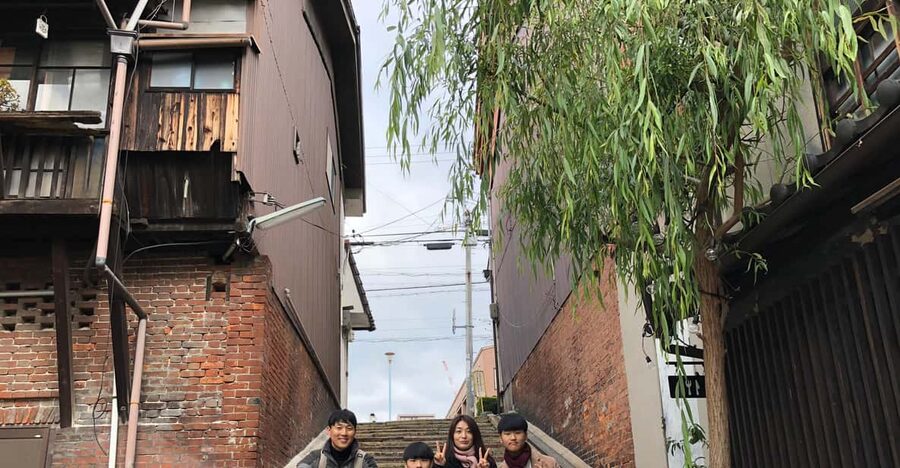
Karahori gives you an Osaka most visitors miss. Just three subway stops from Namba, this old district keeps its narrow lanes, 100 to 200-year-old merchant houses, tiny shrines, and a stretch of Osaka Castle moat hidden behind ordinary streets. The area feels local rather than staged, with older residents still living beside cafés and small shops.
I like two things especially: the guide takes you into walkable side alleys that are easy to miss, and the small group of no more than six people makes it easier to ask questions. I also like the contrast between old homes and the cafés, select shops, and tatami store that now occupy some of them.
The main consideration is that this is a walking tour through a lived-in neighborhood, not a parade of major sights. Some paths are private, and you must follow the guide’s directions and keep noise down. The two-hour schedule also leaves limited time for lingering over food or shopping.
Key points to know before you go
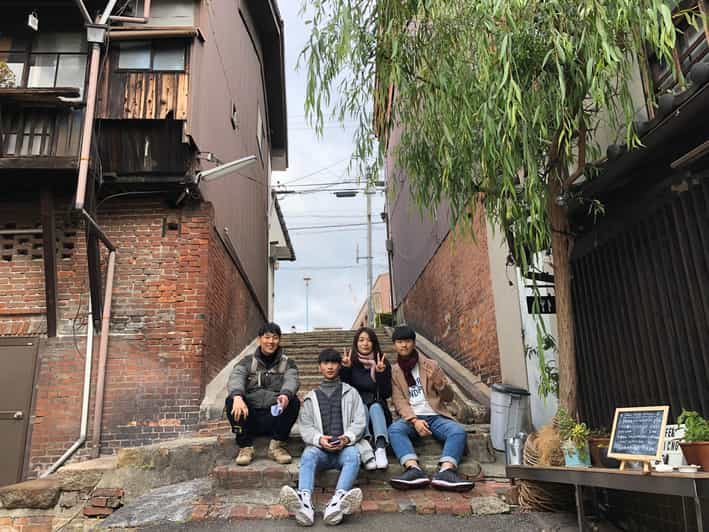
- Karahori survived wartime fires: Its old homes and narrow lanes offer a different side of Osaka from Dotonbori.
- A local guide leads the way: You visit alleys that are hard to understand from a map or guidebook.
- The old and new sit side by side: Merchant houses may contain homes, cafés, cute shops, or small specialty stores.
- The walk includes a dry castle moat: A remnant of Osaka Castle’s defenses appears in an unexpectedly ordinary alley.
- Food and shopping cost extra: The guide can point you toward cafés and restaurants, but your purchases and meals are separate.
- Small groups keep the walk personal: The maximum group size is six, and English and Korean guidance is available.
Karahori is Osaka beyond Dotonbori
Dotonbori gives you neon signs, canal views, giant restaurant displays, and Osaka’s loud public face. Karahori offers something quieter and more revealing: narrow streets where daily life still happens behind old wooden façades.
The district survived the fires of World War II, leaving old traditional merchant houses in place. Some are said to be 100 to 200 years old. They are not museum pieces sealed behind glass. People still live in some of them, while others have been repaired and turned into cafés, select shops, or small businesses.
That mix is the point. You may pass a weathered home, turn through a lane, and find a pleasant café tucked into the next building. The charm comes from the surprise and from the fact that the neighborhood was not built as a sightseeing set.
The tour begins at Osaka Metro’s Tanimachi 6-chome Station, Exit 3, at street level. Be careful here: Tanimachi 6-chome serves more than one subway line, and Exit 3 is on the Tanimachi Line side. Meet at 6-chome-9-1 Tanimachi.
More Dotonbori walks and food stops:
- Osaka Local Foodie Walking Tour in Dotonbori and Shinsekai
★ 5.0 · 985 reviews - Osaka: Dotonbori District River Cruise with Drink Discount
★ 4.2 · 876 reviews - Ultimate Osaka Walking Tour: Castle, Dotonbori & Hidden Gems
★ 5.0 · 862 reviews
The first 15 minutes: finding the neighborhood’s local rhythm
After meeting your guide, you receive a bottle of water and a small snack. The opening part of the walk helps you get oriented in Karahori before the route turns into smaller lanes.
You begin by going through a local market street. This matters because it gives you a look at the district as a place to shop and live, not simply as an old quarter for photographs. The guide can explain what you are seeing and point out details you might pass without noticing on your own.
The pace is modest, but you should still wear comfortable shoes. The route is a walking tour with repeated turns, stops for photos, and time spent standing in narrow spaces. The available information does not give exact distances or a step-free route at every point, although the activity is marked wheelchair accessible.
The welcome snack and water are useful, but they are not a meal. If you arrive hungry, plan to buy food later at your own cost.
One hour in the market and maze-like lanes
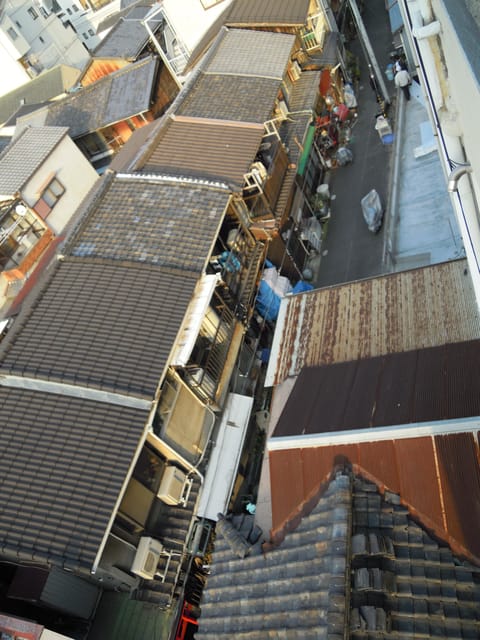
The longest part of the walk takes you away from the main market route and into side streets that are not usually covered in standard Osaka sightseeing plans. This is where the local guide matters most.
Karahori’s lanes can feel like a maze. Some are open for walking, while others are private even if there is no obvious sign. Your guide knows which routes are appropriate and leads you through the paths that can be visited without intruding on local homes.
Please treat this as a residential walk. Older residents still live here, including grandparents who may be sitting close to the lane. Keep your voice down, do not enter a private path, and avoid treating someone’s doorway as a photo prop. The neighborhood’s value depends on people being able to live normally.
Along the way, you visit small shops and may stop at a café. The exact shops can vary, but the route may include select stores and places to rest. The guide can also direct you toward a cozy café or a restaurant if you want to eat. Food, drinks, and anything you buy are not included in the $35 price.
This portion should suit you if you enjoy small details more than a checklist of famous sights. You might notice the shape of a roof, the narrow gap between houses, an old shopfront, or the way a newer café has been fitted into a traditional building. The guide’s job is to connect those details to the neighborhood around you.
The dry moat and tiny shrines
One of the most unusual stops is a ruin of the Osaka Castle moat. It is a dry section, described as about 15 meters deep, and it is tucked away in an alley rather than presented as a grand monument.
That setting makes the stop memorable. You are not standing before a dramatic castle wall with crowds and souvenir stalls. Instead, an old defensive feature appears among ordinary neighborhood streets. It shows how Osaka’s past can survive in fragments, sometimes in places you would never expect.
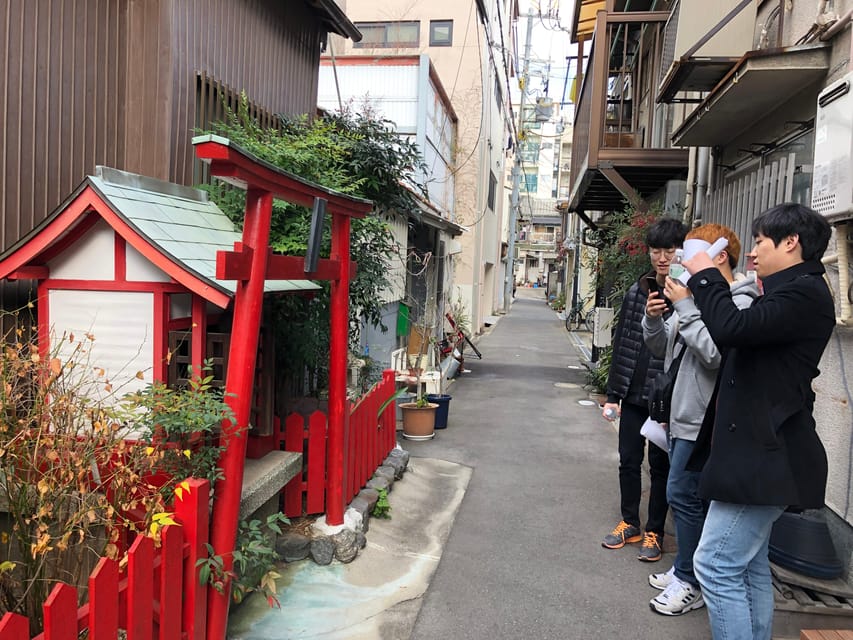
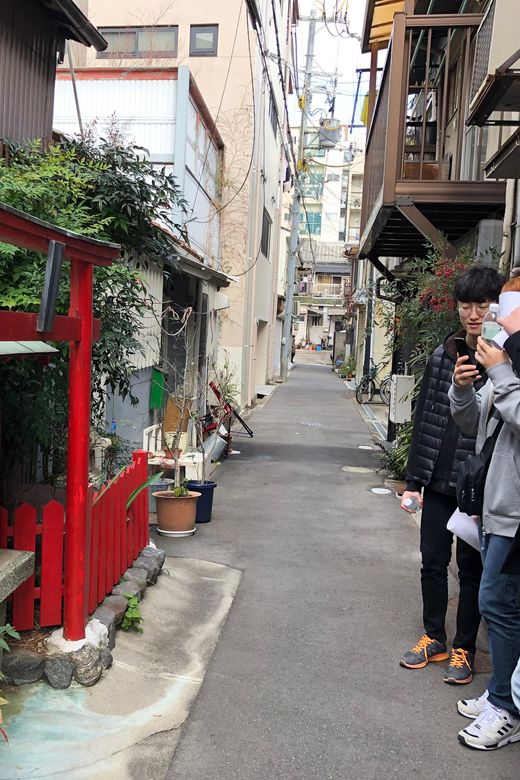
You also visit tiny shrines. These are modest sites, so do not expect a large religious complex or a long formal explanation. Their value is local scale. They help show how sacred spaces can fit into the everyday structure of an old Japanese district.
There are photo stops during the walk, but photography should remain respectful. Narrow lanes give you limited room, and residents may be passing through. Ask your guide if you are unsure where it is appropriate to stop.
More walking tours in Osaka:
- Osaka: Deep Backstreets Walking Tour with Dinner Option
★ 4.9 · 902 reviews - Osaka: Main Sights and Hidden Spots Guided Walking Tour
★ 4.9 · 702 reviews - Private Osaka Walking Tour: Highlights & Hidden Gems
★ 5.0 · 569 reviews - Osaka Castle Walking Tour and Castle Tower Admission
★ 5.0 · 561 reviews
Old merchant houses, cafés, and a tatami shop
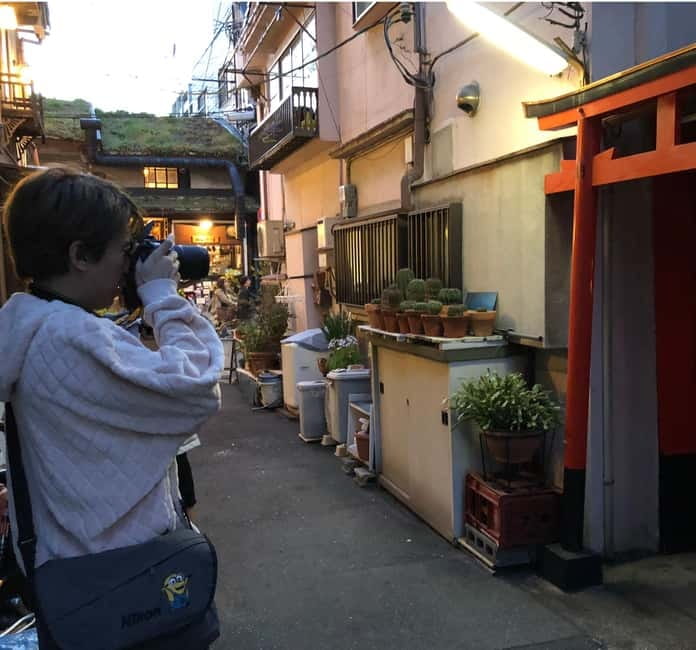
Karahori’s traditional merchant houses are the visual heart of the walk. The buildings preserve an older style of Osaka commerce and domestic life, but their current uses are mixed.
Some still have homes inside. Others have been remodeled into cafés or small, attractive shops. This gives you a useful look at how an old neighborhood can change without losing every trace of its earlier form. You are not only seeing old architecture. You are seeing old buildings continue to serve modern needs.
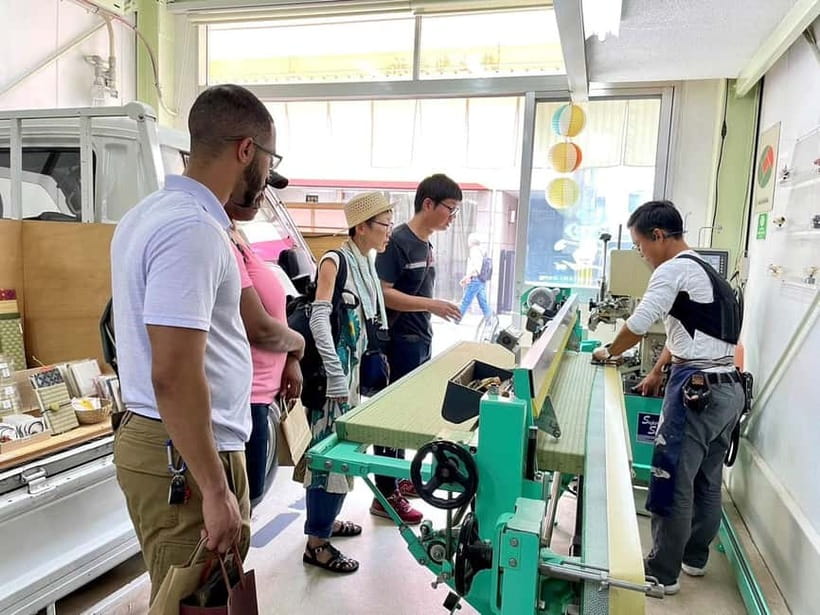
The tour also includes a Japanese tatami mat shop. Tatami is easy to overlook if you are focused only on temples and castles, yet it is a basic part of traditional Japanese interiors. A visit to a specialist shop gives the walk a practical side. You see a craft and household material connected to the kind of older homes found in the district.
Shopping is optional and paid separately. The same applies to cafés and restaurants. Since the walk lasts only two hours, you may have time for a short stop rather than a full meal, especially if the group spends extra time taking photos or asking questions.
What the two-hour format does well
Two hours is a good length for this area. You have enough time to move beyond the station and see several types of place: a market street, residential alleys, old houses, shops, a café option, a tatami store, shrines, and the dry moat.
A longer tour could offer more time for food or detailed building visits, but it might also make the quiet lanes feel repetitive. The short format keeps the focus clear. You see the district, learn how to move through it respectfully, and finish back at the same meeting point.
The group limit of six is another practical advantage. In a large group, a narrow lane can become awkward, and conversation with the guide becomes harder. With six or fewer people, you have a better chance to ask about a building, a shop, or the route itself.
The tour is offered in English or Korean. The supplied information does not name the guide, but the guide is local and knows the area map well. That local familiarity is important here because the route depends on knowing which alleys are open and which belong to residents.
Is $35 a fair price?
At $35 per person, this is a reasonable price if you want context and access to places you would be unlikely to connect on your own. You are paying for two hours of local guiding, a small group, a bottle of water, and a snack. The guide also saves you the time of sorting public lanes from private ones.
The value is less convincing if you only want major Osaka sights or a food-focused tour. This walk does not include Osaka Castle admission, a full meal, or included shopping. You pay separately for anything you eat, drink, or purchase.
I would see the price as paying for orientation and interpretation rather than for entrance tickets. Karahori’s appeal is spread across ordinary streets and small details. Without a guide, you could walk through the district and miss the moat, the tatami shop, or the best side lanes.
The experience has a 4.8 rating from four recorded ratings, including two five-star comments. One praised the educational nature of the walk and said the neighborhood would have gone unnoticed without the guide. Another called it a perfect experience and highlighted the guide’s strong command of the area. Those comments fit the tour’s main strength: it shows you a part of Osaka that is easy to overlook.
Who should book this Karahori walk?
I would recommend it to you if you have already seen Osaka’s central sights and want a quieter change of pace. It also suits anyone interested in ordinary neighborhoods, old houses, small shops, and local customs rather than grand landmarks.
It is a good match for photographers who like texture and close-up details, though you must be considerate in residential lanes. It also works well for curious first-time visitors who want a guide to explain what they are seeing.
You may want to skip it if you dislike walking, prefer large attractions, or want every minute filled with major sights. The district is subtle. Its best moments come from noticing how people live among old buildings, not from one spectacular view.
Arrive on time. If you are more than 15 minutes late, joining the group may not be possible because the guide needs to keep the schedule for everyone else.
Free cancellation is available up to 24 hours before the start time, and you can reserve now and pay later. The activity is marked wheelchair accessible, but because some parts use narrow alleys, confirm the practical route details before booking if you need a fully step-free experience. Drones, smoking indoors, intoxication, loud behavior, skateboards, feeding animals, and making fires are not allowed.
Should you book the Karahori tour?
Book it if you want old Osaka in a residential setting, not another pass through Dotonbori. The dry moat, merchant houses, tatami shop, market street, and narrow lanes give the two hours a clear sense of place.
I would especially choose it early in your Osaka stay, when a local introduction can help you understand the city beyond its headline sights. Just keep your expectations realistic: this is a respectful neighborhood walk with modest discoveries, not a major monument tour or a food crawl.
FAQ
Where does the Karahori walking tour meet?
Meet at Osaka Metro Tanimachi 6-chome Station, Exit 3, at street level. Exit 3 is on the Tanimachi Line side of the station.
How long does the tour last?
The walking tour lasts two hours and returns to 6-chome-9-1 Tanimachi.
What languages are available?
The live guide service is available in English and Korean.
How many people can join the tour?
The group is limited to six participants.
What is included in the price?
The tour includes the guided walk, a bottle of water, and a small snack.
Are food, drinks, and shopping included?
No. If you eat or drink at a café, restaurant, or shop, you pay those costs yourself. Purchases are also separate.
Is the tour wheelchair accessible?
The activity is marked wheelchair accessible. Because the route includes narrow alleys, confirm the route details in advance if you require fully step-free access.
Can I cancel the booking?
You can cancel up to 24 hours in advance for a full refund. You can also reserve now and pay later.
Just added in Osaka
- Urban Canvas: Osaka Street Art Bike Tour★ 5.0 · 10 reviews
- Anime Cosplay Photshoot-50 Digital Photos Provided★ 5.0 · 8 reviews
- TeamLab Botanical Garden Osaka Ticket★ 3.5 · 6 reviews
- Umeda Sky Building & Kuchu Teien Observatory Ticket in Osaka★ 4.5 · 3 reviews
- Immerse in Judo Martial Arts Class from Japan★ 5.0 · 4 reviews
- Cherry Blossom Buddha and Mt.Yoshino with Strawberry Picking Tour★ 4.5 · 5 reviews
- Traditional Home cooking Experience in Osaka, Japan★ 5.0 · 14 reviews
- Traditional Calligraphy Experience near Dotonbori★ 5.0 · 3 reviews
Dotonbori Tours, compared.
Osaka Local Foodie Walking Tour in Dotonbori and Shinsekai
Read our review →
Dotonbori District River Cruise with Drink Discount
Read our review →
Ultimate Osaka Walking Tour: Castle, Dotonbori & Hidden Gems
Read our review →


Roll and Authentic Sushi Making Class in Dotonbori
Read our review →
Osaka Local Bar Crawl in Dotombori & Uranamba Area
Read our review →
Browse the lists this tour appears in