Reviewed · TOURS
Osaka Kickstart: Hotspots & Hidden Gems Tour
Osaka reveals itself in side streets as much as at its famous signs. This tour links Dotonbori, Hozenji Yokocho, Shinsaibashi, Kuromon Market, and, on longer private outings, Osaka Castle and Shinsekai. The best part is the local guide who helps you read the city instead of simply pointing at it. Rahat, Knox, Louis, Bryan, Stephanie, and other guides have earned praise for warmth, humor, and practical advice.
I like the flexible route and the mix of food, history, shopping, and odd little corners. I also like that a three-hour walk can give you a useful first look, while a seven-hour private tour can reach temples, museums, and Osaka Castle. The main catch is pace: fitting several districts into a short tour means plenty of walking, and entrance fees and transport are extra.
Key points to know before booking
- Start in Namba: The meeting point at 2-chōme-2-8 Namba places you near Osaka’s best-known central districts.
- Choose your scale: Three-hour tours focus on central Osaka, while four, five, and seven-hour private options reach farther landmarks.
- Expect local color: Hozenji Yokocho, America Mura, Kuromon Market, arcades, bars, restaurants, and small shops add texture beyond the standard sights.
- Osaka Castle needs time: The castle appears only on five or seven-hour private tours and takes about 70 minutes.
- Food is a taste, not a meal: You receive one drink and one small side dish, usually one takoyaki ball.
- The guide matters: The strongest part of the experience is the guide’s ability to adjust the walk, explain local life, and suggest places to eat afterward.
Why this makes a strong first day in Osaka
Osaka can feel like a lot at first. Neon signs, covered shopping arcades, train stations, narrow lanes, and food counters all compete for your attention. This tour gives you a person to follow and a local frame for what you are seeing.
The central route is especially useful if you have just arrived. You can learn the shape of Namba, Dotonbori, Shinsaibashi, and Kuromon Market in one outing, then return later without wasting time finding the right lane or station exit. Guides have also helped with restaurant choices, vegetarian dining, shopping ideas, and basic train directions.
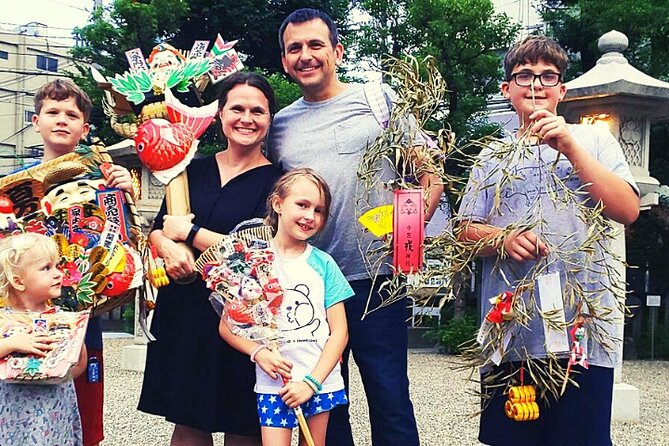
That practical help is one reason the tour works well for families. An eight-year-old enjoyed one outing, while another family used a five-hour walk to visit Osaka Castle, eat well, and get help with a Shinkansen connection. The experience is not designed as a formal lecture. It is a moving conversation, with history and personal stories mixed into the walk.
You should know what this is not. It is not a formal food tour with a long list of tastings, and it is not a coach tour that carries you between monuments. It is mainly a walking experience with the option of using a train or taxi if requested. You pay for those transport costs separately.
Other Osaka bookings people put this one up against:
- Osaka Go Karting Tour with Funny Costume
★ 5.0 · 2,658 reviews - Osaka Castle: Museum and Tower Entry Ticket
★ 4.5 · 2,380 reviews - Osaka: Shinsekai Food Tour with 13-15 Dishes at 5 Eateries
★ 4.8 · 2,204 reviews
Hozenji Yokocho and the old lanes of Namba
The tour begins near Namba and often moves quickly into Hozenji Yokocho. This short stretch of cobblestone lanes has a very different mood from the bright commercial roads nearby. The narrow passage, traditional atmosphere, and walls marked with scenes from Osaka’s past give your guide an easy opening to explain how the district developed.
You have about 20 minutes here. That is enough to see the lane and hear the background, but not enough for a long stop at every detail. If you enjoy atmospheric streets and small shrines, this will be one of the most appealing early moments.
The value is not just the setting. A guide can point out what you might otherwise pass without noticing, then connect this older pocket with modern Namba. This is a good example of the tour’s larger promise: not only famous sights, but also the spaces between them.
Dotonbori, Shinsaibashi, and the city’s bright center
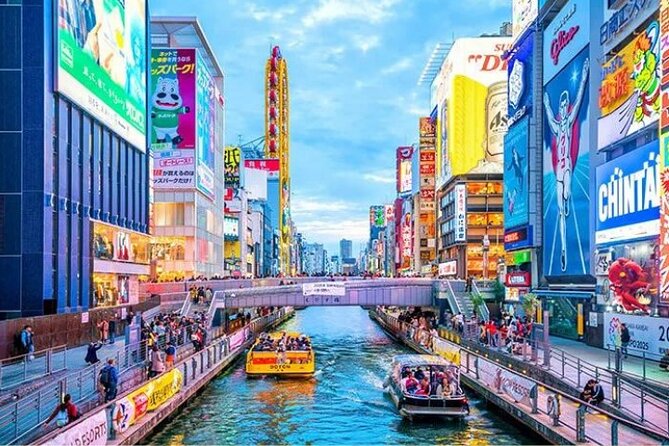
Dotonbori is the tour’s main burst of spectacle. The riverfront, signs, shops, restaurants, and entertainment venues make it an easy place to understand Osaka’s reputation for food and fun. You spend around 45 minutes in this area, which gives you time to see the river, absorb the crowds, and get suggestions for returning later.
The guide may lead you away from the most obvious path toward less familiar bars, restaurants, and tucked-away shops. Do not expect every stop to be a secret place with a formal tasting. The point is to help you see where local life sits beside the main tourist road.
Shinsaibashi-suji follows naturally. This covered shopping street is a good place to compare Japanese fashion, unusual gadgets, and ordinary local shopping with the polished signs of Dotonbori. The planned stop lasts about 20 minutes, so consider it an introduction rather than a full shopping session.
New New Ebisubashi adds a small piece of Osaka history. The bridge began as a wooden crossing in the 1600s and is now an iron bridge and a central meeting place. Fifteen minutes may sound brief, but this stop works as a quick orientation point between the river, shopping street, and nearby entertainment districts.
America Mura and Osaka’s playful side
America Mura, or America Town, is a short stop with a quirky premise. The area reflects Japan’s version of American style, with unusual shops, street art, and a Statue of Liberty perched on a building.
The listed time is about 15 minutes, though the appeal is in the side streets rather than one major sight. If you like vintage clothing, youth culture, odd storefronts, and local interpretations of foreign trends, ask your guide to show you the less obvious corners.
This is also where the tour feels less polished in a good way. You are not being marched from one grand landmark to another. You are seeing how Osaka plays with outside influences and makes them its own.
Same city, a completely different kind of afternoon:
- Osaka Food Tour: 13 Dishes at 5 Local Eateries
★ 5.0 · 2,149 reviews - Hungry Osaka Street Food Tour:15 Tastings & 3 Drinks with a Local
★ 5.0 · 1,727 reviews - Osaka: Tea Ceremony Experience
★ 4.9 · 1,426 reviews - Deep Backstreet Osaka Tours (Option to add Dinner)
★ 5.0 · 1,290 reviews
Kuromon Market and the small food allowance
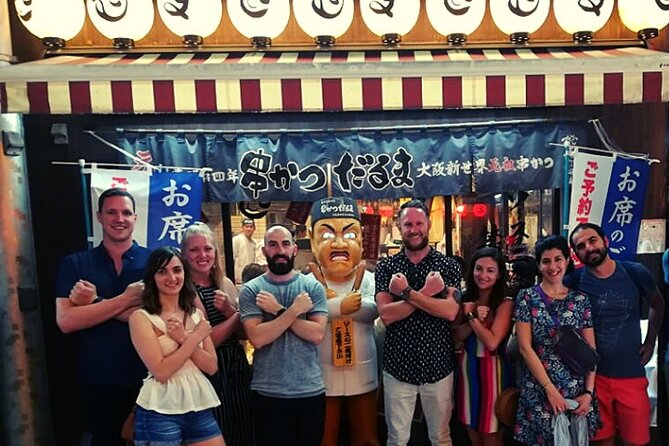
Kuromon Market is among the most useful stops for anyone who wants to understand Osaka’s food culture. From the street, some fish shops can look plain. Inside, you may find a much more impressive range of seafood and market goods.
The usual stop lasts around 15 minutes on a three-hour tour, and timing depends on how quickly the group walks. That short window is important. You can look, ask questions, and get a sense of what to return for, but you should not expect a full market meal within the tour price.
One drink and one small side dish are included, usually a single takoyaki ball. Think of this as a sample, not lunch or dinner. Food and drinks beyond that are your responsibility, which is worth budgeting for if Kuromon makes you hungry.
The guide’s food advice can be more valuable than the included bite. Several outings have included restaurant suggestions tailored to the group, including vegetarian options. If food is your priority, say so when arranging the tour. The route is flexible, and your guide can point you toward places suited to your interests, though the supplied details do not promise a full tasting itinerary.
Games, cosplay, and tucked-away shops
One central route also includes a gaming and cosplay area, though the schedule indicates that reaching it depends on time and walking speed. This is a useful reminder that the tour is not a fixed checklist. The guide is navigating small stores and side streets, and the exact coverage can change.
You might find arcades, gaming shops, cosplay-related stores, and other specialist businesses that are easy to miss on your own. Families and younger visitors may enjoy this section as much as the temples and castle. Adults who want a shopping stop should tell the guide early, since three hours can pass quickly.
Shinsekai on four, five, or seven-hour private tours
Shinsekai is available only on the longer private options of four, five, or seven hours. This retro district gives the tour a different flavor from central Namba. Expect quirky fishing restaurants, old game arcades, board game shops, and vinyl stores.
The planned visit lasts about 30 minutes. That is enough for a guided look, but anyone who wants to browse records or play games will likely want to arrange more time. Shinsekai rewards a slower pace, so a private four-hour or longer route makes more sense here than trying to squeeze it into the shortest option.
This district is also a good reason to book a private tour if you already know your interests. A group route may keep moving, while a private guide can spend more time on food, retro culture, shopping, or photography, depending on the agreed plan.
Tower Knives and the craft of Japanese blades
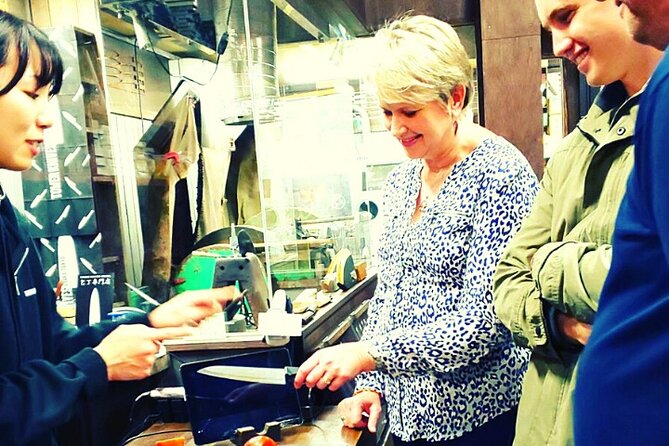
Tower Knives Osaka is offered only on four-hour or five-hour private tours. The visit includes a private knife lesson, an explanation of how knives are made in the rear workshop, and a chance to try cutting.
This is one of the more distinctive additions because it gives you an activity rather than another viewing stop. It also provides a closer look at a Japanese craft tradition without requiring a full museum visit.
The planned time is only 15 minutes, so the lesson is a compact introduction. If knife-making is a major interest, confirm the exact timing and what the private session includes before booking. The tour information confirms the lesson and cutting experience, but not a long workshop or a knife purchase.
Abeno Harukas and Shitennoji
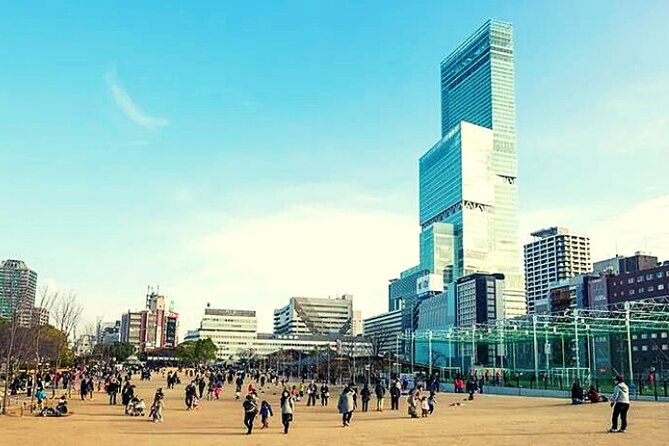
Abeno Harukas appears on five- or seven-hour private tours. At 300 meters, it is Japan’s tallest building, as distinct from the country’s tallest tower or structure. The stop lasts around 20 minutes and gives the route a modern city marker after the older lanes and markets.
Shitennoji is also limited to five- or seven-hour private tours. It is described as Japan’s first Buddhist temple and oldest officially administered temple, with about 30 minutes set aside for the visit. Admission is not included, so keep that extra cost in mind.
These stops suit you if you want more than shopping and food. They also make the longer route feel more balanced, moving from Osaka’s entertainment districts to religious and architectural landmarks.
Osaka Castle and the story of unification
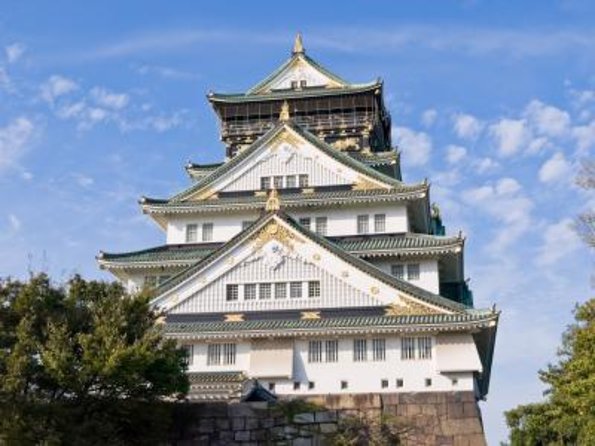
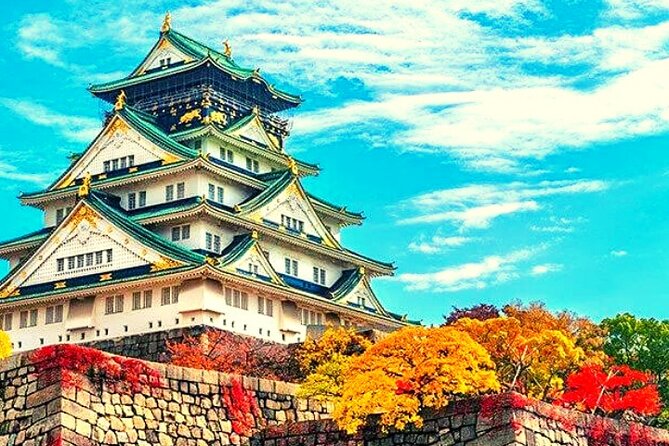
Osaka Castle is included only on five- or seven-hour private tours, with about 70 minutes planned. That time usually covers the castle area and surrounding park, plus an explanation of its role in the unification of Japan.
This is not a minor add-on. Osaka Castle is one of the city’s defining sights, and its history gives your guide a chance to explain the political importance of Osaka in a wider Japanese story. The castle itself is a major landmark, but the surrounding park also gives you room to step away from the dense streets of central Osaka.
Admission is not included. If you want to spend substantial time inside the castle, tell the guide before the walk begins. Seventy minutes can work for a focused visit, but it may feel short if you want a slow museum-style inspection.
A five-hour private tour is likely the sweet spot for people who want the castle plus central Osaka without committing to a full day. A seven-hour outing gives more room for temples, museums, food, and slower walking.
Two small museums for the seven-hour route
The seven-hour private option can include the Osaka Ukiyoe Museum and the Osaka Museum of Housing and Living. The Ukiyoe Museum is a small, welcoming space with older original works from the Edo period alongside newer pieces. Admission is included for this stop.
The Housing and Living Museum takes a different approach. Its main draw is a reconstruction of an old Osaka town, including houses, shops, and homes. It is a useful choice if you want to see how people lived rather than only look at grand buildings.
The museum visit lasts about 45 minutes, and admission is not included. Because the seven-hour route already covers a lot, this option suits you best if you enjoy cultural displays and are comfortable with a full day on foot.
Guides, pace, and what the praise tells you
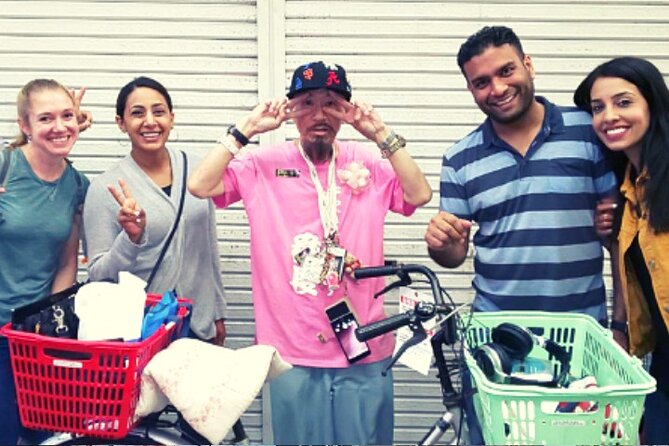
The most consistently praised part of this experience is the guide. Rahat is repeatedly described as friendly, funny, and good at uncovering places that are easy to miss. Knox has been praised for shaping the day around what the group wanted to see. Louis is known for a clear introduction to Osaka, while Bryan has helped families with food choices and train directions.
Other named guides include Meryem, Mari, Dom, Nick, Harry, Shems, Josh, Paul, Kiko, Rutti, and Stephanie. The descriptions of their work point to a common strength: they keep the walk conversational and adapt to the group.
That does not mean every guide will have the same personality. Your experience depends partly on who is assigned and how clearly you explain your interests. Tell the operator if you care most about food, history, shopping, children’s activities, photography, or transport help.
The physical demand is moderate, but the longer routes can be substantial. One five-hour outing covered more than 16,000 steps without feeling rushed to that particular group. You should still wear comfortable shoes and be ready for busy streets, standing, and changing pace.
Price, duration, and real value
At $31.84 per person, the listed price is reasonable for a three-hour introduction, especially if you want a guide to help you get oriented on your first day. The value comes from the route planning and local interpretation, not from included meals or admission tickets.
Private pricing becomes easier to justify when several people share the experience. You get a route shaped around your group, and the guide can spend more time on your interests. Group discounts are offered, though the exact savings are not specified.
The four, five, and seven-hour options cost more in total and create extra expenses through transport, meals, and attraction tickets. Still, they may be efficient if your time in Osaka is tight. A five-hour private tour can combine Dotonbori, Kuromon Market, Osaka Castle, and several other districts in one organized day.
Remember the limits. The tour includes one drink and one small side dish, but not a full meal. Entry fees to Shitennoji, Osaka Castle, and the Housing and Living Museum are extra. Train or taxi costs are also extra if used.
Who should book the Osaka Kickstart tour?
Book it if you want a friendly introduction before exploring Osaka on your own. It suits first-time visitors, families, couples, and small groups that want history mixed with food, shopping, and unusual city corners.
Choose the three-hour option if you want a quick orientation around Namba, Dotonbori, Shinsaibashi, and Kuromon Market. Choose four or five hours if Shinsekai, Tower Knives, or Osaka Castle matters to you. Choose seven hours if you want the broadest route, with both museums and the major historic sites.
I would not choose it if you want a quiet, single-subject tour, a formal museum lecture, or a full food crawl. The route covers a lot, and the short stops can feel brisk. For most people starting an Osaka stay, though, the combination of local guidance, practical city tips, and flexible sightseeing makes this a useful purchase.
You can cancel for a full refund up to 24 hours before the start time. Poor weather or failure to reach the minimum number of participants can lead to a different date or a full refund.
FAQ
Where does the Osaka Kickstart tour start?
The meeting point is 2-chōme-2-8 Namba, Chuo Ward, Osaka, 542-0076, Japan. The tour ends back at the meeting point.
How long does the tour last?
You can choose a three, four, five, or seven-hour tour. The exact sights depend on the duration and, for longer outings, whether you book a private option.
Is the tour private?
A private personalized tour is available, and the activity information also offers a group tour option. A private activity is limited to your own group.
What food or drink is included?
The tour includes one drink and one small side dish, usually one takoyaki ball. Additional food and drinks are not included.
Are attraction entry fees included?
No. Entry fees are not included. This applies to places such as Osaka Castle, Shitennoji, and the Osaka Museum of Housing and Living. Tower Knives Osaka and the Osaka Ukiyoe Museum are listed as included stops when available on the relevant private route.
Which tours include Osaka Castle?
Osaka Castle is available only on five-hour or seven-hour private tours. The planned visit lasts about 70 minutes, and admission is not included.
Can the tour use trains or taxis?
The walk can include optional train or taxi use if requested. Any transport costs are separate unless included in the route you arrange.
Just added in Osaka
- Urban Canvas: Osaka Street Art Bike Tour★ 5.0 · 10 reviews
- Anime Cosplay Photshoot-50 Digital Photos Provided★ 5.0 · 8 reviews
- TeamLab Botanical Garden Osaka Ticket★ 3.5 · 6 reviews
- Umeda Sky Building & Kuchu Teien Observatory Ticket in Osaka★ 4.5 · 3 reviews
- Immerse in Judo Martial Arts Class from Japan★ 5.0 · 4 reviews
- Cherry Blossom Buddha and Mt.Yoshino with Strawberry Picking Tour★ 4.5 · 5 reviews
- Traditional Home cooking Experience in Osaka, Japan★ 5.0 · 14 reviews
- Traditional Calligraphy Experience near Dotonbori★ 5.0 · 3 reviews
Tours, compared.

Shinsekai Food Tour with 13-15 Dishes at 5 Eateries
Read our review →
Osaka Food Tour: 13 Dishes at 5 Local Eateries
Read our review →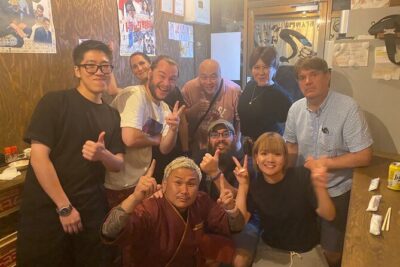
Hungry Osaka Street Food Tour:15 Tastings & 3 Drinks with a Local
Read our review →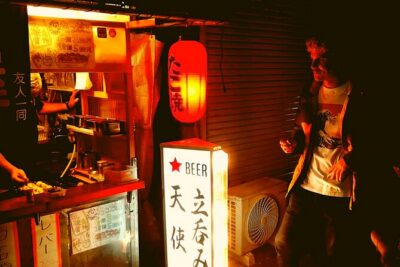
Deep Backstreet Osaka Tours (Option to add Dinner)
Read our review →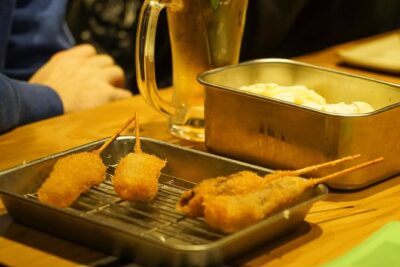
Osaka Local Foodie Walking Tour in Dotonbori and Shinsekai
Read our review →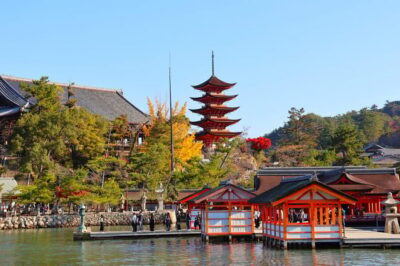
Hiroshima Miyajima Bus Tour & Shinkansen Ticket
Read our review →