Reviewed · FULL-DAY
Mt Koya Full Day Tour from Osaka with Licensed Guide and Vehicle
Mount Koya feels a world away from Osaka’s neon and traffic. In one day, you can walk through Okunoin’s solemn cemetery, see the headquarters of Shingon Buddhism, and stand where Kobo Daishi began building his mountain sanctuary. A private car and licensed guide make the long outing far easier than piecing it together by train and bus.
I like two things right away: you can shape the day around three or four sites, and you get a guide trained in Japanese culture and history rather than a driver with a few memorized facts. I also like the freedom of a private group, especially for a couple. The main drawback is the price, $898.72 for up to two people, and the eight-hour schedule cannot comfortably cover every listed stop.
Key points at a glance
- A private Osaka pickup keeps the day simple and avoids several transport changes.
- Okunoin is the emotional center, with Kobo Daishi’s mausoleum and centuries of graves in a forest setting.
- You choose three or four places, rather than rushing through all six sites.
- The guide is a National Government Licensed Guide Interpreter, with formal knowledge of Japanese culture and history.
- Rain and fog can add atmosphere, but mountain weather may limit what you see.
- The price works best for two people, since the fee is charged per group rather than per seat.
Why Mount Koya makes a strong day trip from Osaka
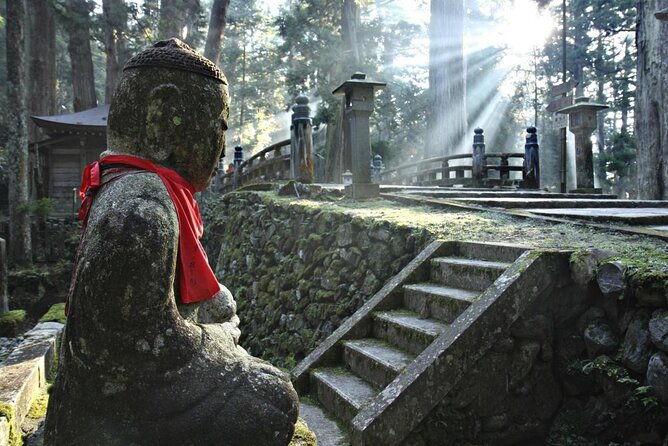
Mount Koya, or Koyasan, is one of Japan’s major Buddhist centers and a World Heritage destination in Wakayama Prefecture. The mountain is closely tied to Kobo Daishi, also known as Kukai, who founded Shingon Buddhism and began developing Koyasan in the ninth century.
This is not simply a temple-counting excursion. The places here explain how Japanese Buddhism developed as a living institution. You move from a sacred cemetery to a sect headquarters, then to the ceremonial grounds where the mountain’s religious story began.
The private car matters because Koyasan is outside Osaka and the day includes several separate sights. You meet your guide at your Osaka hotel, then travel together rather than finding your way through a combination of rail, road, and local transport. The exact driving time is not provided, so you should treat the eight hours as a full day with meaningful time spent on the mountain, not eight uninterrupted hours of sightseeing.
The schedule is best for someone who wants context. At each site, you can ask why it matters, how it connects to Kobo Daishi, and what you are looking at. The guide’s national certification requires a strong understanding of Japanese culture and history, which is more useful here than it would be at a simple photo stop.
A few more Osaka half-days worth pricing up
- Osaka: Minoh, Katsuoji Temple, & Minoh Falls Full-day Tour
★ 4.9 · 172 reviews - Osaka’s Best and Brightest: Private Full-Day Tour by Vehicle
★ 5.0 · 147 reviews - Full Day Tour of Kyoto with Private Transportation
★ 5.0 · 130 reviews
Okunoin: the most powerful two hours
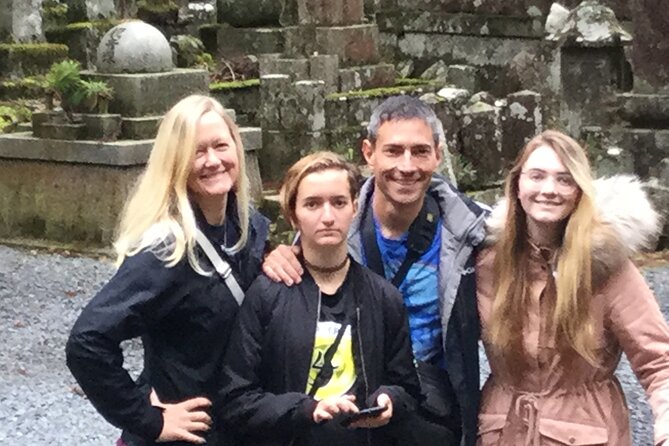
Okunoin is the heart of the visit. Kobo Daishi is believed to rest here, and the site is considered one of the most sacred places on Mount Koya. Graves connected to prominent Japanese families and historical figures line the approach, creating a long record of religious devotion and remembrance.
You have about two hours here, the longest allocation on the schedule. That is sensible. Okunoin is not a place to sprint through with a camera. The importance comes from the setting, the quiet, and the sheer number of memorials rather than from one isolated monument.
I would give this stop your best attention. Listen to the guide’s explanation of Kobo Daishi and Shingon Buddhism, then allow yourself time to notice the atmosphere. A rainy morning can change the character of the place completely. One account of the outing describes rain and thick fog making Koyasan feel more mysterious and sacred, while the guide explained the meaning of the site and helped bridge a language gap between English and French.
That detail is useful. Mountain weather is not automatically a bad thing here. Fog may soften the views and make the forest feel more secluded, though wet conditions can also make walking less comfortable. Wear shoes suited to uneven or damp paths, but keep that advice practical rather than expecting a strenuous hike. The tour description does not give a precise walking distance or trail condition.
Kongobu-ji: seeing the Shingon headquarters
Kongobu-ji is the main headquarters of the Shingon sect, a major Buddhist tradition with thousands of temples in Japan and more than 10 million followers worldwide. You have about 90 minutes here.
The value of this stop is institutional as much as visual. Okunoin shows the spiritual and memorial side of Koyasan. Kongobu-ji helps you understand the organization behind the tradition. The temple includes religious artifacts and painted fusuma sliding doors, so the guide can connect architecture and decoration with the religious purpose of the building.
Ninety minutes should give you enough time to examine the rooms without turning the visit into a rushed procession. Still, remember that entrance fees are not included in the tour price. The schedule marks the stop as having no admission ticket listed, but the separate inclusions state that entrance fees are excluded. Confirm the current cost with the operator before the day, particularly if you are watching your budget.
Danjo Garan: where Koyasan began
Danjo Garan is one of the two most sacred areas on Mount Koya. According to the tradition surrounding the site, Kobo Daishi held a groundbreaking ceremony here in the ninth century and devoted himself to building the religious center.
You have another 90-minute visit, which gives the guide time to explain the founding of Koyasan rather than simply point out buildings. This is the place to ask how the mountain changed from a remote religious project into a major center for Shingon Buddhism.
For many people, Danjo Garan will be more meaningful after Okunoin. Okunoin presents the continuing spiritual life of the mountain. Danjo Garan takes you back to the beginning. If you choose only three or four stops, I would consider pairing these two because they tell different parts of the same story.
The tradeoff is that the day has limits. If you spend extra time at Okunoin, you may need to shorten another visit. That is not a flaw in the private format. It is the point of having a customizable day, but you should decide in advance which sites matter most to you.
Same city, a completely different kind of afternoon:
- Osaka Go Karting Tour with Funny Costume
★ 5.0 · 2,658 reviews - Osaka Castle: Museum and Tower Entry Ticket
★ 4.5 · 2,380 reviews - Osaka: Shinsekai Food Tour with 13-15 Dishes at 5 Eateries
★ 4.8 · 2,204 reviews - Osaka Food Tour: 13 Dishes at 5 Local Eateries
★ 5.0 · 2,149 reviews
Reihokan Museum: a useful indoor choice
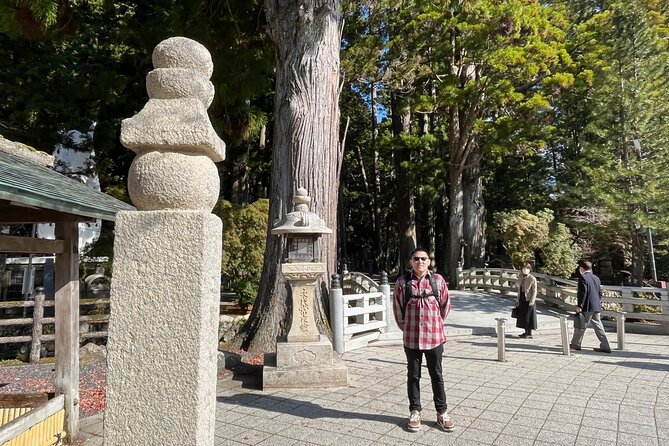
The Reihokan Museum preserves Koyasan’s religious and cultural treasures. Its entrance hall is styled after Byodoin Temple in Uji, and the museum has three exhibition areas.
You have about one hour here. This is a good choice if you want objects and artwork to support the broader story you hear at the temples. Museums can also provide a welcome change from outdoor walking, especially in rain or fog.
The museum may appeal most to you if you enjoy religious art, historic objects, and careful displays. If your main interest is atmosphere and sacred spaces, you may prefer to use your limited site choices on Okunoin, Kongobu-ji, and Danjo Garan.
The tour description does not identify the individual exhibits on display during your visit, and collections can change. Ask the guide what is currently worth seeing when you arrive. Admission fees are not included, so budget separately for any museum charge.
Daishi Kyokai: the administrative side of faith
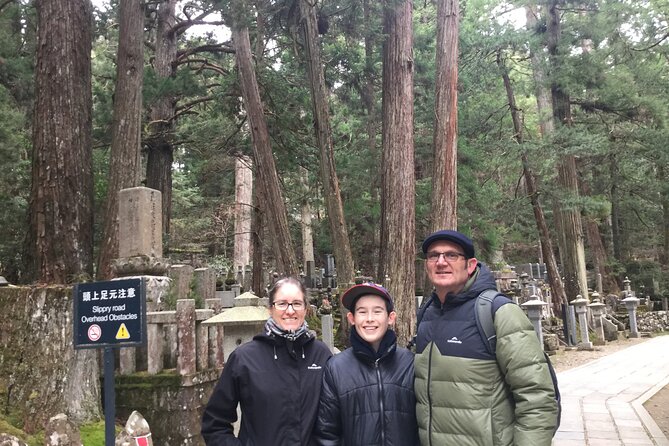
Daishi Kyokai is the administrative center of Shingon Buddhism and works to spread Kobo Daishi’s teachings. The complex has two buildings.
This stop provides a different angle from the temples and mausoleum. Here, you see the modern organizational side of a religious tradition that began more than a thousand years ago. That helps explain the tour’s promise to show both modern and traditional aspects of Mount Koya.
You have about an hour here. It may be especially worthwhile if you want to understand how Shingon Buddhism functions beyond its famous sacred buildings. If you prefer a more visual day, this is one of the stops I would place behind Okunoin, Kongobu-ji, and Danjo Garan.
Tokugawa’s Mausoleum and the power of memory
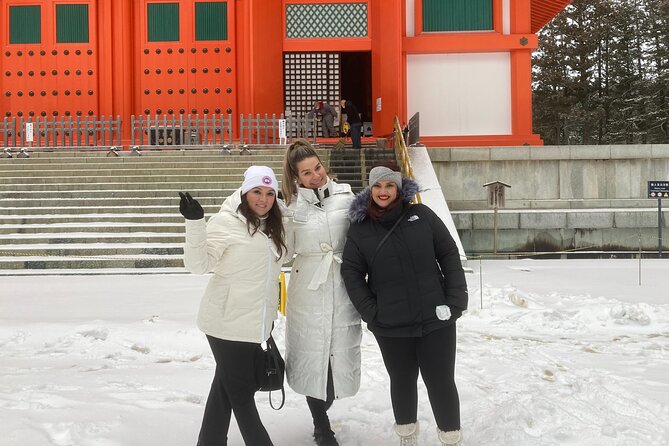
The Tokugawa Mausoleum was built in 1643 by the third Tokugawa shogun, Iemitsu. It gave the Tokugawa family a mausoleum close to Kobo Daishi’s mausoleum.
The site links Mount Koya’s religious importance with Japan’s political past. The Tokugawa family ruled Japan during the shogunate, and placing their mausoleum near Kobo Daishi’s resting place shows how closely political power and religious authority could be connected.
The planned visit lasts about an hour. It is a strong choice for anyone interested in the Tokugawa period or the way elite families used sacred sites. It may be less essential if your first visit to Koyasan is focused on Buddhism’s beginnings and daily religious meaning.
The private vehicle changes the feel of the day
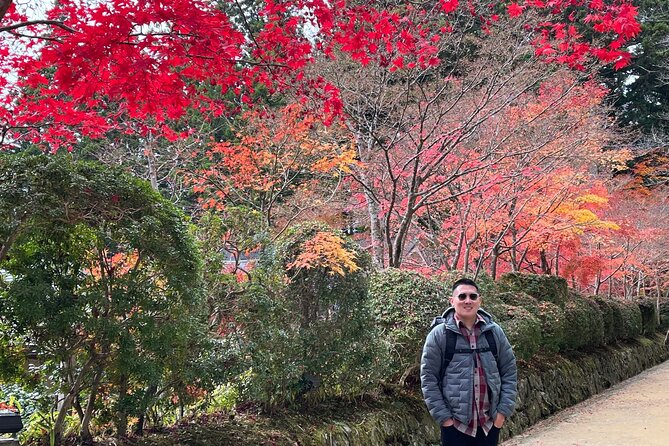
The tour includes a private vehicle and pickup from your Osaka hotel. Only your group participates, so you are not sharing the schedule with a coach full of strangers or waiting for a large group to gather at every stop.
That privacy is valuable in two ways. First, you can ask questions at your own pace. Second, you can choose three or four locations from the available sites instead of trying to force all six into one day.
The published stop times add up to seven and a half hours, leaving very little room for the journey to and from Osaka, meals, parking, and transitions. This is the clearest reason not to expect every listed location in one outing. The experience is designed around a selection of sites, not a complete sweep.
Lunch is not included. You should plan for that expense and ask how much time is available for a meal when the day is arranged. Personal expenses are also separate. Since the tour is private, it is sensible to tell the provider before departure which sites matter most and whether you want more time at the cemetery, temples, museum, or historical sites.
Is $898.72 a fair price for two?
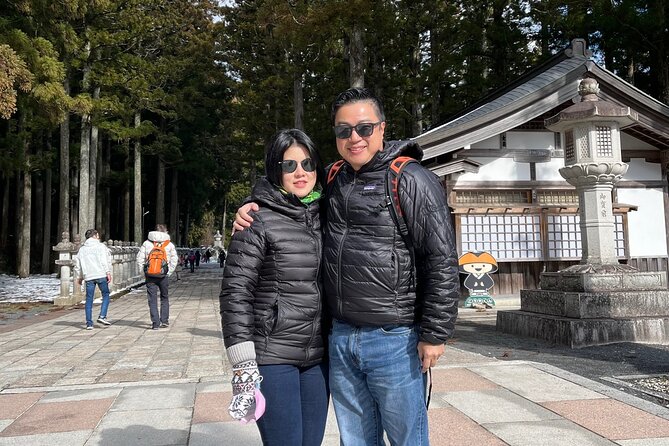
At $898.72 per group of up to two, this is expensive as a solo excursion. For two people, the effective cost is about $449 each before lunch and any entrance charges. The price is easier to defend if you value a private car, hotel pickup, a licensed English-speaking guide, and the ability to set the focus of the day.
It is less attractive if you are comfortable navigating independently or mainly want transportation. The fee does not include lunch, other personal expenses, or entrance fees. Guide entry fees are covered only for sights included under the expected stops, so ask about any additional place you may want to add.
The private format also means you cannot combine your booking with another group to lower the cost. That keeps the day personal, but it removes the usual budget advantage of a shared tour.
The booking pattern suggests people reserve well ahead, with an average lead time of 59 days. That is a useful planning signal, especially if your Osaka dates are fixed. The tour has free cancellation up to 24 hours before the start time. Cancellations or changes inside that window are not accepted for a refund.
Who will get the most from this outing?
I would choose this tour if you have a short stay in Osaka but want one serious day outside the city. It suits couples, first-time visitors who want cultural context, and anyone who would rather let a guide handle the transport.
It is also a good match if you have different interests within your group. One person can ask about Shingon Buddhism while another focuses on architecture, political history, or religious art. A private guide can adjust the explanation instead of giving a fixed speech.
You should think twice if your budget is tight, if you want a relaxed day with no time pressure, or if you hope to visit all six places. The eight-hour limit and three-to-four-site format make prioritizing necessary.
Families can ask for car seats or booster seats, but only a limited number are available. Rear-facing car seats are not available. Service animals are allowed, and the tour states that most people can participate. Since walking details are not specified, ask the provider about your particular mobility needs before booking.
Final call: book it for access, not just transport
Book this Mount Koya day trip if you want the mountain explained as a living religious center and you value door-to-door convenience from Osaka. The strongest plan is to choose Okunoin, Kongobu-ji, and Danjo Garan, then add the Reihokan Museum, Daishi Kyokai, or Tokugawa Mausoleum according to your interests.
The experience earns its high 4.9 rating from the mix of private attention, cultural explanation, and a setting that can feel especially powerful in fog or rain. Just go in knowing what you are buying: not a cheap ride and not a checklist of every site, but a carefully guided day for two at a premium price.
FAQ
How long does the Mount Koya tour last?
The tour lasts approximately eight hours.
Where does pickup take place?
Pickup is offered from your hotel in Osaka.
Is this a private tour?
Yes. Only your group participates, and the tour is booked for up to two people.
How many Mount Koya sites can I visit?
The tour includes a customizable visit to three or four sites from the listed places.
Is lunch included?
No. Lunch and other personal expenses are not included.
Are entrance fees included?
Entrance fees are not included. Guide entry fees are covered only for sights listed under the expected stops.
Can I cancel for a full refund?
Yes. You can cancel at least 24 hours before the experience start time for a full refund. Cancellations or changes made less than 24 hours before the start time are not accepted.
Just added in Osaka
- Urban Canvas: Osaka Street Art Bike Tour★ 5.0 · 10 reviews
- Anime Cosplay Photshoot-50 Digital Photos Provided★ 5.0 · 8 reviews
- TeamLab Botanical Garden Osaka Ticket★ 3.5 · 6 reviews
- Umeda Sky Building & Kuchu Teien Observatory Ticket in Osaka★ 4.5 · 3 reviews
- Immerse in Judo Martial Arts Class from Japan★ 5.0 · 4 reviews
- Cherry Blossom Buddha and Mt.Yoshino with Strawberry Picking Tour★ 4.5 · 5 reviews
- Discover Osaka’s Iconic Umeda Sky Observation★ 5.0 · 6 reviews
- Traditional Home cooking Experience in Osaka, Japan★ 5.0 · 14 reviews
Full-Day, compared.
Minoh, Katsuoji Temple, & Minoh Falls Full-day Tour
Read our review →
Osaka’s Best and Brightest: Private Full-Day Tour by Vehicle
Read our review →
Full Day Tour of Kyoto with Private Transportation
Read our review →
Full Day Hiroshima and Miyajima Tour by Bullet Train from Osaka
Read our review →
Amanohashidate & Ine Funaya Sightseeing Full Day Trip from Kyoto
Read our review →
Kyoto Full-Day Private Tour (Osaka departure) with Government-Licensed Guide
Read our review →