
Reviewed · SHINSEKAI TOURS
Let’s Dance Bon Odori Japanese folk Dance near Tsutenkaku
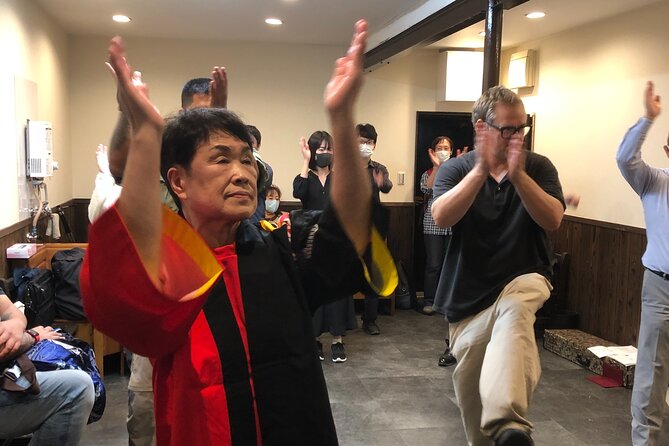
Bon Odori is not a stiff performance reserved for experts. At Ebisuza, you learn a few simple steps, join the circle, and gradually dance with more freedom as the music picks up. Live shamisen and taiko may add a wonderful Japanese festival feel, while the class stays relaxed and social.
I like the easy pace and the setting near Tsutenkaku, where you can pair the class with kushikatsu, takoyaki, or a visit to Isshinji Temple. I also like the small maximum group of 15, which gives the instructor room to guide beginners. The main consideration is that the class lasts about 90 minutes and focuses on dance, not a full guided tour of the neighborhood.
Key points to know before booking
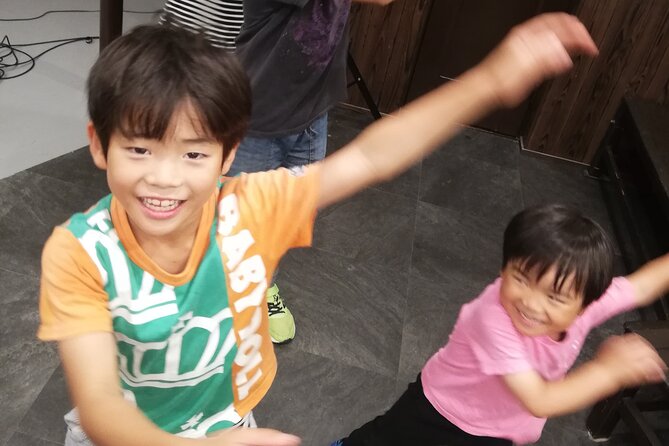
- Simple Bon Odori steps: The instructor demonstrates first, then builds the dance from basic movements.
- A circle dance with a samba-like beat: The style is lively but approachable, with room to move freely.
- Live music may be part of the session: You may get to hear or try shamisen and taiko.
- Central Osaka location: Ebisuza is near Tsutenkaku, Isshinji Temple, and the zoo.
- A drink is included: Choose coffee, tea, water, or a canned alcoholic beverage.
- Small group format: The activity accepts no more than 15 people and offers afternoon and evening times.
Learning Bon Odori at Ebisuza near Tsutenkaku
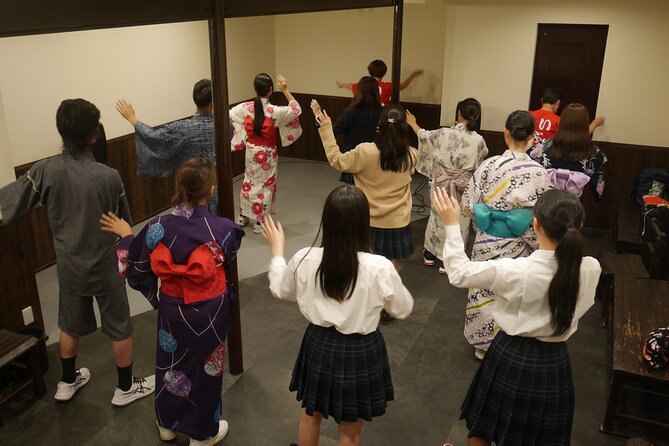
The best thing about this experience is its low barrier to entry. You do not need dance training, festival experience, or Japanese language skills to take part. The instructor begins with a demonstration, then breaks the dance into basic steps before asking you to join the circle.
Bon Odori is often associated with summer festivals, but this class gives you a chance to try it at another time of year. The dance uses a samba-like rhythm, which helps explain why the mood is more playful than formal. You are not trying to master a long routine for a stage show. You are learning enough to move with the group and enjoy the music.
I like that the class allows the dance to loosen up as it goes. In the first half, you work on the steps. In the second half, you can dance with more freedom. That structure gives you a clear starting point without making the session feel like a test.
The class is held at Ebisuza, at 1-chōme-3-13 Ebisuhigashi in Naniwa Ward. The location puts you in one of Osaka’s most recognizable sightseeing areas, close to Tsutenkaku and Isshinji Temple. It is also near public transportation, which makes it a practical activity to add to a day in the Shinsekai area.
More Shinsekai and Tsutenkaku tours:
- Osaka: Shinsekai Food Tour with 13-15 Dishes at 5 Eateries
★ 4.8 · 2,204 reviews - Osaka Local Foodie Walking Tour in Dotonbori and Shinsekai
★ 5.0 · 985 reviews - Osaka: Tsutenkaku Tower Entry Ticket
★ 3.8 · 125 reviews
What the 90-minute class feels like
The session begins with instruction rather than immediate free dancing. The instructor demonstrates the Bon Odori, showing how the body moves and how the steps fit the rhythm. You then repeat the basic pattern at a manageable pace.
This matters if you are worried about looking awkward. Everyone starts with the same simple material, and the dance has relatively few rules. You can concentrate on keeping the rhythm instead of trying to copy a complicated choreography.
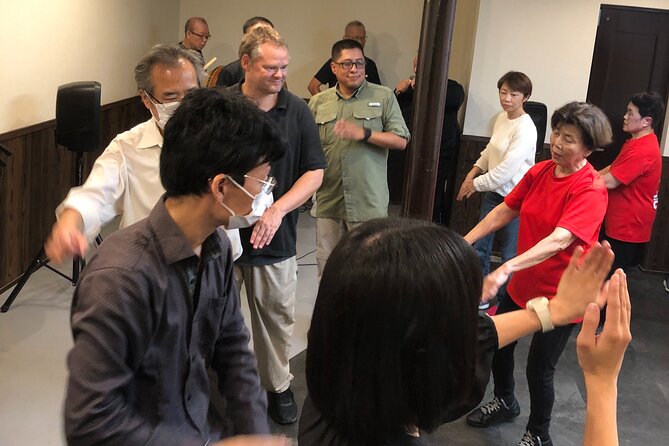
Once the basics are clear, the group dances together in a circle. That circle is an important part of the experience. You are not standing alone in front of an instructor, and you are not expected to perform for the room. The group moves together, which makes it easier to settle into the pattern.
The latter half is less about perfect footwork and more about having fun. You may find yourself adding personal style once the steps become familiar. The relaxed tone also explains the reference to dancing while tipsy. A canned alcoholic beverage is one of the drink choices, but coffee, tea, and water are available if you prefer to stay completely clear-headed.
Plan on about one hour and 30 minutes from start to finish. That is long enough to learn the dance and repeat it several times, but short enough to fit around other Osaka plans. An early afternoon or evening session gives you some flexibility.
Shamisen, taiko, and the extra musical touch
One of the most appealing details is the chance to encounter traditional Japanese instruments alongside the dance. Several class experiences included live shamisen and taiko, and participants were able to touch and try the instruments.
The shamisen is a traditional three-stringed instrument, while the taiko is a Japanese drum. Together, they give the class a stronger connection to festival culture than a dance lesson set only to recorded music. The live playing can also help you understand why Bon Odori feels communal and rhythmic.
The instruments are not described as a separate concert or guaranteed part of every session, so you should treat this as a possible bonus rather than the central promise. Still, it is a valuable feature to keep in mind when comparing this class with a standard cultural workshop.
If you have never played either instrument, the chance to try them can make the visit feel more memorable. You are not just watching Japanese culture from the outside. You are learning a dance and, when available, handling some of the sounds connected with it.
Tsutenkaku and Isshinji Temple: what surrounds the class
The activity’s two listed stops are Tsutenkaku and Isshinji Temple, but the dance itself takes place at Ebisuza. Think of these spots as nearby landmarks that help you plan your day, not as separate guided sightseeing stops with long visits.
Tsutenkaku is the area’s famous tower and an easy reference point when you are finding the studio. Its presence gives the class a strong Osaka setting. You are not being taken out to a remote cultural center. You are learning a traditional dance in the middle of a well-known entertainment district.
Isshinji Temple is also nearby. If you have time before or after the class, it gives you a quieter contrast to the food stalls and attractions around Tsutenkaku. The supplied details do not promise a temple tour, so you should visit it independently rather than expect the instructor to provide a full explanation.
The zoo is also close, and the area has plenty of food. You can make the dance class part of a half-day plan: visit Tsutenkaku, stop at Isshinji Temple, take the Bon Odori lesson, then eat local favorites such as takoyaki, okonomiyaki, or kushikatsu.
That nearby food is more than a convenience. A cultural class can feel disconnected if you have to travel far afterward. Here, you can continue your Osaka outing on foot or with short local transport connections, depending on your plans.
Same city, a completely different kind of afternoon:
- Osaka Go Karting Tour with Funny Costume
★ 5.0 · 2,658 reviews - Osaka Castle: Museum and Tower Entry Ticket
★ 4.5 · 2,380 reviews - Osaka Food Tour: 13 Dishes at 5 Local Eateries
★ 5.0 · 2,149 reviews - Hungry Osaka Street Food Tour:15 Tastings & 3 Drinks with a Local
★ 5.0 · 1,727 reviews
Is $19.60 a fair price?

At $19.60 per person, this is a reasonably priced cultural activity, especially because the fee covers a 90-minute class and a drink. The value comes from participation rather than sightseeing admission. You are paying to learn something and take part, not simply to watch a performance.
The price also compares well with the small-group limit of 15 people. A smaller class can make it easier to see the instructor’s movements and ask for help if you lose the rhythm. The experience is not private, but it should feel more personal than a large festival crowd.
The drink adds a modest extra benefit. You can choose a nonalcoholic option, or select a canned alcoholic beverage if that suits your evening. I would not book the activity for the drink alone, but it helps the session feel social after the dancing ends.
Value depends on your interests. If you want a major Osaka attraction with a long guided explanation, this is not the right purchase. If you want an affordable activity that gives you a direct connection to a Japanese dance tradition, the cost makes sense.
The experience is often reserved about 27 days ahead. That suggests you should not assume you can leave it until the last day of your Osaka stay, especially if you need a particular afternoon or evening time.
Who will enjoy this Bon Odori class
This activity suits first-time dancers particularly well. The steps are described as slow and easy to follow, and the dance has few strict rules. You can participate without worrying about technical skill.
It is also a good choice for families and groups of friends. One French-language review described the session as a memorable source of laughter for friends or family, which fits the class’s relaxed character. You are doing something together, rather than sitting quietly through a presentation.
People with a strong interest in Japanese music may get extra value from the shamisen and taiko. If you arrive early, live shamisen playing may be part of the welcome, and some sessions include the chance to try the instruments.
The class may also suit people who prefer a gentle cultural activity. One participant was able to enjoy the dance despite having knee pain, but you should judge your own comfort. Bon Odori is still a standing and moving activity, and the available information does not promise seated participation or special adaptations.
This is less suitable if you dislike group participation, dancing in circles, or activities with an informal social mood. It is also not the right choice if you expect a full tour of Tsutenkaku and Isshinji Temple. The neighborhood is part of the setting, but the main event is the dance lesson.
Practical details that affect your visit
The meeting point is 1-chōme-3-13 Ebisuhigashi, Naniwa Ward, Osaka, postal code 556-0002. Clear directions matter because the area has many attractions and busy streets, so allow enough time to locate Ebisuza before the scheduled start.
The activity ends back at the meeting point. You do not need to arrange a separate return transfer, and you can continue to nearby restaurants afterward.
A mobile ticket is provided, which makes entry simple as long as your phone is ready. Confirmation is received at booking. The class is near public transportation, and service animals are allowed.
Most people can participate, but the class involves standing, walking through dance steps, and repeated movement. If you have a physical limitation, consider your comfort before booking. The class is friendly to beginners, but it is not described as a seated demonstration.
Free cancellation is available if you cancel at least 24 hours before the local start time. Cancellations or changes made later are not accepted for a refund. That deadline is worth noting if your Osaka schedule is still shifting.
How the dance fits into a wider Osaka day
I would place this class in a day centered on southern Osaka. You could visit the nearby attractions first, then attend an afternoon session and eat afterward. An evening session works well if you want to spend the earlier part of the day elsewhere and finish near Tsutenkaku.
The neighborhood gives the experience a useful local frame. You learn a Japanese folk dance, then step outside into an area known for casual food and sightseeing. You do not have to treat the class as a stand-alone cultural appointment.
Try not to pack the schedule too tightly. The class lasts about 90 minutes, and arriving early is sensible because directions and the first demonstration are important. If you hope to try shamisen or taiko, extra time around the start may help, though the exact timing is not guaranteed.
The dance also gives you a different view of Japanese culture than a temple visit or museum. You learn by copying movement, following rhythm, and joining a group. That hands-on quality is the reason I would choose it over another passive attraction if your Osaka itinerary already includes plenty of sightseeing.
Should you book Let’s Dance Bon Odori?
Book this experience if you want a friendly, affordable activity where you can take part rather than simply observe. It is especially well suited to first-time dancers, families, friends, and anyone curious about Japanese festival culture. The easy steps, included drink, central location, and possible shamisen and taiko session make the $19.60 price attractive.
Think twice if you want a full neighborhood tour, a formal performance, or a private lesson. The focus is a group dance class, and the most rewarding part comes from joining the circle and letting go of the need to get every step perfect.
For most people with room in their Osaka schedule, I would book it. Choose the session time that fits your day, allow time to find Ebisuza, and plan a meal near Tsutenkaku afterward. This is a small activity with a clear purpose: learn a few steps, share the rhythm, and leave with a more personal connection to Osaka’s festival traditions.
FAQ
Where does the Bon Odori activity take place?
The activity takes place at Ebisuza, located at 1-chōme-3-13 Ebisuhigashi, Naniwa Ward, Osaka, 556-0002, Japan.
How long does the experience last?
The activity lasts approximately 1 hour and 30 minutes.
What is Bon Odori?
Bon Odori is a traditional Japanese folk dance often performed during the summer festival season. This class teaches the dance year-round.
Do I need dance experience?
No. The instructor demonstrates the dance and teaches basic steps first. The dance has few rules and is designed to be easy to join.
What kind of music accompanies the dance?
Bon Odori is danced to a samba-like rhythm. Live shamisen and taiko may also be part of the session.
Can I try the shamisen or taiko?
Some sessions include the chance to touch and try the shamisen and taiko instruments. The available information does not guarantee this at every session.
What drink is included?
You can choose coffee, tea, water, or a canned alcoholic beverage.
How many people can join the class?
The activity has a maximum of 15 participants.
Are there different start times?
Yes. You can choose from early afternoon and evening sessions.
Is cancellation free?
Yes. You can cancel for a full refund if you cancel at least 24 hours before the experience’s start time.
Just added in Osaka
- Urban Canvas: Osaka Street Art Bike Tour★ 5.0 · 10 reviews
- Anime Cosplay Photshoot-50 Digital Photos Provided★ 5.0 · 8 reviews
- TeamLab Botanical Garden Osaka Ticket★ 3.5 · 6 reviews
- Umeda Sky Building & Kuchu Teien Observatory Ticket in Osaka★ 4.5 · 3 reviews
- Immerse in Judo Martial Arts Class from Japan★ 5.0 · 4 reviews
- Cherry Blossom Buddha and Mt.Yoshino with Strawberry Picking Tour★ 4.5 · 5 reviews
- Traditional Home cooking Experience in Osaka, Japan★ 5.0 · 14 reviews
- Traditional Calligraphy Experience near Dotonbori★ 5.0 · 3 reviews
Shinsekai Tours, compared.

Shinsekai Food Tour with 13-15 Dishes at 5 Eateries
Read our review →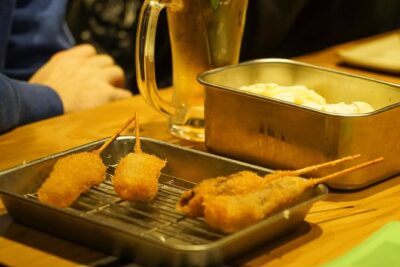
Osaka Local Foodie Walking Tour in Dotonbori and Shinsekai
Read our review →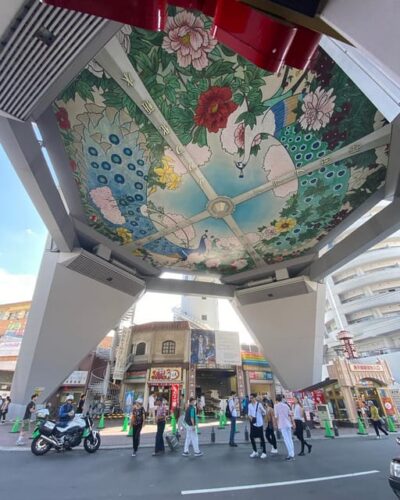
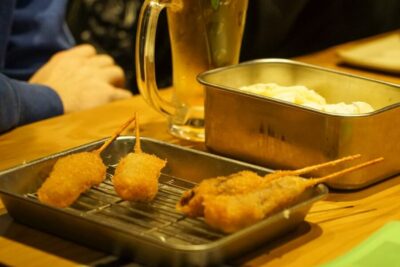

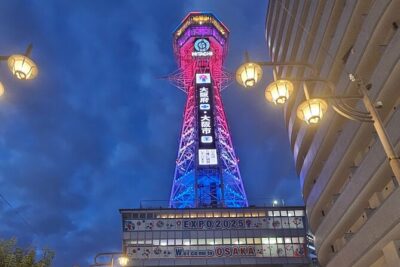
Shinsekai Food Tour – 13 Dishes at 5 Local Eateries
Read our review →
Night Soul Food Tour in Shinsekai with a local guide
Read our review →
Osaka Morning Tour: Shitennoji Temple, Shinsekai &Doutonbori
Read our review →Browse the lists this tour appears in