
Reviewed · OSAKA WALKING TOURS
Sakai – Knife Factory and Craft Walking Tour
Sakai’s knife trade comes alive when you step inside a working factory and watch handmade blades pass through the sharpening station. This is not just a shop visit. You see raw blades arrive from a blacksmith, learn how an ordinary piece of steel becomes a cooking knife, and try traditional sharpening with professional guidance.
I like the mix of craft and local flavor. The tour includes a small cinnamon mochi tasting tied to a 400-year-old Sakai tradition, then adds a useful museum stop covering local products and crafts. I also like the chance to order a customizable knife and watch it being made for you.
The main consideration is that some sightseeing stops can be visited independently, so the factory access and hands-on lesson are the real reasons to book. Guide quality also matters. Guides including Rémi, Scott, and Jean-Yves have led praised tours, but French is not guaranteed on a shared departure.
Key points at a glance
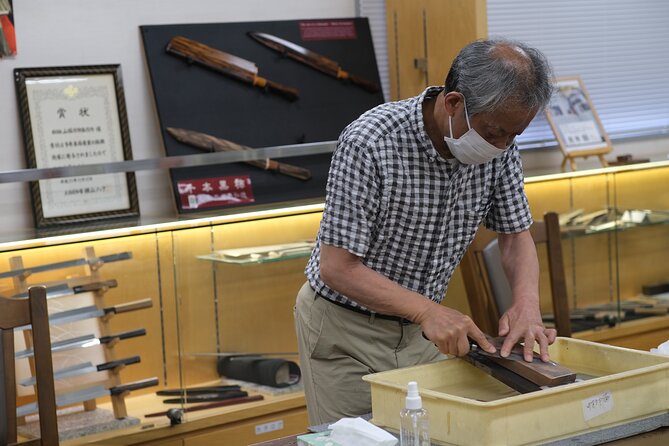
- Watch knives being sharpened by hand: You enter a traditional factory with more than 100 years of family history and see professional sharpening at close range.
- Practice the sharpening technique: The lesson gives you more than a demonstration, though the exact amount of hands-on time may depend on the group.
- Taste Sakai cinnamon mochi: One sweet is included, with the story of a local tradition said to be 400 years old.
- Buy a knife directly from the craft network: You can ask about a custom knife and watch it take shape in front of you.
- Keep the small group in mind: The maximum is 10 people, but at least two bookings are needed for the tour to operate.
- Check special dates: From March 6 to April 6, 2026, the blacksmith portion is available only on Tuesdays, Wednesdays, and Thursdays.
Why a Sakai factory visit is the heart of the morning
Sakai is known for handmade kitchen knives, and this tour gives you access to the part of the process that most casual shopping trips miss. You enter a real knife factory with more than a century of family history, rather than simply looking at finished blades behind a counter.
The most useful part is the sharpening station. This is where you can watch professionals work with patience and precision. The point is not speed. The craft comes from controlling the blade, the angle, and the pressure so the finished knife cuts cleanly.
You also get an explanation of how blades arrive from the blacksmith before being turned into proper cooking knives. That connection matters. It helps you see that a knife is not made in one dramatic step. Blacksmithing, shaping, sharpening, finishing, and fitting all have their own place.
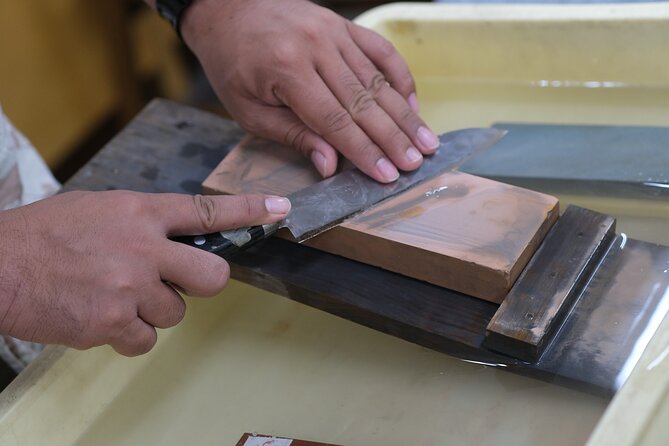
The tour includes a sharpening lesson, so you are not only watching. You have the chance to practice traditional methods under professional direction. If you enjoy cooking, this can change how you think about caring for the knives you already own. It also makes a future purchase more meaningful because you understand the work behind it.
The factory is not a polished theme park attraction. That is part of its appeal, but it also means the visit is focused on working craft rather than theatrical presentation. If you want a quiet, practical look at a traditional trade, this is the strongest part of the tour.
More walking tours in Osaka Prefecture:
- Best Private Osaka Walking Tour With A Guide 100% Personalised
★ 4.5 · 12 reviews - Osaka Local Foodie Walking Tour in Dotonbori and Shinsekai
★ 5.0 · 985 reviews - Osaka: Deep Backstreets Walking Tour with Dinner Option
★ 4.9 · 902 reviews
The cinnamon mochi stop starts the day with local flavor
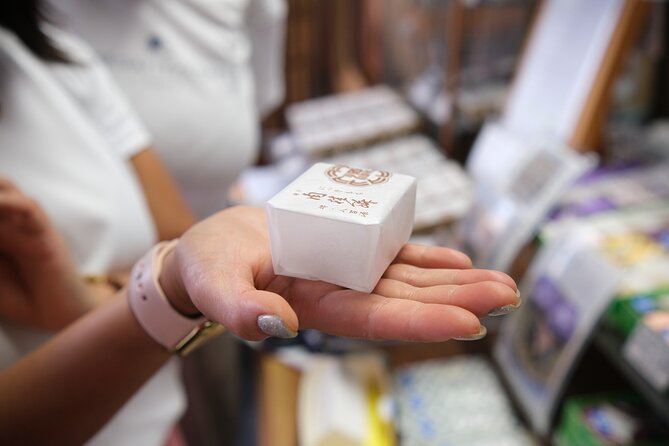
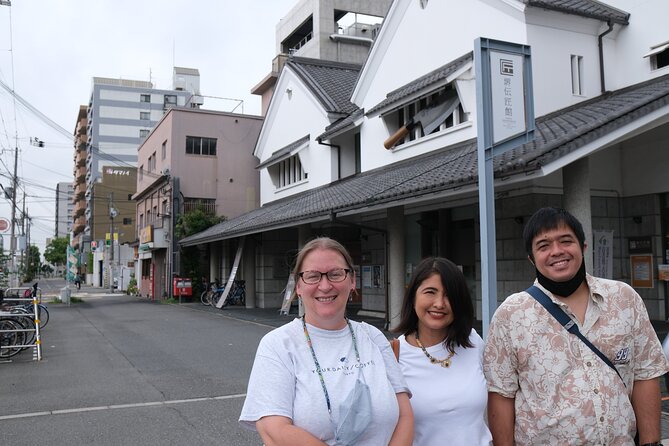
The tour begins at 八百源来弘堂本店, at 3-chōme-22 Ebisujimachō in Sakai Ward. Here you learn about the 400-year-old origin story of traditional Japanese cinnamon mochi and receive one piece as part of the tour.
This is a short stop, about 15 minutes, but it gives the morning a pleasant local touch. The sweet is included, and you can buy more if you like it. It is a better introduction to Sakai than a generic snack because the food comes with a specific local story.
Do not expect a long food tasting. One sweet is included, while any extra food is your responsibility. Still, I like the way this stop connects the walking route to daily life. The tour is not only about tools and production. It also shows you a small food tradition tied to the city.
The meeting point is the same general area, and the activity starts at 9:00 a.m. The tour ends back at the meeting point. Since the full program lasts about three to four hours, you still have much of the day available for lunch or more sightseeing in Osaka.
Inside the family-run knife factory
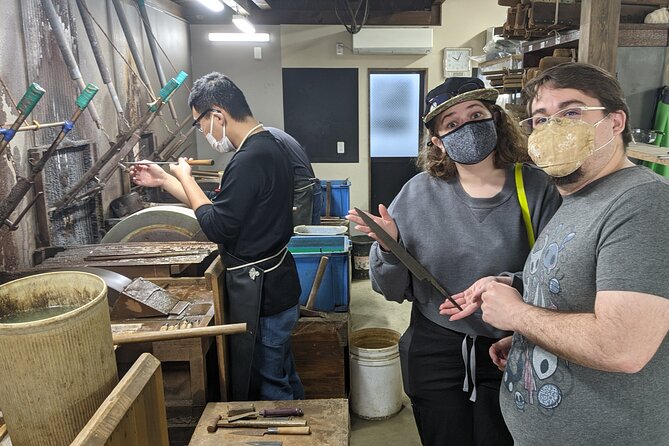
The main factory visit takes about one hour. You go inside the sharpening area, see professionals at work, and learn how blades are finished as handmade cooking knives.
This is where the tour earns its price. A visit to a knife shop can show you dozens of attractive products, but it cannot always show you how they are made. Here, the process is the subject. You can ask questions, observe the work, and connect the craft to the finished tool.
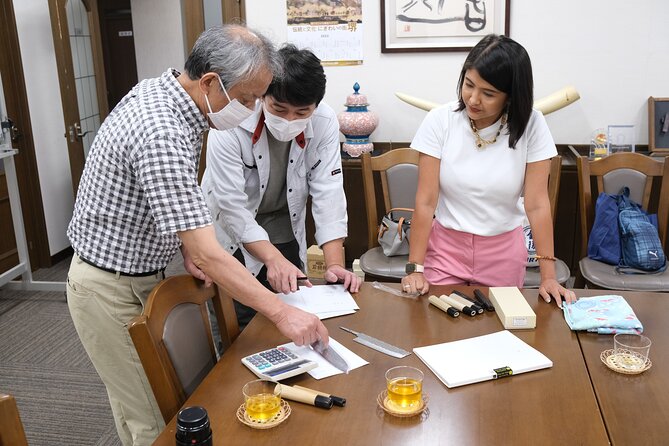
The tour also includes a visit to the main office. That detail may sound modest, but it gives you a look at the business behind the workshop. You are seeing a family operation with a long working tradition, not just a retail display prepared for tourists.
If you are considering buying a knife, listen closely during this section. You can ask about ordering a customizable knife, and the tour allows you to watch your knife being made in front of you. The supplied information does not promise a particular price, blade style, or completion time, so you should ask the guide or craftsman about those points before ordering.
There is no hard-sell requirement built into the tour. Shopping and souvenirs are not included in the fee, and buying something is optional. That makes the purchase more comfortable. You can enjoy the factory even if you leave with nothing.
The sharpening lesson is useful beyond the tour
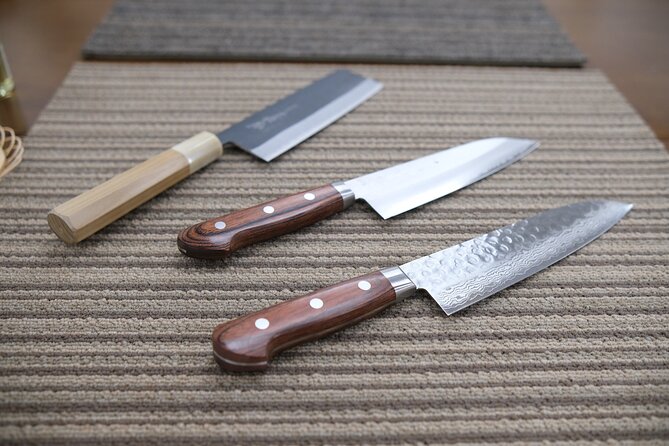
The sharpening lesson is the most practical feature for many people. A Japanese kitchen knife needs care, and seeing a skilled sharpener work can teach you more than reading a short explanation in a shop.
You will practice traditional sharpening techniques with professional help. The experience can be especially useful if you already cook often or own a quality knife that you have not maintained properly. It may also help you understand why a handmade knife should not be treated like a disposable kitchen tool.
The lesson is not described as a full professional course, so set your expectations correctly. You are getting an introduction during a walking tour, not several days of formal training. The size of the group is limited to 10, which should help keep the demonstration visible and the explanation manageable.
Guide skill makes a difference here. Rémi has led tours in French, English, and Japanese, and his background has been praised for helping people understand both the knife craft and Japanese culture. Scott has been praised for conversation and for explaining the detail behind the knives. Jean-Yves has also led tours that combine Sakai, the factory, and local food suggestions.
The operator does not guarantee a French-speaking guide on a shared tour. If French is important to you, ask before booking rather than assuming Rémi will lead your date.
Same city, a completely different kind of afternoon:
- Full Day Tour of Kyoto with Private Transportation
★ 5.0 · 130 reviews - Kyoto private tour (Shore excursion available from Osaka or Kobe port)
★ 5.0 · 39 reviews - Private arrival Transfer from Kansai airport to Osaka city
★ 4.5 · 36 reviews - Private Transfer by Sedan from Itami Airport ITM to Kyoto City
★ 4.5 · 31 reviews
Sakai Traditional Crafts Museum adds local context
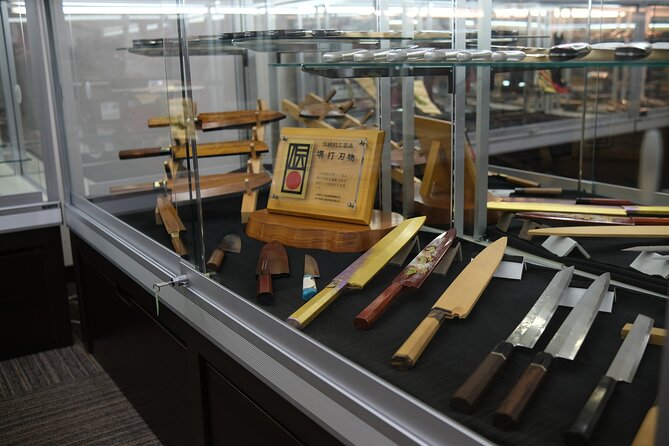
After the factory, the route includes the Sakai Traditional Crafts Museum and Knife Shop for about 30 minutes. This museum introduces the city’s handmade crafts, bicycles, and local products.
The bicycle section is a useful reminder that Sakai’s working identity extends beyond knives. The city is also linked to Shimano, which began there. The stop gives you a wider view of local manufacturing and craft instead of treating Sakai as a single-product destination.
The museum is also a practical place to compare knives and other goods. You may find products there that differ from what you see at the factory. Shopping is not included, so bring your own budget and remember that the $66.05 tour price covers the guided activity, factory visit, sharpening lesson, included snack, and taxes, not purchases.
There is one scheduling detail to watch. Every third Tuesday of the month, the museum may close for inventory without notice. If that happens, the guide takes you directly to The Craftsman location. This protects the morning from losing momentum, but the exact museum visit cannot be guaranteed on that date.
Is the $66.05 price good value?
At $66.05 per person, this is not the cheapest way to walk around Sakai. You can visit public sights and browse shops on your own for less. One clear advantage is access to the factory and the sharpening lesson, which are the parts hardest to recreate independently.
The price also includes a bilingual guide, all fees and taxes, one sweet, and the factory visit. A good guide can connect the craft to Sakai’s past and explain what you are seeing in plain language. The small group limit of 10 adds value, especially during the sharpening demonstration.
The value drops if you are mainly interested in seeing the museum or buying a finished knife. Those activities may be possible without paying for a half-day tour. In that case, you are paying chiefly for the guided route, factory access, and instruction.
For a person who wants a Japanese kitchen knife and would like to understand its making, the price is easier to justify. You also avoid walking into a shop with no idea what questions to ask. The tour gives you a better basis for comparing knives, choosing a custom order, and caring for the tool afterward.
Timing, meeting point, and group size
The tour starts at 9:00 a.m. and lasts roughly three to four hours. It begins at 3-chōme-22 Ebisujimachō, Sakai Ward, Sakai, Osaka 590-0985, and returns to the meeting point.
The activity is near public transportation, according to the supplied details. You should still allow enough time to reach Sakai in the morning, since arriving late could mean missing the mochi stop or the factory entry.
Most people can participate. The tour accepts solo bookings, but it has a two-person minimum for the session to operate. If a single booking does not reach that minimum, the operator may cancel and offer another date or a full refund. This is important if your Osaka plans are tight.
A maximum of 10 people keeps the group fairly small. The exact group size may vary, but you should expect a shared walking tour rather than a private appointment.
From March 6 through April 6, 2026, the blacksmith portion is available only on Tuesdays, Wednesdays, and Thursdays. If seeing that part matters to you, choose your date with care.
Who will get the most from this tour?
I would choose this tour if you cook, enjoy traditional handcraft, or want a useful souvenir rather than another decorative object. The factory and sharpening lesson give the morning a clear purpose, and the optional custom knife adds a personal reason to pay attention.
It also suits people who want a quieter side trip from Osaka. The walking route combines food, local manufacturing, and a museum without trying to fill every minute with major attractions.
You may not love it if you have little interest in knives. The museum and mochi stop are pleasant, but the factory remains the main event. You should also skip it if you need a guaranteed French-speaking guide, since shared departures cannot promise one.
If you want only a quick shopping stop, the tour may feel too long. The best reason to book is not simply to purchase a knife. It is to understand the work, learn basic care, and make a better choice if you decide to buy.
Booking and cancellation details to keep in mind
Confirmation is provided when you book, and the ticket is mobile. The tour offers free cancellation when you cancel at least 24 hours before the local start time. Cancellations or changes inside that window are not refunded or accepted.
The activity may be canceled if the minimum number of bookings is not reached. In that case, you are offered another date or experience, or a full refund.
Should you book the Sakai Knife Factory and Craft Walking Tour?
Book it if you want factory access, hands-on sharpening, and a chance to order a knife directly through local craftspeople. Those features give the tour more value than a simple shop visit, and they turn an ordinary souvenir purchase into a lesson in Japanese workmanship.
I would be more cautious if your main goal is general sightseeing. Some stops are short, and you could explore parts of Sakai on your own. Check your date for the March 2026 blacksmith restriction, the third-Tuesday museum closure possibility, and the two-person minimum before you commit.
For cooks, craft fans, and curious visitors who want an authentic morning outside central Osaka, this is a focused and worthwhile choice. Just book it for the factory and the sharpening lesson, not for a long food tour or a guaranteed French guide.
FAQ
How long does the Sakai Knife Factory and Craft Walking Tour last?
The tour lasts approximately three to four hours.
What time does the tour start?
The tour starts at 9:00 a.m.
Where does the tour begin?
It begins at 3-chōme-22 Ebisujimachō, Sakai Ward, Sakai, Osaka 590-0985, Japan.
Where does the tour end?
The activity ends back at the meeting point.
Is a knife included in the tour price?
No. Shopping and souvenirs are not included. You can ask about ordering a customizable knife, but any purchase is extra.
Is knife sharpening included?
Yes. The tour includes a knife sharpening lesson with professional guidance.
Can I visit a real knife factory?
Yes. The tour includes entry to a traditional knife factory with more than 100 years of family history.
Is a French-speaking guide guaranteed?
No. French cannot be guaranteed on a shared tour, although Rémi has led tours in French, English, and Japanese.
Can one person book the tour?
Yes, a single person can book directly, but at least two guests are required for the session to operate. If the minimum is not met, you may be offered another date or a full refund.
What happens if I book on the third Tuesday of the month?
The museum may close for inventory without notice. If it is closed, the guide takes the group directly to The Craftsman location.
Is the blacksmith visit available every day?
From March 6 to April 6, 2026, the blacksmith portion is available only on Tuesdays, Wednesdays, and Thursdays.
Can I cancel for a full refund?
Yes, if you cancel at least 24 hours before the experience start time. Changes or cancellations made less than 24 hours before the start are not accepted or refunded.
Just added in Osaka Prefecture
- Shared Arrival Transfer: Osaka Itami Airport to Osaka City★ 5.0 · 3 reviews
- Best Private Osaka Walking Tour With A Guide 100% Personalised★ 4.5 · 12 reviews
- Private Transfer Between Kyoto and Kansai Airport KIX★ 5.0 · 3 reviews
- Osaka Sushi Cooking Class★ 5.0 · 3 reviews
- Cup Noodles Museum Guided Tour in Osaka★ 4.5 · 4 reviews
- Private Day Tour in Osaka and Kyoto with charter car★ 5.0 · 3 reviews
- Osaka : Cycling Tour Private Seaside Ride Near Kansai Airport★ 5.0 · 3 reviews
- Cook Homestyle Ramen and Gyoza from scratch★ 5.0 · 4 reviews
Osaka Walking Tours, compared.

Osaka Local Foodie Walking Tour in Dotonbori and Shinsekai
Read our review →
Deep Backstreets Walking Tour with Dinner Option
Read our review →
Ultimate Osaka Walking Tour: Castle, Dotonbori & Hidden Gems
Read our review →
Main Sights and Hidden Spots Guided Walking Tour
Read our review →
Private Osaka Walking Tour: Highlights & Hidden Gems
Read our review →
Osaka Castle Walking Tour and Castle Tower Admission
Read our review →
Kuromon Market Food Walking Tour in Osaka (6 stops, 6 tastes)
Read our review →
Five Must-See Highlights Walking Tour & Ramen Lunch
Read our review →Browse the lists this tour appears in