Reviewed · PRIVATE
Osaka: Traditional Japanese Ceramics Private Experience
Osaka’s most memorable souvenirs are often the ones you make yourself. At this private workshop, you shape Shigaraki clay into a sake set, sushi plate, or tea bowl while Anna explains Japanese pottery, food, and daily culture in her family’s century-old home studio. I like the walk from Teradachō Station through a local shopping street, and I like that the class is truly private, so you get patient, hands-on help instead of a rushed demonstration. The main catch is that your finished piece takes about a month and a half to arrive, and shipping costs extra.
I also like the choice of three useful Japanese forms, rather than one fixed craft project. English, Spanish, Catalan, and Japanese are available, which makes this a good option if you want real conversation as well as clay work. You should arrive on time, though: more than 15 minutes late counts as a no-show.
Key points to know
- Start at JR Teradachō Station: Meet Anna at the north exit, where she carries a sign for Ceramics Tocoton.
- Choose your own Japanese form: Make a sake bottle and glass, a sushi plate and chopstick holder, or a chawan tea bowl.
- Use local materials: The clay comes from the Shigaraki area, and the glazes use typical Japanese colors.
- Enjoy a private lesson: Anna gives step-by-step guidance and can adjust the pace for beginners or people with pottery experience.
- Plan for delayed delivery: Your completed pottery takes about six weeks to ship, and postage is not included.
- Receive two small gifts: Anna gives you a patterned sushi dish and a Sakura-shaped chopstick holder.
A quiet craft break in southern Osaka

This two-hour class gives you a useful change of pace from Osaka’s stations, shopping streets, and bright entertainment districts. You are not simply watching someone make pottery. You work with the clay yourself, ask questions as you go, and leave with a piece connected to Japanese food culture.
The workshop begins at JR Teradachō Station, a practical meeting point on the Osaka Loop Line. At the north exit, look for Anna carrying a sign with the name Ceramics Tocoton. She walks with you from the station to the studio, taking you away from the city’s best-known tourist areas and into a more ordinary part of Osaka.
That walk matters. The route leads toward a street lined with shops selling local food, then to a roughly century-old, two-story house that also serves as Anna’s family home. You get a short look at an older side of Osaka before the clay work begins. This is not a major sightseeing stop, so the value comes from the setting and the personal contact, not from grand architecture.
I like this opening because it makes the activity feel rooted in the neighborhood. You meet at a station, but the class does not remain in a commercial studio built only for visitors. The home workshop gives the experience a more personal scale. It also means you should be comfortable entering a private family space and following the guide’s lead.
A few more Osaka half-days worth pricing up
- Private Osaka Walking Tour: Highlights & Hidden Gems
★ 5.0 · 569 reviews - 3/4/5 Hours Private Tour in Osaka with Local Guide
★ 5.0 · 189 reviews - Osaka’s Best and Brightest: Private Full-Day Tour by Vehicle
★ 5.0 · 147 reviews
Meeting Anna and learning the three projects
Anna studied ceramic making in Osaka and Barcelona. During the introduction, she explains Japanese pottery and the cultural ideas tied to the objects you can make. You also have time to talk about Japanese customs, food, local arts, and places to visit in Osaka.
The three choices are clearly connected to Japanese dining:
- A sake set, made up of a small bottle and a glass
- A sushi set, made up of a sushi plate and chopstick holder
- A chawan, the bowl used for tea
This choice gives you a little control over the final souvenir. The sake set has a practical food and drink connection. The sushi plate is a good pick if you want a serving piece with a companion holder. The chawan has the simplest shape of the three, but it carries a strong link to the Japanese tea tradition.
You will make one of these sets or forms during the class. Read the description carefully when booking, since the experience includes instruction and construction of one selected option, not an unlimited pottery session. Some people have made more than one item during their time, but the stated activity is built around one of the three choices.
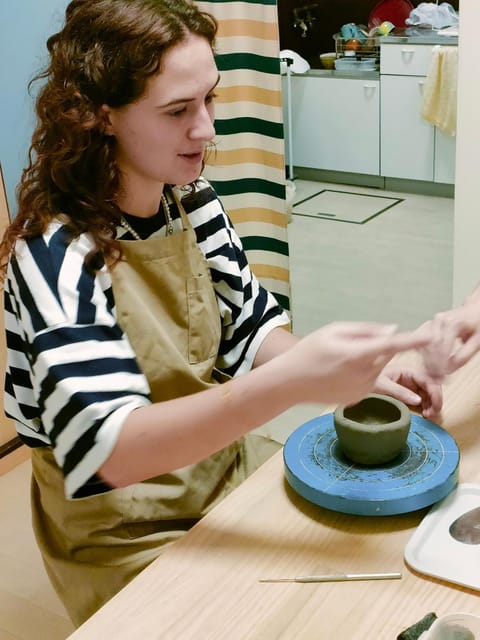
Anna begins with explanations and demonstrations, then lets you do the forming yourself. That balance is important. A pottery class can lose its value if the instructor quietly fixes every mistake and hands you a perfect object. Here, the point is to learn how the clay responds under your hands. You should expect help with shaping and technique, but your finished piece remains your own work.
Working with Shigaraki clay
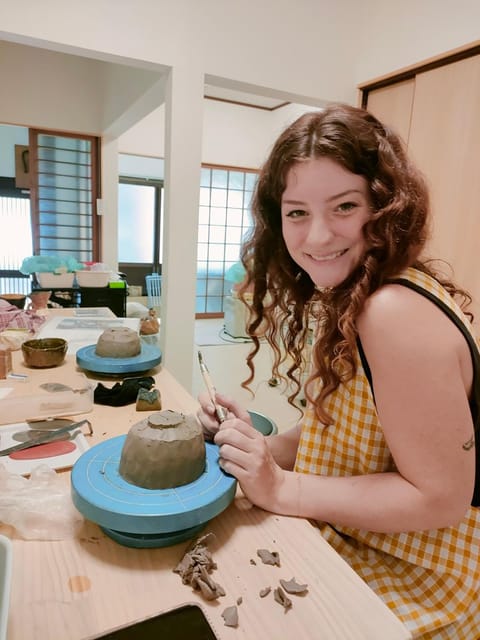
The clay comes from the Shigaraki area, one of Japan’s traditional pottery-producing regions. That detail gives the project a clear connection to Japan rather than making it a generic craft class with Japanese decorations added later.
You work by hand, shaping the clay into the chosen food-related object. The class is suitable for beginners, and people with previous pottery experience can ask for a more advanced pace. Anna’s teaching style is patient and clear, with step-by-step instructions and demonstrations. She can also answer questions about why particular forms and designs are used.
For a first-time potter, the private format is especially useful. You can stop when you need clarification, and you do not have to keep up with a room full of strangers. Families and couples can work alongside one another while still receiving direct guidance. Children under five are not suitable for this activity, so families should plan around that restriction.
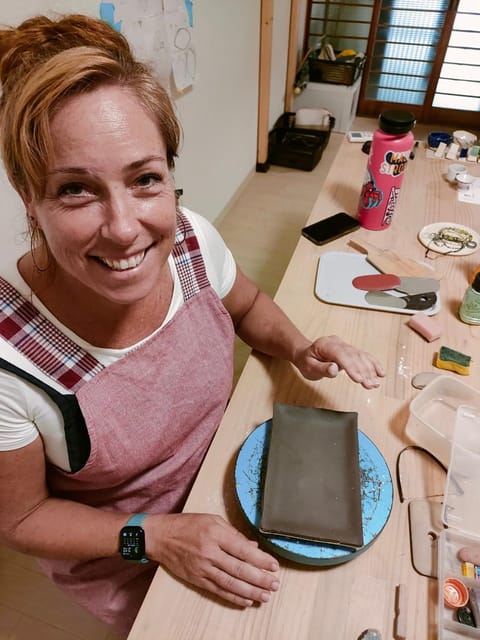
You should also expect a hands-on session rather than a polished photo opportunity. Clay work takes concentration. You may need to correct the thickness or shape of the piece several times, and the result may have the small variations that make handmade pottery appealing. If you want a flawless factory-style souvenir on the same day, this is the wrong choice. If you want to understand how a Japanese ceramic object begins, it is a good fit.
Choosing Japanese glazes and colors
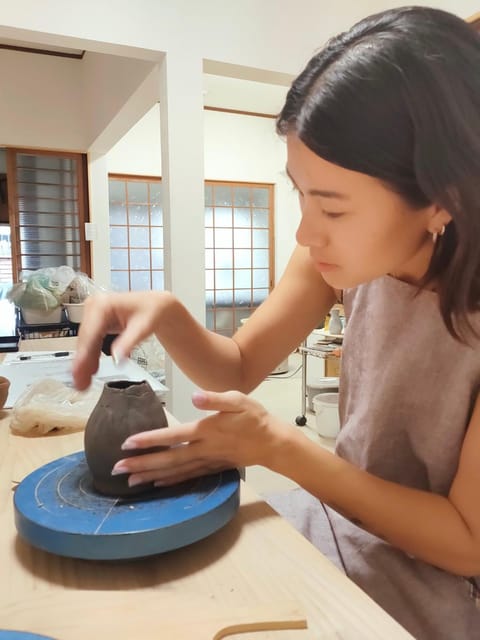
Once the form is made, you choose a glaze finish from colors typical of Japan. This is where the object starts to reflect your taste. Anna explains the available finishes and helps you decide how the glaze will suit the shape you made.
The glaze choice is also a useful lesson in how Japanese ceramics combine function and appearance. A tea bowl, sushi plate, or sake vessel is meant to be used, not just placed on a shelf. The colors and surface treatment help connect the object to Japanese cuisine and table settings.
The exact finished appearance can vary because this is handmade pottery. The piece still needs to be completed after the class, and delivery takes about one and a half months. Shipping is not included in the $96 price, so ask about the postage arrangements before you finish the session.
That waiting period is the biggest practical drawback. You cannot pack the finished pottery in your suitcase that afternoon. You also need to give the provider a correct home address and allow time for the package to arrive after your trip. The advantage is that you avoid carrying a fragile ceramic piece through airports and train stations.
Same city, a completely different kind of afternoon:
- Osaka Go Karting Tour with Funny Costume
★ 5.0 · 2,658 reviews - Osaka Castle: Museum and Tower Entry Ticket
★ 4.5 · 2,380 reviews - Osaka: Shinsekai Food Tour with 13-15 Dishes at 5 Eateries
★ 4.8 · 2,204 reviews - Osaka Food Tour: 13 Dishes at 5 Local Eateries
★ 5.0 · 2,149 reviews
What the two hours feel like
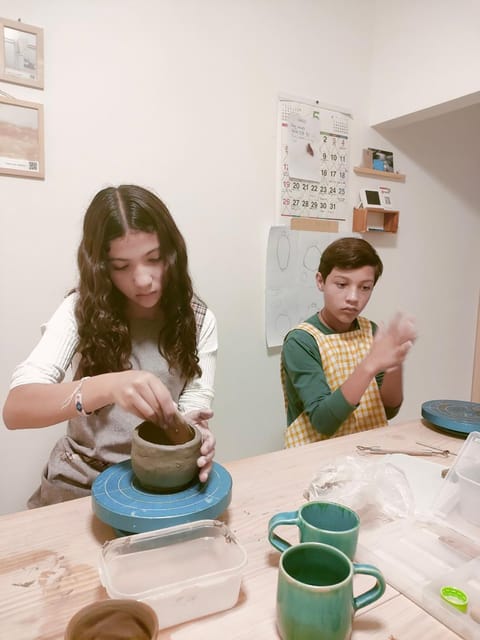
The class has a relaxed, conversational rhythm. You spend part of the time learning about ceramics and Japanese culture, then shift into shaping, decorating, cleaning up, and arranging delivery. Anna also offers refreshments and use of facilities at the studio, according to the experience details.
The private setting leaves room for conversation. You can ask about Japanese phrases, pottery traditions, local food, or Osaka recommendations while your hands are busy. Several participants found that this cultural exchange became as important as the finished object. That makes the class a strong choice for a solo visitor who wants personal contact, as well as for couples and families seeking a quieter activity together.
The guide’s language skills are a real advantage. The session is offered in English, Catalan, Spanish, or Japanese. The English option is particularly useful because it is unusual to find a private Japanese ceramics class with this level of direct instruction in English, Spanish, or Catalan.
You should not expect a large class, a formal museum presentation, or a full professional ceramics course. The experience lasts two hours and focuses on one project. You get a friendly introduction and a practical lesson, not a long technical program covering every pottery method.
The small gifts from Anna
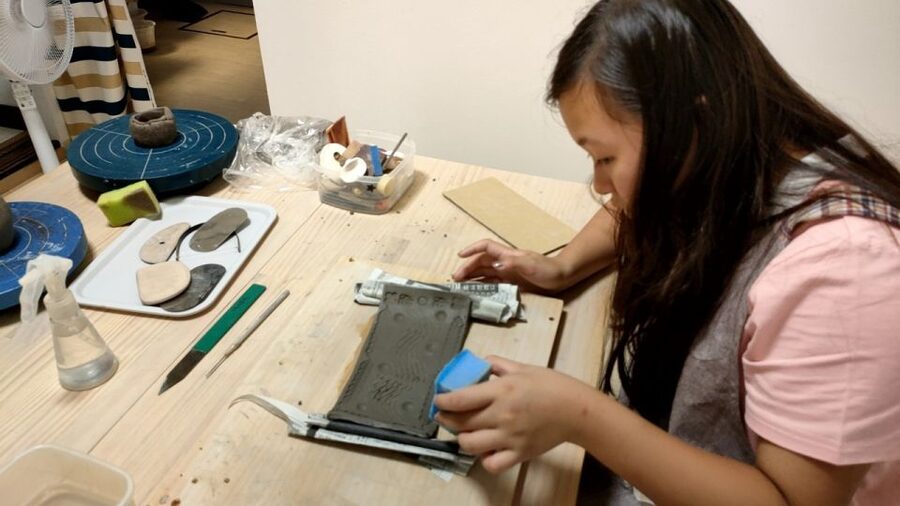
The class includes two small handmade gifts from Anna: a little dish decorated with a traditional Japanese pattern and a chopstick holder shaped like a Sakura flower. These are separate from the pottery you create.
I like this touch because you receive something to take home even if your own piece must be shipped later. The gifts also give you examples of finished work made with Japanese decorative ideas. They are small, easy to pack, and useful reminders of the studio visit while you wait for your larger piece.
Anna has also taken photographs during some sessions and shared them afterward. This is not listed as a guaranteed inclusion, so do not book solely on that expectation. Still, it is worth asking during the class if you would like a few pictures of the process.
Is $96 good value?
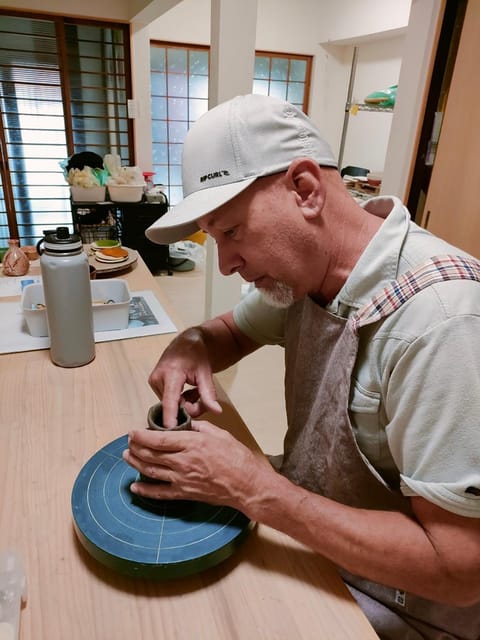
At $96 per person, this is not the cheapest craft activity in Osaka. The price makes more sense when you consider what is included: a private instructor, materials, studio guidance, a finished ceramic product, the walk from Teradachō Station, and two small gifts.
The private format is the main value. You are paying for direct attention, the freedom to ask questions, and a lesson paced around your group. A cheaper shared class might work better if you only want to make a quick souvenir and do not care about the cultural discussion.
The price also includes the clay and glazes, so you do not need to bring materials. Transportation to Teradachō Station is not included, and the later shipping charge is extra. Add both points to your budget before comparing this with other Osaka activities.
For me, the value is strongest if you care about the process. You learn how a Japanese tableware object takes shape, talk with a local instructor, and receive a handmade item later. If your main goal is immediate shopping, use the $96 for a finished ceramic piece from a store instead.
Who should book this workshop?
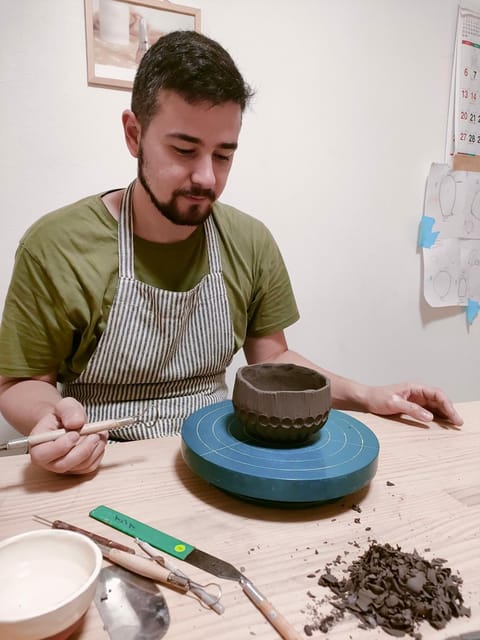
I would recommend this class to first-time potters, experienced hobbyists, couples, solo visitors, and families with children five or older. It works especially well on a day when you want something calm and social rather than another major attraction.
It is also a good choice if you want to avoid an activity conducted only in Japanese. Anna teaches in English, Catalan, Spanish, and Japanese, and her background in Osaka and Barcelona gives the class an international point of contact.
Pottery fans will appreciate the use of Shigaraki clay and the chance to make a chawan or sake set. Food lovers may prefer the sushi plate because it links the craft directly to Osaka’s dining culture. Beginners should not feel intimidated, since the lesson includes demonstrations and close guidance.
I would hesitate if you have a very tight itinerary after Osaka. The meeting point, walk to the studio, two-hour class, and later shipping arrangements require a little planning. I would also avoid booking if you cannot pay the extra postage or do not want to wait six weeks for the finished work.
Cancellation is free up to 24 hours before the start time, and you can reserve now and pay later. Those policies help if your Japan schedule is still changing, but punctuality matters on the day. Contact the provider if you will be more than 15 minutes late, since that is treated as a no-show.
My booking advice
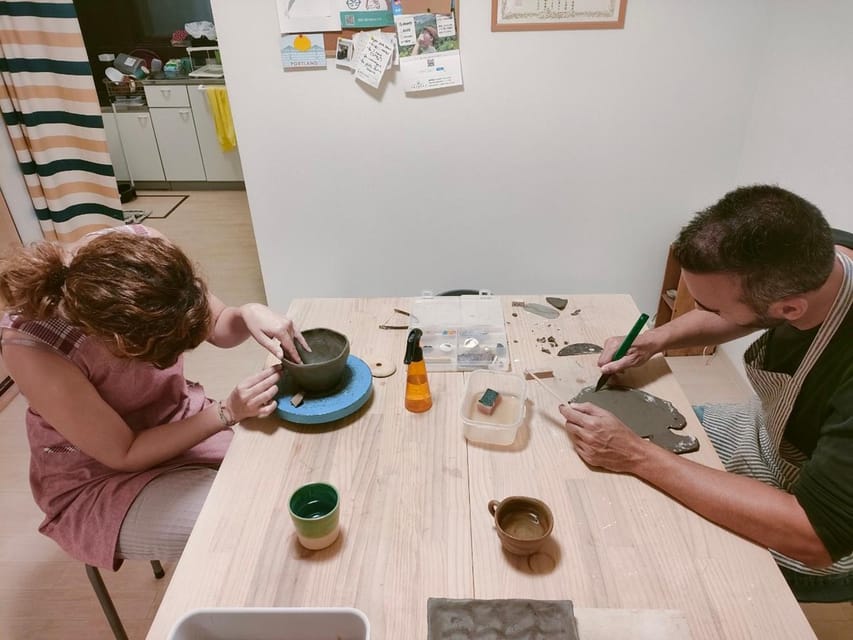
Book this workshop if you want a personal, hands-on Osaka experience and like the idea of using a piece of tableware you shaped yourself. Choose the sake set for a gift or drinkware souvenir, the sushi set for a practical dining piece, or the chawan for the strongest tea-culture connection.
Skip it if you need a finished souvenir immediately, want a large professional ceramics course, or cannot manage extra shipping costs. For everyone else, the private lesson with Anna offers a thoughtful break from sightseeing, a direct look at everyday Osaka, and a small piece of Japanese craft that arrives after you return home.
FAQ
How long does the ceramics experience last?
The workshop lasts two hours.
Where do I meet the instructor?
Meet at the north exit of JR Teradachō Station. Look for the guide carrying a sign that says Ceramics Tocoton.
Who teaches the class?
The main instructor is Anna, who studied ceramic making in Osaka and Barcelona. The experience is provided by Tocoton LLC.
What can I make?
You can choose a sake set with a small bottle and glass, a sushi set with a sushi plate and chopstick holder, or a chawan tea bowl.
What materials are included?
The class includes clay from the Shigaraki area and typical Japanese glazes.
Can I have my pottery shipped home?
Yes. The pottery can be sent to your home, but shipping costs are not included. Delivery takes about one and a half months.
What languages are available?
Instruction is available in English, Catalan, Spanish, and Japanese.
Are young children allowed?
Children under five are not suitable for this activity.
Just added in Osaka
- Urban Canvas: Osaka Street Art Bike Tour★ 5.0 · 10 reviews
- Anime Cosplay Photshoot-50 Digital Photos Provided★ 5.0 · 8 reviews
- TeamLab Botanical Garden Osaka Ticket★ 3.5 · 6 reviews
- Umeda Sky Building & Kuchu Teien Observatory Ticket in Osaka★ 4.5 · 3 reviews
- Immerse in Judo Martial Arts Class from Japan★ 5.0 · 4 reviews
- Cherry Blossom Buddha and Mt.Yoshino with Strawberry Picking Tour★ 4.5 · 5 reviews
- Traditional Home cooking Experience in Osaka, Japan★ 5.0 · 14 reviews
- Traditional Calligraphy Experience near Dotonbori★ 5.0 · 3 reviews
Private, compared.

Private Osaka Walking Tour: Highlights & Hidden Gems
Read our review →
3/4/5 Hours Private Tour in Osaka with Local Guide
Read our review →
Osaka’s Best and Brightest: Private Full-Day Tour by Vehicle
Read our review →
Full Day Tour of Kyoto with Private Transportation
Read our review →
Kyoto & Nara Private customized tour with English speaking Guide
Read our review →