
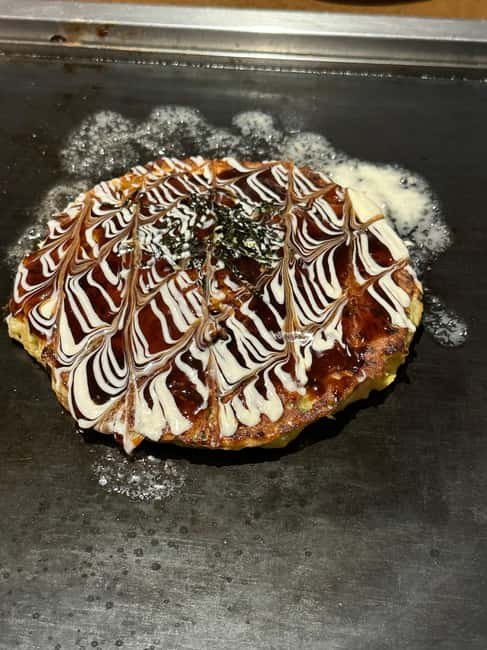
Reviewed · SHINSEKAI TOURS
Osaka: Shinsekai Food Tour – 13 Dishes and 4 Eateries
Shinsekai is the kind of Osaka neighborhood best understood one bite at a time. This three-hour walk pairs 13 local dishes at four eateries with the district’s old-school arcades, backstreets, Janjan Yokocho alley, and Shinsekai Inari Shrine. I like the way food here is tied to place, rather than served as a detached tasting menu.
I especially like the mix of savory staples, from crisp kushikatsu to soft doteyaki, and the pause at the shrine, which gives the food crawl a welcome change of pace. The possible drawback is simple: 13 dishes in three hours is a lot, so anyone with a small appetite or strict dietary needs should check the details before booking. Guides Bell and Tara are praised for explaining both the food and local culture.
Key points at a glance
- Thirteen tastings across four eateries: You get more than one famous Osaka snack, with enough variety to make the meal feel like a tour of local favorites.
- Shinsekai beyond the main signs: The route includes Janjan Yokocho alley and smaller backstreets, not just the district’s best-known photo spots.
- Kushikatsu, doteyaki, takoyaki, and taiyaki: The menu moves from fried skewers and savory stew to hot batter snacks and a traditional sweet pastry.
- A shrine visit in the middle of the food walk: Shinsekai Inari Shrine offers a quiet cultural stop between noisy food streets.
- English guidance from Bell or Tara: The guides explain the foods, Japanese customs, and the history of the shrine.
- Three hours for $77: The price makes the most sense if you want a guided meal, local context, and several tastings in one compact outing.
Starting at Daily Yamazaki in Ebisu Higashi
Your meeting point is the Daily Yamazaki in Ebisu Higashi, a practical place to begin before heading into Shinsekai. From there, the tour moves on foot through a district known for its nostalgic feel and strong food culture.
The start matters because Shinsekai can seem like a collection of loud signs, small restaurants, narrow lanes, and busy corners if you arrive without a plan. A local guide gives the area a shape. You are not simply looking for food. You are learning why these particular dishes belong to Osaka and how they fit the neighborhood.
The tour lasts three hours, which is long enough for a proper tasting walk without taking up an entire day. You should still arrive ready to eat. Thirteen dishes can add up quickly, especially when fried food and sweets are part of the lineup.
More Shinsekai and Tsutenkaku tours:
- Osaka: Shinsekai Food Tour with 13-15 Dishes at 5 Eateries
★ 4.8 · 2,204 reviews - Osaka Local Foodie Walking Tour in Dotonbori and Shinsekai
★ 5.0 · 985 reviews - Osaka: Tsutenkaku Tower Entry Ticket
★ 3.8 · 125 reviews
Shinsekai’s old Osaka character
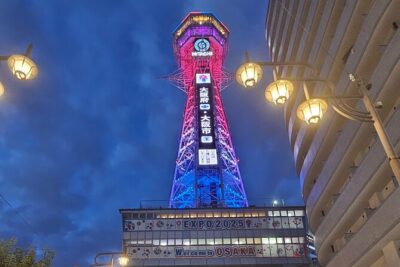
Shinsekai has a nostalgic, slightly rough-edged character that feels different from Osaka’s polished shopping districts. The appeal is not one grand monument. It is the combination of food stalls, old lanes, local eateries, bright signs, and streets where the neighborhood’s personality is on display.
I like food tours in places such as this because the setting does much of the teaching. A plate of kushikatsu tastes more meaningful when you are eating it in the district associated with this style of Osaka cooking. The guide can point out details you might pass without noticing, while you concentrate on the food.
The tour also promises hidden corners rather than a straight march between restaurants. That makes the walk more than a restaurant-hopping session, though it also means you should expect some standing and walking between tastings.
Janjan Yokocho, an alley built for atmosphere
Janjan Yokocho is one of the tour’s most useful stops for getting a feel for Shinsekai. Its narrow, old-fashioned character brings you close to the small-scale food culture that gives the district its appeal.
The alley is not presented as a grand sightseeing monument. Its value is more immediate. You see the kind of compact streets and local businesses that make Shinsekai feel distinct, and your guide can connect the surroundings to the food you are eating.
This is also where a guide earns the price of the tour. Without context, an alley can be just an alley. With Bell or Tara explaining what you are seeing, the route becomes easier to read. The available feedback gives special credit to Bell for explaining Japanese food, culture, and the shrine, so visitors who enjoy stories alongside their meal should get a lot from this part.
Takoyaki brings Osaka to the table
Takoyaki is one of the essential Osaka bites, and it appears among the tour’s tastings. These small, hot pieces are known for their soft centers and savory flavor, with the cooking process itself adding to the fun.
You may encounter takoyaki more than once in the food lineup, as it is mentioned among the tour’s repeated Osaka specialties. That is worth noting if you prefer a wider range of dishes. For most people, though, takoyaki is a central part of the Osaka food lesson, not filler.
The practical tip is to pace yourself. Hot food is often served in small portions, but it can still be filling when combined with skewers, stew, and sweets. A three-hour schedule should give you time to eat at a comfortable rate, but you will want to avoid arriving after a large meal.
More street food tours in Osaka:
- Osaka Food Tour: 13 Dishes at 5 Local Eateries
★ 5.0 · 2,149 reviews - Hungry Osaka Street Food Tour:15 Tastings & 3 Drinks with a Local
★ 5.0 · 1,727 reviews - Hungry Osaka Street Food Tour: 15 Dishes & 3 Drinks
★ 4.9 · 694 reviews - Osaka: Guided Food Tour with 12 Dishes at 4 Local Eateries
★ 5.0 · 533 reviews
Kushikatsu is the main event for many diners
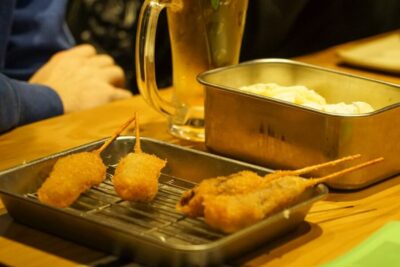
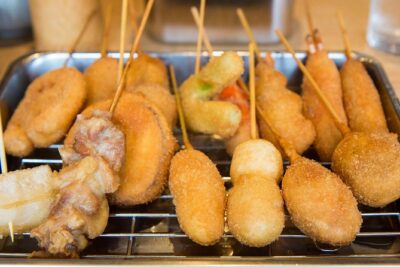
Kushikatsu means food served on skewers and fried until crisp. It is one of the specialties that gives Shinsekai its strongest food identity, and it is likely to be the tasting that many people remember most.
The appeal is the contrast between the golden outside and the tender food inside. It is also a useful dish for a guided tour because the guide can explain how to approach a local specialty instead of leaving you to guess from a menu.
One visitor specifically singled out the kushikatsu as the best part of the meal. I can see why. It is hearty, distinctly Osaka, and different enough from ordinary street snacks to make the $77 price feel more worthwhile.
Do not treat the skewers as a quick snack before dinner. Along with the other tastings, they form a substantial meal. If you are planning another major food stop soon afterward, you may want to leave some room in your schedule.
Doteyaki adds a slower, savory note
Doteyaki provides a different texture and mood from takoyaki and kushikatsu. It is a savory dish associated with Osaka, described here as tender and melt-in-your-mouth, and it gives the tasting menu a softer, deeper element after the crisp fried foods.
This sort of variety is one of the tour’s strengths. You are not sampling 13 versions of the same snack. The route includes fried food, hot batter-based bites, a savory stew, and a traditional pastry. The result is closer to a guided introduction to Osaka eating than a simple list of famous foods.
Because the full dish-by-dish menu is not specified, you should not book expecting a precise restaurant menu unless the provider confirms it. The advertised highlights make clear that takoyaki, kushikatsu, doteyaki, and taiyaki are included, while the remaining tastings form part of the 13-dish total.
Taiyaki finishes the savory-heavy route
Taiyaki is a traditional Japanese pastry shaped like a fish. It is warm, flaky, and sweet, making it a natural finish after the savory dishes.
I like having a dessert stop built into a food walk. It changes the rhythm and keeps the outing from feeling like three hours of fried food. Taiyaki also gives you a familiar but distinctly Japanese sweet to compare with the stronger flavors earlier in the route.
If you have a sweet tooth, this will likely be one of the easiest tastings to enjoy. If you prefer savory food, the pastry is still a useful part of the tour because it shows how the neighborhood’s food range extends beyond its best-known skewers and takoyaki.
Shinsekai Inari Shrine gives the tour a quiet pause
The visit to Shinsekai Inari Shrine is a smart part of the route. After noisy streets and several tastings, a short stop at a place of worship gives you time to slow down and notice another side of the neighborhood.
The shrine is not treated as a separate full sightseeing visit. It is part of the walking route, so you should expect a compact cultural stop rather than a long temple or shrine tour. That makes it suitable for people who want some history and local tradition without giving up most of the afternoon.
Bell received particular praise for explaining the shrine’s history and for adding wider context about Japan. That is important here. A shrine visit can be easy to skim past, but a good explanation turns it into a meaningful part of the afternoon.
Remember that this is a food tour first. If your main goal is a detailed study of Japanese religious architecture, this is not the right format. If you want a short cultural break that adds context to the neighborhood, it fits well.
What the 13 dishes are worth at $77
At $77 per person, this is not the cheapest way to eat in Osaka. You could buy individual snacks for less if you already know where to go and are comfortable ordering on your own.
The value comes from what is bundled with the food: a local English-speaking guide, four eateries, 13 tastings, a walking route through Shinsekai, Janjan Yokocho, and the shrine. You are paying for a meal, but also for organization and explanation.
I think the price is reasonable for a first visit to Osaka if you want to sample a broad range of specialties without spending time researching each stop. It is less compelling for a confident food explorer who already knows Shinsekai and prefers choosing dishes independently.
The tour also helps reduce the risk of missing foods you might not recognize. One visitor noted that the variety included dishes they would not have tried alone. That is a real benefit. A guide can make unfamiliar foods feel approachable and can explain what you are eating as you go.
The guides are a key part of the experience
The tour is conducted in English, and the named guides connected with the experience are Bell and Tara. Bell is specifically praised for explaining the food, Japanese culture, and the shrine. Bell and Tara are also described as sharing local insight during the walk.
That personal element matters because the dishes themselves are easy to find in Osaka. The difference between a basic food crawl and a useful tour is the explanation around each stop.
You should expect the guide to lead the route, introduce the foods, and give background on the places you visit. The precise group size is not provided, so you should check current availability if group atmosphere matters to you.
Who will enjoy this food walk most
I would recommend this tour to first-time Osaka visitors who want an organized introduction to Shinsekai. It suits people who are curious about local food but do not want to decode menus, choose restaurants, or build a route from scratch.
It is also a good match for anyone who likes a balance of eating and walking. The shrine and alley visits break up the tastings, while the guide adds cultural context that you would not get from eating alone.
Families and mixed groups may appreciate the range of food, though the tour is still centered on Japanese specialties and includes several hearty dishes. Picky eaters should check the menu details before booking, since the full list of 13 dishes is not given.
I would be more cautious if you have serious food allergies, dietary restrictions, or a very small appetite. The available information does not explain substitutions or allergy procedures, so ask before reserving rather than assuming changes are possible.
Booking details that affect your choice
The tour runs for three hours, with starting times based on availability. It includes a live English-speaking guide, food tastings, the Janjan Yokocho visit, and the Shinsekai Inari Shrine visit.
You can cancel up to 24 hours before the tour for a full refund. The reserve now and pay later option also helps if your Osaka plans are still shifting.
The meeting point is the Daily Yamazaki in Ebisu Higashi. Since the route is built around walking between food stops, wear comfortable shoes and arrive hungry enough for a substantial tasting session. Those are practical choices rather than special requirements, but they will make the afternoon easier.
Should you book the Shinsekai food tour?
Book it if you want to understand Shinsekai through its food, try 13 dishes without planning every stop yourself, and hear local explanations from guides such as Bell or Tara. The strongest reasons are the kushikatsu, the range of dishes, the Janjan Yokocho route, and the shrine stop that gives the walk some cultural balance.
Skip it if you prefer choosing your own restaurants, need a fully confirmed allergy-friendly menu, or want a detailed shrine-focused tour. At $77, the value depends on using the guide and the variety, not simply on the amount of food.
For a first Osaka visit, I think this is a well-shaped introduction to one of the city’s most distinctive food districts. Come hungry, pace yourself, and treat the walk as both a meal and a lesson in local street food.
FAQ
Where does the Shinsekai food tour start?
The tour starts at the Daily Yamazaki in Ebisu Higashi.
How long does the tour last?
The food tour lasts three hours.
How many dishes are included?
The experience includes 13 food tastings at four eateries.
Which Osaka specialties are included?
The tour includes takoyaki, kushikatsu, doteyaki, and taiyaki among its tastings.
Does the tour visit any cultural sites?
Yes. The route visits Shinsekai Inari Shrine and Janjan Yokocho alley.
What language is the tour conducted in?
The live tour guide speaks English.
Can I cancel the booking for a refund?
Yes. You can cancel up to 24 hours in advance for a full refund.
More Food and Drink Tours in Osaka
- Kuromon Market Food Walking Tour in Osaka (6 stops, 6 tastes)
★ 5.0 · 550 reviews - Absolute Osaka Food Tour
★ 5.0 · 309 reviews - Osaka: Traditional Mochi Pounding Experience with Tasting
★ 4.9 · 306 reviews - Osaka: Kuromon Market Food Walking Tour (6 stops, 6 tastes)
★ 4.6 · 272 reviews
Just added in Osaka
- Urban Canvas: Osaka Street Art Bike Tour★ 5.0 · 10 reviews
- TeamLab Botanical Garden Osaka Ticket★ 3.5 · 6 reviews
- Anime Cosplay Photshoot-50 Digital Photos Provided★ 5.0 · 8 reviews
- Umeda Sky Building & Kuchu Teien Observatory Ticket in Osaka★ 4.5 · 3 reviews
- Immerse in Judo Martial Arts Class from Japan★ 5.0 · 4 reviews
- Cherry Blossom Buddha and Mt.Yoshino with Strawberry Picking Tour★ 4.5 · 5 reviews
- Traditional Home cooking Experience in Osaka, Japan★ 5.0 · 14 reviews
- Traditional Calligraphy Experience near Dotonbori★ 5.0 · 3 reviews
Shinsekai Tours, compared.
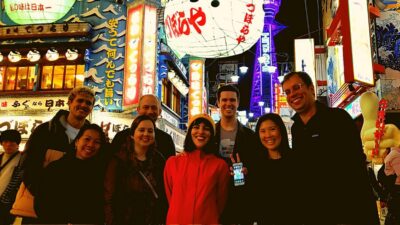
Shinsekai Food Tour with 13-15 Dishes at 5 Eateries
Read our review →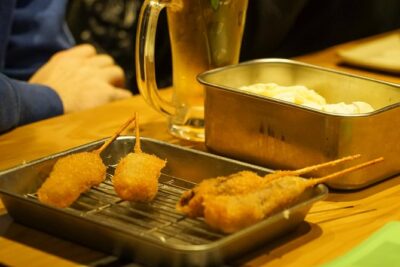
Osaka Local Foodie Walking Tour in Dotonbori and Shinsekai
Read our review →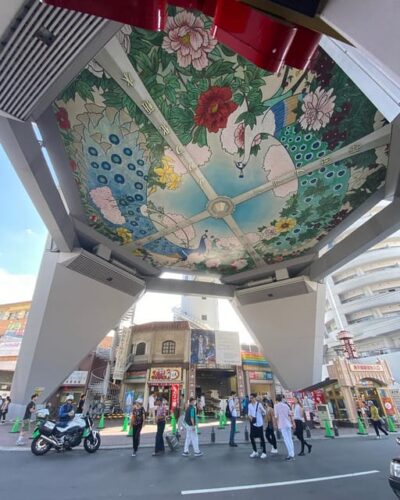
Shinsekai Food Tour – 13 Dishes at 5 Local Eateries
Read our review →
Night Soul Food Tour in Shinsekai with a local guide
Read our review →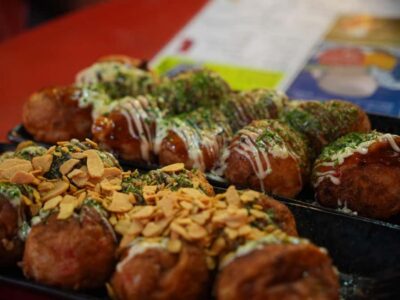
Osaka Morning Tour: Shitennoji Temple, Shinsekai &Doutonbori
Read our review →Browse the lists this tour appears in