
Reviewed · KYOTO DAY TRIPS FROM OSAKA
Osaka: Kyoto & Nara & Uji Historical and Scenic One-Day Tour
Nara’s deer, Uji’s matcha streets, and Fushimi Inari’s red torii gates give this day trip a strong Japan-in-miniature feel. You move from ancient Buddhist temples to tea culture and shrine paths, all without arranging several separate train rides. The catch is simple: eight to ten hours is a lot of ground to cover, and some stops are brief.
I like the convenience of round-trip transport from Osaka, especially if train connections feel like work. I also like the mix of places: Nara gives you friendly but wild deer, Uji slows the pace beside its river, and Fushimi Inari adds a striking final stop. The main drawback is road time, and June’s experience is worth keeping in mind: the route can feel rushed at the major sights.
Guide Mia earned special praise for her clear explanations, local shopping tips, and smart use of WhatsApp to keep everyone connected. The tour has a 4.7 rating from 21 bookings, but you should book it for breadth and ease, not for long, quiet visits at every temple.
Key points at a glance
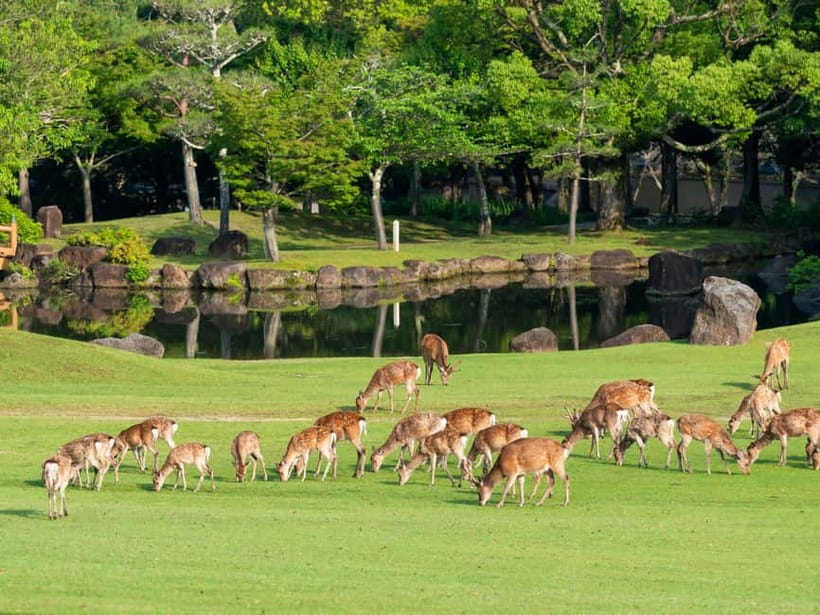
- Nara Park in 45 minutes: Feed the deer with approved snacks, take photos, and follow the guide closely because these are wild animals.
- Todaiji in 30 minutes: See the enormous Vairocana Buddha and one of Japan’s major Buddhist monuments, with temple admission paid separately.
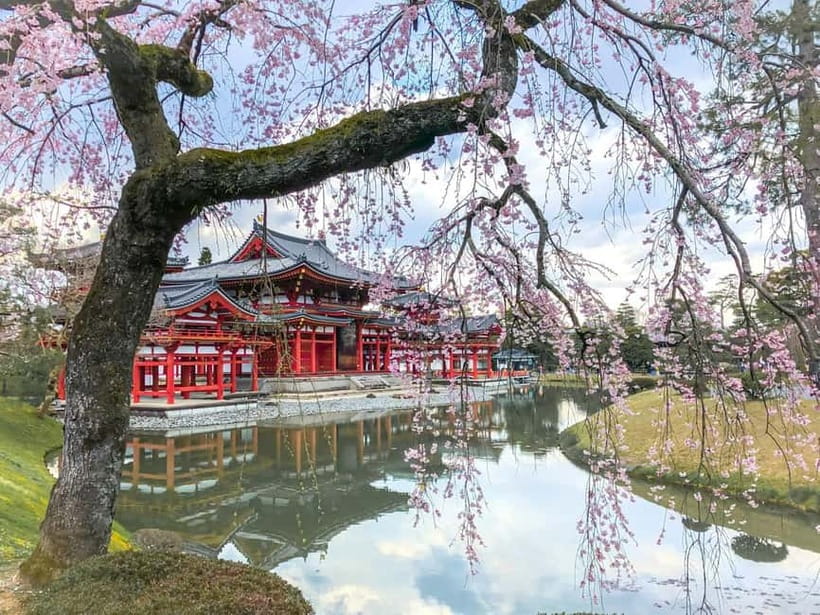
- Two hours in Uji: Walk by the Uji River, see the Murasaki Shikibu statue, visit Byodoin, and sample matcha food along Omotesando.
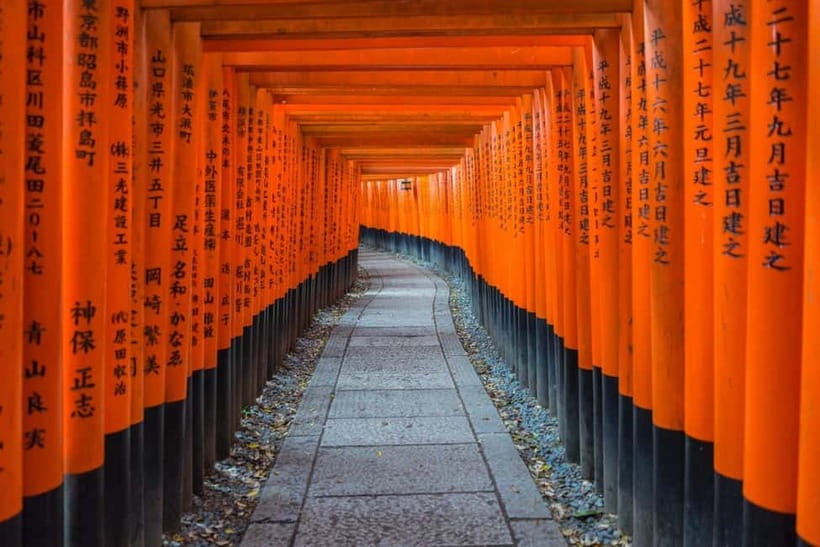
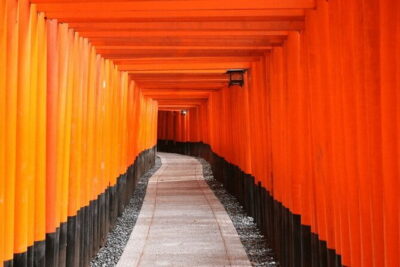
- Fushimi Inari for 70 minutes: Walk beneath the famous red torii gates, with enough time for photos and a short climb.
- A $56 transport package: The price includes the vehicle, fuel, tolls, parking, and guide, but not temple tickets or food.
- A full day with compromises: You gain easy access to several historic places, but traffic and limited stop times can reduce your time on foot.
Why this route works from Osaka
This is a wide-ranging day trip through Nara, Uji, and Kyoto, with Osaka as the practical base. You are not simply visiting one temple and returning. Instead, the day links several kinds of Japanese culture: deer connected with Nara’s park, Buddhist art at Todaiji, tea in Uji, and Shinto worship at Fushimi Inari.
That variety is the tour’s greatest strength. If you have only one free day and want to see more than Osaka, this route gives you a useful first look at the Kansai region. You will not experience each place at a slow pace, but you will come away with a sense of how different the old capitals and towns feel.
The air-conditioned vehicle also matters. You avoid handling several train changes, finding the correct station exits, and keeping an eye on the clock in unfamiliar cities. The trade-off is that a road-based route depends on traffic. You should keep your return plans flexible, especially if you have an evening reservation in Osaka.
Pickup depends on the option you choose. Possible drop-offs include several Osaka wards, Kyoto Station Hachijo Entrance Square Sunken Garden, and areas such as Naniwa, Nishi, Fukushima, Kita, Chuo, and Nishinari. Check the exact pickup and return point before booking, since this affects how much time you save.
More Nara day trips from Osaka:
- Ancient Capital Tour: Kyoto and Nara Highlights from Kyoto/Osaka
★ 4.5 · 332 reviews - Kyoto and Nara Day Trip from Osaka
★ 4.0 · 175 reviews - Discover Himeji, Kobe and Nara from Osaka
★ 5.0 · 101 reviews
Nara Park and the deer encounter
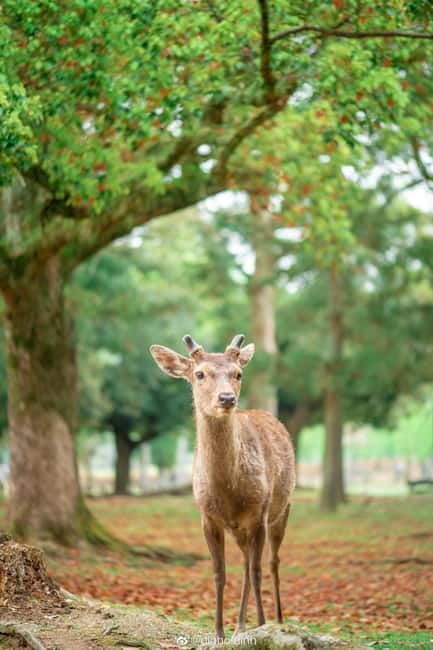
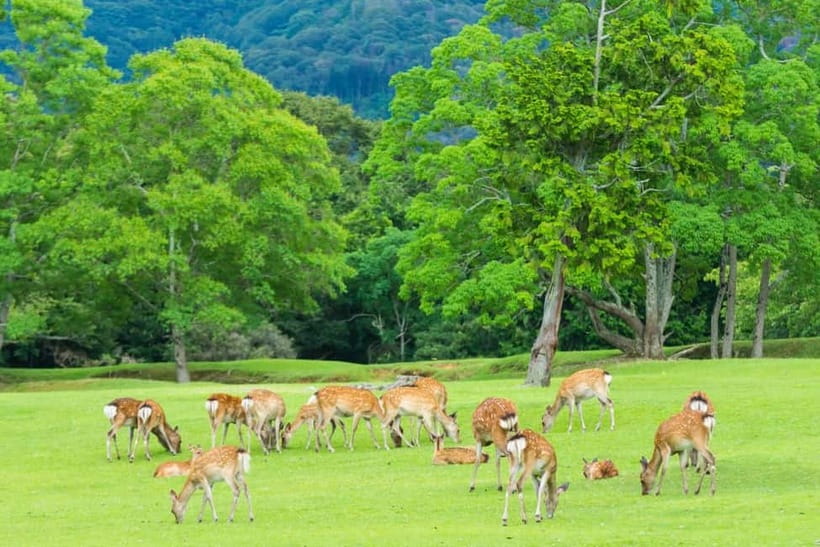
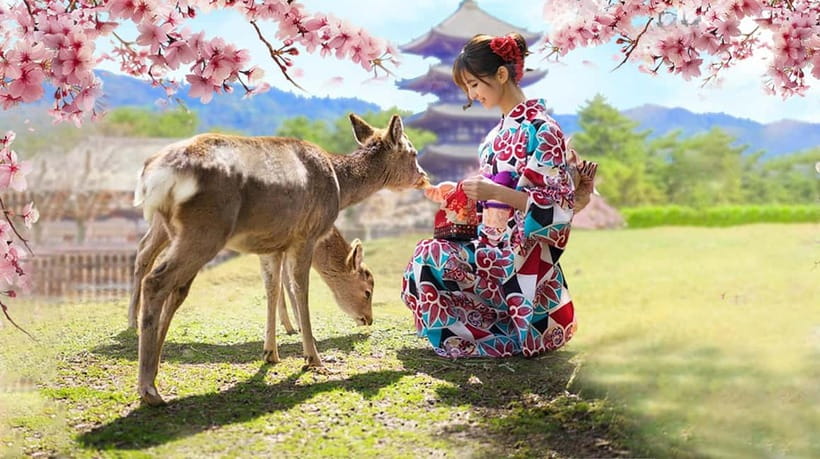
Nara Park is the first major stop, with about 45 minutes for free time and sightseeing. The deer are the immediate draw. You can buy or receive a snack and offer it to them, then watch how quickly they notice anyone holding food.
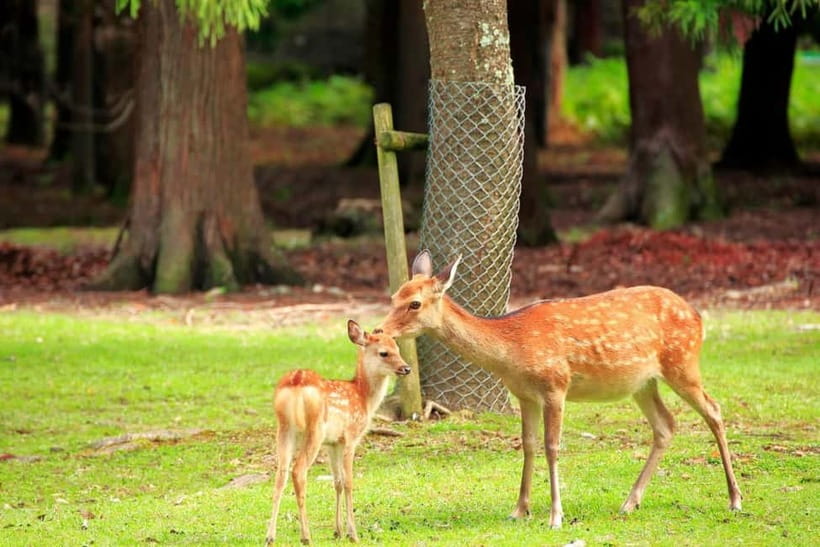
The fun comes with a small responsibility. These deer are wild animals, not pets, so follow the guide’s instructions and keep your hands clear once the food is gone. A short visit is enough to feed a few deer and take photos, but it is not long enough to wander across the wider park at an unhurried pace.
I like this stop because it is more than a standard temple visit. The deer give Nara a playful side, and the encounter is easy to enjoy even if you are not deeply interested in architecture. Families may find it especially memorable, though anyone with an animal allergy should not book this experience.
The 45-minute limit also tells you what to expect. This is a quick introduction, not a full Nara Park day. If you want extended time around the park or additional Nara sights, you would need a separate visit.
Todaiji and the huge bronze Buddha
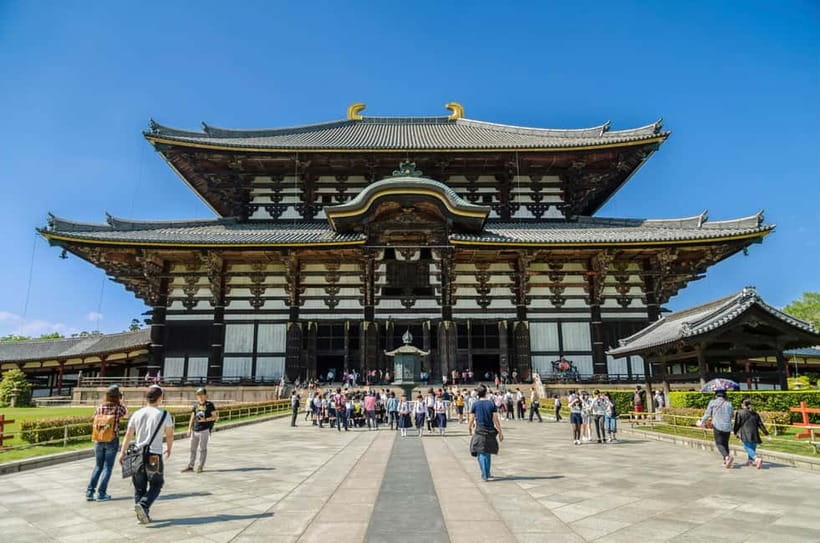
Todaiji follows with around 30 minutes of sightseeing. Its main draw is the giant bronze Vairocana Buddha, housed within one of Japan’s best-known Buddhist temple complexes. The scale of the building and statue gives this short stop real impact.
Admission to Todaiji is not included, so bring extra money for the entrance ticket. The tour price covers transport and operating costs, but temple tickets and personal spending remain yours.
Thirty minutes is enough to enter, see the main hall and Buddha, and listen to an explanation from the guide. It is not enough for a slow architectural study or a relaxed walk through every part of the temple grounds. Still, this is one of the day’s essential stops because the building and statue give physical weight to Nara’s long religious tradition.
A guide can make a real difference here. The tour information promises English and Chinese guidance, and a strong guide can explain what you are seeing before the group moves on. Mia, one named guide connected with the experience, was praised for clear explanations and useful local suggestions. Guide assignments can vary, so treat Mia as an example rather than a guarantee.
Uji’s river, tea culture, and literary touch
Uji receives the longest visit, about two hours, and this is where the day becomes less hurried. You can walk along the Uji River, see the statue of Murasaki Shikibu, visit Byodoin, and browse the food streets around the temple.
The river area gives you a change of pace after Nara’s crowds and the close-up deer encounter. A walk beside the water helps you appreciate Uji as a town rather than simply a stop on a checklist. The statue of Murasaki Shikibu adds a literary note, connecting the town with one of Japan’s best-known classical writers.
Uji is also the place to try matcha. Along Byodo-in Omotesando and the Uji Matcha Food Street, you can look for matcha desserts and other tea-flavored foods. Meals and drinks are not included, so this is a chance to budget for your own snack or dessert.
I would use the two hours carefully. If matcha matters most to you, allow time for a tea-flavored treat and a little browsing. If Byodoin is your priority, head there early rather than spending the first part of the stop shopping.
More Kyoto day trips from Osaka:
- Osaka/Kyoto: Hiroshima Miyajima Bus Tour & Shinkansen Ticket
★ 4.7 · 919 reviews - From Kyoto/Osaka: Kyoto Top Highlights 1-Day Guided Bus Tour
★ 4.5 · 714 reviews - Osaka/Kyoto: Amanohashidate & Miyama Tour with Boat & Lunch
★ 4.6 · 207 reviews - Volleyball in Osaka, Kobe & Kyoto with locals!
★ 4.8 · 131 reviews
Byodoin Temple and the price of admission
Byodoin is the major temple visit in Uji. Its quiet setting and graceful appearance provide a calmer contrast to the crowded torii gates later in the day. The temple admission is extra, so check your budget before you arrive.
The visit is valuable because it gives Uji a clear focus. You are not only stopping for food or a riverside walk. You also see an important historic Buddhist site in a setting associated with traditional Japanese design and tea culture.
The schedule groups Byodoin with the river, the Murasaki Shikibu statue, Uji Park, and the nearby food streets. That creates choice, but also forces you to decide what matters most. You can see all the headline places briefly, or give one or two of them more attention.
If you prefer a slow temple visit, this route may feel tight. If you want a well-rounded introduction to Uji, the two-hour stop offers a fair amount of freedom compared with the shorter Nara stops.
Fushimi Inari and the red torii corridor
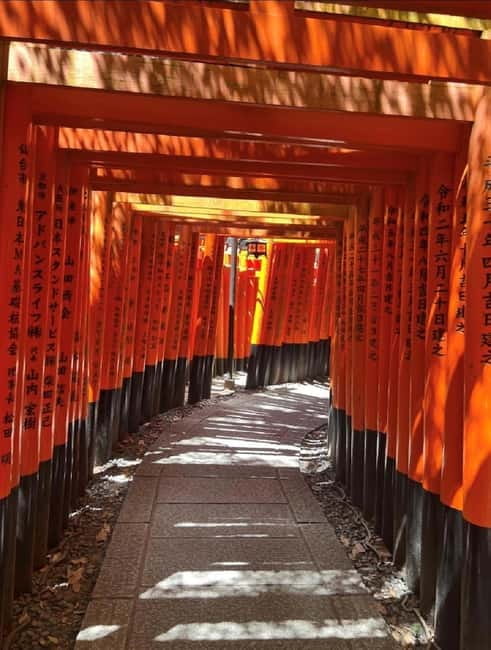
The final major stop is Fushimi Inari Taisha, with roughly 70 minutes for a break, photos, free time, and walking. The shrine is famous for its long rows of red torii gates, which create a powerful visual effect as the path rises into the wooded hills.
You do not need to walk the entire mountain route to enjoy the visit. With 70 minutes, you can pass through the lower torii corridor, take photos, and walk as far as your energy and schedule allow. The path can become steep, so comfortable shoes are important.
This is a strong final stop because it feels different from both Nara and Uji. Todaiji is broad and monumental. Uji is measured and tea-focused. Fushimi Inari is rhythmic, narrow, and built around movement through repeated gates.
The timing is useful but limited. You can get a memorable sample of the shrine, but you will not have time to explore every section. If you have already visited Fushimi Inari independently, the stop may feel less valuable than the Uji portion. For a first visit, though, it gives you one of Kyoto’s most recognizable sights without requiring another day of planning.
What the $56 price really covers
At $56 per person, the tour offers solid value if you place a high price on simplicity. Round-trip transportation, fuel, tolls, parking, and an English or Chinese-speaking guide are included. Arranging the same route on your own would require several rail journeys, local transfers, and careful timing.
The price does not include admission to Todaiji or Byodoin. It also excludes food, drinks, deer snacks if purchased separately, and other personal costs. These are not surprise categories, but you should add them to the advertised price when setting your day’s budget.
You are paying for access and coordination rather than a slow, private-style visit. A dedicated vehicle takes you between places, and the guide helps keep the group moving. That is useful for people who prefer not to navigate Japanese transport on a packed schedule.
The value drops if you dislike fixed timings or want to linger. The route covers a lot, and the road between stops can eat into sightseeing time. June’s account makes the central compromise clear: the guide worked hard to keep the day organized, but there was still more time on the road than at some attractions.
Guides, communication, and the pace of the day
The guide is important on this route because you are moving through several sites with short visits. A good explanation at Nara or Todaiji can help you understand what you are seeing before it is time to return to the vehicle.
Guide Mia received especially positive attention for her local tips and clear explanations. WhatsApp was also used to keep the group connected during the day, which can be handy when a large sightseeing route has several meeting points. Your guide may be different, but the tour offers live guidance in English or Chinese.
Expect a moderate amount of walking. You will move through a park, temple grounds, riverside areas, shopping streets, and a shrine path. Bring water and comfortable shoes, and arrive 15 minutes before departure. If pickup is from a hotel, wait in the lobby 10 minutes early so you can board promptly.
The schedule can change with weather, traffic, or other unexpected delays. Do not book a tight evening flight or an important dinner immediately after the stated return time. The operator asks about infants, strollers, and large luggage because vehicle capacity and Japanese traffic rules matter. Pregnant people and those aged 70 or older may need to sign a waiver on arrival.
This tour is not suitable for wheelchair users. It is also a poor choice if you have animal allergies because Nara Park is a central part of the day.
Who should book this Osaka day trip?
I would choose this tour if you are staying in Osaka and want a guided first look at Nara, Uji, and Kyoto in one day. It suits people who value transport convenience, want a guide’s context, and would rather see several major places than spend a whole day in one town.
It is also a good fit for first-time visitors who feel unsure about Japanese train connections. You can let the guide manage the route while you focus on the deer, temples, tea treats, and torii gates.
I would think twice if your priority is photography, temple study, or a relaxed pace. Thirty minutes at Todaiji and 70 minutes at Fushimi Inari will feel short if you want to examine every detail. A separate Nara or Kyoto day would give you more freedom.
The free cancellation option allows cancellation up to 24 hours before departure for a full refund, and you can reserve now and pay later. Those terms help if your Osaka schedule is still shifting, but they do not change the basic question: are you comfortable trading depth for range?
Should you book it?
Book this tour if you want a broad, well-organized day with Nara deer, Todaiji, Uji matcha culture, Byodoin, and Fushimi Inari for a moderate price. The included vehicle and guide make $56 a reasonable deal for a busy regional route.
Skip it if you want long temple visits, quiet exploration, or complete control over your timing. For everyone else, this is a practical way to see several famous places in one day, as long as you accept the road time and budget separately for temple tickets and food.
FAQ
How long does the tour last?
The tour lasts approximately 8 to 10 hours. The exact starting time depends on availability and the option you book.
Which languages are available?
Live tour guidance is available in English and Chinese.
Is hotel pickup included?
Pickup is optional and depends on the option selected. The exact meeting point and pickup time are sent by 8:00 pm the evening before the tour.
Are Todaiji and Byodoin admission fees included?
No. Admission to Todaiji Temple and Byodoin Temple is not included in the tour price.
Are meals and drinks included?
No. Meals, beverages, and other personal expenses are paid separately.
What should I bring?
Bring comfortable walking shoes and water. You should also arrive at the meeting point 15 minutes before the scheduled departure.
Can wheelchair users join the tour?
No. The experience is not suitable for wheelchair users. It is also not suitable for people with animal allergies because the route includes Nara’s deer.
More History Tours in Osaka
- Osaka: Castle History Walking Tour / Castle Tower Admission
★ 4.9 · 230 reviews - Osaka: Osaka Castle & Historical Museum Guided Tour
★ 4.8 · 28 reviews - Osaka Castle & Samurai History Walking Tour
★ 5.0 · 22 reviews - (Ticket Included) Explore Osaka Castle & Museum of History
★ 4.8 · 21 reviews
Just added in Osaka
- Urban Canvas: Osaka Street Art Bike Tour★ 5.0 · 10 reviews
- Anime Cosplay Photshoot-50 Digital Photos Provided★ 5.0 · 8 reviews
- TeamLab Botanical Garden Osaka Ticket★ 3.5 · 6 reviews
- Umeda Sky Building & Kuchu Teien Observatory Ticket in Osaka★ 4.5 · 3 reviews
- Immerse in Judo Martial Arts Class from Japan★ 5.0 · 4 reviews
- Cherry Blossom Buddha and Mt.Yoshino with Strawberry Picking Tour★ 4.5 · 5 reviews
- Traditional Home cooking Experience in Osaka, Japan★ 5.0 · 14 reviews
- Traditional Calligraphy Experience near Dotonbori★ 5.0 · 3 reviews
Kyoto Day Trips from Osaka, compared.
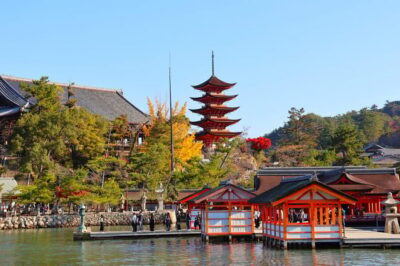
Hiroshima Miyajima Bus Tour & Shinkansen Ticket
Read our review →
Ancient Capital Tour: Kyoto and Nara Highlights from Kyoto/Osaka
Read our review →
Full Day Tour of Kyoto with Private Transportation
Read our review →
Kyoto & Nara Private customized tour with English speaking Guide
Read our review →Browse the lists this tour appears in