
Reviewed · OSAKA BIKE TOURS
Osaka E-Bike Tour With A Local Guide
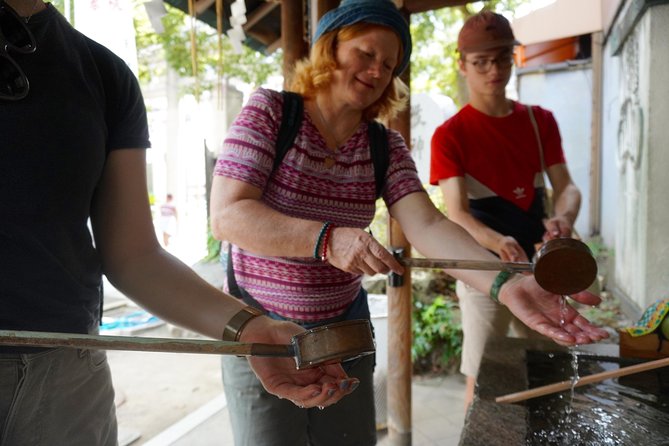
Osaka is spread out, and this three-hour e-bike tour tackles a surprising amount of it without asking you to spend the day underground on trains. You pedal from anime shops and ancient temples to Osaka Castle, riverside gardens, fashion streets, and one of the city’s most unusual shrines.
I like two things here. First, the pedal assist makes the route manageable even if you are not a keen cyclist. Second, the small group, capped at seven, gives guides such as Ko, Kosuke, and Sukuna room to talk, watch the traffic, and adjust the pace. The main consideration is that you need to ride confidently enough in city streets, and three hours is useful but not enough for a slow visit at every stop.
Key points to know before booking
- A broad Osaka sampler: See six very different areas in one compact ride.
- Pedal assist helps on slopes: The electric bikes take the strain out of longer stretches and inclines.
- Guides add local context: Ko is especially praised for clear English, humor, historical stories, and practical recommendations.
- Small groups feel manageable: With no more than seven participants, the guide can keep an eye on the group.
- Best for active first-day sightseeing: You cover more ground than on foot while still stopping for photos and short visits.
- Check the physical requirements: The tour is not suitable for children under 14, riders under 140 centimeters, or people with several listed health and mobility concerns.
Why an e-bike makes sense in spread-out Osaka
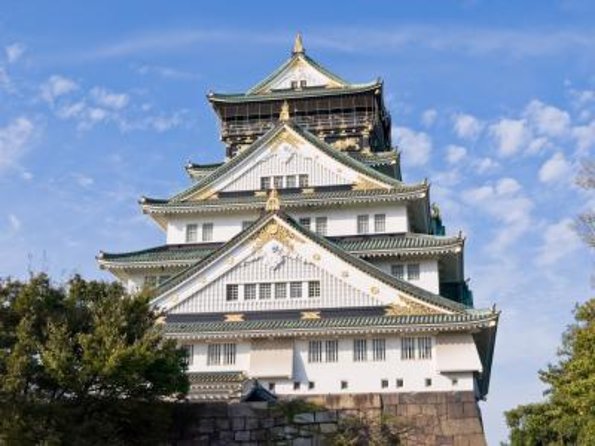
Osaka is easy to explore by train, but trains move you between stations rather than through the spaces between them. An e-bike lets you connect districts that can feel separate on a subway map. You see the change from Den Den Town’s pop culture shops to the quiet grounds of Shitennoji, then on to castle park, office-district gardens, and youth fashion streets.
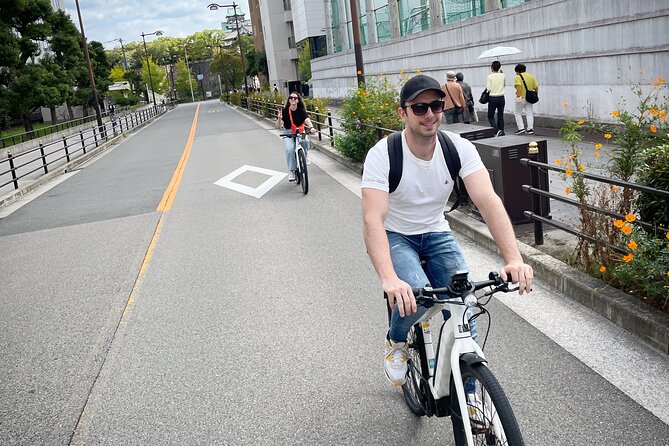
The electric motor gives you pedal assist rather than replacing pedaling altogether. That matters on a route with several stops and some slopes. You still get the feeling of moving through Osaka under your own power, but you are less likely to arrive at the castle tired and sweaty.
The bikes are described as comfortable and easy to handle. A helmet is included. Guides set a manageable pace, and one recent experience even worked well for a less confident cyclist and a 75-year-old participant. Still, do not confuse easy riding with no physical effort. You need to balance, steer, brake, and follow the group through city streets.
The group limit of seven is a real advantage. A large cycling group can turn every traffic light into a head count. Here, the guide has a better chance of noticing who needs a slower pace or extra reassurance. Ko is often praised for doing exactly that, while keeping the mood light.
More bike tours in Osaka:
- 5-Hour Osaka Bike Tour to the Neighborhood of Osaka Castle
★ 5.0 · 319 reviews - One-Day Osaka Bike Adventure: 5–6 Hours
★ 5.0 · 246 reviews - Eat, Drink & Cycle: Osaka Foodie Bike Tour
★ 5.0 · 224 reviews
Den Den Town: Osaka’s playful opening scene
The tour starts near a Lawson convenience store, then heads toward Den Den Town, Osaka’s center for anime, manga, games, electronics, and colorful character goods. The district gives you an immediate sense that Osaka does not take only one cultural path. Alongside temples and castles, the city has a strong modern identity built around fantasy, collecting, and pop entertainment.
You should think of this as a neighborhood introduction rather than a dedicated shopping expedition. The schedule has many stops, so you will likely get a look at the streets and storefronts rather than hours to inspect every shop. That is useful if you want to understand the area before returning on your own.
I like this first stop because it avoids the standard city-tour opening. Osaka Castle may be the familiar postcard, but Den Den Town shows the city’s current personality. If anime culture interests you, make a note of shops you would like to revisit after the ride.
Shitennoji Temple connects Osaka to early Buddhism
From Den Den Town, the route reaches Shitennoji, one of Japan’s oldest temples. The stop shifts the mood quickly. Instead of bright shop signs and collectibles, you get traditional architecture, open temple grounds, and a quieter setting.
Your guide explains the place in relation to Japanese Buddhism and its role in the local community. That context helps you read what you are seeing. A temple is not just a collection of gates and rooflines, and a short explanation can make the architecture feel less like scenery and more like part of Osaka’s story.
The tradeoff is time. You are seeing Shitennoji as one part of a city circuit, not taking a full temple visit with extended time for every building or detail. If Shitennoji is high on your personal list, you may want to return later for a slower look.
This contrast between Den Den Town and Shitennoji is one of the route’s best features. In a short distance, Osaka moves from modern entertainment culture to centuries-old religious practice. That is a more useful introduction than visiting only one type of attraction.
Osaka Castle Park gives you the big photo stop
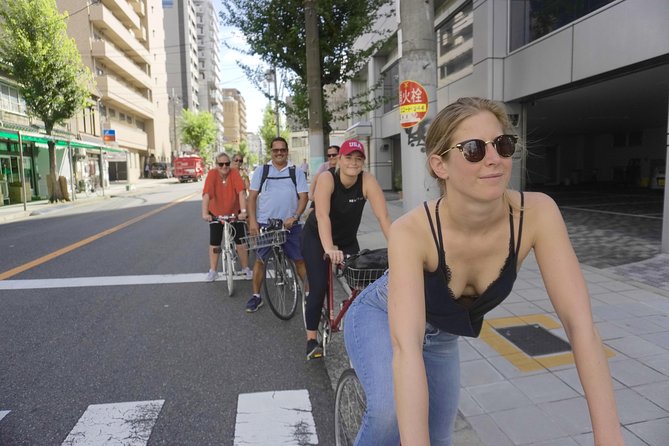
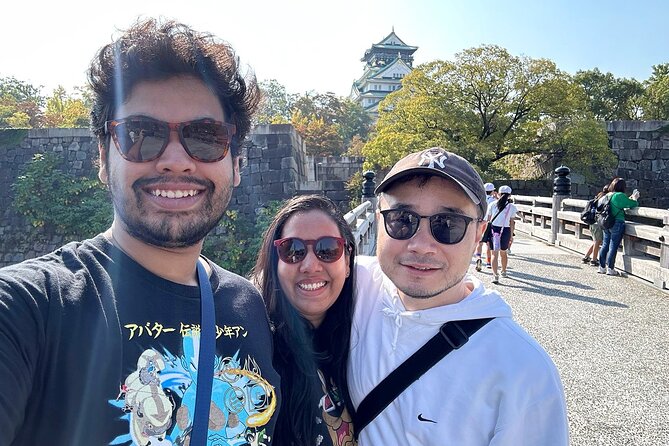
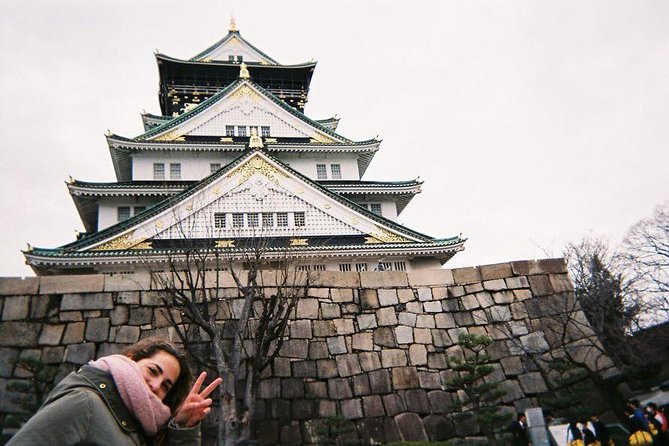
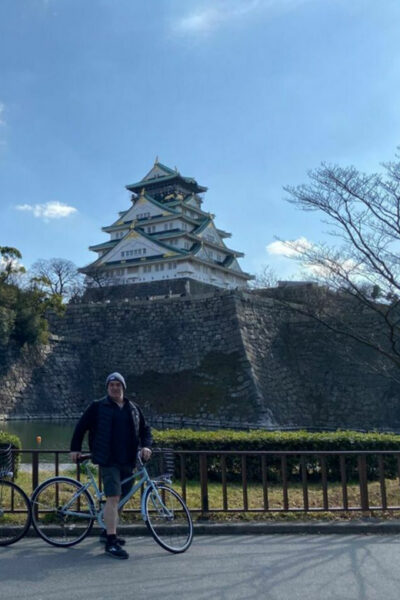
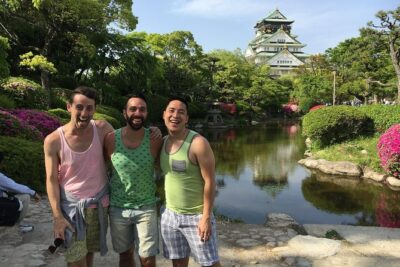
Osaka Castle Park is likely the visual high point of the ride. You pedal through green parkland and pause for views of Osaka Castle, with time to take photographs and hear stories about the castle’s history and local legends.
Several guides have been praised for finding good photo positions, including a less obvious spot with a strong view of the castle. That small service can make a difference. A guide who knows where to stop saves you from wandering around the park while trying to frame the tower through trees, crowds, or railings.
The park also gives you a welcome change of pace. After riding through city streets, the open grounds offer room to breathe. In cherry blossom season, the ride beneath flowering trees can be especially appealing, though the timing of blossoms and the weather are naturally outside the tour’s control.
Keep your expectations in check. This is not a full Osaka Castle museum visit. The focus is the park, the exterior view, the setting, and the stories connected with the castle. If you want to tour the interior exhibits or spend a long time on the grounds, plan a separate visit.
For a first day in Osaka, this stop earns its place. You get the city’s most recognizable landmark without giving up the chance to see several less obvious districts.
Same city, a completely different kind of afternoon:
- Osaka Go Karting Tour with Funny Costume
★ 5.0 · 2,658 reviews - Osaka Castle: Museum and Tower Entry Ticket
★ 4.5 · 2,380 reviews - Osaka: Shinsekai Food Tour with 13-15 Dishes at 5 Eateries
★ 4.8 · 2,204 reviews - Osaka Food Tour: 13 Dishes at 5 Local Eateries
★ 5.0 · 2,149 reviews
Nakanoshima Park offers a quiet pause downtown
Nakanoshima Park sits between rivers in Osaka’s business district and was the city’s first public park. Its gardens and riverside paths provide a calmer interlude after the castle stop.
This is a good example of why a bike route can reveal more than a list of famous attractions. Nakanoshima is not simply a monument to check off. It shows how Osaka uses open public space within a dense commercial center. You can stroll briefly, take photographs, and listen as the guide explains the area’s place in the city.
The stop may feel short if you prefer major landmarks over parks. I would see it as a reset in the middle of the tour. Six locations in three hours could easily become a blur, so a peaceful riverside section helps break up the ride.
America Town shows Osaka’s fashion-forward side

The tour then heads to America Town, also known as Amerikamura, a district linked with local fashion, youth culture, and unusual shops. It is a good counterpoint to Den Den Town. Both areas have a strong sense of style, but Den Den Town leans toward anime and electronics, while America Town is about clothing, street looks, and contemporary Osaka character.
You will not have much time for serious shopping during the tour. The value here is seeing how different parts of the city express themselves. If you spot a shop or street you want to explore, remember its location and return later on foot.
This stop also helps explain why the route feels broader than a conventional monument tour. You are not only moving between temples and castle grounds. You are seeing neighborhoods where people shop, dress, meet, and shape the city’s present-day identity.
Namba Yasaka Shrine ends with a giant lion
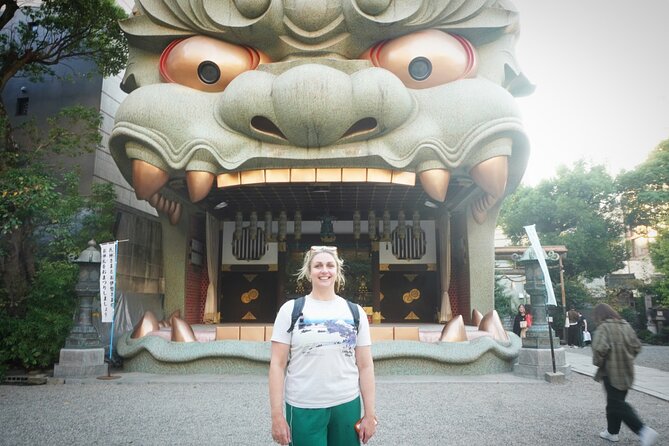
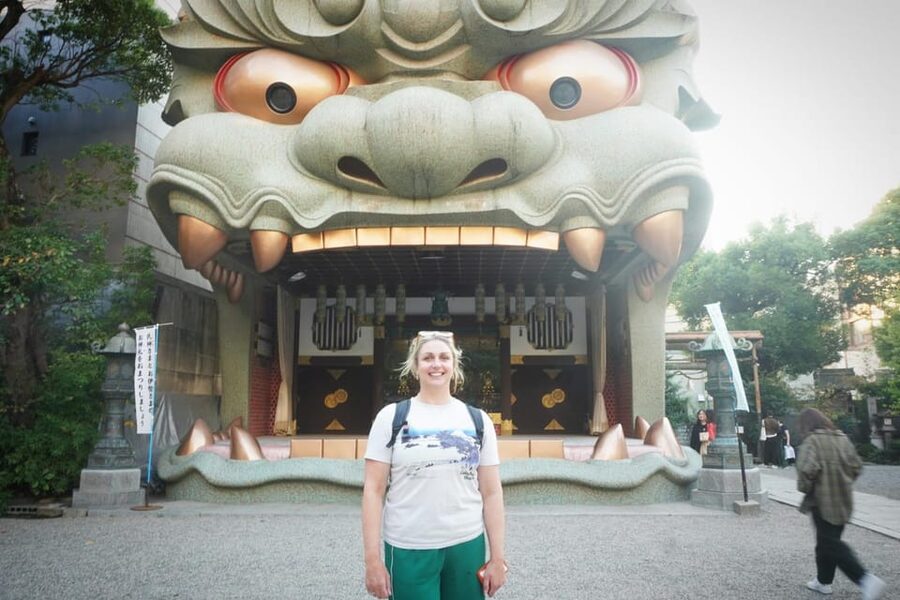
The final stop is Namba Yasaka Shrine, famous for its enormous lion-head stage. The structure is unusual enough to be memorable, and it gives the tour a strong closing image.
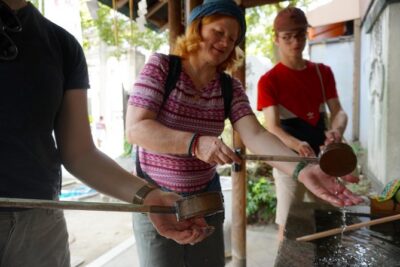
Here, the guide discusses Shinto and its place in Japanese social and spiritual life. That makes the ending more than a photo stop. After Shitennoji introduced Buddhism, Namba Yasaka provides a chance to consider a different religious tradition and how both remain part of everyday Japan.
The shrine is in a lively part of Osaka, but the grounds offer a quiet pause. It is a fitting final stop before you continue into Namba on your own. You finish near one of the city’s major entertainment and dining areas, so you can easily carry on with dinner or evening sightseeing, though the tour itself does not include food or additional activities.
What the guides add to the ride
The guide can make or break a fast-moving city tour. Here, Ko is the name most often associated with the experience, and he is praised for clear English, good humor, personal stories, and a strong sense of Osaka as his home. Kosuke and Sukuna are also named as guides who provided useful explanations and recommendations.
The best quality to look for is not simply a list of facts. It is the ability to explain why a place matters, then keep the group moving. Ko is described as striking a good balance between information and conversation. That suits this route, since you need enough context to understand each stop without standing still for a lecture at every one.
A guide also matters for safety. You are not handed a bike and sent off alone. The group rides together, and the guide watches the pace and the people behind him. This is particularly helpful if you are comfortable on a bike but unfamiliar with Osaka’s streets.
English is the stated tour language. The available experiences describe the guides’ English as strong, though one account found the guide a little less certain than expected. That appears to be the exception, but it is fair to allow for some variation depending on who leads your departure.
Price, timing, and practical value
At $57 per person, the tour is priced as a compact guided sightseeing experience rather than a simple bike rental. Your fee includes the local guide, electric bike, and helmet. Gratuity is not included.
I think the price makes sense if you value orientation and efficiency. In three hours, you connect places that would take more planning on foot or by public transport. You also get help with route choices, photo locations, historical background, and cycling pace.
The value is weaker if you already know Osaka well or want long visits inside individual attractions. The tour cannot give you a full museum visit, a long shopping session, and a relaxed temple exploration in the same three-hour window. It works best as a first look that helps you decide where to return.
Starting times vary, so check availability for your date. You meet outside a Lawson convenience store. The tour offers free cancellation up to 24 hours ahead and a reserve-now, pay-later option, which is useful when your Japan schedule is still shifting.
Weather can affect comfort. One January rider found it cold, so dress for the season rather than assuming the cycling will warm you enough. Osaka’s weather changes through the year, and you will spend the full three hours outdoors.
Who should book this Osaka e-bike tour?
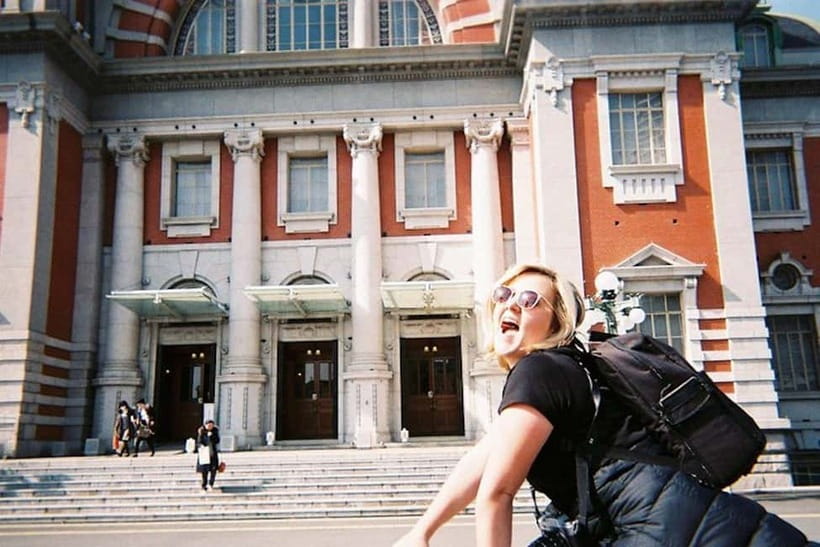
I would recommend it to first-time visitors who want to understand Osaka’s layout quickly. It is especially useful near the start of a stay, when you can return to Den Den Town, Shitennoji, Nakanoshima, America Town, or Namba after learning where each area sits.
It also suits active adults who can ride a bicycle but do not want a demanding athletic tour. The pedal assist and steady pace make it approachable, and the small group keeps the experience more personal than a large coach outing.
The stated limits are important. The tour is not suitable for children under 14, people under 140 centimeters, people who cannot ride a bike, or people with back, heart, or mobility problems. It is also not recommended for people with low fitness, people over 70, or people with visual impairments. A 75-year-old participant managed the ride well, but the official restrictions should guide your decision.
If you are nervous about cycling, tell yourself the right thing: this is not a race. You still need basic control and confidence, but the electric assistance handles much of the strain. Wear comfortable clothes, bring water, and leave room in your schedule afterward for a slower meal or rest.
Should you book it?
Book this tour if you want a fast, friendly introduction to Osaka and like the idea of seeing neighborhoods rather than only famous buildings. The combination of Den Den Town, Shitennoji, Osaka Castle Park, Nakanoshima, America Town, and Namba Yasaka Shrine gives you a useful cross-section of the city.
Skip it if you cannot ride comfortably, need a fully accessible sightseeing option, or want deep visits at one or two attractions. At $57, it offers good value for coverage, local explanation, and a small group, but its strength is breadth. You see a lot, get your bearings, and leave with clear ideas for what deserves more of your time.
FAQ
How long is the Osaka e-bike tour?
The tour lasts three hours.
What price should I expect?
The listed price is $57 per person.
What is included in the tour?
A local guide, an electric bike, and a helmet are included.
Is the tour conducted in English?
Yes. The live guide language is English.
How large is the group?
The tour is limited to seven participants.
Where is the meeting point?
You meet outside the convenience store Lawson.
Which places does the tour visit?
The route includes Den Den Town, Shitennoji Temple, Osaka Castle Park, Nakanoshima Park, America Town, and Namba Yasaka Shrine.
Can beginners ride the e-bikes?
The bikes use pedal assist and are described as easy to ride, but you must be able to ride a bicycle and manage city riding.
Who should not take this tour?
It is not suitable for children under 14, people under 140 centimeters, people who cannot ride a bike, or people with back, heart, mobility, or visual problems. It is also not recommended for people with low fitness or people over 70.
Just added in Osaka
- Urban Canvas: Osaka Street Art Bike Tour★ 5.0 · 10 reviews
- Anime Cosplay Photshoot-50 Digital Photos Provided★ 5.0 · 8 reviews
- TeamLab Botanical Garden Osaka Ticket★ 3.5 · 6 reviews
- Umeda Sky Building & Kuchu Teien Observatory Ticket in Osaka★ 4.5 · 3 reviews
- Immerse in Judo Martial Arts Class from Japan★ 5.0 · 4 reviews
- Cherry Blossom Buddha and Mt.Yoshino with Strawberry Picking Tour★ 4.5 · 5 reviews
- Traditional Home cooking Experience in Osaka, Japan★ 5.0 · 14 reviews
- Traditional Calligraphy Experience near Dotonbori★ 5.0 · 3 reviews
Osaka Bike Tours, compared.
5-Hour Osaka Bike Tour to the Neighborhood of Osaka Castle
Read our review →
Osaka Half-day E-bike Adventure: Minoh Falls & Katsuoji Temple
Read our review →Browse the lists this tour appears in