
Reviewed · OSAKA TEMPLE TOURS
Osaka: Japan’s Oldest Temple & Bone Buddha Walking Tour
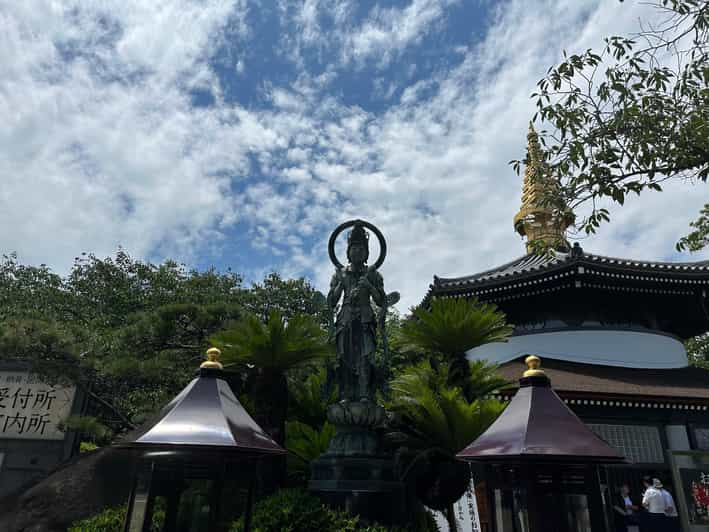
Japan’s oldest officially established Buddhist temple is only part of this Osaka walk. At Shitennoji, you’ll see an ancient religious plan still used today, then move to Isshinji for the striking Bone Buddhas, statues formed from cremated ashes. It is a powerful change of scene, from early national Buddhism to very personal city faith.
I like the clear historical arc, which connects Prince Shotoku and the arrival of Buddhism with the way ordinary Osaka families remember the dead. I also like the private format and small time commitment: a live English or Japanese speaking guide can shape the explanation around your questions, and the visit takes about two hours.
The main consideration is pace. You cover two temples in a short time, so this suits you if you want focused context rather than a slow, unstructured temple visit. Transportation, food, drinks, and personal expenses are not included.
Key points of the Osaka temple walk
- Shitennoji dates to 593: Learn why Prince Shotoku helped make Buddhism part of early Japanese society.
- The central precinct has a classic layout: Your guide explains the meaning behind its orderly Buddhist design.
- The Pure Land Garden links sunset with rebirth: This quiet garden gives the tour its most reflective moment.
- Isshinji’s modern gate makes a sharp contrast: The current head priest designed the bold entrance.
- The Bone Buddhas contain cremated ashes: More than two million Osaka ancestors are connected with this tradition.
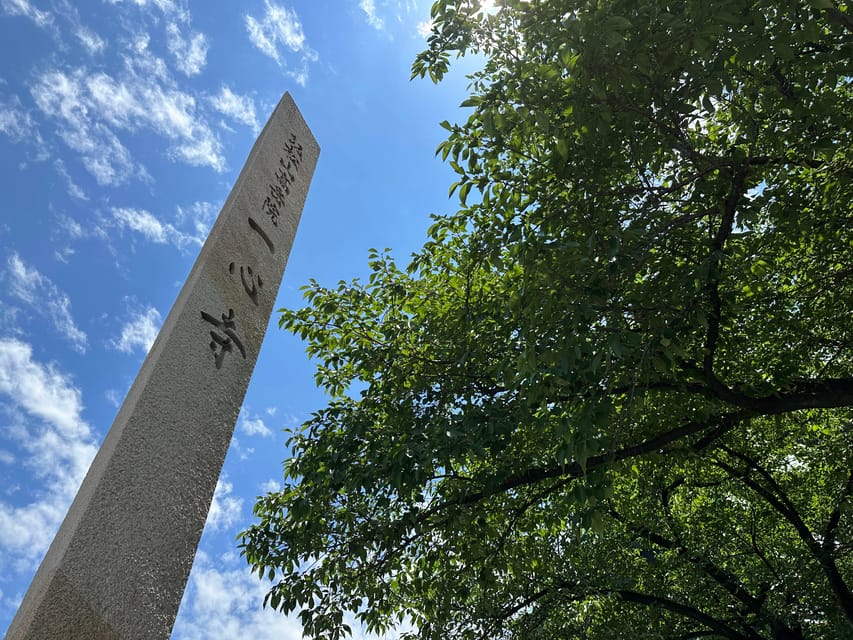
- The private tour keeps the focus personal: You meet a professional guide at Shitennoji’s stone torii gate and finish at Isshinji.
Why these two Osaka temples belong together
Osaka is easy to approach through food, shopping, neon, and modern city life. This walk gives you another way into the city, through the religious institutions that helped shape Japanese society.
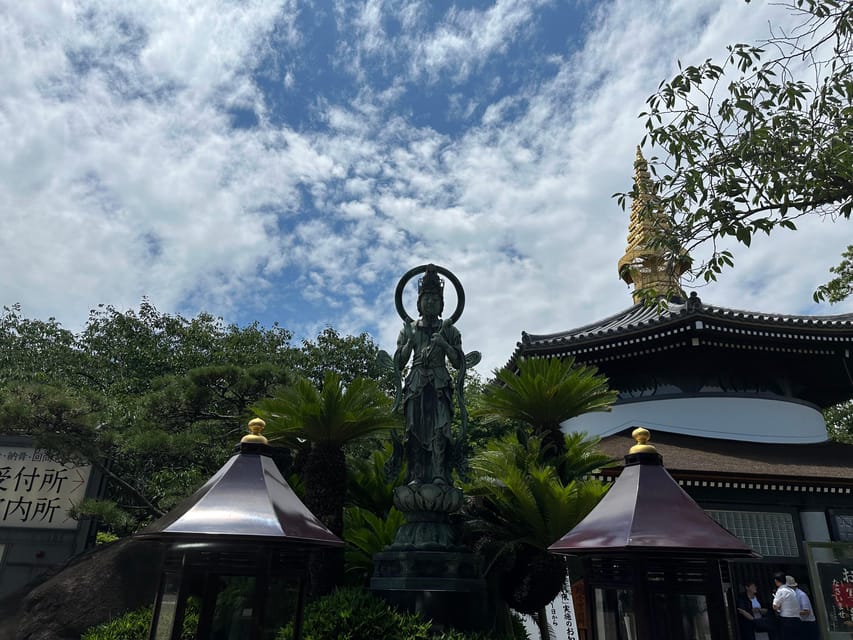
Shitennoji represents Buddhism at the beginning of its public life in Japan. Isshinji shows how Buddhist practice changed into something intimate and communal in a crowded urban setting. I like that the tour does not treat the temples as isolated monuments. Instead, it lets you follow an idea across more than fourteen centuries.
The two stops also feel different in mood. Shitennoji offers early Buddhist planning, formal buildings, and a garden tied to Pure Land belief. Isshinji brings you face to face with a modern entrance and a tradition built around shared remembrance. That contrast gives the walk a useful rhythm.
You should not expect a broad Osaka sightseeing tour. There is no food stop, shopping district, or transportation between major city sights built into the experience. The value comes from guided interpretation, not from checking off a long list of attractions.
More temple tours in Osaka:
- Osaka: Minoh, Katsuoji Temple, & Minoh Falls Full-day Tour
★ 4.9 · 172 reviews - Osaka Temple Cool Foot Bath & Matcha Experience〈45min〉
★ 4.9 · 82 reviews - Osaka: Mind & Spirit Balance Temple Reiki Healing
★ 5.0 · 41 reviews
Meeting at Shitennoji’s stone torii gate
The tour begins at the stone torii gate, called the Ishidori, at Shitennoji’s main entrance. Your guide will hold a sign with your name. The meeting point is a short walk from Shitennoji-mae Yuhigaoka Station, so you can reach it without arranging transportation as part of the tour.
I recommend allowing enough time to find the gate before the start. The supplied details identify the stone torii clearly, but temple grounds can feel confusing when you are watching the clock and trying to read signs. Arriving calmly gives you a better start.
The guide speaks English or Japanese, and the group is private. That matters here because religious sites often raise small questions that do not fit a standard script. You can ask about the layout, the symbolism of the garden, or the meaning of the Bone Buddhas without waiting for a large group to move along.
Shitennoji and the Buddhist beginning of Japan
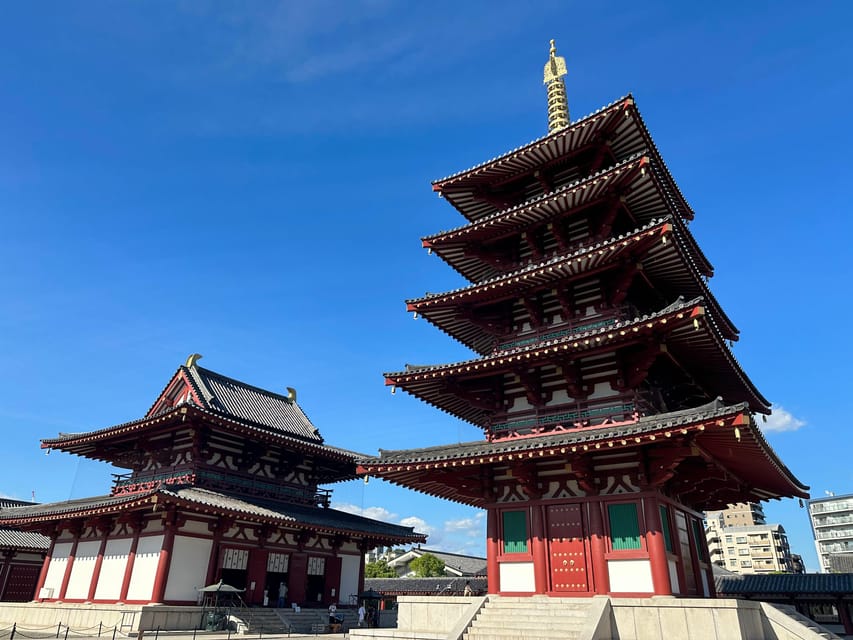
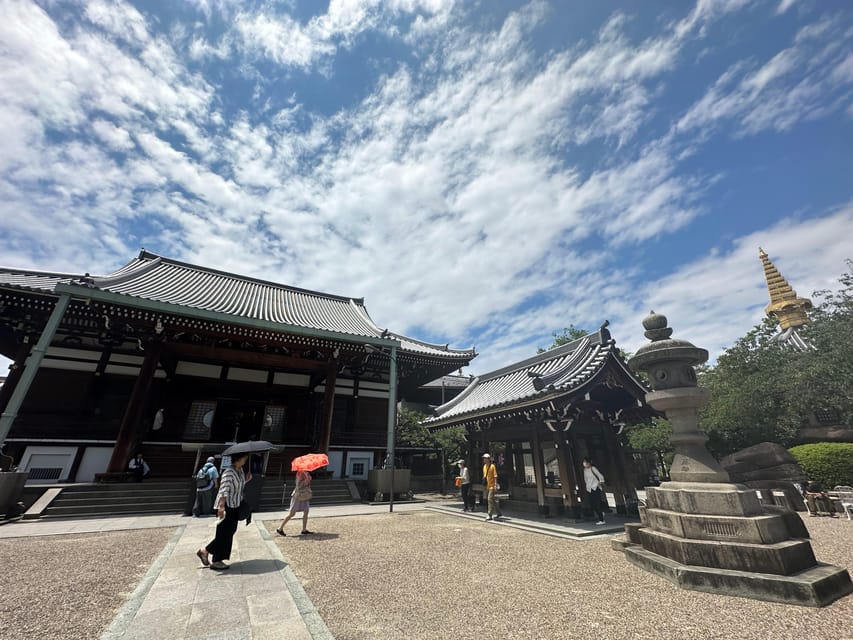
Shitennoji was founded in 593 by Prince Shotoku, a key early figure in the spread of Buddhism. The date is the first detail that changes how you see the site. You are not simply entering an old temple. You are visiting a place linked with the period when Buddhist ideas began to take a lasting role in Japanese society.
The temple honors the Four Heavenly Kings, known as the Shitenno. These guardian figures were believed to protect the nation, so Shitennoji’s purpose was not only private worship. It also carried a public and political meaning in early Japan.
Your guide will explain the central precinct and its symmetrical layout. This is one of the most useful parts of the visit because the arrangement of the buildings is not random. The design reflects early Japanese Buddhist architecture and gives the complex a clear order.
I find guided explanation especially valuable here. Without context, you may notice that the buildings line up neatly, but miss why that order matters. The guide turns the plan into evidence of how Buddhism was being organized, presented, and understood in early Japan.
Shitennoji has been damaged by fires and wars and rebuilt many times. That creates a useful question for you: what makes a temple ancient when many physical parts have been replaced? The answer offered by this visit is continuity of purpose and identity. The materials may change, but the religious role and the plan remain tied to the original foundation.
This is also where you get the tour’s strongest historical grounding. The guide connects the temple to Prince Shotoku, the Four Heavenly Kings, and the long process by which Buddhism became part of Japanese life. One verified visitor from Portugal praised the guide for explaining Japanese culture and religion in a way that made Japan easier to understand. That praise points to the tour’s real strength: the explanation matters as much as the buildings.
The Pure Land Garden and the meaning of sunset
The visit includes Shitennoji’s Pure Land Garden. This is not simply a pleasant green space added to the temple grounds. It reflects Pure Land Buddhist ideas about the Western Paradise and the hope of rebirth in Amida’s realm.
Your guide will explain the connection between the setting sun and this promise of rebirth. The relationship is especially meaningful in this part of Osaka, which has long been associated with sunset views. The garden gives you a visual way to understand a belief that can otherwise feel abstract.
I like this stop because it slows the historical story. The central precinct tells you how Buddhism was organized in early Japan. The garden asks what those beliefs meant to people facing death, hope, and the next life.
Do not expect an extended garden visit with plenty of spare time. The whole experience lasts about two hours and also includes Isshinji. If gardens are your main interest, you may want a separate visit at a slower pace. Here, the Pure Land Garden works best as part of the larger story.
More walking tours in Osaka:
- Osaka Local Foodie Walking Tour in Dotonbori and Shinsekai
★ 5.0 · 985 reviews - Osaka: Deep Backstreets Walking Tour with Dinner Option
★ 4.9 · 902 reviews - Ultimate Osaka Walking Tour: Castle, Dotonbori & Hidden Gems
★ 5.0 · 862 reviews - Osaka: Main Sights and Hidden Spots Guided Walking Tour
★ 4.9 · 702 reviews
Isshinji’s modern gate and old religious purpose
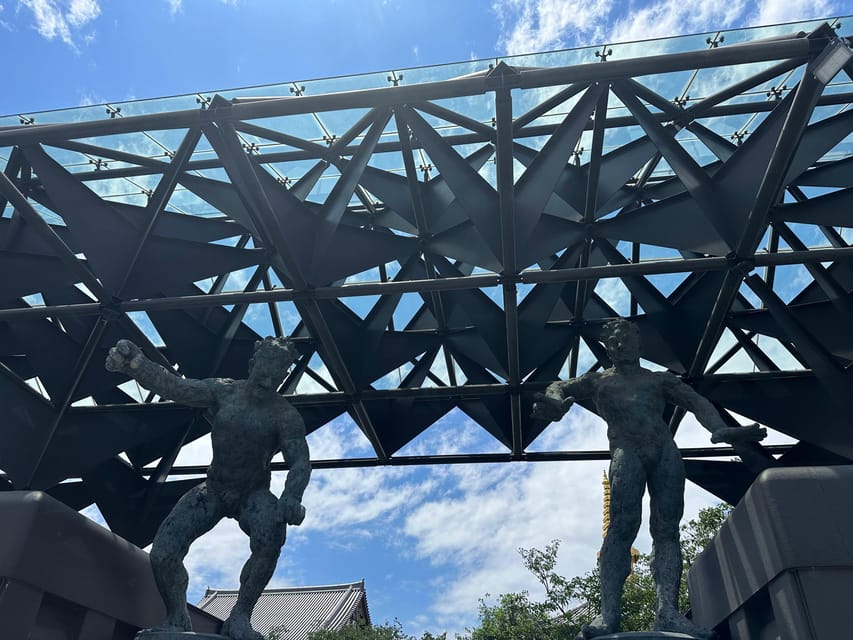
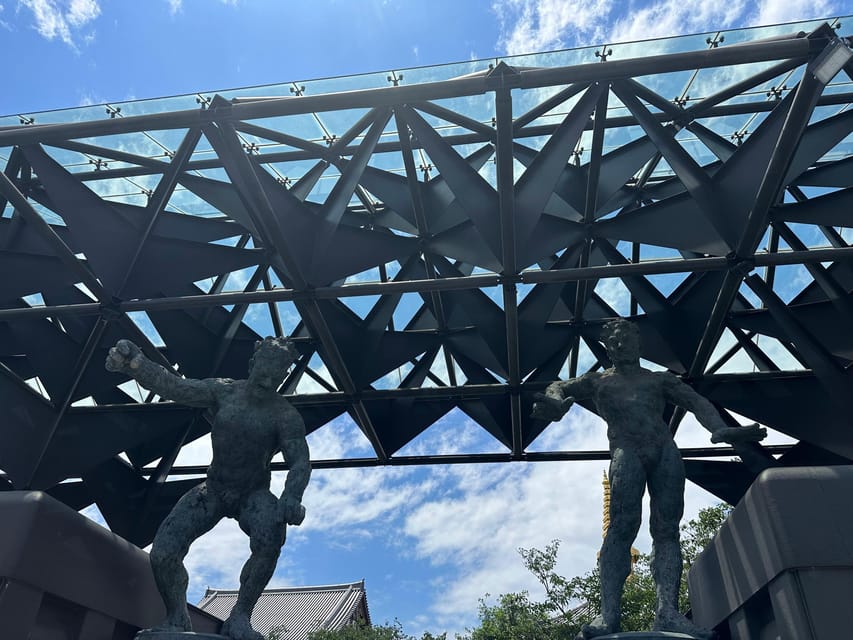
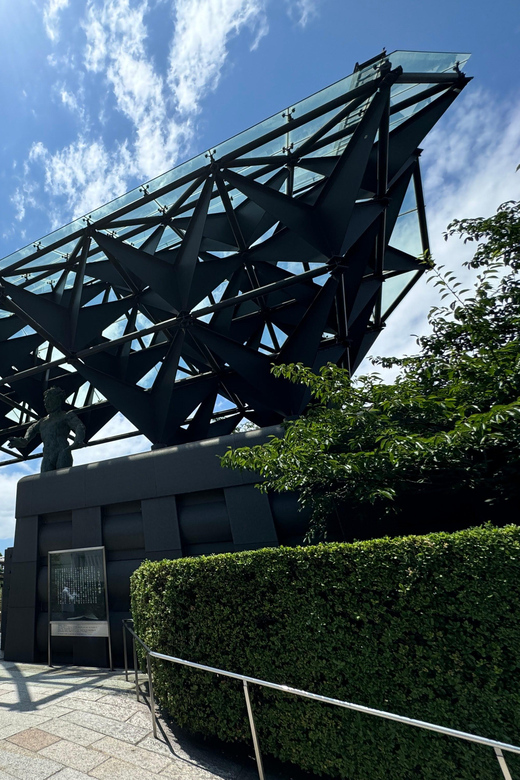
From Shitennoji, the tour moves to Isshinji Temple. The visual change is immediate. The main gate is strikingly modern and was designed by the current head priest. After seeing a temple rooted in the sixth century, this entrance makes the point that Japanese religious places do not have to look frozen in the past.
Behind the modern gate is a temple with nearly 900 years of history. That combination is worth paying attention to. Isshinji is not presented as a new building replacing an old tradition. It is a long-running temple using contemporary design to express its place in the present city.
This stop helps correct a common assumption about Japanese temples. Tradition and modern design are not always opposites. A religious site can preserve old practices while changing its architecture and public face.
Your guide will explain how Isshinji developed its distinctive role. The subject is more personal than the national story at Shitennoji, and the change makes the second half of the walk feel different rather than repetitive.
The Bone Buddhas and Osaka’s communal memory
Isshinji is home to the ashes of more than two million ancestors of Osaka residents. These remains are respectfully combined to create statues known as Bone Buddhas, or Kotsubotoke.
This is the experience’s most unusual feature, and it deserves a serious approach. The Bone Buddhas are not curiosities for a quick photograph. They reflect a form of Buddhist remembrance in which individual cremated remains become part of a shared religious memorial.
Your guide will explain when this practice began and how it continues to serve families across generations. That explanation is important because the idea may be unfamiliar or even startling at first. The tour gives you the cultural and religious setting needed to understand it as an act of respect and communal memory.
I appreciate the way Isshinji broadens the story of Buddhism. Shitennoji shows Buddhism helping shape a nation. Isshinji shows Buddhism helping people deal with family, death, and remembrance in a dense city. The Bone Buddhas connect countless Osaka families to one place.
The subject may not suit every visitor. If you prefer light sightseeing or have little interest in religious customs surrounding death, this stop can feel intense. If you want a more honest look at how faith works in daily life, it is likely to be the part you remember longest.
What the two-hour timing means for you
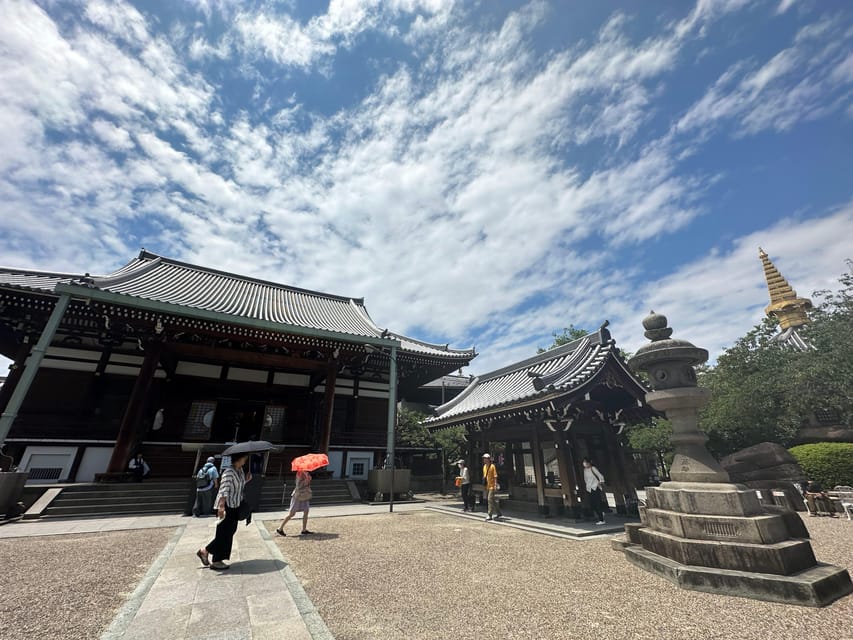
The experience lasts two hours, with the Shitennoji portion described as about an hour and a half before the visit continues through Osaka to Isshinji. The schedule is compact but sensible for a focused introduction.
You get enough time to understand the major ideas, see the central precinct, visit the Pure Land Garden, and learn about the Bone Buddhas. You do not get a full day to wander, sit, sketch, or study every building. I would treat this as a well-framed introduction, not as a complete examination of both temples.
The private group format improves the value of a short tour. You are not paying only for entry. You are paying for someone to explain why the temple layout matters, how Pure Land thought relates to sunset, and why Isshinji’s memorial statues exist.
At $65 per person, the price is reasonable if you want cultural explanation and a guide who can answer questions in English or Japanese. Admission to Shitennoji’s main temple complex and the Pure Land Garden is included. Since food, drinks, transportation, and personal spending are not included, you should see the fee as the cost of a guided cultural visit, not an all-inclusive outing.
The value is weaker if you only want to walk through temple grounds on your own. Shitennoji and Isshinji can be meaningful without a guide, but much of what makes this experience distinctive is the connection between architecture, belief, and social change.
Who will get the most from this experience
I would recommend this walk to you if you want more from Osaka than its modern entertainment districts. It suits first-time visitors who need a clear introduction to Japanese Buddhism, as well as repeat visitors looking for a quieter part of the city.
It is especially useful if you enjoy:
- Religious history explained in plain language
- Architecture and symbolic layouts
- The relationship between Buddhism and Japanese society
- Thoughtful memorial customs
- Private tours where you can ask questions
- A short cultural activity that fits around other Osaka plans
Families and mixed-interest groups may also find the contrast helpful. One person can focus on architecture, another on history, and another on the Bone Buddhas. The subject matter is serious, so it is worth making sure everyone in your group is comfortable with a visit centered partly on cremated remains.
The walk is less suitable if you want a food-focused experience, a long garden visit, or a tour that covers many Osaka neighborhoods. It also does not include transport from your accommodation or onward travel after Isshinji.
Free cancellation is available up to 24 hours in advance for a full refund, and you can reserve now and pay later. Those options make it easier to fit the visit into a changing Osaka schedule.
Should you book the Shitennoji and Isshinji walk?
Book it if you want a focused explanation of how Buddhism entered early Japan and became part of urban family life. The combination of Shitennoji’s 593 foundation, the Pure Land Garden, Isshinji’s modern gate, and the Bone Buddhas gives you a story with real range.
I would book this before a general temple walk if you value meaning over quantity. You will see only two main sites, but the guide helps you understand why they matter. The strongest praise for the experience centers on the cultural and religious explanations, and that is exactly where the $65 fee earns its keep.
Skip it if you want entertainment, food, or a relaxed half-day with no fixed pace. For everyone else, this is a worthwhile short tour that reveals a serious, memorable side of Osaka.
FAQ
How long does the Osaka temple tour last?
The tour lasts two hours.
What temples does the tour visit?
It visits Shitennoji Temple and Isshinji Temple.
Where does the tour begin?
You meet at the stone torii gate, or Ishidori, at the main entrance of Shitennoji Temple.
How do I identify the guide?
The guide will be holding a sign with your name.
Is the meeting point near public transportation?
Yes. The meeting point is a short walk from Shitennoji-mae Yuhigaoka Station.
What languages are available?
The live guide is available in English or Japanese.
Is this a private tour?
Yes. The activity is for a private group.
What is included in the price?
The price includes a professional English-speaking guide, guided visits to Shitennoji and Isshinji, admission to Shitennoji’s main temple complex, and admission to the Pure Land Garden.
Can I cancel for a full refund?
Yes. You can cancel up to 24 hours in advance for a full refund.
Just added in Osaka
- Urban Canvas: Osaka Street Art Bike Tour★ 5.0 · 10 reviews
- Anime Cosplay Photshoot-50 Digital Photos Provided★ 5.0 · 8 reviews
- TeamLab Botanical Garden Osaka Ticket★ 3.5 · 6 reviews
- Umeda Sky Building & Kuchu Teien Observatory Ticket in Osaka★ 4.5 · 3 reviews
- Immerse in Judo Martial Arts Class from Japan★ 5.0 · 4 reviews
- Cherry Blossom Buddha and Mt.Yoshino with Strawberry Picking Tour★ 4.5 · 5 reviews
- Discover Osaka’s Iconic Umeda Sky Observation★ 5.0 · 6 reviews
- Traditional Home cooking Experience in Osaka, Japan★ 5.0 · 14 reviews
Osaka Temple Tours, compared.
Minoh, Katsuoji Temple, & Minoh Falls Full-day Tour
Read our review →
Osaka Temple Cool Foot Bath & Matcha Experience〈45min〉
Read our review →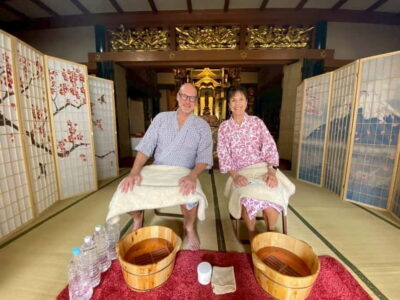
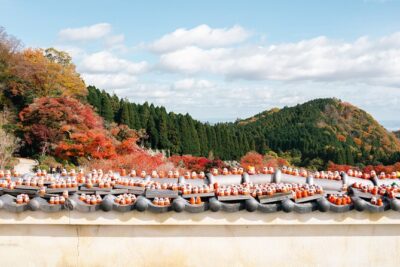
Katsuo-ji Temple, Arashiyama Forest, & Nara Park
Read our review →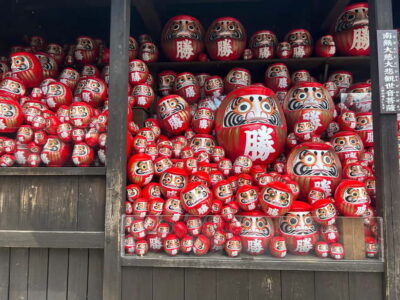
Minoh Waterfall & Katsuo-ji Temple Half-Day Tour
Read our review →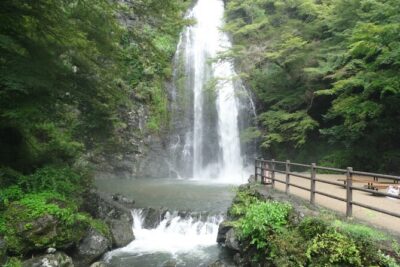
Osaka Half-day E-bike Adventure: Minoh Falls & Katsuoji Temple
Read our review →
Osaka Temple Head Spa &Matcha Facial – Refresh & Glow〈90min〉
Read our review →
Browse the lists this tour appears in