
Reviewed · OSAKA WALKING TOURS
The Dark Side of Osaka Walking Tour
Osaka’s Dark Side Walking Tour takes you beyond the usual food stalls and neon signs into Shinsekai, Nishinari, and Tobita Shinchi. You’ll see a side of the city shaped by day labor, poverty, entertainment, and a red-light district with more than a century of history. Guides such as Jay, Matt, and Rico have led guests through the area with clear explanations and plenty of local context.
I like the small group limit of 15 and the sensible two-hour route. I also like that the tour is built around places you can walk through for free, rather than paid sights with long lines. The main drawback is that some of the first half may feel like walking through ordinary, worn-down streets rather than looking at major attractions, so this tour suits curious walkers more than sightseers seeking big monuments.
Key points to know before you book
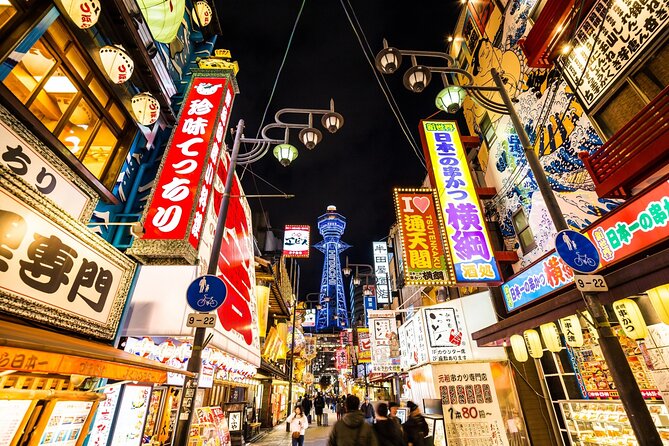
- Shinsekai begins the evening with retro Osaka character, including the streets around Tsutenkaku Tower.
- Nishinari offers social history, with a focus on working-class life and the area’s former day-labor economy.
- Tobita Shinchi is the most sensitive stop, a long-established red-light district that requires respectful behavior.
- Jay, Matt, and Rico have guided this route, with the strongest praise focused on clear answers, local stories, and thoughtful explanations.
- The walk lasts about two hours, and one guest specifically noted that you should be ready to walk for nearly the full time.
- The $25 price is fair for a small-group guide, but less appealing if you only want photo stops or famous landmarks.
What this Osaka evening walk is really about
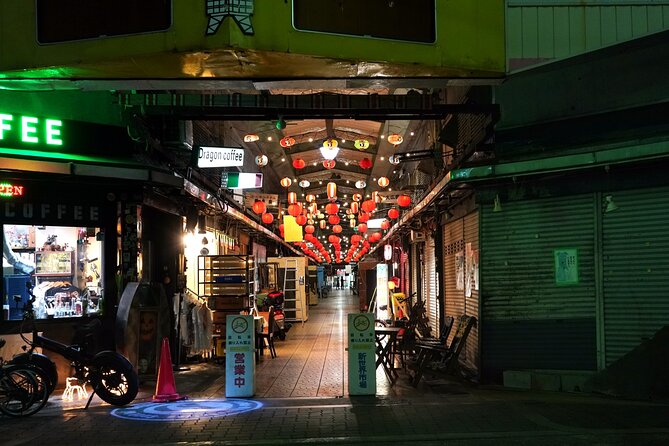
This is not a standard Osaka highlights tour. You will not spend the evening ticking off castles, temples, or grand viewpoints. Instead, you’ll move through districts that reveal how the city worked for people living outside the polished tourist center.
The route focuses on social history. You’ll hear about Shinsekai’s creation in 1912, Nishinari’s connection with day laborers and working-class residents, and Tobita Shinchi’s long role as Osaka’s largest red-light district. The point is not shock value. At its best, the walk helps you understand how entertainment, poverty, labor, and urban change sit side by side in one part of Osaka.
I like that the route uses streets rather than indoor attractions. There is no admission fee at the stops, and the guide is the main value. A strong guide can explain what you are seeing, answer questions, and help you avoid treating a complicated neighborhood as a backdrop for snapshots.
The experience has earned a 4.9 rating from 49 reviews, with 98 percent recommending it. That high score makes sense for people who want history and local context. It is less convincing for anyone expecting a packed schedule of activities. One poor rating made the fair point that there may not be enough to look at or do if you are not interested in the social side of Osaka.
More walking tours in Osaka:
- Osaka Local Foodie Walking Tour in Dotonbori and Shinsekai
★ 5.0 · 985 reviews - Osaka: Deep Backstreets Walking Tour with Dinner Option
★ 4.9 · 902 reviews - Ultimate Osaka Walking Tour: Castle, Dotonbori & Hidden Gems
★ 5.0 · 862 reviews
Starting at Shinsekai near Tsutenkaku
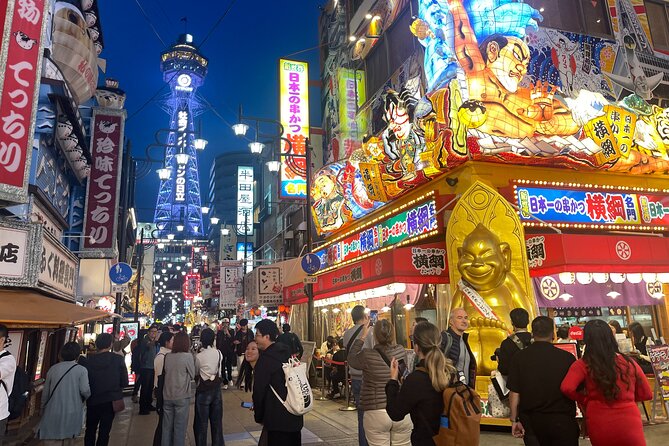
You meet at 5:30 pm outside MEGA Don Quijote in Shinsekai, at 3-chōme-4-36 Ebisuhigashi. This is a useful starting point because Shinsekai gives you an immediate sense of the evening’s theme: old Osaka character, local commerce, entertainment streets, and the famous Tsutenkaku area.
Shinsekai means New World, an amusing name for a district now known for its retro feel. It was established in 1912 as a modern entertainment area, and the tour uses that past to explain how the neighborhood developed. You’ll spend about 30 minutes here, with no admission ticket required.
Do not expect the guide to rush you from one landmark to the next. This part is about reading the streets and understanding why Shinsekai feels different from Osaka’s sleek shopping zones. You might find the material more interesting than the scenery itself, especially if you enjoy urban history.
The first stop is also where your expectations matter most. If you want nonstop visual highlights, the walk may feel slow. If you want to know why a district looks and feels the way it does, the opening explanation gives the rest of the route a useful frame.
Nishinari and the working-class side of Osaka
The route then moves into Nishinari, including the Dobutsuen-mae area known as Deep Osaka Street. You’ll spend about 30 minutes here. This is likely the most demanding part of the tour for some people, not because of the walking, but because the surroundings and subject matter are more direct.
Nishinari has long been connected with day laborers and working-class residents. The guide discusses the district’s past and present, along with the local stories that help explain its reputation. This is where the tour moves furthest from the usual Osaka visitor circuit.
I would listen closely here and keep your camera away unless the guide clearly indicates that a photograph is appropriate. The value of this stop comes from context and respect, not from collecting dramatic images of poverty. You are passing through a lived-in neighborhood, not a museum exhibit.
The guide makes a major difference. Jay has been praised for thoughtful explanations of Japanese social history, while other outings led by Matt and Rico have been described as friendly, well informed, and willing to answer questions. The listing does not guarantee a particular guide, but the names give you a sense of the sort of leadership the experience aims for.
One criticism of the route is worth taking seriously: the first half can feel like wandering through slum areas with limited sights. That is not a flaw for everyone. It is simply the tradeoff for choosing a tour about social history rather than conventional sightseeing.
Jan Jan Yokocho and retro street life
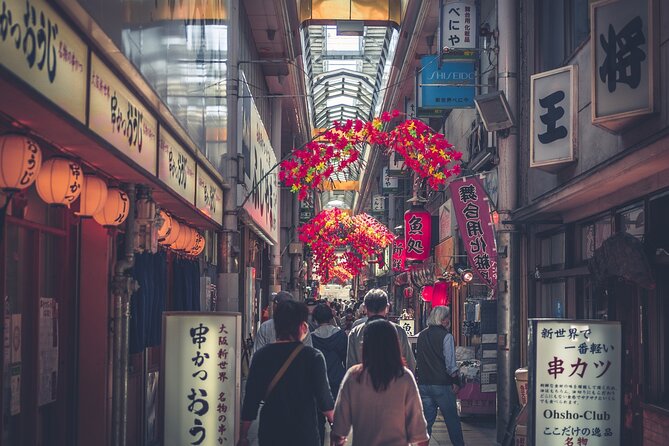
After Nishinari, you reach Jan Jan Yokocho, also called Nanyodori Shopping District. The walk here lasts about 20 minutes. This narrow street sits near Tsutenkaku Tower and is known for its old-fashioned shopping and dining atmosphere.
The contrast with Nishinari gives the route some rhythm. You move from a serious discussion of labor and hardship into a more commercial stretch where the older character of Shinsekai is easier to see. The area’s name and narrow layout add to its sense of place, even if you are only passing through.
This is a good spot to ask the guide questions. You may want to connect the district’s restaurant and shopping culture with the larger story of Shinsekai. The tour does not include snacks, so you will need to buy anything you want yourself. Since the stop is short, I would not count on having time for a proper meal during the walk.
That said, the end point is close to Tsutenkaku Hondori, where you can continue exploring after the tour. If you are hungry, the area gives you a practical place to decide what to eat once the guided portion is over.
Same city, a completely different kind of afternoon:
- Osaka Go Karting Tour with Funny Costume
★ 5.0 · 2,658 reviews - Osaka Castle: Museum and Tower Entry Ticket
★ 4.5 · 2,380 reviews - Osaka: Shinsekai Food Tour with 13-15 Dishes at 5 Eateries
★ 4.8 · 2,204 reviews - Osaka Food Tour: 13 Dishes at 5 Local Eateries
★ 5.0 · 2,149 reviews
Tobita Shinchi, Osaka’s most sensitive stop
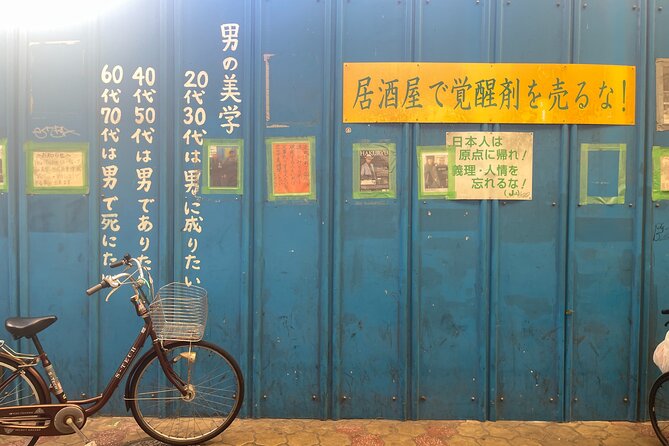
Tobita Shinchi is the most unusual stop and the one that needs the most care. The district is Osaka’s best-known and largest red-light area, with a history going back more than a century. You spend about 20 minutes walking through or near the area while the guide explains its place in Osaka’s social and architectural past.
The district operates under tight rules and has a distinctive built environment. That combination makes it an important part of the city’s history, but it is not a place for loud jokes, intrusive photographs, or careless behavior. Keep your voice low, follow the guide, and treat the people who live and work there as people, not scenery.
For many people, this is the part that makes the tour different from a normal Osaka walk. It shows how regulated entertainment districts can exist within an ordinary urban neighborhood. It also raises questions about the line between curiosity and intrusion. A good guide helps you stay on the right side of that line.
You should also know that this stop may not suit everyone. The subject matter is adult in nature, and the district can feel uncomfortable. If that is not what you want from an evening in Osaka, choose a food walk or a standard city tour instead.
Ending near Tsutenkaku Hondori
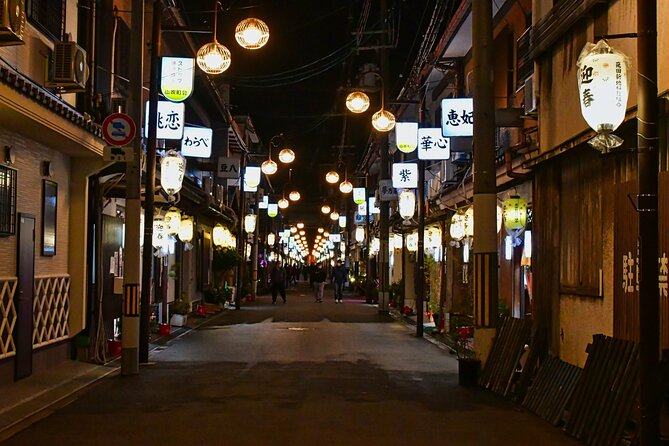
The final 20-minute stop is Tsutenkaku Hondori Shopping Street, at 1-chōme-18-6 Ebisuhigashi. The tour ends here, near Tsutenkaku Tower and within the Shinsekai district.
This is a practical finish. You are not dropped at an isolated meeting point or sent across town at the end of the evening. You can remain in the area, continue walking, look for food, or make your own way back to your accommodation.
Tsutenkaku Hondori has a retro shopping arcade feel, with a mix of shops and local businesses. It brings the experience back toward everyday Osaka after the heavier subjects in Nishinari and Tobita Shinchi.
The final stop may feel brief, but that is probably helpful. The tour has already covered several serious themes, and ending in a shopping street gives you space to process what you have heard. You can also ask a final question before saying goodbye.
How good is the $25 value?
At $25 per person, this is a reasonable price for a two-hour guided walk, especially with a maximum of 15 people. You are paying for interpretation, route planning, and access to local context rather than entrance tickets. Since all fees and taxes are included, there should be no surprise charge for the guided experience.
The value depends heavily on your interests. If you enjoy social history, local stories, and parts of a city that are usually skipped, $25 is easy to justify. A guide can turn a confusing walk through unfamiliar streets into a useful lesson about Osaka.
If you measure value by the number of famous sights, the calculation changes. There are no paid attractions, no included snacks, and no major activity beyond walking and listening. One guest felt the route did not offer enough to see or do, despite giving the guide five stars. That is the clearest warning for potential buyers.
I would book it for the explanation, not the entertainment. The guides have been praised for answering questions, giving area tips, and keeping a comfortable pace. That is more useful than a hurried route packed with stops that you barely understand.
Timing, group size, and practical details
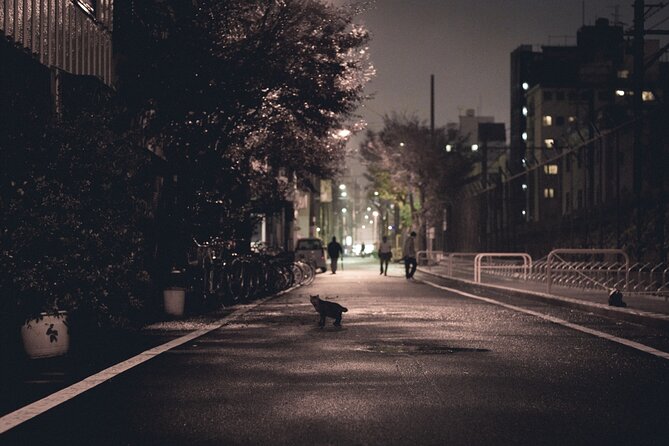
The tour starts at 5:30 pm and lasts about two hours. An evening start works well for this subject, as the route moves through entertainment streets and finishes after dark or near dark depending on the season. The tour requires good weather, so poor conditions can lead to a new date or a full refund.
You should plan to walk for nearly the full two hours. Wear comfortable shoes and bring what you need for changing evening weather. Snacks are not included, and the walk is not built around a meal break.
The meeting point is near public transportation at MEGA Don Quijote Shinsekai. The end point is at Tsutenkaku Hondori, so you finish close to where you began. The mobile ticket is convenient, and confirmation arrives when you book.
The group limit is 15. That is small enough for questions without making the guide impossible to hear. The tour states that most people can participate, and service animals are allowed. It does not list a special accessibility plan, so if you have specific mobility needs, check the route details before booking.
Free cancellation is available up to 24 hours before the 5:30 pm start time. Changes or cancellations inside that window are not accepted for a refund. Local time controls the cut-off.
Who should take this tour?
I would choose this walk if you have already seen some of Osaka’s standard sights and want a harder-edged look at the city. It works especially well for people interested in urban history, working-class life, Japanese society, and the way districts change over time.
It also suits solo visitors who want a small group and a guide to help explain what they are seeing. The route provides structure without forcing you into a full-day schedule.
I would think twice if you want a relaxed food tour, a family-focused outing, or a list of famous landmarks. The red-light district and discussion of poverty may be uncomfortable for some people. The first half can feel visually ordinary, and there is no included food to break up the walk.
For the best experience, arrive ready to listen. Ask questions. Keep an open mind. Most of the value comes from what the guide explains, not from how many attractions you can photograph.
Should you book the Dark Side of Osaka Walking Tour?
Book it if you want to understand Osaka beyond its bright signs and famous eating districts. The route through Shinsekai, Nishinari, Jan Jan Yokocho, Tobita Shinchi, and Tsutenkaku Hondori gives you a useful look at parts of the city that many visitors miss.
The $25 price is fair, the group is limited to 15, and the guides have earned strong praise for local knowledge, social history, and thoughtful answers. Jay, Matt, and Rico are names associated with particularly strong outings, though your guide may differ.
Skip it if you need constant sightseeing action or prefer to avoid adult subjects and discussions of poverty. This is a talk-and-walk experience, not a show. For the right person, that is exactly why it is worth doing.
FAQ
How long does the Dark Side of Osaka Walking Tour last?
The tour lasts approximately two hours. The route includes about 30 minutes each in Shinsekai and Nishinari, followed by about 20 minutes each in Jan Jan Yokocho, Tobita Shinchi, and Tsutenkaku Hondori Shopping Street.
What time does the tour start?
The tour starts at 5:30 pm.
Where does the tour meet?
The meeting point is MEGA Don Quijote Shinsekai, 3-chōme-4-36 Ebisuhigashi, Naniwa Ward, Osaka, 556-0002, Japan.
Where does the tour end?
The walk ends at Tsutenkaku Hondori, 1-chōme-18-6 Ebisuhigashi, Naniwa Ward, Osaka, 556-0002, Japan.
What is included in the price?
All fees and taxes are included. Snacks are not included.
How many people can join the tour?
The tour has a maximum group size of 15 people.
Can I cancel for a full refund?
Yes. You can cancel at least 24 hours before the experience start time for a full refund. Cancellations or changes made less than 24 hours before the start are not refunded or accepted. If poor weather causes the tour to be canceled, you will be offered another date or a full refund.
Just added in Osaka
- Urban Canvas: Osaka Street Art Bike Tour★ 5.0 · 10 reviews
- Anime Cosplay Photshoot-50 Digital Photos Provided★ 5.0 · 8 reviews
- TeamLab Botanical Garden Osaka Ticket★ 3.5 · 6 reviews
- Umeda Sky Building & Kuchu Teien Observatory Ticket in Osaka★ 4.5 · 3 reviews
- Immerse in Judo Martial Arts Class from Japan★ 5.0 · 4 reviews
- Cherry Blossom Buddha and Mt.Yoshino with Strawberry Picking Tour★ 4.5 · 5 reviews
- Traditional Calligraphy Experience near Dotonbori★ 5.0 · 3 reviews
- Discover Osaka’s Iconic Umeda Sky Observation★ 5.0 · 6 reviews
Osaka Walking Tours, compared.
Osaka Local Foodie Walking Tour in Dotonbori and Shinsekai
Read our review →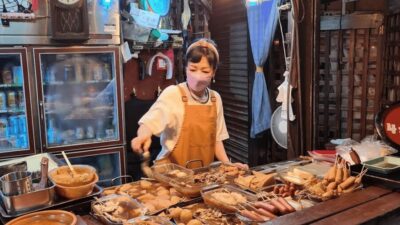
Deep Backstreets Walking Tour with Dinner Option
Read our review →
Ultimate Osaka Walking Tour: Castle, Dotonbori & Hidden Gems
Read our review →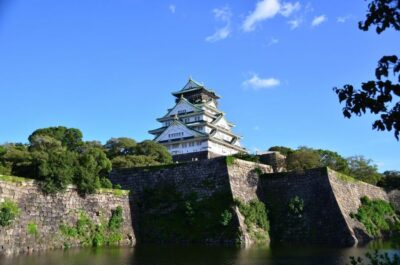
Main Sights and Hidden Spots Guided Walking Tour
Read our review →
Private Osaka Walking Tour: Highlights & Hidden Gems
Read our review →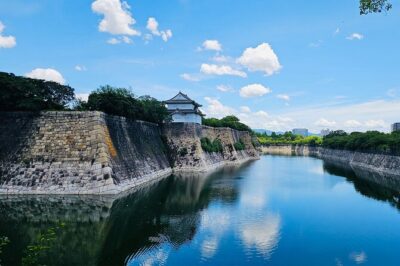
Osaka Castle Walking Tour and Castle Tower Admission
Read our review →
Kuromon Market Food Walking Tour in Osaka (6 stops, 6 tastes)
Read our review →
Five Must-See Highlights Walking Tour & Ramen Lunch
Read our review →Browse the lists this tour appears in