
Reviewed · CITY TOURS
Private Osaka City Tour: Fusion of Tradition and Modernity
Osaka’s best-known sights are spread across very different neighborhoods, and this private tour links them into one busy, useful day. You’ll move from Osaka Castle and Shitennoji Temple to neon-lit Dotonbori and old-school Shinsekai, with a local guide to keep the day moving.
I like the personal format, especially for families or first-time visitors who want help with trains, food choices, and shopping. I also like the mix of major sights and everyday Osaka, from the Glico Running Man sign to takoyaki, kushikatsu, and the long Shinsaibashi arcade.
The main drawback is the pace. Six hours covers a lot of ground, and admission fees, lunch, and public transportation cost extra. If you want long museum visits or slow photography stops, you may need to ask the guide to trim the route.
Key points
- Osaka Castle viewpoint: See one of the city’s main symbols and reach the top floor for wide views.
- Dotonbori food stop: Walk among famous signs and try Osaka specialties such as takoyaki, okonomiyaki, and kushikatsu.
- Private guide format: Only your group takes part, so the guide can adjust the day to your interests.
- Shitennoji’s long story: Visit a temple founded in 593, one of Japan’s oldest Buddhist sites.
- Shinsekai atmosphere: Finish among Tsutenkaku Tower and the nostalgic streets around it.
- Helpful guide names: Kazu has guided families and first-time visitors, while Risa has worked especially well with older groups.
A six-hour route through Osaka’s many faces
This is a city sampler with a clear purpose. In one half-day, you see the feudal Osaka of Toyotomi Hideyoshi, the shopping and food center around Dotonbori, one of Japan’s oldest temples, and the retro Shinsekai district.
That range is the tour’s biggest strength. Osaka is not one single postcard scene. It shifts from stone walls and temple courtyards to covered shopping arcades, glowing signs, and inexpensive local food. A private guide helps connect those pieces instead of leaving you to work out the trains and order of stops alone.
The meeting point is the Osaka Tourist Information Center in the central concourse of JR Osaka Station. The tour returns there at the end, which gives the day a simple beginning and finish. Public transportation is used between areas, and the supplied cost estimate is ¥1,000 per person.
You should think of this as an active walking day with train or subway rides between districts. One guide described it as a walking tour that uses the underground to reach different places. Comfortable shoes matter, and you should keep a little room in your schedule for crowds, food, and stops that take longer than expected.
A few more Osaka half-days worth pricing up
- Private Osaka Walking Tour: Highlights & Hidden Gems
★ 5.0 · 569 reviews - 3/4/5 Hours Private Tour in Osaka with Local Guide
★ 5.0 · 189 reviews - Osaka’s Best and Brightest: Private Full-Day Tour by Vehicle
★ 5.0 · 147 reviews
Osaka Castle and the view from the top
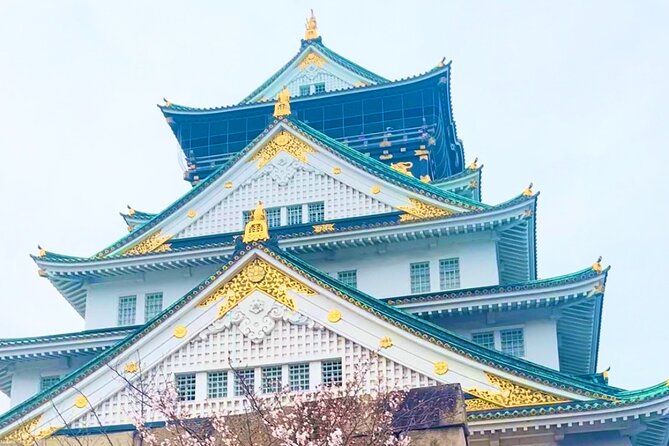
The day begins with Osaka Castle, built in 1583 by Toyotomi Hideyoshi. The castle is tied to Japan’s political unification, so this is more than a quick photo stop. It gives your guide a natural place to explain Osaka’s role in the country’s past.
The setting is one of the most attractive parts. Massive stone walls and open grounds frame the castle, and the area is especially appealing during cherry blossom season and in autumn. At the top floor, you can look across the city and get a sense of how large Osaka really is.
Allow about an hour here. That is enough for the grounds, the building, and the upper view, but it is not a leisurely museum visit. The castle admission fee is not included and is listed as ¥1,200 per person. Since the tour covers several more districts, ask your guide how much time is practical if you want to read every exhibit.
I like starting here because the castle gives the day some historical weight before you reach the neon and food districts. If your main interest is modern shopping, this first stop may feel slower. If you want context for Osaka, it earns its place.
Dotonbori and the flavors of Osaka
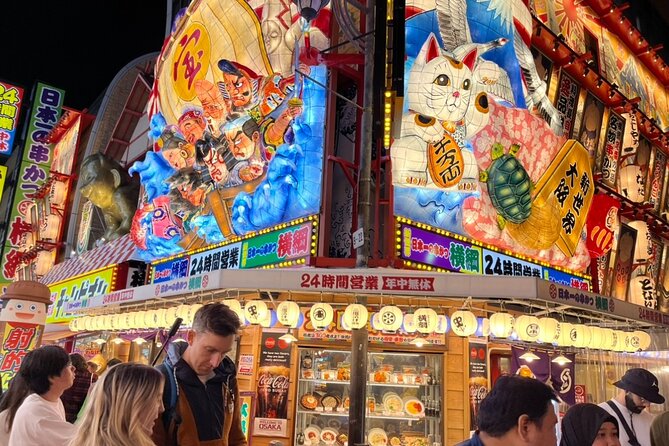
Dotonbori is the loud, bright center of the route. The canal area is known for giant signs, glowing advertisements, and the famous Glico Running Man. It is an easy place to recognize, but its value is not just photographic. This is where Osaka’s food culture becomes part of the tour.
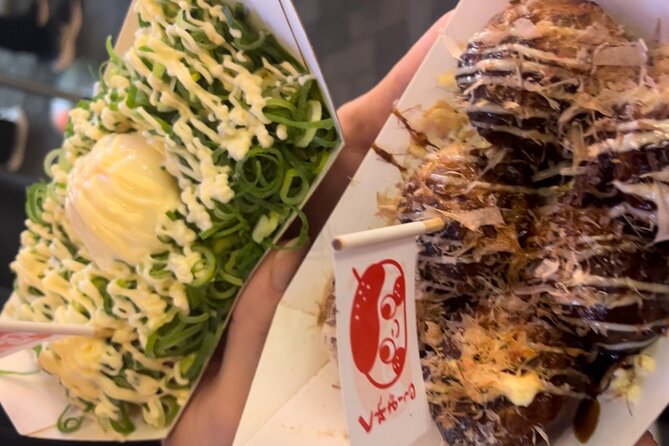
Your guide can point you toward local specialties such as takoyaki, okonomiyaki, and kushikatsu. Takoyaki are hot batter balls with octopus inside. Okonomiyaki is a savory griddled dish with a range of fillings. Kushikatsu consists of skewered and fried ingredients. These foods are casual, filling, and closely tied to the city’s everyday identity.
The scheduled time around Dotonbori is about an hour and a half. That should give you room to walk, take pictures, browse, and sample something, though lunch is listed separately as roughly one hour. Food costs extra, with an expected lunch range of ¥1,000 to ¥2,000 per person.
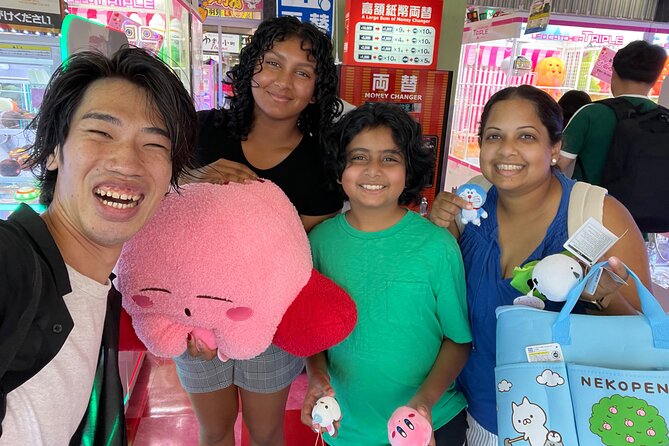
The practical benefit of a guide here is choice. Dotonbori can feel confusing when you are hungry and surrounded by signs. Kazu, one of the guides connected with this experience, has been praised for making the highlights easy to enjoy and for sharing local life as well as sightseeing. That kind of conversation can make a food stop feel less like a checklist.
Do not expect a quiet meal. Dotonbori is energetic and crowded, and the tour’s aim is to introduce you to the area rather than give you a long restaurant experience. If food is your top priority, tell the guide at the start so lunch does not get squeezed between the other stops.
Shinsaibashi-suji for shopping and people-watching
Shinsaibashi-suji is a covered shopping arcade stretching for more than 600 meters. It combines high-end boutiques, familiar retail names, and local shops, making it a useful stop for different tastes and budgets.
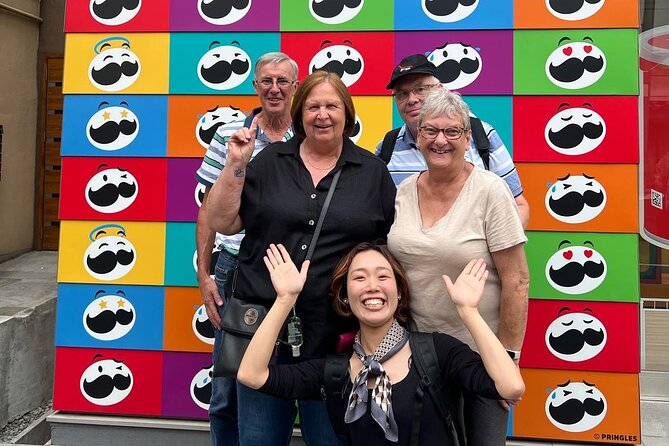
This is also where the private format can help. A family with a teenager may want more time for shopping, while another group may prefer to keep moving toward the temples. One family’s day with Kazu included time for a 14-year-old to shop, along with conversation about daily life in Japan. That detail matters because a private tour works best when the guide responds to your group rather than delivering the same script to everyone.
The plan allows about an hour for Shinsaibashi-suji, with lunch also taking about an hour. These times may overlap in the practical flow of the day, so do not assume you will have a full two hours for shopping and dining plus the other stops.
There is no admission charge to walk through the arcade, but anything you buy and eat is your responsibility. Shinsaibashi is a good place to ask about Osaka-made products, clothing, snacks, and gifts, though the tour does not promise a specific shop list.
Same city, a completely different kind of afternoon:
- Osaka Go Karting Tour with Funny Costume
★ 5.0 · 2,658 reviews - Osaka Castle: Museum and Tower Entry Ticket
★ 4.5 · 2,380 reviews - Osaka: Shinsekai Food Tour with 13-15 Dishes at 5 Eateries
★ 4.8 · 2,204 reviews - Osaka Food Tour: 13 Dishes at 5 Local Eateries
★ 5.0 · 2,149 reviews
Shitennoji Temple and Osaka’s older roots
Shitennoji changes the mood. Founded in 593 by Prince Shotoku, it is one of Japan’s oldest temples. The site gives you a chance to step away from shopping streets and look at traditional architecture, religious practice, and the long span of Osaka’s past.
The planned visit lasts about an hour. That is enough for a meaningful look at the temple complex, but again, this is not an exhaustive religious or architectural study. Your guide can help explain what you are seeing and place the temple within Japan’s early Buddhist story.
Admission is not included and costs ¥500 per person. This is a modest extra fee, but it should be part of your budget along with Osaka Castle, lunch, and transport.
I especially like this stop because it prevents the day from becoming only a food-and-shopping tour. The castle shows political power, while Shitennoji offers a different look at Japan’s spiritual and architectural past. The contrast makes the overall route more interesting.
Risa has guided this route for an older group and adjusted the day well, including the castle, temple, Shinsekai, and lunch. That suggests the tour can work for different ages, though the walking and transfers still make it wise to discuss your pace before setting out.
Tsutenkaku and the old Shinsekai district
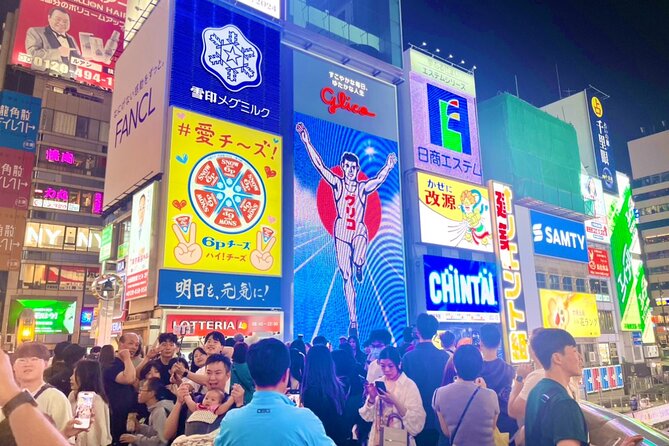
The final major area is Shinsekai, with Tsutenkaku Tower as its landmark. The original tower was built in 1912 and rebuilt in 1956. At 103 meters, it offers another city view, but the surrounding neighborhood is just as important as the tower itself.
Shinsekai has a nostalgic character that feels different from polished Shinsaibashi. Its restaurants, signs, and older streets give you another view of Osaka’s entertainment culture. This is also a natural place for kushikatsu, one of the city’s well-known foods.
The scheduled time is about an hour and a half, and Tsutenkaku admission is extra. The supplied information does not give a price for the tower, so ask your guide or confirm before entering. You may prefer to spend the time walking the district instead of paying for another viewpoint after Osaka Castle.
Ending in Shinsekai makes sense. The area is easy to explore at street level, and the food keeps the final stop relaxed after a full day of sights. Still, the route is ambitious. If you linger at Osaka Castle, eat slowly in Dotonbori, or shop in Shinsaibashi, the guide may need to shorten the Shinsekai portion.
What the private guide adds

The tour is for your group only. That is the biggest difference from a standard city tour. You can ask questions without worrying about slowing down a large bus group, and you can explain your interests at the start.
Kazu’s style, based on the information available, includes Osaka highlights, shopping help, food, and conversation about daily life. Families appreciated his friendly manner and his ability to keep a younger traveler interested. Risa has been noted for taking care with an older group and managing the walking and underground travel.
The tour includes photos and videos. That is useful if you want a record of the day without asking a family member to keep stopping for pictures. The exact number or format of the photos and videos is not specified, so you may want to ask how they are delivered.
A private guide is most valuable here for navigation and judgment. Osaka’s districts are easy to reach by public transport, but linking five major stops in six hours requires decisions about timing. A guide can also help you choose food and make the day less stressful for a first visit.
The tradeoff is price. At $178 per person, the tour costs more than exploring Osaka independently. You will also pay about ¥1,200 for Osaka Castle, ¥500 for Shitennoji, ¥1,000 to ¥2,000 for lunch, and about ¥1,000 for public transportation per person. The tower fee may also be extra.
That total can be good value for families, older groups, or anyone who wants personal help in a new city. For solo visitors or confident rail users, the cost may be harder to justify. You are paying for time saved, a private pace, food guidance, and a human connection, not just entrance to the sights.
Who should book this Osaka tour
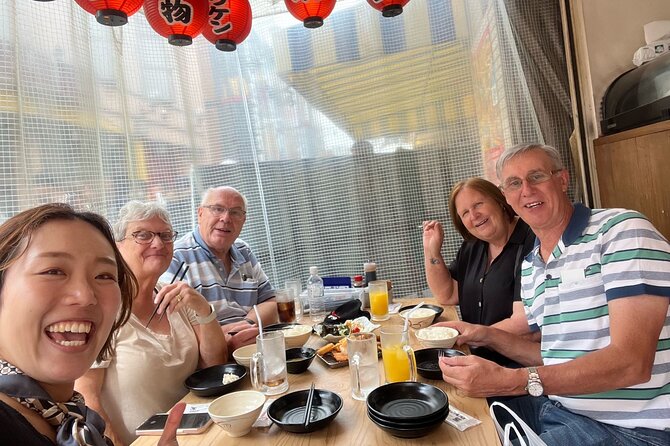
I would recommend it to first-time visitors who want a broad introduction to Osaka in one day. It also suits families, since the guide can adjust shopping and food time for different ages. A group that includes an older person may appreciate the ability to discuss pace and use underground transport between districts.
It is a good match if you want both famous sights and ordinary city life. Osaka Castle, Dotonbori, and Tsutenkaku are recognizable landmarks, while Shinsaibashi shopping and local food provide a more daily view of the city.
I would hesitate if you prefer a slow, single-neighborhood experience. Five stops in six hours means movement. You will see a lot, but you will not have unlimited time at any one place. I would also hesitate if your budget is tight, since the $178 price excludes several expected costs.
Book it if you value a private guide, want help with food and public transportation, and like the idea of seeing Osaka’s historical and modern sides in one organized day. Skip it if you are happy to plan your own trains and would rather spend a full afternoon at one temple, museum, or shopping district.
FAQ
How long is the Osaka city tour?
The tour lasts approximately six hours.
Where does the tour begin?
It begins at the Osaka Tourist Information Center in the central concourse of JR Osaka Station, in Kita Ward, Osaka.
Where does the tour end?
The tour ends back at the meeting point.
Is this a private tour?
Yes. Only your group participates in the activity.
Are Osaka Castle tickets included?
No. Osaka Castle admission is listed as ¥1,200 per person.
Is lunch included?
No. Lunch is not included. The expected cost is about ¥1,000 to ¥2,000 per person.
Is public transportation included?
No. Public transportation is listed separately at ¥1,000 per person.
Can I cancel for a full refund?
Yes, if you cancel at least 24 hours before the experience start time. Cancellations or changes made less than 24 hours in advance are not refunded or accepted.
Just added in Osaka
- Urban Canvas: Osaka Street Art Bike Tour★ 5.0 · 10 reviews
- Anime Cosplay Photshoot-50 Digital Photos Provided★ 5.0 · 8 reviews
- TeamLab Botanical Garden Osaka Ticket★ 3.5 · 6 reviews
- Umeda Sky Building & Kuchu Teien Observatory Ticket in Osaka★ 4.5 · 3 reviews
- Immerse in Judo Martial Arts Class from Japan★ 5.0 · 4 reviews
- Cherry Blossom Buddha and Mt.Yoshino with Strawberry Picking Tour★ 4.5 · 5 reviews
- Traditional Home cooking Experience in Osaka, Japan★ 5.0 · 14 reviews
- Traditional Calligraphy Experience near Dotonbori★ 5.0 · 3 reviews
City Tours, compared.
Osaka Castle Tour – With Optional City Highlights (3 hours)
Read our review →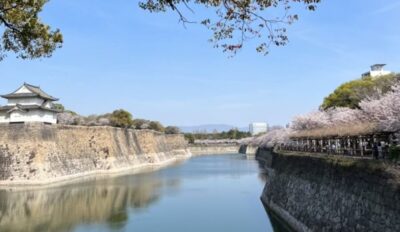
Full-Day City Tour with a Guide and Public Transport
Read our review →
Osaka Castle Walking Tour – With Optional City Highlights
Read our review →Browse the lists this tour appears in