
Reviewed · OSAKA
Osaka: Traditional Japanese Ikebana Flower Art Experience
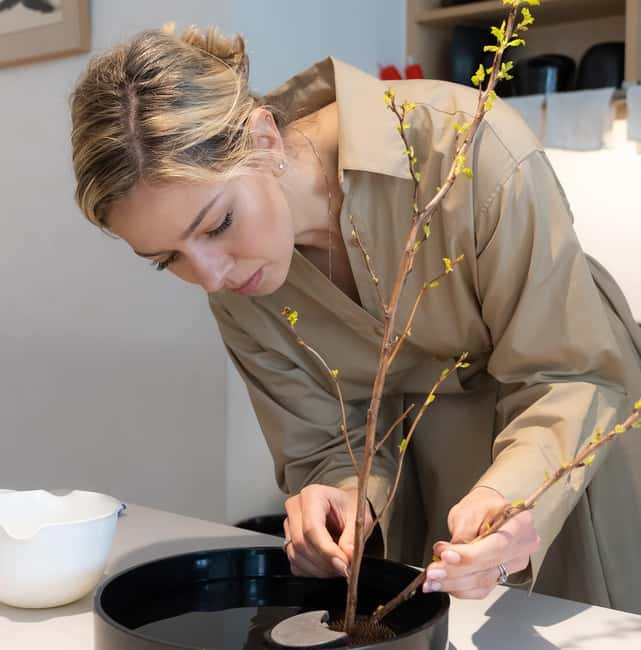
Ikebana is not simply putting flowers in a vase. In this small Osaka workshop, you learn how line, space, balance, and seasonal materials can turn a few ordinary stems into a personal work of art. Fooraku, a Sogetsu senior master with more than 30 years of experience, teaches in English and keeps the session open to complete beginners.
I like the small group of six or fewer, which gives the lesson an intimate, human feel. I also like the setting: a quiet modern gallery in Kyomachibori, where the clean design lets you focus on the flowers rather than on a crowded tourist program.
The main consideration is time. The booking information describes the activity as roughly two hours, while the workshop itself is listed as about 1 hour and 45 minutes. At $103 per person, it is a thoughtful cultural lesson rather than a quick craft stop, so you should want more than a souvenir photo.
Key points to know before booking
- Learn from Fooraku, a Sogetsu Ikebana senior master with more than 30 years of experience.
- Work in a group of up to six, a useful size for personal guidance and relaxed conversation.
- Create your own arrangement, using flowers, a vase, and scissors supplied at the gallery.
- Study the ideas behind Ikebana, including balance, line, form, space, and seasonal beauty.
- Take home practical skills, not just a finished arrangement, so you can continue experimenting later.
- Enjoy a cultural exchange afterward, with time to talk about Japanese life, food, traditions, and your own culture.
A quiet introduction to Ikebana in Osaka
This workshop offers a different side of Osaka. You are not rushing through a major sight or watching a demonstration from the back of a room. You sit down with flowers in front of you and learn by making something yourself.
The venue, VADE MECVM Showroom #2 in Kyomachibori, is described as a simple, modern gallery. That matters. Ikebana often uses clean lines and open space, and the gallery’s uncluttered design fits the art well. You get a calm setting for an activity that asks you to slow down and look carefully.
The contrast with Osaka’s energetic streets is part of the appeal. You leave the noise outside for a while and focus on shape, proportion, and the character of each stem. The workshop does not require you to know Japanese customs or art terms in advance. You can arrive with no experience at all.
I would especially consider this activity if you have already seen temples, markets, and city viewpoints and want something more personal. You are not only observing Japanese culture here. You are taking part in one small tradition and making an object that reflects your own choices.
Other Osaka bookings people put this one up against:
- Osaka Go Karting Tour with Funny Costume
★ 5.0 · 2,658 reviews - Osaka Castle: Museum and Tower Entry Ticket
★ 4.5 · 2,380 reviews - Osaka: Shinsekai Food Tour with 13-15 Dishes at 5 Eateries
★ 4.8 · 2,204 reviews
What Fooraku teaches in the first part of the session
Fooraku is a senior master of the Sogetsu School, with more than 30 years of practice. Sogetsu is known for treating Ikebana as a living art that can suit contemporary spaces and individual expression, rather than limiting it to one fixed style.
The lesson introduces the basic ideas that guide an arrangement. You learn to think about:
- Balance, so the arrangement feels stable and intentional
- Line, which gives the eye a direction to follow
- Form, including the shape and weight of flowers and branches
- Space, which is not empty by accident but part of the design
- Seasonal beauty, using the natural character of the materials
This approach gives the workshop more substance than a simple flower arranging class. You are not just filling a container until it looks full. You are learning why leaving room between stems can matter, why one branch may need to lean away from the others, and how a single strong line can give an arrangement its character.
You should still expect practical teaching, not a long lecture. The session is designed around making your own piece. Fooraku guides you through the process and helps you see how small changes affect the entire composition.
That is useful for beginners because Ikebana can look effortless from the outside. A sparse arrangement may seem easy until you try to create one yourself. Instruction helps you understand that the open space and careful angles are deliberate choices.
Making your own arrangement with supplied materials
All the basic materials are provided: flowers, containers, and scissors. You do not need to bring special tools or buy supplies before arriving.
The hands-on portion is the heart of the experience. You use the materials in front of you to create a composition of your own. Since each person works with natural stems that vary in shape, height, and movement, no two arrangements need to look alike.
That personal element is one of the strongest reasons to choose this workshop. You are not simply copying a finished example and taking it home. You are making decisions about placement and proportion while receiving guidance from an experienced teacher.
The everyday nature of the materials also makes the skill more useful after the session. The goal is not to leave you thinking Ikebana requires a special studio or expensive equipment. The principles of balance, line, form, and space can be applied at home with suitable flowers and a container.
You may find the process more demanding than expected. Flowers do not always move exactly as you want, and a small adjustment can change the entire shape. That is part of the lesson. Ikebana asks you to work with the material rather than force it into a rigid design.
The workshop is suitable for art lovers, cultural explorers, and curious beginners. It also works for someone who wants a quiet creative activity during an Osaka visit. You do not need drawing skills or prior flower-arranging experience.
Why the modern gallery setting works
The gallery in Kyomachibori gives the activity a contemporary frame. Ikebana has more than a thousand years of development behind it, but this workshop does not treat it as a museum piece. The Sogetsu approach allows tradition and modern design to meet in a practical way.
That is important if you are unsure about formal cultural activities. You are not expected to behave like an expert or follow a complex ceremony. Instead, you learn the values behind the art and apply them with guidance.
The calm room also helps with the pace. You have time to notice the angle of a branch or the gap between two flowers. In a larger class, that kind of attention can be harder to find. With six participants or fewer, Fooraku can respond to individual arrangements and offer advice as you work.
A verified booking described the gallery as stylish and easy to reach, which is useful when planning your day. The venue is VADE MECVM Showroom #2 in Kyomachibori, Osaka. Check the map and starting time carefully when you book, since the activity has set session times.
The venue is wheelchair accessible. If you have plant allergies, tell the provider in advance so the materials can be considered before the class.
Same city, a completely different kind of afternoon:
- Osaka Food Tour: 13 Dishes at 5 Local Eateries
★ 5.0 · 2,149 reviews - Hungry Osaka Street Food Tour:15 Tastings & 3 Drinks with a Local
★ 5.0 · 1,727 reviews - Osaka: Tea Ceremony Experience
★ 4.9 · 1,426 reviews - Osaka Kickstart: Hotspots & Hidden Gems Tour
★ 5.0 · 1,306 reviews
The cultural exchange after the flowers are arranged
The activity does not end the moment you finish cutting stems. Time is set aside for informal conversation, including Japanese traditions, food, daily life, and the cultures of the people in the room.
This part may be especially valuable if you prefer direct contact over a scripted sightseeing program. You can ask questions in English and share something about your own home in return. The conversation gives the craft a wider context without turning the session into a formal history lesson.
The small group helps here, too. Six people can talk naturally in a way that a large tour group often cannot. You might arrive focused only on the flowers and leave with a better sense of how Japanese aesthetics connect to everyday ideas about simplicity, nature, and attention.
The tone is social but not forced. If you mainly want the practical lesson, the cultural exchange does not replace it. If you enjoy meeting people and asking questions, it adds another layer to the visit.
The commemorative photo and what you take home
A commemorative photo captures your finished arrangement. It is a simple inclusion, but it gives you a lasting record of the activity, especially since a flower arrangement will not remain fresh forever.
The more important souvenir is the method. You leave with a clearer idea of how to arrange flowers using shape, line, balance, and open space. Those are skills you can continue practicing at home.
I would not book this expecting a large physical takeaway or a professional floral certificate. The value is in the lesson, the teacher’s guidance, the creative process, and the cultural setting. The photo is a pleasant extra.
You may also find that the arrangement reflects your own taste more than you expected. Even within the same lesson, one person may prefer a strong upright line while another chooses a softer, more open shape. That freedom is central to the Sogetsu style described here.
Is $103 a fair price?
At $103 per person, this is not a bargain activity. It costs more than a basic drop-in craft class, and the workshop lasts less than two hours. You should choose it for expert instruction and cultural depth, not because it is the cheapest way to spend an afternoon in Osaka.
The price includes all materials, the vase or container, flowers, scissors, instruction from Fooraku, the commemorative photo, and the cultural exchange. You do not need to add the cost of renting tools or buying a starter kit before the lesson.
The small group is another part of the value. A class capped at six allows closer attention than a large demonstration. That matters in Ikebana, where a small change in angle or spacing can alter the entire arrangement.
I think the price makes the most sense for someone who values personal instruction and wants an activity with a clear connection to Japanese culture. It is less compelling if you simply want to fill a spare hour or take home a ready-made flower display.
The strong response from the first five verified bookings is encouraging, with a perfect 5 out of 5 rating. Two specific comments praise the workshop as a favorite part of a Japan trip, the stylish and easy-to-reach venue, and Fooraku’s teaching. Those points match the activity’s main strengths, though five ratings are still a small sample, so I would treat them as useful evidence rather than a guarantee.
Who will enjoy this Osaka workshop most?
I would recommend it to:
- First-time visitors who want a hands-on cultural activity
- Art and design fans who appreciate simple forms and careful composition
- Couples or friends looking for a quiet shared project
- Solo visitors who enjoy small classes and conversation
- People who want a skill they can practice after returning home
- Anyone curious about Japanese aesthetics without needing prior knowledge
It may be less suitable if you want a fast-paced attraction, a large group event, or a highly formal ceremony. The workshop is thoughtful and focused. You need to give it your attention.
Families should check the booking details directly if children are part of the plan, since the provided information confirms that beginners are welcome but does not specify an age range.
Private and custom sessions are available upon request. That could be useful for a special occasion, a private group, or anyone who wants a more tailored pace. Ask in advance rather than assuming a standard booking can be changed on the day.
Practical timing and planning advice
Set aside about two hours for the full activity. The hands-on workshop is listed as approximately 1 hour and 45 minutes, while the booking duration is described as two hours. Allowing the longer amount gives you a sensible buffer for the lesson, photo, and conversation.
The session is conducted in English. Fooraku teaches in English, making this a straightforward option for visitors who do not speak Japanese.
Wear something that allows comfortable hand movement. The provided information does not set a dress code, but you will be working with flowers and scissors, so practical clothing is a sensible choice.
Do not forget to report plant allergies in advance. The provider specifically asks for this information, and it is better to raise the issue before the flowers are selected.
You can cancel up to 24 hours before the activity for a full refund. A reserve-now, pay-later option is also available, which can help if your Osaka schedule is still changing.
Should you book the Ikebana workshop?
Book this experience if you want a personal introduction to Japanese culture, especially one that lets you make something rather than simply watch. Fooraku’s long experience, the six-person limit, the modern gallery, and the practical focus give the workshop a strong foundation.
The activity is worth the $103 price when you care about instruction and atmosphere. It is not the right pick if you are looking for a cheap filler activity or a large-scale sightseeing tour.
For most art-minded visitors, I would place it high on an Osaka cultural itinerary. You get a finished arrangement, a photo, and useful techniques, but the best part is learning to see flowers differently: not as decoration alone, but as line, shape, space, and living material.
FAQ
How long does the Ikebana workshop last?
The full activity is described as lasting about two hours. The workshop itself is listed as approximately 1 hour and 45 minutes.
Who teaches the Ikebana class?
Fooraku teaches the session. Fooraku is a senior master of the Sogetsu School with more than 30 years of experience.
Is the workshop suitable for complete beginners?
Yes. The activity is open to complete beginners, and no previous Ikebana knowledge or special tools are required.
What materials are included?
Flowers, a container or vase, and scissors are provided. Instruction and a commemorative photo of your arrangement are also included.
Is the session taught in English?
Yes. The session and instruction are conducted in English.
Can I cancel or book a private session?
You can cancel up to 24 hours in advance for a full refund. Private and custom sessions are available upon request.
Just added in Osaka
- Urban Canvas: Osaka Street Art Bike Tour★ 5.0 · 10 reviews
- Anime Cosplay Photshoot-50 Digital Photos Provided★ 5.0 · 8 reviews
- TeamLab Botanical Garden Osaka Ticket★ 3.5 · 6 reviews
- Umeda Sky Building & Kuchu Teien Observatory Ticket in Osaka★ 4.5 · 3 reviews
- Immerse in Judo Martial Arts Class from Japan★ 5.0 · 4 reviews
- Cherry Blossom Buddha and Mt.Yoshino with Strawberry Picking Tour★ 4.5 · 5 reviews
- Discover Osaka’s Iconic Umeda Sky Observation★ 5.0 · 6 reviews
- Traditional Home cooking Experience in Osaka, Japan★ 5.0 · 14 reviews