
Reviewed · OSAKA STREET FOOD TOURS
Osaka Michelin Food Tour Experience Kaiseki and Local dishes
Osaka’s food culture makes its best impression when you taste both ends of the scale: a carefully arranged Michelin-starred kaiseki meal followed by hot takoyaki from a Bib Gourmand-recognized shop. This 3.5-hour walk also adds a small pottery shrine, a ceramics shop, and a matcha dessert, so you get more than a string of restaurant stops.
I like the small maximum group of six, which gives your guide room to explain dining customs and answer questions. I also like the sharp contrast between quiet, seasonal kaiseki and the easygoing energy of Amerikamura. The main drawback is dietary flexibility: vegan, gluten-free, and shellfish-free requests cannot be accommodated, and takoyaki contains both octopus and fish broth.
Key Points at a Glance
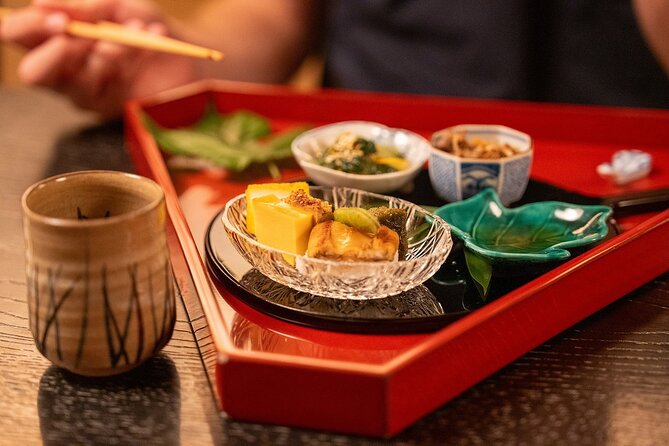
- Michelin-starred kaiseki in Honmachi: Spend about an hour with an artistic Japanese meal, seasonal ingredients, tea, and water included.
- Bib Gourmand takoyaki in Amerikamura: Try Osaka’s famous octopus snack at a shop recognized by the Michelin Guide.
- A small group of six or fewer: The setup suits questions, personal guidance, and a calmer pace than a large food crawl.
- Food plus local culture: Visit Hibuse Pottery Shrine and a ceramics shop with Edo-era tableware, if open.
- A useful afternoon schedule: Begin at 11:30 a.m., walk about 2 to 3 kilometers, and finish near Shinsaibashi or Namba.
- Strict food restrictions: Request the vegetarian course in advance. Same-day changes are not accepted.
Why This Osaka Food Tour Works
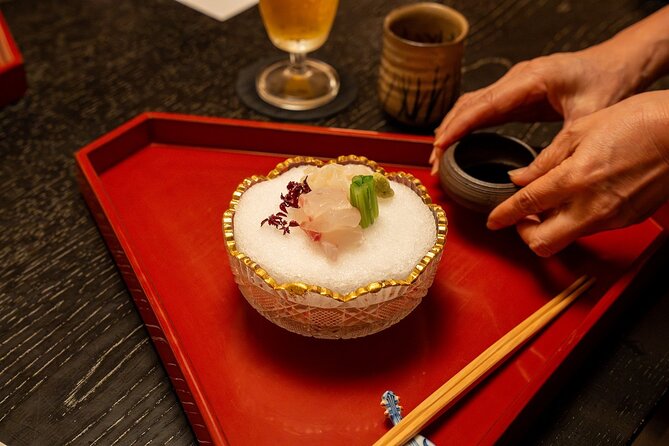
This experience is designed around contrast. Kaiseki asks you to slow down and notice presentation, season, texture, and balance. Takoyaki is casual Osaka comfort food, cooked on a hot griddle and eaten fresh. Matcha brings the meal to a cool, sweet finish.
That mix gives you a better sense of Osaka than a tour devoted only to expensive restaurants. You see how a refined meal and a cheap street snack can both matter in the same city. The guide’s explanations help connect the food to Japanese dining customs, rather than leaving you to guess what is in front of you.
The group size is another real advantage. With no more than six participants plus the guide, you should have a fair chance to ask about ingredients, table manners, and local habits. The available review specifically praises guide Chie, who also helped a guest write their name in Japanese characters. That small personal touch fits the tone of the tour: food is the main event, but local interaction is part of the experience.
At $162.58 per person, this is not a budget food walk. The price makes more sense if you want a restaurant meal that would be difficult to arrange on your own, plus several tastings and a guide over three and a half hours. You are paying for the meal, the planning, the small group, and the context around each stop.
If your goal is simply to eat as much street food as possible, you can find cheaper options. If you want one polished Japanese meal paired with Osaka specialties and a cultural walk, the cost is easier to justify.
More street food tours in Osaka:
- Osaka: Shinsekai Food Tour with 13-15 Dishes at 5 Eateries
★ 4.8 · 2,204 reviews - Osaka Food Tour: 13 Dishes at 5 Local Eateries
★ 5.0 · 2,149 reviews - Hungry Osaka Street Food Tour:15 Tastings & 3 Drinks with a Local
★ 5.0 · 1,727 reviews
Starting at Hibuse Pottery Shrine
Meet at the 7-Eleven Osaka Kutarocho 4-chome at 11:30 a.m. The first stop is Hibuse Pottery Shrine, a compact visit that lasts about 20 minutes and has no admission charge.
The shrine is tied to local prayers for protection from fire and for prosperity in ceramics. That connection gives the opening stop a useful purpose. You are not beginning with a random photo opportunity. You are getting a short introduction to the neighborhood’s relationship with pottery, craft, and everyday life.
Do not expect a long shrine visit. Twenty minutes is enough to look around and hear the basic story before moving on. Arrive early, since the tour starts on time. If you arrive late, you cannot join the group, reschedule, or receive a refund.
Kaiseki Lunch at Ajikitcho Bunbuan
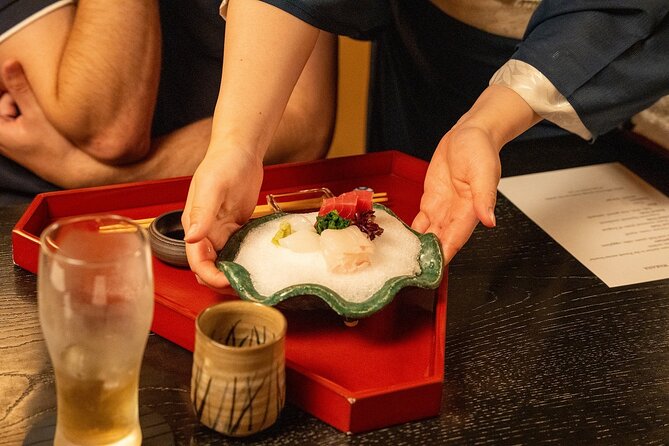
The centerpiece is a one-hour meal at Ajikitcho Bunbuan in Honmachi. The restaurant is known for artistic presentation and seasonal ingredients, so this is the point where the tour shifts from casual sightseeing to formal Japanese dining.
Kaiseki is not one large plate of food. It is a carefully arranged meal in which appearance, season, portion, and order all matter. Your guide can help explain the dishes and the traditions behind them, which is especially useful if you have never had kaiseki before.
The restaurant’s name comes from its first-generation couple and the idea of bunburyodo, the pursuit of excellence in both culinary and cultural arts. You do not need to memorize that phrase to enjoy lunch, but it hints at the care behind the setting and presentation.
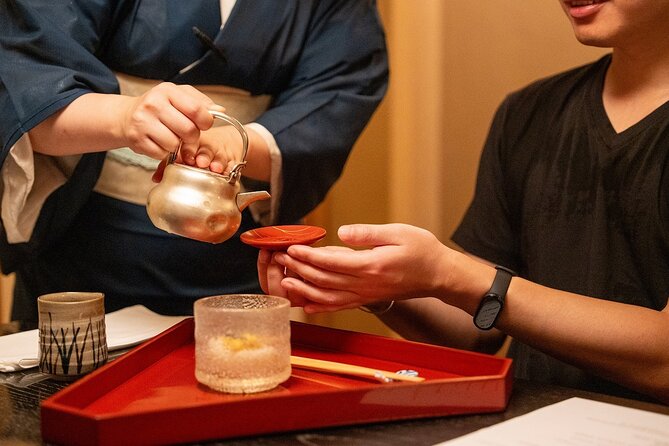
Tea and water are included. Alcoholic drinks and soft drinks cost extra, so plan on paying separately if you want more than the included beverages. You do not need to pay for your guide’s food or drinks.
Dress with some care. Moderate attire is requested, and off-shoulder tops should be avoided. This is not a black-tie meal, but it is also not the place for beachwear. A little respect for the restaurant setting helps you settle in comfortably.
The vegetarian course is available only when requested in advance. The tour cannot accommodate vegan or gluten-free diets, and the partner restaurants do not guarantee allergy-free food. That point matters more here than on a simple snack walk, since the meal is prepared by the restaurant rather than by the tour company.
Walking Shinsaibashi’s Shotengai
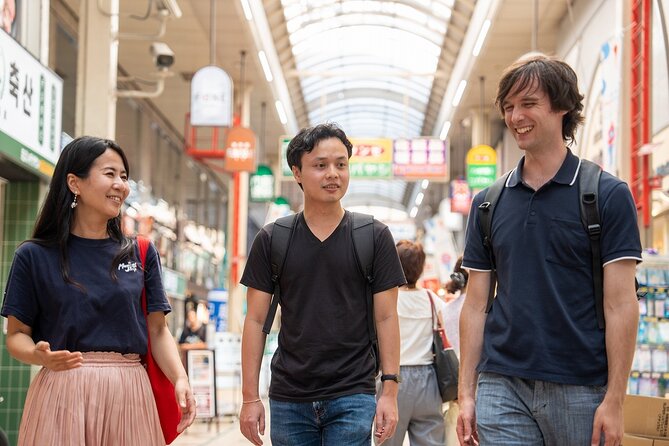
After lunch, you leave the business district and walk toward Shinsaibashi and Amerikamura. This section takes about 20 minutes and includes a local shotengai, or covered shopping street.
A shotengai is part of ordinary Japanese city life. It is a place to shop, eat, and pass through, rather than a single sightseeing attraction. The walk gives you a look at the connection between Osaka’s food culture and its shopping streets, where small stores and casual eateries share space.
The route covers about 2 to 3 kilometers in all, at a leisurely pace. You should still wear comfortable shoes, especially if you plan to spend more time exploring Shinsaibashi after the tour. The walk is manageable for most people, but the combination of standing, dining, and city pavement may be tiring for anyone with mobility concerns.
More food and drink tours in Osaka:
- Hungry Osaka Street Food Tour: 15 Dishes & 3 Drinks
★ 4.9 · 694 reviews - Kuromon Market Food Walking Tour in Osaka (6 stops, 6 tastes)
★ 5.0 · 550 reviews - Osaka: Guided Food Tour with 12 Dishes at 4 Local Eateries
★ 5.0 · 533 reviews - Absolute Osaka Food Tour
★ 5.0 · 309 reviews
Ceramics and Edo-Era Tableware
One stop takes you to a ceramics shop specializing in Imari ware and other antique tableware. The visit lasts about 30 minutes, though it depends on whether the shop is open. If it is closed, the guide suggests an alternative.
This is a useful bridge between the shrine and the kaiseki meal. You have just eaten food presented with care, and now you can see the kind of vessels and design traditions that help shape a Japanese dining table. Imari ware is known for decorative Japanese porcelain, while the shop’s focus on pieces suited to daily life keeps the stop from feeling like a museum visit.
Because the shop’s opening is not guaranteed, you should treat this as a flexible part of the route. The tour’s main food stops remain the central draw. Still, if you enjoy pottery, table settings, or Japanese craft, this can be one of the more distinctive parts of the afternoon.
Takoyaki in Amerikamura

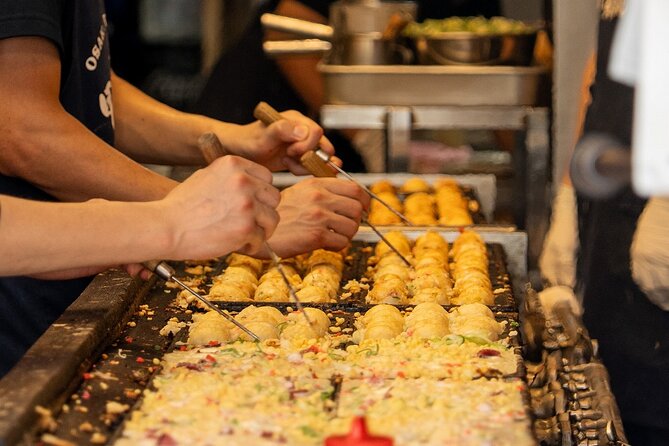
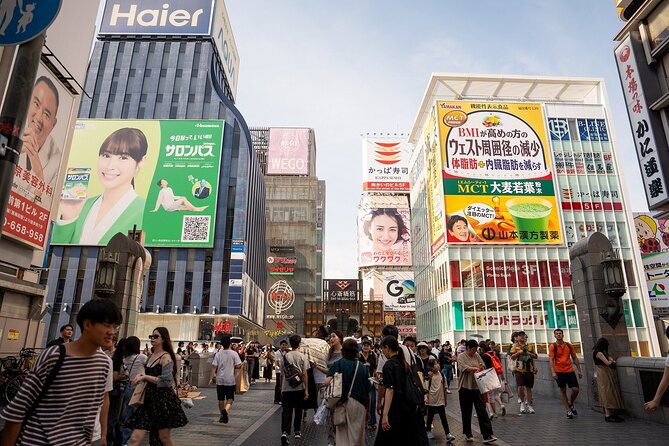
In Amerikamura, the mood changes quickly. This youth-culture district is a fitting place to try takoyaki, Osaka’s famous ball-shaped snack made with batter and octopus.
The shop used on the tour has Bib Gourmand recognition. Your serving is cooked fresh, with a crisp outside and a soft center. The octopus gives it a savory bite, while the hot filling requires a little patience before you eat it. This is not delicate food, and that is the point. Takoyaki is informal, quick, and closely tied to Osaka’s everyday food identity.
You spend about 40 minutes here, enough time to eat at a sensible pace and hear more about the dish. It is a good counterpoint to the measured kaiseki lunch. One meal asks you to notice fine details; the other is best enjoyed hot and without too much ceremony.
The ingredients are important to understand before booking. Takoyaki contains octopus and dashi made with fish broth. It cannot be substituted. If you cannot eat it, the tour may offer extra matcha desserts instead, but that alternative is not a true replacement for the Osaka specialty.
Finishing with Matcha Near Shinsaibashi
The final stop is a local tea shop near Shinsaibashi or Namba Station. You finish with a matcha dessert and a drink, spending about 30 minutes here.
Matcha can be refreshing after a savory meal, especially after takoyaki. It also gives the tour a clean ending rather than leaving you full of fried food and sending you back into the city without a pause.
The end point is Shinsaibashi Station, at 3 Chome-12 Minamisenba, though the exact tea stop may be near Shinsaibashi or Namba. That location is practical. You can continue shopping, head back to your hotel, or explore more of central Osaka without needing another long transfer.
The Practical Details That Matter
The tour begins at 11:30 a.m. and lasts about three and a half hours. It operates in rain or shine, with changes only considered in extreme weather. Bring weather-appropriate clothing and shoes that can handle a few kilometers of city walking.
The maximum group is six participants plus the guide. You may share the tour with other people unless you book a private experience. Group discounts are listed as a feature, but the available details do not specify the discount amount, so check the current booking terms before relying on a lower price.
Children aged three and under may join their parents, but meals are not provided for them. The tour is described as kid-friendly, though the formal kaiseki setting and walking distance may suit older children better than toddlers.
Confirmation is provided when you book, and the route is near public transportation. You should still allow time to find the meeting point. The late-arrival rule is strict, and this is one of those tours where missing the first stop means missing the whole experience.
Free cancellation is available up to 24 hours before the start time. Changes or cancellations made inside that window are not accepted and are not refunded.
Who Should Book This Experience
I would choose this tour if you want a balanced introduction to Osaka food rather than a single restaurant meal. It gives you a refined lunch, a famous local snack, a sweet finish, and a few cultural stops in one compact outing.
It is especially suited to first-time visitors who want help understanding Japanese dining customs. The English-speaking guide can make a formal kaiseki meal less intimidating, and the small group allows room for questions.
Food lovers who enjoy ceramics, presentation, and seasonal cooking will get more from the route than someone interested only in quantity. The tour includes about an hour at the main restaurant, not a long series of tastings, so it is best viewed as a guided food experience with a few carefully chosen stops.
I would not book it if you need vegan, gluten-free, or shellfish-free food. A vegetarian course is possible only with advance notice, and the takoyaki still contains fish broth and octopus. People with serious allergies should also note that the partner restaurants cannot guarantee an allergy-free meal.
Should You Book the Osaka Michelin Food Tour?
Book it if you want a small, well-paced introduction to Osaka’s food culture with one high-end meal at its center. The strongest parts are the contrast between kaiseki and takoyaki, the small group, the guide’s personal attention, and the convenient finish near Shinsaibashi.
Skip it if the price feels high for a three-and-a-half-hour outing, if you prefer a street-food-only crawl, or if your diet rules out the listed ingredients. For everyone else, this is a smart choice for a first Osaka food day, especially if you appreciate both fine presentation and food eaten straight from a hot griddle.
FAQ
How long does the Osaka food tour last?
The experience lasts approximately 3 hours and 30 minutes, beginning at 11:30 a.m.
Where does the tour start?
The meeting point is the 7-Eleven Osaka Kutarocho 4-chome, at 4 Chome-3-1 Kyutaromachi, Chuo Ward, Osaka.
Where does the tour end?
The tour ends at Shinsaibashi Station. The final matcha dessert may be near Shinsaibashi or Namba Station.
How many people can join the tour?
The maximum is six participants plus the guide. Other participants may be in the group unless you book a private tour.
Is a vegetarian meal available?
Yes, a vegetarian course is available when requested in advance. Same-day vegetarian requests cannot be accommodated.
Can the tour accommodate vegan or gluten-free diets?
No. The tour cannot accommodate vegan or gluten-free requests.
Does the takoyaki contain octopus and fish broth?
Yes. The takoyaki contains octopus and dashi made with fish broth, and it cannot be substituted. Extra matcha desserts may be offered to people who cannot eat it.
How much walking is involved?
The tour involves about 2 to 3 kilometers of walking at a leisurely pace. Comfortable shoes and weather-appropriate clothing are recommended.
What happens if I arrive late or need to cancel?
The tour starts on time, and late arrivals cannot join, reschedule, or receive a refund. You can cancel for a full refund up to 24 hours before the start time.
Just added in Osaka
- Urban Canvas: Osaka Street Art Bike Tour★ 5.0 · 10 reviews
- Anime Cosplay Photshoot-50 Digital Photos Provided★ 5.0 · 8 reviews
- TeamLab Botanical Garden Osaka Ticket★ 3.5 · 6 reviews
- Umeda Sky Building & Kuchu Teien Observatory Ticket in Osaka★ 4.5 · 3 reviews
- Immerse in Judo Martial Arts Class from Japan★ 5.0 · 4 reviews
- Cherry Blossom Buddha and Mt.Yoshino with Strawberry Picking Tour★ 4.5 · 5 reviews
- Discover Osaka’s Iconic Umeda Sky Observation★ 5.0 · 6 reviews
- Traditional Home cooking Experience in Osaka, Japan★ 5.0 · 14 reviews
Osaka Street Food Tours, compared.
Shinsekai Food Tour with 13-15 Dishes at 5 Eateries
Read our review →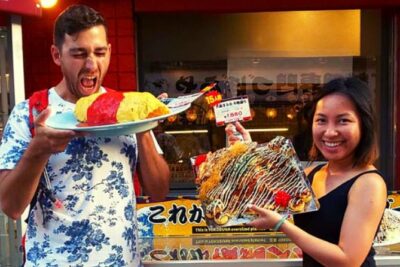
Osaka Food Tour: 13 Dishes at 5 Local Eateries
Read our review →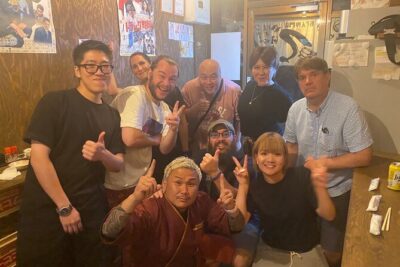
Hungry Osaka Street Food Tour:15 Tastings & 3 Drinks with a Local
Read our review →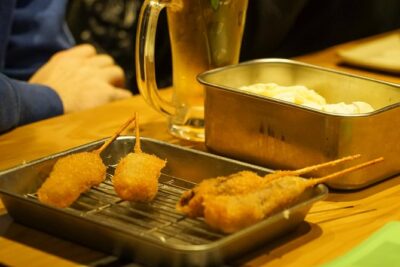
Osaka Local Foodie Walking Tour in Dotonbori and Shinsekai
Read our review →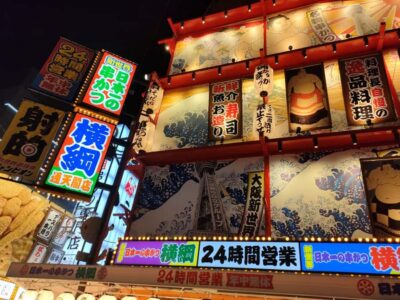
Hungry Osaka Street Food Tour: 15 Dishes & 3 Drinks
Read our review →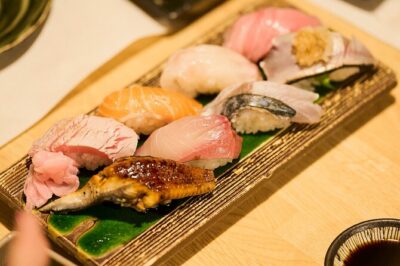
Guided Food Tour with 12 Dishes at 4 Local Eateries
Read our review →
Osaka After Dark: Small-Group Night Food Tour (Max 6)
Read our review →Browse the lists this tour appears in