
Reviewed · OSAKA
Osaka: LGBTQ+ Life Past and Present
Osaka’s LGBTQ+ scene is not confined to Tokyo. This three-hour evening moves from Shinsekai, where gay life once operated behind closed doors, to Doyama, the city’s more open northern nightlife district. You get local context, a light meal, two drinks, and the train ride between the two areas.
I like the way the tour connects past and present instead of treating LGBTQ+ Osaka as only a night out. I also like the personal touch: guides such as Kevin help with Osaka’s maze of station exits and can answer questions in English. The main drawback is that the experience is short, and the included food and drinks are modest rather than a full dinner or bar crawl.
Key points to know before booking
- Two very different Osaka districts: Start in food-filled Shinsekai, then ride about 15 minutes to Doyama.
- A guide from the LGBTQ+ community: Kevin has led the tour with an open, friendly style and practical knowledge of Osaka.
- Dinner and two drinks included: You receive a light meal and drink at a local restaurant, then another drink at an LGBTQ+-oriented bar.
- A private experience: Only your own group takes part, which makes questions and conversation easier.
- A walking and transit evening: Expect about two hours in Shinsekai, one hour in Doyama, and train travel between them.
- Best for adults aged 20 and older: Japan’s legal drinking age is 20, and this is also the minimum age for the tour.
Osaka’s LGBTQ+ story begins away from the usual sights
This experience makes a useful point right away: Osaka has its own LGBTQ+ story, and it does not simply copy Tokyo’s. The city’s large metropolitan area supports several distinct scenes, each with its own mood and audience.
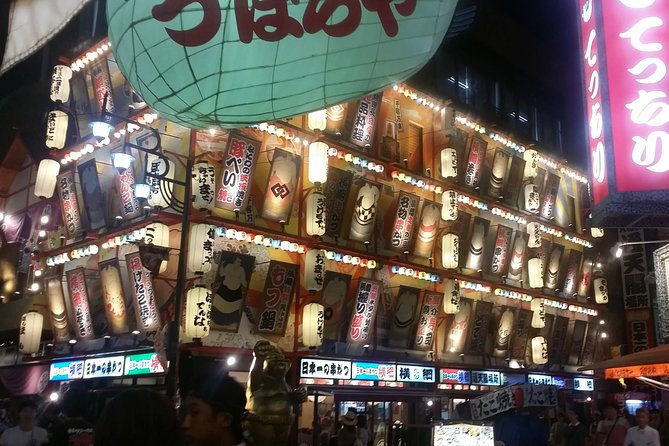
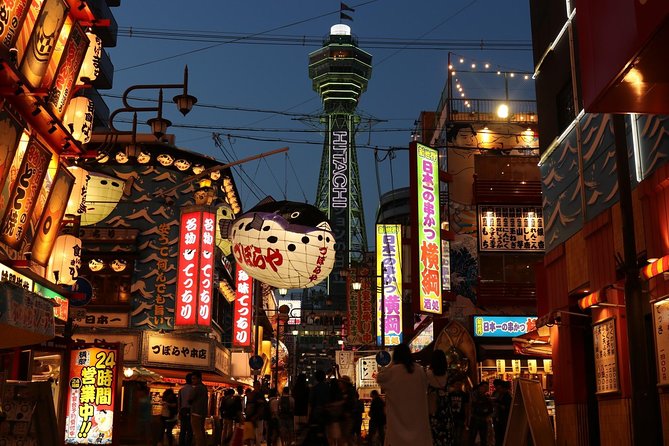
The evening begins at Dobutsuen-Mae Station at 6:30 pm. That puts you in the southern part of Osaka, close to Shinsekai. Most people know this area for its colorful signs, local food, and old-fashioned entertainment atmosphere. The tour asks you to look past the bright surface.
In Shinsekai, your guide explains how gay men once built private social worlds in a society where many felt pressure to marry women and keep their relationships hidden. Membership bars and gay saunas offered places to meet, but these were often discreet and difficult for an outsider to understand.
That history matters because it gives the area a human layer beyond its famous food and decorations. You are not simply being shown a row of bars. You are hearing how people found companionship and identity when open public life was much harder.
The subject can be serious, but the tone is not meant to be a lecture. The description of the evening has a playful edge, and the guide’s role is to make the history approachable. Kevin, who has led this experience, is described as personable, frank, and easy to get along with. That style suits a tour built around conversation.
A few more Osaka half-days worth pricing up
- Osaka: LGBTQ+ Tour with Dinner and Drinks
★ 5.0 · 8 reviews
Two hours in Shinsekai, with history behind the neon
You spend about two hours in Shinsekai, and this is the longer half of the evening. That extra time allows the guide to explain the district, place its LGBTQ+ history in context, and point out the less visible parts of the local scene.
The useful thing here is the contrast. Shinsekai is not presented as a polished gay district with a single clear identity. Instead, the experience shows how LGBTQ+ life could exist in ordinary parts of the city, often in spaces that were known mainly to regulars.
You should expect walking, conversation, and stops connected to the area’s past. The exact bars or businesses visited may depend on the evening, but the focus is on the district’s former hidden social life rather than a fixed list of tourist sights.
The tour includes a light meal and one drink at a local restaurant. This is convenient at the start of an evening, especially if you arrive without having eaten. It is not a replacement for a full dinner, so I would plan on a snack or later meal if you normally eat more than a light serving.
Your included drink can be alcoholic or non-alcoholic. That makes the meal workable for people who do not drink, though the tour itself is still built around visiting a bar later.
Shinsekai may appeal most to you if you enjoy social history and ordinary city districts more than polished attractions. If you are mainly looking for dancing or a busy club scene, this first section could feel slow. Its value is in the explanation and the setting, not in a rapid run through venues.
The train ride changes the mood
After Shinsekai, the group takes a train for about 15 minutes to Doyama. Transit during the tour is included, so you do not need to work out the fare or route while trying to keep up with the group.
This small transfer is one of the evening’s useful features. It gives you a clear change of scene. You begin with the traces of a more private past in the south, then arrive in a northern district where gay culture is more visible and social.
Osaka’s stations can be confusing, particularly if you are still learning the many exits and connections. Kevin has gone to find a participant who had trouble navigating the station, which shows the sort of practical help a good guide can provide. Still, you should arrive at Dobutsuen-Mae Station with enough time to find the meeting point at 1-chōme-6-12 Taishi.
The route ends in Doyamacho, in Kita Ward. From there, the area is within walking distance of Osaka Station and Umeda Station, including Hankyu and subway connections. That makes the finish useful if you want to continue your evening nearby.
Doyama offers a more open nightlife scene
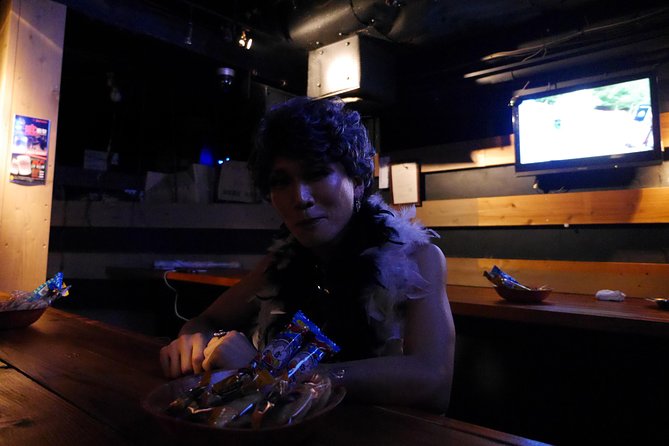
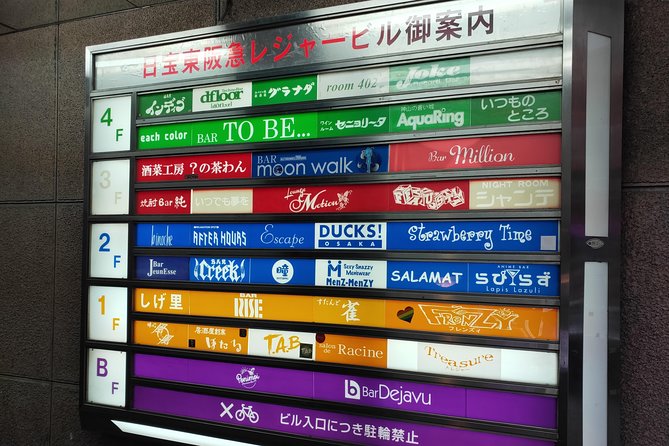
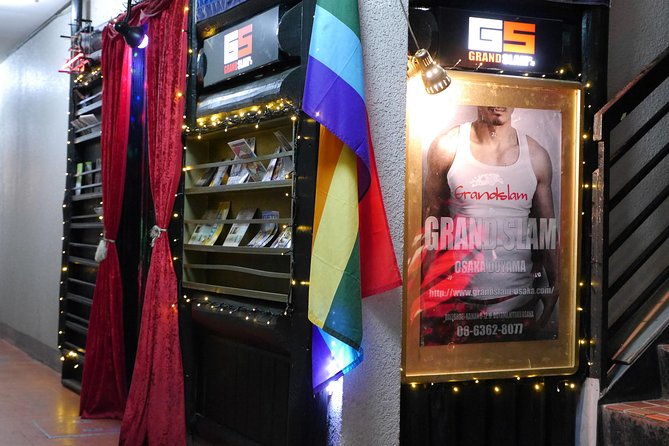
Doyama is the modern half of the experience. The district has more than a hundred bars and other venues, ranging from tiny bars to larger dance clubs. It is described as open but not showy, with a mix of younger people, admirers, and older people who remain active in the scene.
The guide takes you on a walkabout, helping you understand the layout and the range of places. This is where having a Japanese-speaking guide matters. Small bars and local nightlife can be intimidating when you cannot read the signs or explain what kind of place you are seeking.
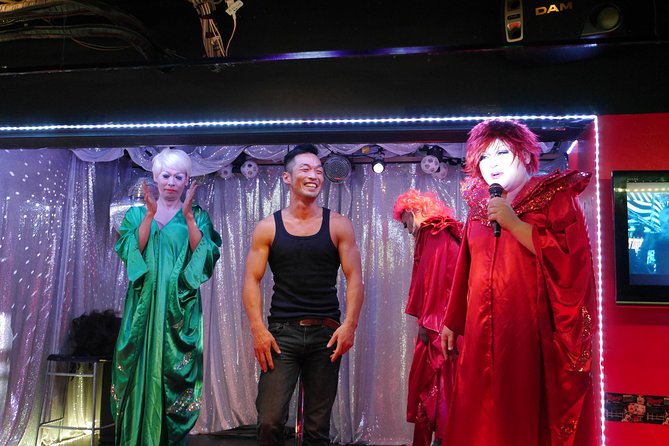
You then stop at an LGBTQ+-oriented bar for one included drink. The drink may be alcoholic, so remember that the legal drinking age in Japan is 20. The minimum age for the full tour is also 20.
The one-hour Doyama section is an introduction, not a full night of bar hopping. You will see the range of the district and get help deciding where to go afterward, but the included price covers one bar drink rather than multiple venue entries or an open tab.
That arrangement has a real advantage. You are not locked into a fixed nightlife route for the rest of the evening. At the end, the guide is happy to point you in a direction that fits your interests. You might want a quiet bar, a dance club, karaoke, or simply an easy route back to your hotel. The tour gives you a starting point, then lets you choose.
One previous evening with Kevin ended with karaoke, showing how the night can extend beyond the formal three-hour schedule. Karaoke is not listed as a guaranteed inclusion, so treat that as an example of how the evening might continue, not as part of the ticket.
Same city, a completely different kind of afternoon:
- Osaka Go Karting Tour with Funny Costume
★ 5.0 · 2,658 reviews - Osaka Castle: Museum and Tower Entry Ticket
★ 4.5 · 2,380 reviews - Osaka: Shinsekai Food Tour with 13-15 Dishes at 5 Eateries
★ 4.8 · 2,204 reviews - Osaka Food Tour: 13 Dishes at 5 Local Eateries
★ 5.0 · 2,149 reviews
What the guide adds to the experience
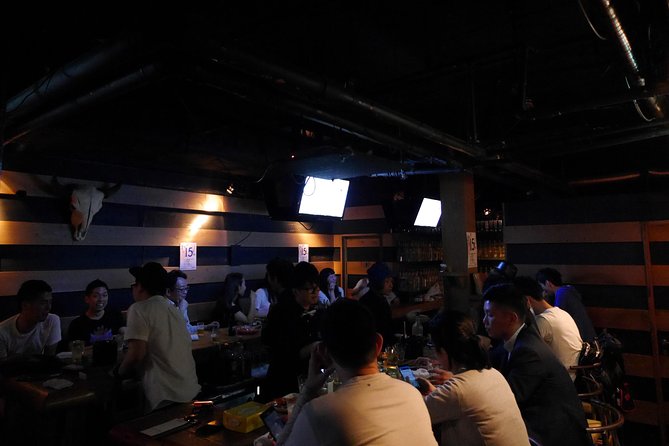
The guide is more important here than on a standard sightseeing walk. The main sights are districts and bars, not monuments with printed explanations. You are paying for interpretation, introductions, and help reading a social scene that can be hard to approach alone.
The guide is an English speaker and comes from the LGBTQ+ community. That combination gives the conversation a personal angle while keeping the evening accessible. You can ask about the history of the neighborhoods, the difference between Shinsekai and Doyama, or practical questions about continuing your night.
Kevin has received especially warm attention for being friendly, open, and easy to talk with. He has also helped with station navigation and offered suggestions about Osaka. Those details matter because the evening involves moving through unfamiliar streets and making decisions about nightlife.
The tour is private, meaning only your own group participates. That can make a major difference if you want to ask direct questions or discuss LGBTQ+ life in Japan without speaking in front of strangers. It also means the pace may feel more personal than a large scheduled walk.
A private tour is not automatically better for everyone. If you enjoy meeting a large mixed group, this format may feel too contained. But for people who want conversation, privacy, or a more relaxed introduction to the city, it is a strong fit.
Is $96.79 a fair price?
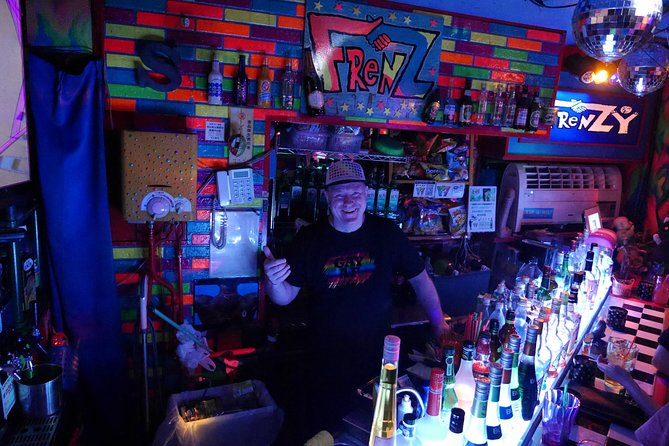
At $96.79 per person, this is not the cheapest way to spend an evening in Osaka. The value depends on what you want from the outing.
You receive roughly three hours with an English-speaking guide, a light dinner, two drinks, and train transit between the districts. You also get a private experience and local help in areas where language and social customs may otherwise make the first visit awkward.
The price makes the most sense if you would otherwise spend money on a guided walk, dinner, a couple of drinks, and a taxi or train between neighborhoods. It is less compelling if you only want a meal and a drink, or if you already know Doyama well.
The experience also saves you research time. You do not have to identify the LGBTQ+ areas, work out which southern district connects with the northern one, or decide how to approach small bars on your first night. That practical help is part of the price.
Group discounts are available, though the supplied details do not specify the discount amount. Since the experience is private, ask about the group rate if you are booking for several people.
Who will get the most from this evening?
I would recommend this experience to an adult visiting Osaka for the first time who wants more than a generic nightlife outing. It suits you especially well if you are interested in LGBTQ+ history, local social life, and a guide who can explain what you are seeing.
It also fits people who want a gentle introduction before exploring alone. The first drink and meal give you time to settle in, while the Doyama walk shows you where the nightlife is concentrated.
You may want to skip it if you dislike walking, do not want to discuss personal or social history, or expect a full dinner and a long run of bars. The tour gives you a short, guided introduction. It does not include food and drinks beyond the stated provisions.
The weather policy is worth noting. The experience requires good weather, and poor conditions can lead to a different date or a full refund. You can cancel for a full refund up to 24 hours before the 6:30 pm start time. Changes or cancellations inside that window are not accepted for a refund.
Practical details that shape the evening
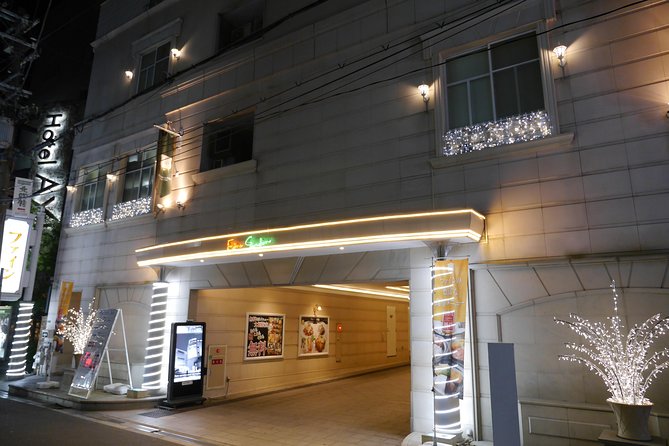
Plan to arrive early at Dobutsuen-Mae Station. Osaka’s stations have many exits, and the meeting point is near the station at 1-chōme-6-12 Taishi in Nishinari Ward. Do not assume that reaching the station means you have found the correct street exit.
Wear shoes you can walk in. The evening includes neighborhood walking, a station transfer, and a second district walk. The tour lasts about three hours, but the Doyama portion may lead naturally into your own plans afterward.
The final point is Doyamacho, not the original meeting point. That is helpful if you are staying near Osaka Station or Umeda, and it also gives you a clear place from which to continue the night.
The tour accepts mobile tickets, and confirmation is provided when you book. Most people can participate, but the tour is aimed at adults aged 20 and older because of the drinking component.
Should you book Osaka: LGBTQ+ Life Past and Present?
Book it if you want context, conversation, and a safe way to get oriented to Osaka’s LGBTQ+ districts. The strongest parts are the contrast between Shinsekai and Doyama, the guide’s personal approach, and the useful mix of dinner, drinks, and transit.
I would not book it expecting a full meal, a long club crawl, or guaranteed karaoke. Think of it as a guided introduction that ends with the city open to you. At $96.79, it offers good value for a private three-hour evening if local insight matters as much to you as nightlife itself.
FAQ
Where does the tour begin?
It begins at Dobutsuen-Mae Station, near 1-chōme-6-12 Taishi in Osaka’s Nishinari Ward.
What time does the tour start?
The start time is 6:30 pm.
Where does the tour end?
The tour ends in Doyamacho in Kita Ward. The area is within walking distance of Osaka Station and Umeda Station.
How long does the experience last?
The experience lasts about three hours.
Which Osaka areas does the tour visit?
It visits Shinsekai in southern Osaka and Doyama in northern Osaka.
Is transportation included?
Yes. Train transit between Shinsekai and Doyama is included in the tour price.
What food and drinks are included?
You receive a light meal and one alcoholic or non-alcoholic drink at a local restaurant, plus one additional drink at an LGBTQ+-oriented bar.
What is the minimum age?
The minimum age is 20. Japan’s legal drinking age is also 20.
Is this a private tour?
Yes. Only your own group participates.
Can I cancel for a refund?
You can cancel up to 24 hours before the start time for a full refund. Cancellations or changes made less than 24 hours before the start are not refunded. If poor weather causes the tour to be canceled, you can choose another date or receive a full refund.
Just added in Osaka
- Urban Canvas: Osaka Street Art Bike Tour★ 5.0 · 10 reviews
- Anime Cosplay Photshoot-50 Digital Photos Provided★ 5.0 · 8 reviews
- TeamLab Botanical Garden Osaka Ticket★ 3.5 · 6 reviews
- Umeda Sky Building & Kuchu Teien Observatory Ticket in Osaka★ 4.5 · 3 reviews
- Immerse in Judo Martial Arts Class from Japan★ 5.0 · 4 reviews
- Cherry Blossom Buddha and Mt.Yoshino with Strawberry Picking Tour★ 4.5 · 5 reviews
- Discover Osaka’s Iconic Umeda Sky Observation★ 5.0 · 6 reviews
- Traditional Home cooking Experience in Osaka, Japan★ 5.0 · 14 reviews