
Reviewed · OSAKA STREET FOOD TOURS
Osaka Food Tour with 10 Classic Japanese Tastings & Drinks
Osaka’s best food lesson may happen one bite at a time along Tenjinbashi-Suji, where this three-hour walk links local eateries with ten classic tastings. You can try okonomiyaki, kushi-katsu, udon, mackerel sashimi, taiyaki, mochi, rice crackers, and drinks without stopping to decode menus or work out payment at every door. I love the range of food, and I like that the route uses the city’s longest covered shopping arcade rather than a single restaurant.
The small maximum of 10 people keeps the guide close enough to explain dishes and answer questions. Guides named in the tour’s recent operation include Terumi, Marcelo, and Akane, and the food is handled in English for you. One possible drawback is the fixed 10:45 a.m. start and three-hour pace, which may not suit late risers or people who prefer to linger over each dish.
Key points to know before you book
- Tenjinbashi-Suji sets the scene: Walk through nearly three miles of covered shops and eateries in Osaka’s long local shopping arcade.
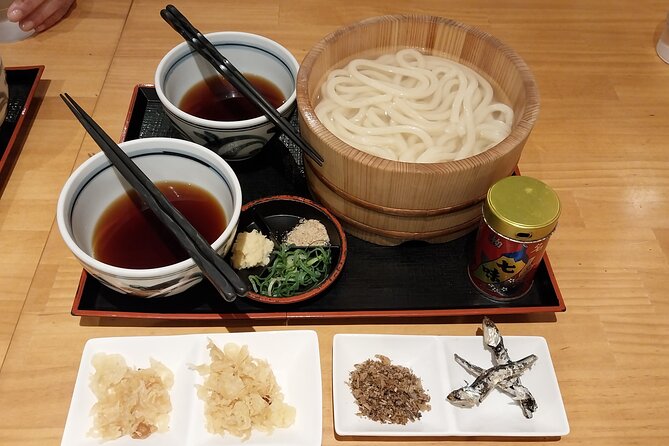
- Ten tastings cover sweet and savory: Expect dishes such as okonomiyaki, kushi-katsu, udon, mackerel sashimi, taiyaki, mochi skewers, rice crackers, drinks, and a secret dish.
- The guide handles the hard parts: English translation, ordering, and payment at each food stop make the route easy to follow.
- The group stays small: A maximum of 10 people gives you better access to the guide than a large food bus or crowded group.
- The finish is useful: The walk ends at the Osaka Museum of Housing and Living, near Tenjinbashisuji-rokuchome Station.
- The price buys convenience and context: At $86.50 per person, you pay for ten tastings, drinks, local guidance, and a shortcut through Osaka’s food culture.
Why Tenjinbashi-Suji is a smart place to eat
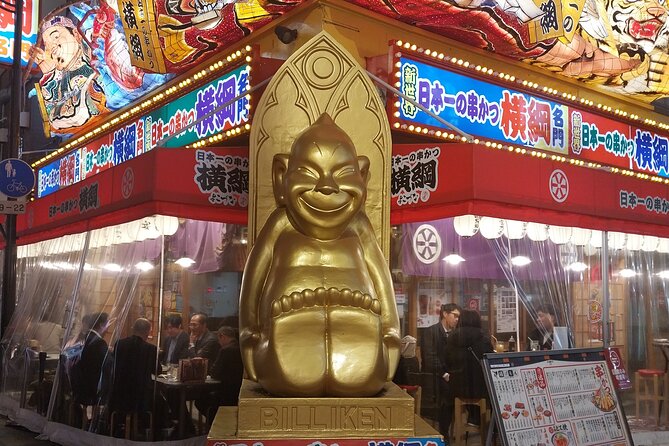
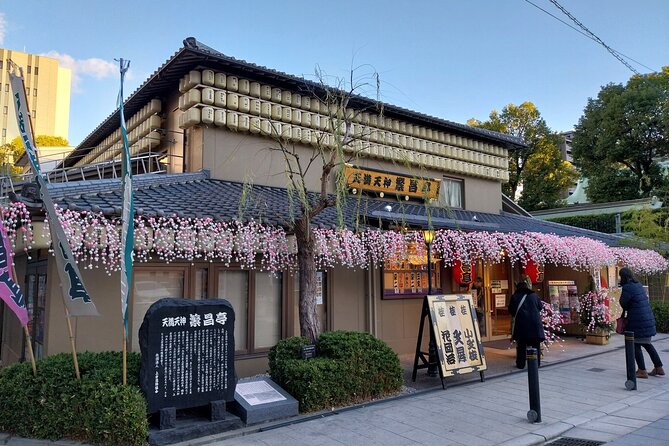
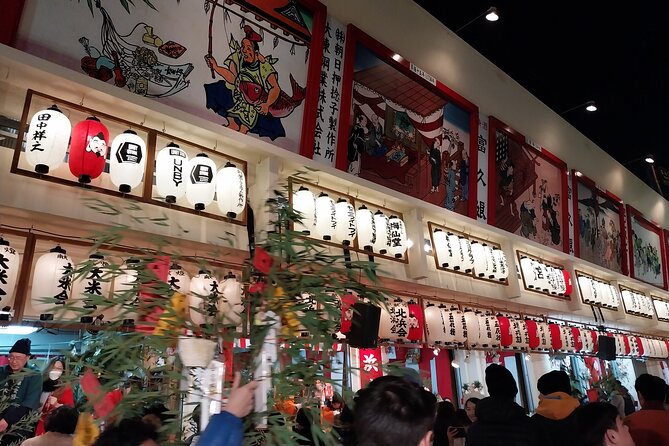
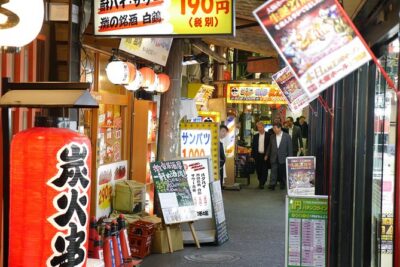
Tenjinbashi-Suji is not just a backdrop for the tour. At nearly three miles, it is Japan’s longest shopping arcade, with a covered route that passes shops, food counters, and everyday neighborhood businesses. That matters because you get a look at ordinary Osaka life while moving from one bite to the next.
I prefer food walks that show how a city eats, not only where tourists take photos. This route brings you into the Tenjinbashi area and lets you see food as part of the neighborhood. The roof over the arcade is also practical. Osaka weather can change, and a covered walk is more comfortable than an outdoor route exposed to sun or rain.
The tour begins near Minami-Morimachi Station at 10:45 a.m. The meeting point is the Resona Bank Minamimorimachi Branch, at 2 Chome-1 Minamimorimachi. You should arrive with enough time to find the bank and station area, since the tour does not include hotel pickup.
More street food tours in Osaka:
- Osaka: Shinsekai Food Tour with 13-15 Dishes at 5 Eateries
★ 4.8 · 2,204 reviews - Osaka Food Tour: 13 Dishes at 5 Local Eateries
★ 5.0 · 2,149 reviews - Hungry Osaka Street Food Tour:15 Tastings & 3 Drinks with a Local
★ 5.0 · 1,727 reviews
Starting with local guidance, not guesswork
Food halls and arcades can be easy to enter and hard to understand. You may recognize a few dishes, but ordering the right portion, asking what is in something, or knowing how a local specialty is meant to be eaten can take effort. Here, the guide translates and takes care of ordering at the stops.
That is one of the tour’s strongest practical features. You can focus on tasting rather than juggling menus, cash, and unfamiliar service customs. The guide also explains each dish, which gives the food a useful setting instead of presenting it as a string of anonymous samples.
Guides who have led the experience include Terumi, Marcelo, and Akane. Terumi has been praised for explaining the food clearly in English, while Marcelo has brought cultural background into the walk. Akane has guided guests through the neighborhood and explained the area’s dishes. The guide assigned to your date can vary, so treat those names as examples rather than a promise.
A shrine visit has also been included as an unexpected addition on some outings. It is not listed as a formal tasting stop, so you should not book this tour solely for that extra. Still, it shows how the guide may add a little neighborhood context when the route allows.
The savory core: sashimi, kushi-katsu, and okonomiyaki
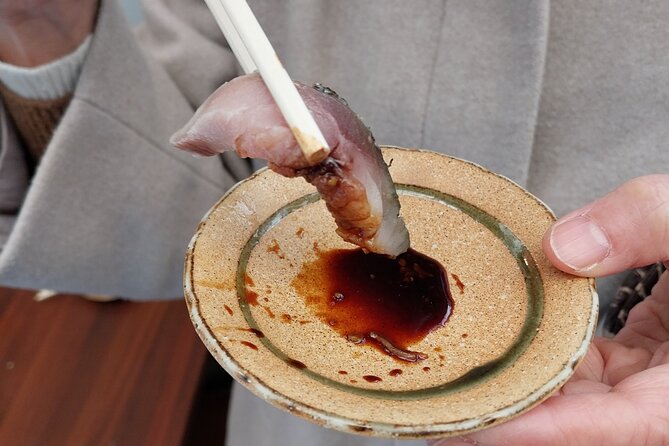
The food list begins with some mackerel sashimi, giving you a fresh fish taste early in the walk. Mackerel is a familiar Japanese seafood choice, but sashimi also gives the guide a chance to explain texture, freshness, and how the dish fits into local eating habits. If raw fish is a concern for you, ask the guide about the serving before you begin. The tour specifically includes mackerel sashimi, so this is not the place to assume every tasting can be swapped.
Next comes Osaka-renowned kushi-katsu, deep-fried food served on skewers. The format makes it easy to sample without committing to a large plate. It also gives you a strong taste of Osaka comfort food: crisp outside, hot inside, and designed for a casual stop.
The familiar warning about double-dipping is part of the wider kushi-katsu tradition, though the exact serving setup can vary by venue. Your guide can explain what to do at the stop. That is a small detail, but it is exactly the sort of thing that makes guided ordering useful.
Okonomiyaki is another major stop. This Osaka-style savory pancake is often treated as the city’s signature food, and it pairs naturally with beer. The tour presents it as a full tasting rather than a lecture, but the guide’s explanation helps you understand why this dish matters locally. Since the tour includes several other foods, expect a portion suited to sampling rather than a giant solo meal.
These three dishes provide a good balance: raw fish, fried skewers, and a warm griddled specialty. You are not simply repeating one style of food ten times.
Udon, takoyaki, and the tour’s changing menu
Udon provides a softer, simpler pause in the middle of the heavier foods. The thick wheat noodles are familiar to many people, but tasting them in Japan gives you a direct comparison with versions served elsewhere. The supplied food plan specifically includes udon, and one recorded outing also included takoyaki.
Takoyaki is not listed among the formal included items, so I would not count on it for every departure. If it appears, you may get one of Osaka’s most recognizable snacks: a round batter bite with a hot center. The guide can help you wait for it to cool and explain the toppings or serving style.
The tour also includes an unspecified secret dish. That keeps a little surprise in the route, but it makes the exact ten-item lineup less predictable. The listed foods provide a clear idea of the experience, while the secret item and possible additions may change with the day’s stops or availability.
This is worth noting if you have strict dietary needs. The published food list includes fish, fried foods, wheat-based dishes, and sweets. The available information does not promise vegetarian, vegan, gluten-free, or allergy adaptations, so ask before booking if those needs affect your plans.
More food and drink tours in Osaka:
- Hungry Osaka Street Food Tour: 15 Dishes & 3 Drinks
★ 4.9 · 694 reviews - Kuromon Market Food Walking Tour in Osaka (6 stops, 6 tastes)
★ 5.0 · 550 reviews - Osaka: Guided Food Tour with 12 Dishes at 4 Local Eateries
★ 5.0 · 533 reviews - Absolute Osaka Food Tour
★ 5.0 · 309 reviews
Sweet stops: taiyaki, dango, and rice crackers
Freshly baked taiyaki brings a warm sweet finish to part of the walk. These fish-shaped cakes are often filled, and one recorded route included custard-filled waffles, which suggests the exact sweet stop can vary. The formal food list specifically names taiyaki, so that is the item to expect.
Dango mochi sweet skewers are made on the day. They offer a chewy texture and a different kind of sweetness from taiyaki. Because the skewers are prepared fresh, this stop connects the tasting to the day’s food production rather than a packaged souvenir snack.
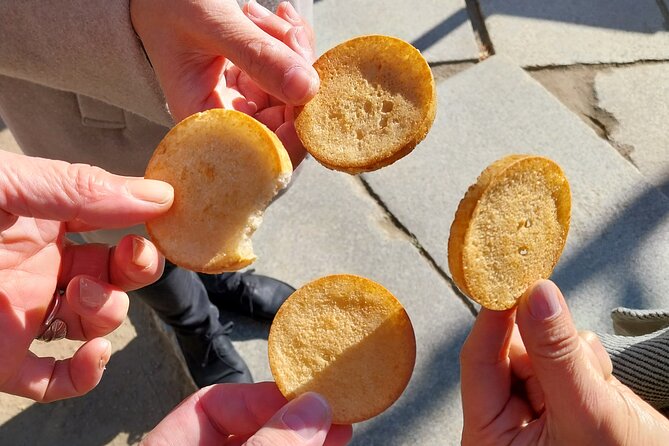
Rice crackers add a crisp, savory contrast. They are common across Japan, but trying them in a local arcade fits the tour’s aim of showing everyday food alongside famous Osaka dishes. I like this kind of inclusion because it keeps the route from becoming a parade of only headline specialties.
One recorded outing also included matcha tea. Drinks are part of the advertised experience, and beer is described as a good match for okonomiyaki, but the exact drink choices may vary. You should see the tour as a guided selection of food and drinks rather than a guaranteed menu with every possible item fixed in place.
What the three-hour format really gives you
Three hours is long enough to sample a broad selection and get a feel for Tenjinbashi-Suji without taking over your entire day. You finish with time left for another Osaka sight, an afternoon rest, or a second meal if your appetite returns later.
The pace will likely be steady. Ten tastings, several food stops, and a walk through a long arcade leave limited time for extended shopping or sitting at each venue. If you want a leisurely restaurant lunch, book a separate meal. If you want to taste many local foods in one morning, the timing works well.
The small-group limit of 10 is important here. A guide can translate more easily, keep the group together, and respond to questions without turning each stop into a long wait. It also reduces the risk that you will be left behind while figuring out an unfamiliar order.
The tradeoff is that a small group can still feel structured. You follow the guide’s route and schedule rather than choosing every dish yourself. That is the price of covering so much ground in three hours.
Is $86.50 fair for the food and help?
At $86.50 per person, this is not a cheap way to buy ten small meals. You are paying for more than the food itself: a guide, translation, local explanations, drink pairings, a preplanned route, and help with ordering and payment at several venues.
The value improves if you are new to Osaka or uneasy about ordering in Japanese. You get a shortcut to places and dishes that could take time to find on your own. You also avoid spending part of your morning comparing menus, joining the wrong line, or buying a full portion when you only wanted a taste.
Independent eaters can spend less by choosing food from the arcade one stop at a time. That approach gives you more freedom and may cost less, but it requires more planning and leaves you to manage every order. I see the tour’s price as reasonable for the convenience, range, and language support, especially on a first Osaka visit.
Group discounts may be available, which can improve the price for people booking together. The tour is typically booked well ahead, with an average booking lead time of 63 days, so popular dates may be worth arranging before your Osaka schedule fills up.
Where you finish and how to plan the day
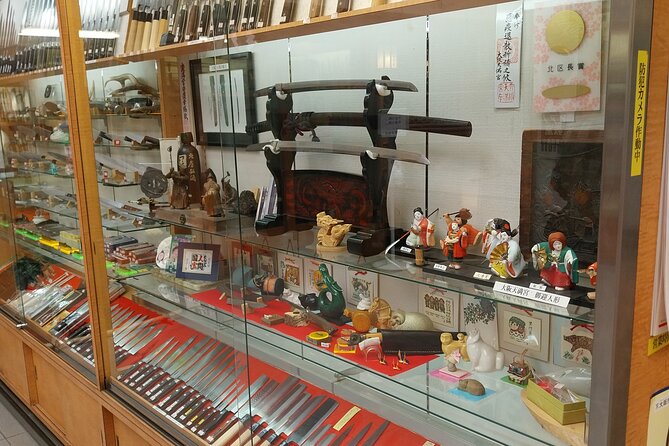
The walk ends at the open space of the Osaka Museum of Housing and Living, in the Tenjinbashi area. The listed end point is the Osaka Municipal Housing Museum building, at Tenjinbashi 6-chome, on the eighth floor.
This is useful for planning because you do not return to the starting station. Keep the end point in mind when arranging your afternoon. The experience begins near Minami-Morimachi Station and ends at a different location, so do not leave a bag, meeting arrangement, or rental item near the start unless you have a clear plan to retrieve it.
The tour is near public transportation, and most people can participate. No hotel pickup or drop-off is included. A mobile ticket is provided, and confirmation arrives within 48 hours of booking, subject to availability.
Wear shoes you can walk in for three hours and arrive ready to eat gradually. The tour combines many samples, so a large breakfast would work against the experience. The listed start is 10:45 a.m., giving you a late-morning beginning and a food-heavy midday finish.
Who will enjoy this Osaka food walk?
I would recommend it to first-time Osaka visitors who want an introduction without spending a day planning restaurant stops. It also suits solo visitors and small groups who want a guide nearby but do not want a large organized outing.
You will get the most from it if you enjoy trying unfamiliar dishes, want help with Japanese menus, and like learning a little about the neighborhood as you eat. The English guidance is especially useful when you want to ask what a dish contains or understand why a food is associated with Osaka.
Families and mixed groups may also find the format helpful, though the fixed menu means you should check dietary concerns before reserving. Raw fish, fried foods, noodles, wheat-based dishes, and sweets are all part of the stated food selection.
I would be more cautious if you are looking for a deep restaurant experience, have a very limited diet, or prefer to set your own pace. The route is designed for variety and access, not long meals at one famous restaurant.
Should you book the Tenjinbashi food tour?
Book it if you want ten Osaka tastes, a local guide, and a simple way to handle ordering in English. The combination of okonomiyaki, kushi-katsu, mackerel sashimi, udon, taiyaki, dango, rice crackers, drinks, and possible extras gives you a broad first look at the city’s food culture.
Skip it if you would rather browse the arcade independently or need a menu tailored to strict dietary rules. For everyone else, the $86.50 cost is justified by the small group, translation help, and time saved. Free cancellation is available until 24 hours before the 10:45 a.m. start, while poor weather or failure to reach the minimum group size can lead to a new date or full refund.
FAQ
Where does the Osaka food tour start?
It starts at the Resona Bank Minamimorimachi Branch, at 2 Chome-1 Minamimorimachi in Osaka’s Kita Ward. The nearest listed station area is Minami-Morimachi Station.
What time does the tour begin?
The tour starts at 10:45 a.m.
How long does the experience last?
The food walk lasts approximately three hours.
How many people can join the tour?
The group has a maximum of 10 travelers.
What food is included?
The stated tastings include mackerel sashimi, kushi-katsu, Osaka-style okonomiyaki, udon, freshly baked taiyaki, a secret dish, dango mochi skewers, rice crackers, and drinks. The exact selection may vary.
Does the tour include hotel pickup?
No. Hotel pickup and drop-off are not included.
Where does the tour end?
It ends at the open space of the Osaka Museum of Housing and Living, located in the Tenjinbashi area.
Can I cancel for a full refund?
Yes. You can cancel at least 24 hours before the local start time for a full refund. Cancellations or changes made less than 24 hours ahead are not refunded or accepted.
Just added in Osaka
- Urban Canvas: Osaka Street Art Bike Tour★ 5.0 · 10 reviews
- Anime Cosplay Photshoot-50 Digital Photos Provided★ 5.0 · 8 reviews
- TeamLab Botanical Garden Osaka Ticket★ 3.5 · 6 reviews
- Umeda Sky Building & Kuchu Teien Observatory Ticket in Osaka★ 4.5 · 3 reviews
- Immerse in Judo Martial Arts Class from Japan★ 5.0 · 4 reviews
- Cherry Blossom Buddha and Mt.Yoshino with Strawberry Picking Tour★ 4.5 · 5 reviews
- Traditional Calligraphy Experience near Dotonbori★ 5.0 · 3 reviews
- Discover Osaka’s Iconic Umeda Sky Observation★ 5.0 · 6 reviews
Osaka Street Food Tours, compared.
Shinsekai Food Tour with 13-15 Dishes at 5 Eateries
Read our review →
Osaka Food Tour: 13 Dishes at 5 Local Eateries
Read our review →
Hungry Osaka Street Food Tour:15 Tastings & 3 Drinks with a Local
Read our review →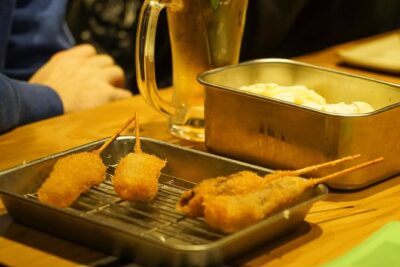
Osaka Local Foodie Walking Tour in Dotonbori and Shinsekai
Read our review →
Hungry Osaka Street Food Tour: 15 Dishes & 3 Drinks
Read our review →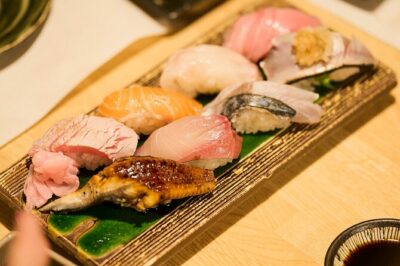
Guided Food Tour with 12 Dishes at 4 Local Eateries
Read our review →
Osaka After Dark: Small-Group Night Food Tour (Max 6)
Read our review →Browse the lists this tour appears in