Reviewed · FOOD
Eat Like a Japanese with a Local Guide
Dotonbori is Osaka at its most delicious: hot takoyaki, sweet sauces, neon signs, and narrow streets packed with food counters. This tour turns that famous scene into a guided tasting route, with stops for nine local specialties and time at the Glico Running Man sign.
I like the broad mix of savory and sweet food, and I like that the small group is capped at 10 people. The main concern is timing. Each stop is short, but popular Dotonbori shops can have long lines, and one slow kitchen could eat into your two-and-a-half-hour outing.
Key points to know before booking
- Nine food and sightseeing stops: Try takoyaki, purin, nikuman, okonomiyaki, karaage, matcha tart, yakisoba, and Japanese cheesecake, then photograph the Glico sign.
- Small group of up to 10: You get a more manageable walk through crowded Dotonbori streets than on a large coach-style food tour.
- English or Spanish guide: The guide explains the dishes and the local food culture as you move between shops.
- $89.47 includes food and gratuities: The price makes the most sense if you sample nearly everything included and avoid extra orders.
- No vegetarian or vegan option: This is a poor match for plant-based diets.
- Popular shops may slow the route: Be ready for waiting at busy counters, especially during peak dining hours.
Why Dotonbori makes a good food-tour setting
Dotonbori is one of Osaka’s best places to see how food shapes the city. Restaurants line the canal and side streets, huge signs compete for attention, and familiar dishes are served in quick, casual forms. You are not sitting through one long meal. You are moving from one bite to the next.
The meeting point is Kani Doraku Dotonbori Main Branch at 1-chōme-6-18 Dōtonbori. That is a useful landmark in a crowded district, and the tour returns there at the end. Public transportation is nearby, so you can pair the outing with an evening in Namba or continue exploring Dotonbori after the guide says goodbye.
The route lasts about 2 hours and 30 minutes. That sounds generous, but there are nine stops packed into the schedule. Several tastings are assigned only 15 minutes, while the larger savory stops receive 20 minutes. You should think of this as a sampling walk, not a slow dinner.
More food and drink tours in Osaka:
- Osaka: Shinsekai Food Tour with 13-15 Dishes at 5 Eateries
★ 4.8 · 2,204 reviews - Osaka Food Tour: 13 Dishes at 5 Local Eateries
★ 5.0 · 2,149 reviews - Hungry Osaka Street Food Tour:15 Tastings & 3 Drinks with a Local
★ 5.0 · 1,727 reviews
Takoyaki first, the Osaka classic
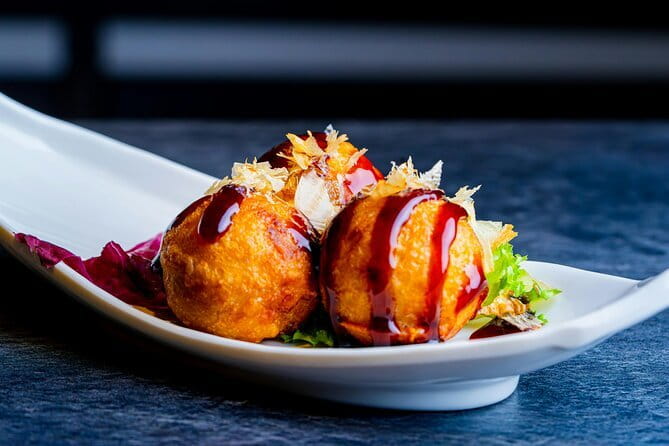
The first food stop is Takohachi Dotonbori Main Store, where you taste takoyaki. These round batter balls are made with dashi, eggs, and flour, then filled with diced octopus, green onion, pickled ginger, and tempura scraps.
The appeal is in the contrast. The outside gets lightly crisp from the special grill, while the center stays soft and hot. Sauce, mayonnaise, bonito flakes, and seaweed add the familiar finish.
You will want to let them cool before taking a full bite. Takoyaki is often served almost too hot, and its soft center holds heat well. The 15-minute stop should be enough for a tasting, but not for lingering over several orders.
This is a strong opening dish because it gives you an immediate feel for Osaka food: inexpensive, filling, cooked in front of you, and designed for quick eating.
Purin and nikuman keep the route varied
Next comes Mattari-Purin Dotombori for purin, Japan’s smooth custard dessert. It is close to crème caramel, with eggs, milk, sugar, and vanilla cooked into a soft custard and topped with amber caramel.
Purin is not an overly complicated dessert, and that is part of its charm. The texture is silky, while the caramel gives it a darker, slightly bitter edge. It also provides a needed change after the savory takoyaki.
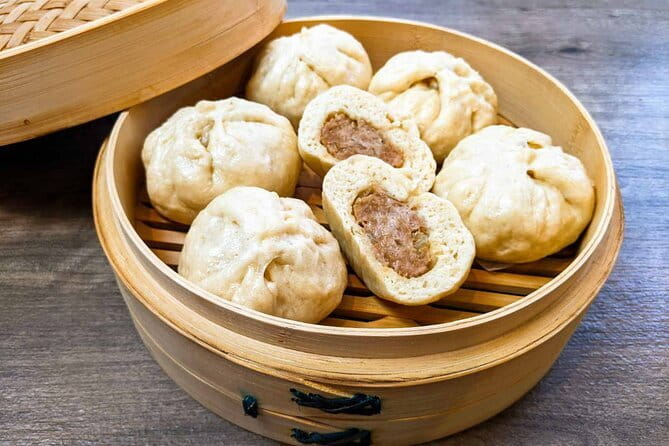
At 551 Horai Ebisubashi honten, the food turns savory again with nikuman, a steamed bun filled with seasoned pork and onions. The dough is soft and faintly sweet, and the filling usually carries soy sauce, ginger, garlic, and other seasonings.
Nikuman is a practical street snack, especially when you want something warm without sitting down for a full meal. It is also one of the more filling items on this route. If you are hoping to save room for the sweets later, take your time with this one.
Both stops are allotted 15 minutes. That keeps the walk moving, though it leaves little room if a shop is crowded.
Okonomiyaki brings Osaka’s comfort food to the table
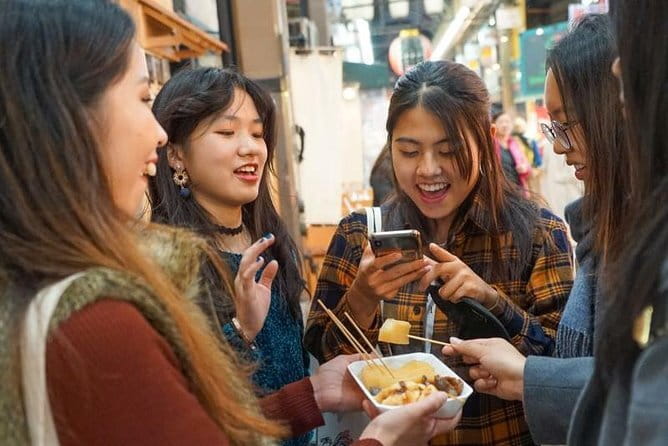
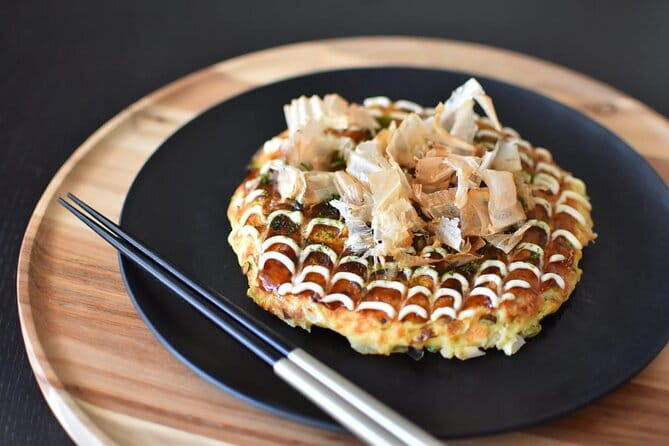
At Honke Ootako Dotonbori Honten, you try okonomiyaki, a savory pancake built from shredded cabbage, flour, eggs, and additional ingredients such as pork, shrimp, or squid.
The name refers to grilling the dish as you like it, and the food is designed to be flexible. The outside browns on a hot griddle, while the cabbage keeps the middle soft. Okonomiyaki sauce, mayonnaise, bonito flakes, and seaweed add sweetness, salt, and plenty of savory flavor.
This is one of the most useful dishes to understand in Osaka because it is more substantial than a snack but still casual. The 20-minute stop gives you a little more time than the dessert stops, though you should not expect a long restaurant meal.
The exact ingredients matter if you avoid seafood or have allergies. The tour information does not promise a choice of fillings, so ask the guide before eating if you need to know what is in your portion.
A few more Osaka half-days worth pricing up
- From Kyoto/Osaka: Kyoto Top Highlights 1-Day Guided Bus Tour
★ 4.5 · 714 reviews - Osaka: Main Sights and Hidden Spots Guided Walking Tour
★ 4.9 · 702 reviews - Osaka: Guided Food Tour with 12 Dishes at 4 Local Eateries
★ 5.0 · 533 reviews - Osaka: Namba Pub Bar Crawl with a Local Guide
★ 4.9 · 424 reviews
Karaage offers the crispiest bite
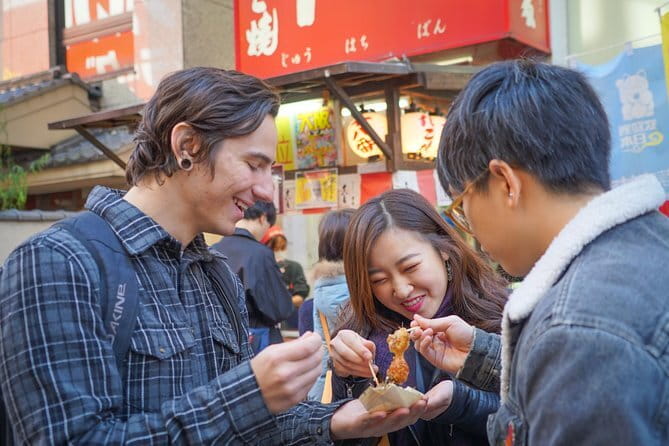
The stop at DEARBROS. Dotonbori Sennichimae introduces karaage, usually bite-sized chicken marinated with soy sauce, garlic, ginger, and sometimes sake before frying.
Good karaage has a crisp coating and juicy meat. A squeeze of lemon cuts through the savory seasoning, and the dish works well as a quick snack between larger foods.
This is familiar enough for cautious eaters, but it still shows a Japanese approach to fried food. The marinade is doing much of the work, so the flavor is not simply salt and crunch.
The stop lasts 20 minutes. That gives you time to eat without rushing, although the tour’s total food load is considerable. You may want to pace yourself rather than treating every serving as a full portion.
Matcha tart and the route’s sweet middle
Lord Stow’s Bakery, also identified with Ken’s Papa Marron, supplies the matcha tart. The filling combines the earthy bitterness of green tea with cream, white chocolate, or cream cheese in a buttery pastry shell.
Matcha desserts vary widely. Some are grassy and sharp, while others are mostly sweet with only a mild tea note. This tart is intended to balance a creamy filling with the slight bitterness of matcha and the crunch of the crust.
You receive 15 minutes here. It is a good point in the route to slow down, especially after the fried chicken and savory pancake. If you are new to matcha, this should be easier to approach than an unsweetened tea because the pastry and filling soften the tea’s stronger edge.
The bakery stop also helps prevent the tour from becoming a parade of meat and sauce. Still, you should not expect a full bakery visit. This is a single tasting within a tightly timed route.
The yakisoba stop needs a little clarification
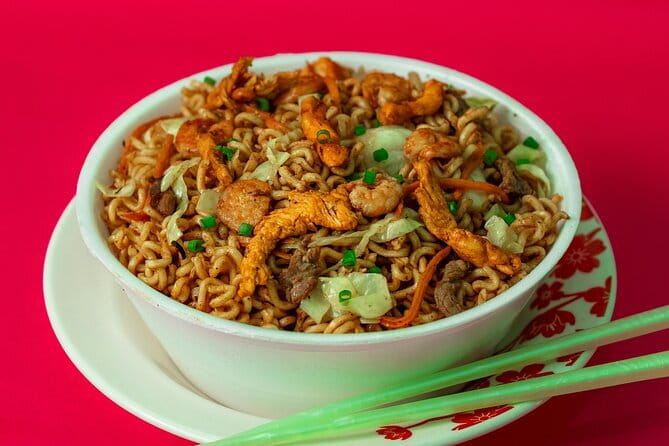
The seventh stop is listed as Takoyaki Dotonbori Kukuru Dotonbori Minami, but the food described for this stop is yakisoba. Yakisoba uses thin wheat noodles stir-fried with cabbage, carrots, onions, and meat such as pork, beef, or chicken.
The sauce is usually savory and slightly sweet, with elements such as Worcestershire sauce, soy sauce, and ketchup. Pickled ginger, sesame seeds, and bonito flakes may finish the dish.
Yakisoba is filling without being heavy in the same way as a large pancake. It also adds a different texture to the route, with springy noodles and crisp vegetables rather than soft batter.
Because the stop name and the food description do not fully match, I would confirm the day’s tasting with the guide. The supplied details clearly describe yakisoba, but the shop name points to a takoyaki business. That does not necessarily mean the stop is wrong, but it is worth clarifying if this particular dish is important to you.
Japanese cheesecake ends the food portion
Rikuro’s Namba Main Branch provides Japanese cheesecake. This style is lighter and airier than the dense American version, with cream cheese, eggs, sugar, and a little flour baked into a soft, springy cake.
The flavor is gentle rather than intensely sweet. If you usually find cheesecake too heavy, this is likely to be the more comfortable finish. The light texture also makes sense after several savory samples.
The stop lasts 15 minutes. By this point, you may already feel full, so treat the cheesecake as a final taste rather than an additional dessert course. The tour includes snacks and lunch, but it does not include unlimited ordering. Extra orders cost more.
The Glico Running Man is the photo stop
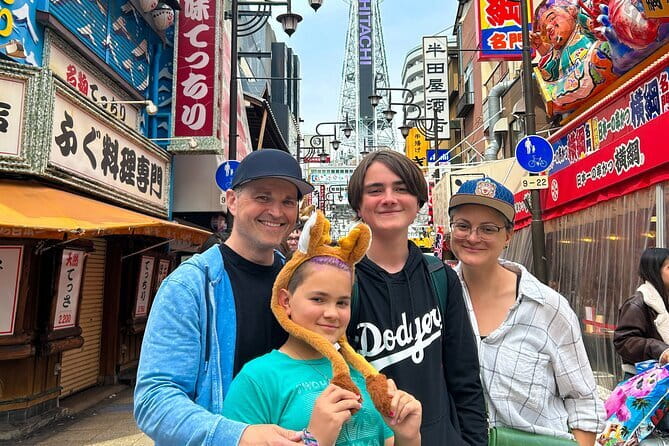
The final stop is the Dotombori Glico Sign near Ebisubashi Bridge. The famous Running Man has been part of Osaka’s advertising scene since 1935 and has become one of the city’s easiest symbols to recognize.
At night, the sign lights up over the canal and the surrounding signs. You get about 15 minutes for photos and a look at the area. It is a simple stop, but it gives the food walk a clear ending and places your meal in the middle of Dotonbori’s famous visual setting.
Do not expect a museum visit or a long history talk here. The value is the location itself. You can take the classic running pose photo, then return to the meeting point with the guide.
Is $89.47 fair for the food included?
At $89.47 per person, this is not the cheapest way to eat in Dotonbori. You could buy individual street foods for less, especially if you choose only one or two dishes.
The price becomes easier to justify if you want structure, translation help, and a planned mix of foods without deciding where to go at every turn. Lunch, snacks, the guide, and gratuities are included. You also get several small tastings rather than paying separately at each stop.
The value drops if you eat lightly, dislike sweets, or plan to order extra portions. It also drops if long lines cut into the food stops. One account describes extended waits at several locations, including one restaurant where the food took a long time to arrive. That is the chief practical risk of this kind of tour in a popular district.
The average booking lead time is 21 days. That suggests you should reserve ahead if your Osaka dates are fixed, especially if you need an English or Spanish departure.
Group size, guides, and the pace of the walk
The maximum group size is 10 people. That is small enough for a guide to keep the group together on crowded streets and explain unfamiliar dishes without using a microphone.
The tour is offered in English or Spanish. The guide is expected to explain the food, its background, and the local customs around eating it. Esteban is the guide named in the available tour feedback, although assignments can vary by departure.
The pace is the point to watch. You will be walking between food counters and restaurants, standing at some stops, and eating several different items in one outing. Most travelers can participate, but the details do not promise a seated meal at every location or a slow walking pace.
The tour ends back at Kani Doraku Dotonbori Main Branch. That makes it easy to retrieve your bearings, but you should allow extra time if you have a later reservation elsewhere.
Who should book this Dotonbori food walk?
I would choose this tour if you want to try many Osaka foods in one evening and prefer a guide to handle the route. It suits first-time visitors who do not yet know the difference between takoyaki, okonomiyaki, nikuman, karaage, and yakisoba.
It is also a good fit for small groups who want both savory and sweet food. The mix is broad, and the Glico sign adds a clear sightseeing element.
I would hesitate if you are vegetarian or vegan, since no plant-based option is provided. I would also think twice if you dislike crowded food districts, need a relaxed meal, or have strict food allergies. The descriptions do not provide a full ingredient list for every stop, so you will need to ask the guide before eating.
Free cancellation is available up to 24 hours before the start time. Changes or cancellations inside that window are not refunded, so keep the policy in mind before locking in your Osaka schedule.
Should you book it?
Book this tour if your priority is variety. In two and a half hours, you get a useful introduction to Osaka’s snack culture, several well-known dishes, local sweets, and the city’s most famous neon sign.
Skip it if you want a quiet sit-down dinner, plant-based food, or complete control over every ingredient. At $89.47, the tour earns its price through the number of tastings and the guide’s help, not through luxury or leisurely service. Go with a light appetite, expect possible waits, and confirm the yakisoba stop if that dish matters to you.
FAQ
Where does the tour start?
It starts at Kani Doraku Dotonbori Main Branch, 1-chōme-6-18 Dōtonbori, Chuo Ward, Osaka, 542-0071, Japan.
Where does the tour end?
The activity ends back at the meeting point.
How long does the food tour last?
The tour lasts approximately 2 hours and 30 minutes.
How much does the tour cost?
The listed price is $89.47 per person.
What food is included?
The route includes takoyaki, purin, nikuman, okonomiyaki, karaage, matcha tart, yakisoba, and Japanese cheesecake, along with the listed food tastings and lunch.
Is the Glico Running Man sign included?
Yes. The route includes a 15-minute stop at the Dotombori Glico Sign.
Are drinks included?
Drinks are not listed among the inclusions. Extra orders are not included.
Are vegetarian or vegan options available?
No. The activity information states that vegetarian and vegan options are not available.
What languages are offered?
The guide is available in English or Spanish.
How large is the group?
The tour has a maximum of 10 participants.
Can I cancel for a refund?
Yes. You can cancel at least 24 hours before the start time for a full refund. Cancellations or changes made less than 24 hours before the start time are not refunded.
Just added in Osaka
- Urban Canvas: Osaka Street Art Bike Tour★ 5.0 · 10 reviews
- Anime Cosplay Photshoot-50 Digital Photos Provided★ 5.0 · 8 reviews
- TeamLab Botanical Garden Osaka Ticket★ 3.5 · 6 reviews
- Umeda Sky Building & Kuchu Teien Observatory Ticket in Osaka★ 4.5 · 3 reviews
- Immerse in Judo Martial Arts Class from Japan★ 5.0 · 4 reviews
- Cherry Blossom Buddha and Mt.Yoshino with Strawberry Picking Tour★ 4.5 · 5 reviews
- Traditional Home cooking Experience in Osaka, Japan★ 5.0 · 14 reviews
- Traditional Calligraphy Experience near Dotonbori★ 5.0 · 3 reviews
Food, compared.
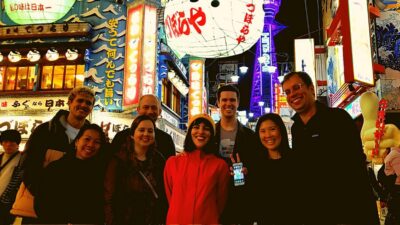
Shinsekai Food Tour with 13-15 Dishes at 5 Eateries
Read our review →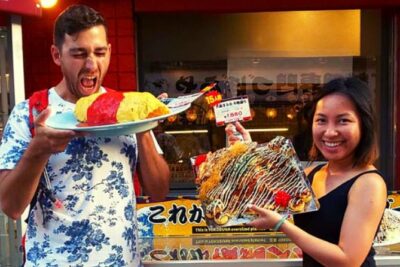
Osaka Food Tour: 13 Dishes at 5 Local Eateries
Read our review →
Hungry Osaka Street Food Tour:15 Tastings & 3 Drinks with a Local
Read our review →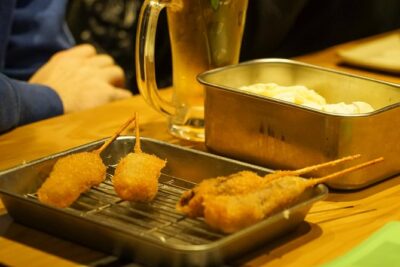
Osaka Local Foodie Walking Tour in Dotonbori and Shinsekai
Read our review →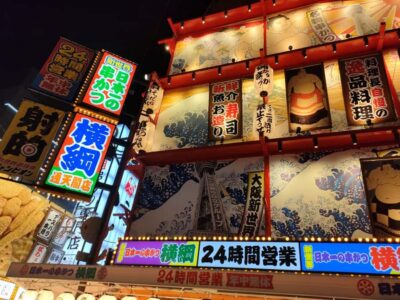
Hungry Osaka Street Food Tour: 15 Dishes & 3 Drinks
Read our review →
Kuromon Market Food Walking Tour in Osaka (6 stops, 6 tastes)
Read our review →
Guided Food Tour with 12 Dishes at 4 Local Eateries
Read our review →