
Reviewed · OSAKA WALKING TOURS
Osaka Walking Tour
Osaka reveals itself in quick changes: a sleek railway complex, a gritty old entertainment quarter, a tiny temple tucked into an alley, and the glowing signs of Dotonbori. This three-hour small-group walk gives you that contrast without trying to cover every major sight in town.
I like the local feel and the guides, especially names such as Hide, Keiko, Minako, Harry, Ichi, and Ichiro, who are repeatedly praised for clear English, useful history, and practical advice. I also like that the tour uses the subway, includes a kushikatsu snack, and ends in the heart of Namba.
The main drawback is expectation. This is an orientation walk, not a full sightseeing tour or a dedicated food tour. You also pay your own subway fare, and the busy Osaka Station meeting point can take patience to navigate.
Key points at a glance
- Three neighborhoods in three hours: Begin at Osaka Station, explore Shinsekai, pass through traditional shopping streets, and finish at Ebisu Bridge.
- A local guide makes the difference: Guides including Hide, Keiko, Minako, Harry, and Ichiro are praised for history, culture, directions, and practical Osaka advice.
- Kushikatsu is included: You receive a food tasting and one non-alcoholic drink, but this is a sample rather than a full meal.
- Small groups keep the pace personal: The maximum is 10 people, and some departures may be much smaller.
- The tour uses public transport: The subway fare is extra, at 430 yen for adults and youths or 220 yen for children.
- It ends in Dotonbori: Ebisu Bridge puts you near restaurants, shops, theaters, and the famous canal district, but you must arrange your own return.
Osaka in three hours: a useful first look
At $53.06 per person, this tour makes the most sense as a first-day introduction. You are paying for a local guide, a short food tasting, and a carefully connected route through several different parts of Osaka. The real value is not the number of sights. It is the context between them.
Osaka can feel scattered at first. Umeda, Shinsekai, Namba, and Dotonbori each have a different mood, and a map does not always explain how those areas fit together. A guide helps you see Osaka as a working city, a food city, and a place shaped by older neighborhoods and postwar change.
The tour earns strong marks for its guides. Hide, also called Harry in some departures, is praised for his friendly manner and city history. Keiko and Minako are noted for answering questions and offering practical advice beyond the immediate walk. Ichi and Ichiro are also singled out for explaining how the city developed.
That personal connection matters more here than a long checklist of attractions. You may learn how to read a commercial street, where Osaka’s local food culture fits into daily life, or how to find your way around after the tour. The content can vary slightly by guide, but the overall aim is clear: help you get your bearings fast.
More walking tours in Osaka:
- Osaka Local Foodie Walking Tour in Dotonbori and Shinsekai
★ 5.0 · 985 reviews - Osaka: Deep Backstreets Walking Tour with Dinner Option
★ 4.9 · 902 reviews - Ultimate Osaka Walking Tour: Castle, Dotonbori & Hidden Gems
★ 5.0 · 862 reviews
Meeting at Osaka Station at 9:50
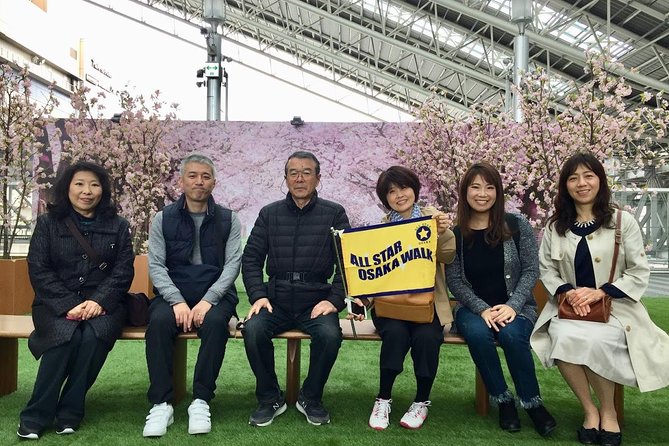
The tour begins at the Osaka Tourist Information Center on the ground level, in front of the central gate of JR Osaka Station. You should arrive by 9:50 a.m. The tour starts exactly at 10 a.m., and the guide holds an All Star Osaka yellow flag.
Give yourself extra time for this meeting. Osaka Station is large and busy, with several connected facilities and signs that can be confusing if you have just arrived in Japan. The meeting point is specific, but the station itself is not a simple one-room terminal.
The first part takes place around Osaka Station City, a modern facility in the north-central part of the city. Expect about 45 minutes here. This section provides a useful contrast with the older districts later in the morning.
You will not be visiting a historic monument at this point. Instead, you are seeing the modern face of Osaka and learning how the station area functions as a major urban center. For a first visit, that orientation can be valuable, especially if you are staying near Umeda or expect to use the station again.
The station portion may feel underwhelming if you want temples, castles, or famous views right away. One unhappy participant felt that too much time was spent around the station. I would treat this section as practical city orientation rather than a headline attraction.
Riding the subway like an Osakan
The route uses the subway to connect the northern station district with the older southern areas. The subway fare is not included. Adults and youths pay 430 yen, while children pay 220 yen.
That extra cost is small, but it should be part of your price calculation. It also gives the tour a useful local touch. Instead of staying inside one compact sightseeing zone, you see how Osaka’s neighborhoods connect in everyday life.
The group uses escalators and some stairs. You should wear comfortable shoes and be ready for a moderate amount of walking. The tour takes place in rain or shine, although the provider may cancel in poor weather and offer another date or a full refund.
Hot, humid weather can make a three-hour walk feel longer. A steady pace is one of the tour’s strengths, and guides have adjusted the route to spend more time indoors during very hot conditions. Still, bring weather protection and water if you need it, since only one non-alcoholic drink is included.
Shinsekai and the taste of kushikatsu
Shinsekai is the tour’s most distinctive neighborhood stop. It is known for casual restaurants and Osaka soul food, especially kushikatsu, pieces of meat, seafood, or vegetables coated and deep-fried on skewers.
The tour stops at a restaurant for a kushikatsu tasting. One non-alcoholic drink is included with the food. The tasting gives you a clear introduction to a local specialty without requiring you to choose a restaurant or decode a menu on your own.
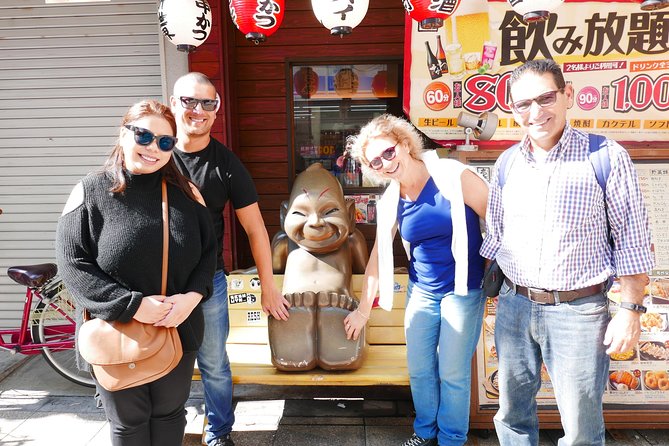
Keep your expectations in check. This is not a food crawl, and it is not meant to replace lunch. The included bite is modest, though the setting can make it memorable. One unusual stop involved eating inside an old Volkswagen van, a detail that shows how the experience can include informal local character.
Shinsekai itself is more important than the snack. The neighborhood offers a different view of Osaka from the polished station district. You see a traditional downtown area shaped by restaurants, arcades, shops, and long-running local habits.
This is also a good point to ask your guide about Osaka’s past and its postwar development. One guide used the tour to explain when Osaka was built and what changed after World War II. That kind of explanation helps turn a simple food stop into a lesson in how the city grew.
Same city, a completely different kind of afternoon:
- Osaka Go Karting Tour with Funny Costume
★ 5.0 · 2,658 reviews - Osaka Castle: Museum and Tower Entry Ticket
★ 4.5 · 2,380 reviews - Osaka: Shinsekai Food Tour with 13-15 Dishes at 5 Eateries
★ 4.8 · 2,204 reviews - Osaka Food Tour: 13 Dishes at 5 Local Eateries
★ 5.0 · 2,149 reviews
Small alleys, shopping streets, and everyday Osaka
The route passes through a narrow alley lined with restaurants. These lanes are easy to miss when you explore alone, especially if you stay on the main road between major sights.
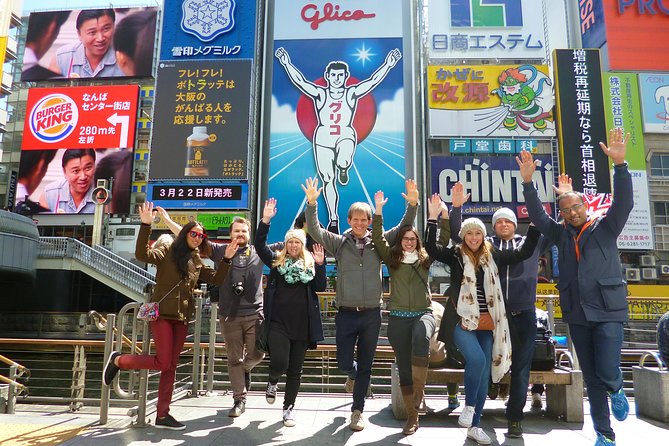
You may also pass a busy commercial district filled with restaurants, shops, theaters, and large illuminated signs. This stretch leads toward the Namba and Dotonbori area, where Osaka’s food culture and nightlife are on full display.
The walking route is not built around entering many attractions. Its strength is street-level observation. You move through places where people eat, shop, meet friends, and spend an ordinary evening. That gives you a more useful feel for Osaka than a route limited to famous photo stops.
The tradeoff is that some sections can feel like simply walking through shopping streets. If you want admission to Osaka Castle, a museum, or a major temple complex, this tour will not meet that need. It is better for understanding the city’s districts than for collecting landmark interiors.
The group size helps here. The maximum is 10 people, and some departures have been as small as one person or a handful of participants. A small group makes it easier to hear the guide, ask questions, and avoid the stop-and-start rhythm of a large coach tour.
Hozenji Temple and the quieter side of Namba
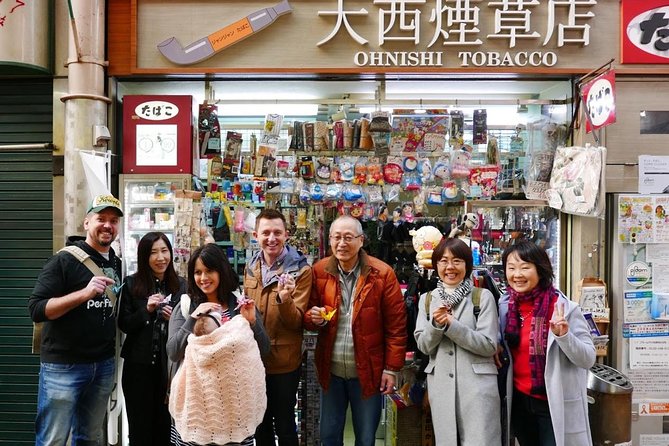
Hozenji Temple is one of the tour’s more appealing details. It is a small temple near the crowded entertainment streets, and its presence provides a calm pause amid the signs, restaurants, and foot traffic.
The attraction is not scale. Hozenji is valuable because it is easy to pass without noticing. A local guide can point out why the temple matters and explain how this small religious site fits into the surrounding neighborhood.
This is the type of stop I appreciate most on the route. You are not simply being led to the most famous place in Osaka. You are being shown how old and new parts of the city sit close together.
The exact balance between temple, shopping streets, and restaurant areas can depend on the guide and pace of the group. Guides such as Kaori and Ichi are praised for taking time to explain each place and answer questions. If you enjoy asking about customs, food, or local history, make use of that access.
Finishing at Ebisu Bridge in Dotonbori
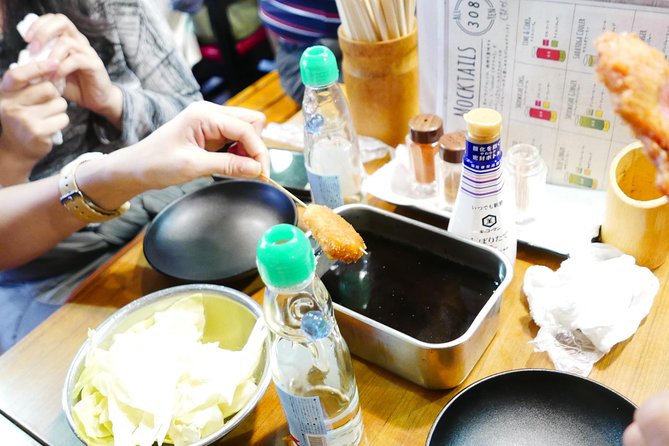
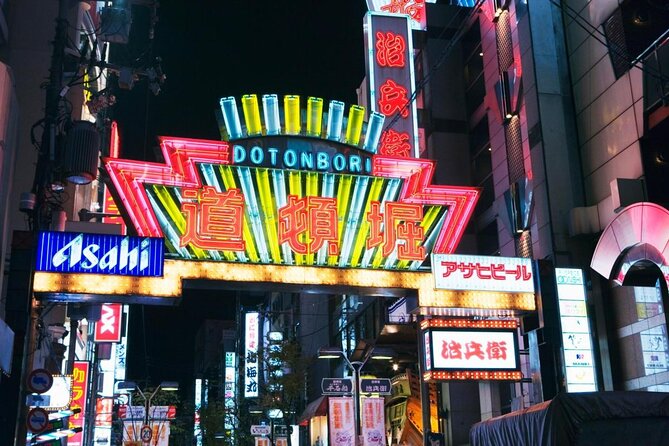
The walk ends at Ebisu Bridge, at 1 Chome-6 Dotonbori. This puts you in one of Osaka’s liveliest areas, surrounded by restaurants, shops, theaters, and flashy signs.
The bridge is a practical ending point. You can continue exploring Dotonbori, stop for a meal, or use the area as a base for the rest of your day. It is also a good place to continue your own Osaka wandering because the tour leaves you in a district with plenty to do.
The tour does not include hotel drop-off or a return transfer. You are responsible for finding your next destination after the bridge. One guide went out of the way to help a participant find the route back to a cruise ship, but that kind of assistance should be treated as a bonus, not a guaranteed transfer service.
Do not expect the tour to finish at the same place where it began. The one-way route is part of its appeal, but it means you should plan the afternoon from Dotonbori rather than from Umeda.
What the $53.06 price really buys
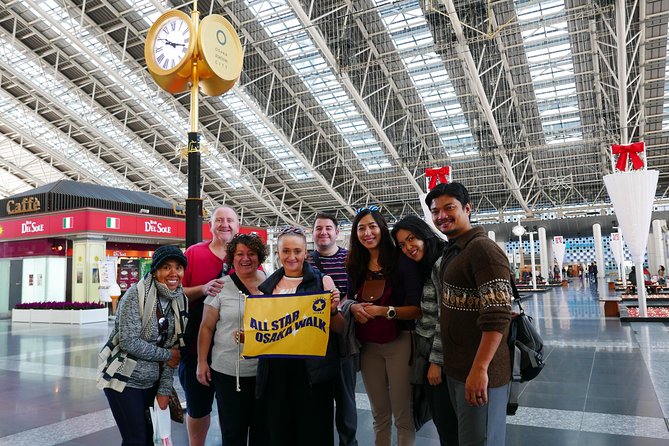
The price is fair if you want a guided introduction and do not know Osaka well. You receive about three hours with a local guide, a kushikatsu tasting, one non-alcoholic drink, and a route through several districts. The small group can add real value because you get room for questions and more direct help with directions.
It is less compelling if you are comfortable using Osaka’s subway and researching neighborhoods yourself. The tour does not include major attraction admissions, a full meal, or transportation back to your hotel. You also pay the subway fare separately.
I would compare it with the cost of a private guide, not with the price of walking around on your own. At a maximum of 10 people, the experience can feel close to a personal introduction without private-tour pricing.
The strongest return comes when you take the tour early in your stay. Use the guide to ask about restaurants, station connections, local customs, and which districts deserve more time. Several guides have been praised for giving advice about Osaka and Japan beyond the formal route.
Who will enjoy this Osaka walk most
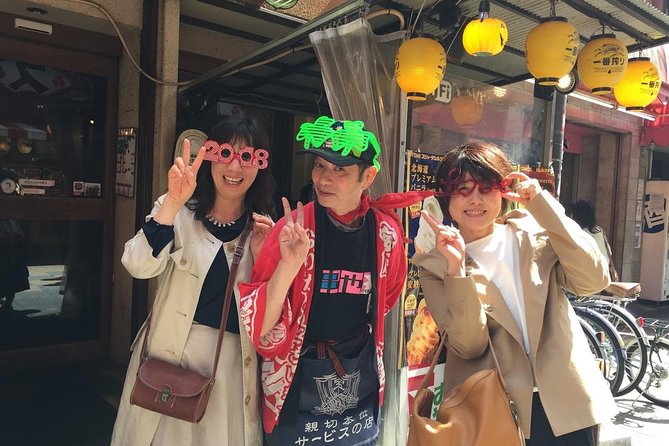
I would recommend it to a first-time visitor who wants a quick orientation before exploring independently. It suits people with one day in Osaka, cruise passengers with limited time, and anyone who prefers streets and neighborhoods to a long list of indoor sights.
It is also a good fit for families with older children who can manage several hours of walking, subway travel, escalators, and stairs. Children must be accompanied by an adult. Strollers may be awkward because of the steps and station transfers.
You will likely enjoy it if you want:
- A local guide rather than a recorded audio tour
- A manageable introduction to Umeda, Shinsekai, Namba, and Dotonbori
- A small food sample with cultural context
- A relaxed walking pace
- Help understanding Osaka’s history and daily life
I would skip it if you mainly want Osaka Castle, a full food tour, extensive shopping time, or a private vehicle. I would also avoid booking it as your only Osaka activity if you have several days and want deeper visits to museums, temples, or major landmarks.
A few practical cautions before booking
Wear shoes suited to several hours on pavement. The pace is generally relaxed, but you will walk, use the subway, take escalators, and manage some steps.
Arrive early at Osaka Station. The guide starts at 10 a.m. exactly, and the yellow flag should make the meeting easier once you are in the right place.
The tour runs in rain or shine, but poor weather can lead to cancellation with a choice of another date or a full refund. Free cancellation is available until 24 hours before the start time. Within 24 hours, the payment is not refunded, and changes are not accepted.
The experience is not covered by insurance. You should make your own arrangements if that matters to your trip.
One small social point: a participant found repeated requests to pose for company photographs irritating. That may not happen on every departure, but if you dislike promotional photos, say so politely at the start.
Should you book the All Star Osaka Walk?
Book it if you want a friendly first look at Osaka, especially early in your visit. The guides are the main reason to choose it. Hide, Harry, Keiko, Minako, Ichi, Ichiro, and others have shown strong ability to explain the city, answer questions, adjust to weather, and keep the group moving at a comfortable pace.
The route gives you useful variety: modern Osaka Station City, the older streets of Shinsekai, a kushikatsu stop, Hozenji Temple, and the bright Dotonbori finish. You will not see every major attraction, but you will understand the city’s different moods.
Skip it if you expect a full meal, extensive landmark admissions, or a complete history tour. At $53.06 plus subway fare, it is best viewed as a guided orientation with a snack, not a full-day sightseeing package.
For most first-time visitors with limited time, I would book it for the first morning, listen closely, ask plenty of questions, and use the final stop at Ebisu Bridge as the starting point for your own Osaka afternoon.
FAQ
How long does the Osaka Walking Tour last?
The tour lasts approximately three hours, beginning at 10 a.m. and ending at Ebisu Bridge in Dotonbori.
Where does the tour meet?
Meet at the Osaka Tourist Information Center on the ground level in front of the central gate of JR Osaka Station. You should arrive at 9:50 a.m. The guide holds an All Star Osaka yellow flag.
What food is included?
The tour includes a kushikatsu tasting and one non-alcoholic drink. Additional food and drinks are not included.
Is the subway fare included?
No. The subway fare is extra. Adults and youths pay 430 yen, while children pay 220 yen.
How large is the group?
The tour has a maximum of 10 participants.
Is the tour suitable for children?
Children may participate but must be accompanied by an adult. The route includes moderate walking, escalators, and some steps, so strollers may be difficult to use.
What happens if the weather is poor?
The tour generally operates in rain or shine, but it may be canceled because of poor weather. If that happens, you will be offered another date or a full refund.
Just added in Osaka
- Urban Canvas: Osaka Street Art Bike Tour★ 5.0 · 10 reviews
- Anime Cosplay Photshoot-50 Digital Photos Provided★ 5.0 · 8 reviews
- TeamLab Botanical Garden Osaka Ticket★ 3.5 · 6 reviews
- Umeda Sky Building & Kuchu Teien Observatory Ticket in Osaka★ 4.5 · 3 reviews
- Immerse in Judo Martial Arts Class from Japan★ 5.0 · 4 reviews
- Cherry Blossom Buddha and Mt.Yoshino with Strawberry Picking Tour★ 4.5 · 5 reviews
- Traditional Home cooking Experience in Osaka, Japan★ 5.0 · 14 reviews
- Traditional Calligraphy Experience near Dotonbori★ 5.0 · 3 reviews
Osaka Walking Tours, compared.
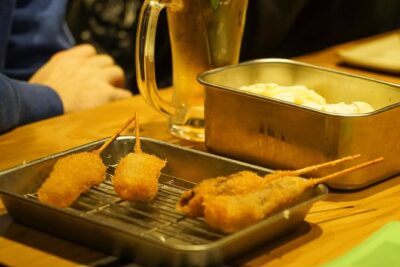
Osaka Local Foodie Walking Tour in Dotonbori and Shinsekai
Read our review →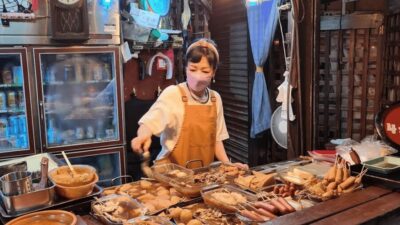
Deep Backstreets Walking Tour with Dinner Option
Read our review →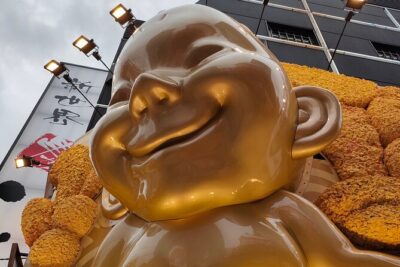
Ultimate Osaka Walking Tour: Castle, Dotonbori & Hidden Gems
Read our review →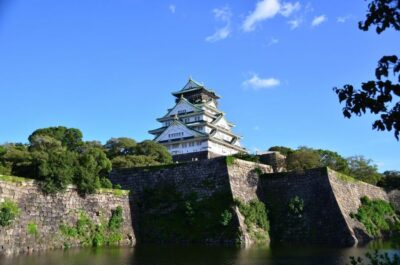
Main Sights and Hidden Spots Guided Walking Tour
Read our review →
Private Osaka Walking Tour: Highlights & Hidden Gems
Read our review →
Osaka Castle Walking Tour and Castle Tower Admission
Read our review →
Kuromon Market Food Walking Tour in Osaka (6 stops, 6 tastes)
Read our review →
Five Must-See Highlights Walking Tour & Ramen Lunch
Read our review →Browse the lists this tour appears in