
Reviewed · HISTORICAL TOURS
Osaka Food Quest: Self-Guided Culinary & History Adventure
Osaka’s food culture is the star here, but the real trick is how the quest ties dishes to places. You move from Ebisu Bridge and Dotonbori to Hozenji Temple, Kuromon Market, and Namba Yasaka Shrine while solving 10 phone-based puzzles.
I like the low price of $7.85 and the freedom to start anytime, pause for lunch, or play only with your own group. I also like that the route includes more than restaurant signs, bringing in baseball lore, Buddhist customs, Bunraku theater, and the story of Osaka as the Nation’s Kitchen. The main caution is that the app experience may depend on your phone and connection. One person found it slow and gave up, though the operator disputed the reported data use and issued a refund.
Key points at a glance
- Ten puzzles link food with place: Each clue sends you to another Osaka sight and adds a small piece of local context.
- Dotonbori is the lively opening act: Ebisu Bridge, takoyaki, horumon, and neon-lined streets make this the most food-focused stretch.
- The route reaches beyond the obvious: Hozenji Temple, the National Bunraku Theater, Kuromon Market, and Namba Yasaka Shrine add cultural depth.
- You set the pace: The quest is listed at about one hour, but you can take two or three hours if you stop to eat and explore.
- It is private and self-guided: Your group alone participates, with no physical guide included.
- The cost is easy to justify: At $7.85 per person, it costs less than many guided food walks, though food purchases are extra.
Osaka food history, delivered as a walking game
This is not a standard tasting tour. You do not follow a guide from one reserved restaurant table to the next, and no food or admission tickets are included. Instead, your phone gives you a story and a puzzle at each stop.
That format works well in central Osaka. The route takes you through areas where food stalls, shopping arcades, temples, theaters, and old neighborhood customs sit close together. You solve a clue by looking around, enter the answer, and receive the next part of the story.
I like this approach for a first look at Osaka because it gives your walk a purpose. Without a guide, you might pass a bridge, shrine, or theater without knowing why it matters. Here, each stop asks you to notice something specific.
The experience is advertised as about one hour. That is possible if you move quickly and solve the clues without long stops. In practice, you should leave more room if you plan to eat, browse Kuromon Market, take photos, or read the background material. One participant completed it in about two hours while pressed for time and suggested allowing at least three hours for a slower outing.
The starting point is at 1 Chome-6 Dotonbori, and the route ends at 2-chōme-9-19 Motomachi in Naniwa Ward. Both points are in central Osaka and near public transportation. The activity runs all day and night, so you can fit it around a morning visit, an afternoon meal, or an evening walk through Dotonbori.
More food and drink tours in Osaka:
- Osaka: Shinsekai Food Tour with 13-15 Dishes at 5 Eateries
★ 4.8 · 2,204 reviews - Osaka Food Tour: 13 Dishes at 5 Local Eateries
★ 5.0 · 2,149 reviews - Hungry Osaka Street Food Tour:15 Tastings & 3 Drinks with a Local
★ 5.0 · 1,727 reviews
Ebisu Bridge begins with baseball, shopping, and a city symbol
Ebisu Bridge is a smart first stop because it places you right in the middle of Osaka’s famous entertainment district. The bridge originally helped people reach nearby Ebisu Shrine, but today it also connects the Shinsaibashi-suji and Ebisubashi-suji shopping areas.
Your first challenge asks you to look around and find the answer. This sounds simple, but it changes how you use the bridge. Instead of only taking the expected Dotonbori photo, you start looking for a sign, symbol, or detail that the puzzle needs.
The bridge also carries one of Osaka’s best-known sports legends. It is linked to a curse said to have affected the Hanshin Tigers baseball team. That story gives the place a local flavor that is easy to miss if you treat Ebisu Bridge as only a photo stop.
This part can feel crowded, especially because Dotonbori is one of Osaka’s most popular areas. The self-guided format helps because you are not trying to keep up with a group. You can wait for a clearer view, then move on when the clue is solved.
Konamon Museum puts Osaka’s soul food in context
The next food stop is the Konamon Museum, which focuses on takoyaki and other flour-based Osaka specialties. Takoyaki is one of the city’s signature street foods, and the museum is a place where you can eat, learn about, and make it.
The quest does not include a takoyaki serving or a workshop fee. That distinction matters. You can treat the stop as a quick puzzle location, or pause and buy something if the smell and display make that impossible to resist.
I like that the route puts a recognizable dish into a wider story. Takoyaki is not just a snack to eat while walking. It is part of Osaka’s identity and a useful entry point into the city’s food customs.
If you are visiting with children, this should be one of the easiest stops to enjoy. The puzzle gives young participants a task, while the food connection keeps the history from feeling too dry. Adults can use the pause to decide where to eat next.
Horumon brings a less polished side of Osaka’s food culture
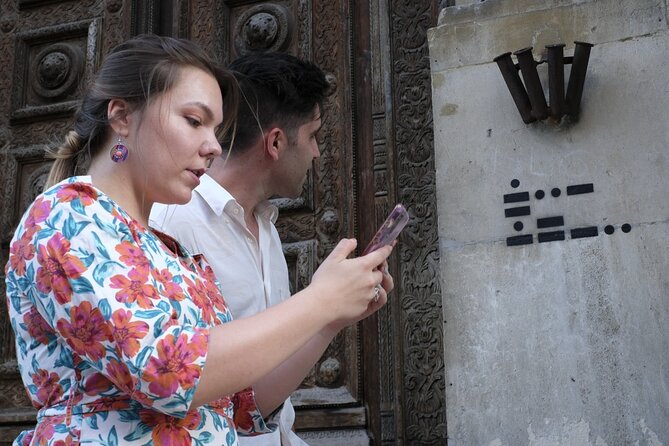
Showa Taishu Horumon Dotonbori introduces horumon, a style of cooking that specializes in beef offal. This is a more distinctive stop than another famous noodle or sushi reference because it points to a hearty, casual side of Osaka dining.
You do not need to eat at the restaurant to complete the challenge. Still, this is one of the places where the quest can influence your meal plans. If you are comfortable trying unfamiliar cuts, you might turn the puzzle stop into dinner. If not, simply learn what the restaurant represents and continue.
The food focus is broad enough to suit curious eaters, but this particular stop may not appeal to everyone. Families with young children or anyone who dislikes offal can treat it as a cultural clue rather than a dining recommendation.
That balance is useful. The quest shows you what Osaka eats without pretending every dish suits every palate.
Same city, a completely different kind of afternoon:
- Osaka Go Karting Tour with Funny Costume
★ 5.0 · 2,658 reviews - Osaka Castle: Museum and Tower Entry Ticket
★ 4.5 · 2,380 reviews - Osaka: Tea Ceremony Experience
★ 4.9 · 1,426 reviews - Osaka Kickstart: Hotspots & Hidden Gems Tour
★ 5.0 · 1,306 reviews
Hozenji Temple slows the pace near Dotonbori
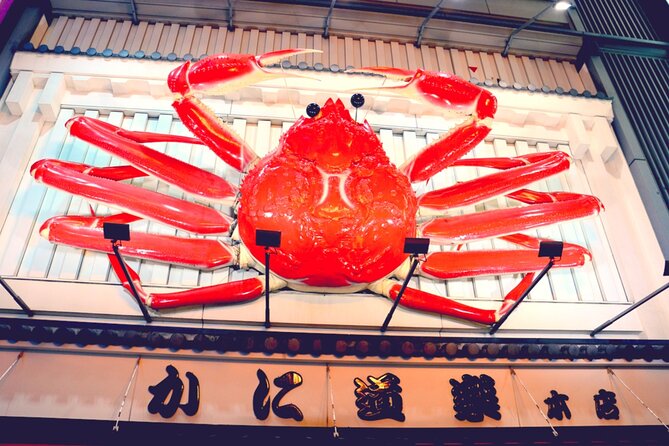
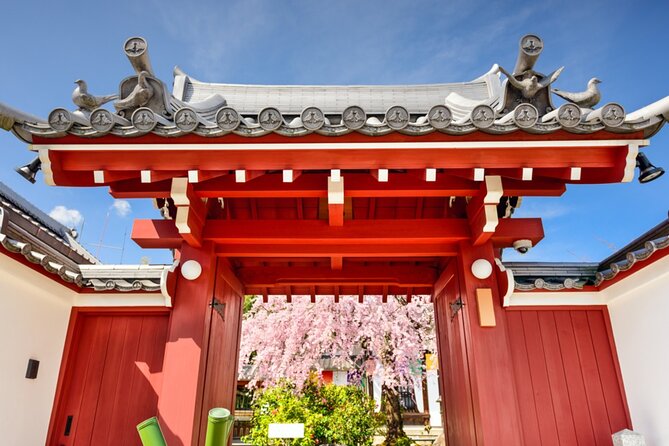
Hozenji Temple brings a sharp change in mood. Built in 1637, it honors Fudo Myoo, one of the five guardians of Buddhism. The temple sits in an area that was once tied to the entertainment life of Namba and Dotonbori, where kabuki and Bunraku performances drew audiences in the 1600s.
This stop gives the quest some needed quiet. After the signs, shops, and food of Dotonbori, a temple offers a chance to notice Osaka’s religious customs and older neighborhood layout.
The puzzle still asks you to inspect the surroundings rather than simply receive a lecture. That can make the visit more memorable, but it also means you need to pay attention. If you rush through, you may solve the clue without taking in the setting.
I consider Hozenji one of the more valuable stops because it shows how food, theater, religion, and commerce developed side by side in this part of Osaka. You are not simply moving between tourist attractions. You are seeing how different parts of city life shared the same streets.
The National Bunraku Theater connects food with performance
The National Bunraku Theater was established in 1984 as the Kansai home of Bunraku, Japan’s traditional puppet theater. Its main hall has 753 seats, while the smaller hall has 159 seats. The main hall is used mainly for Bunraku, along with traditional dance and other dramatic performances.
You may not attend a show as part of this activity. The theater is a puzzle stop, not an included performance. Even so, its presence helps explain why the surrounding Namba and Dotonbori districts became associated with entertainment and dining.
This is a good example of the quest’s wider aim. It is about food, but not food in isolation. Osaka’s restaurants, markets, theaters, temples, and shopping streets all developed together. The theater stop gives you a little cultural framing before the route turns toward market life.
If you want a full Bunraku experience, you would need to arrange that separately. For this activity, the theater functions as a landmark and a short lesson.
Kuromon Market is the route’s best place to stop for a snack
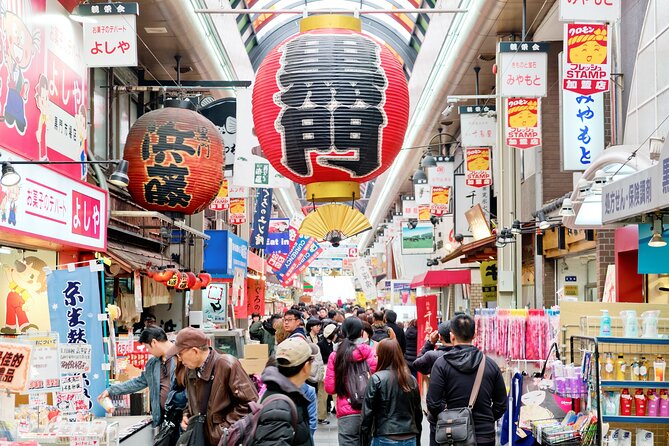
Kuromon Market is one of the strongest stops for anyone interested in Osaka food. The name means black gate, and it is tied to the black gate of Enmyo Temple, which stood in the area until 1912. The market began as a fish market around 1822 and was approved as an official market in 1902.
The quest asks you to find an answer by looking around the market. That makes sense here, since the stop is filled with signs, stalls, displays, and food clues. You will get more from it if you do not treat the 10-minute estimate as a strict limit.
The market is a natural place to pause the quest. The activity lets you stop and resume, so you can browse and eat without worrying about losing your place. Food purchases are not included, but this is where the low tour price works in your favor. You pay only $7.85 for the quest, then choose your own snacks instead of paying for a fixed tasting menu.
There is one practical point to keep in mind. Market food can turn this one-hour activity into a much longer outing. That is not a problem, but plan for it. If you have a timed reservation later, solve the clue and save your browsing for another visit.
Namba Yasaka Shrine ends with a dramatic landmark
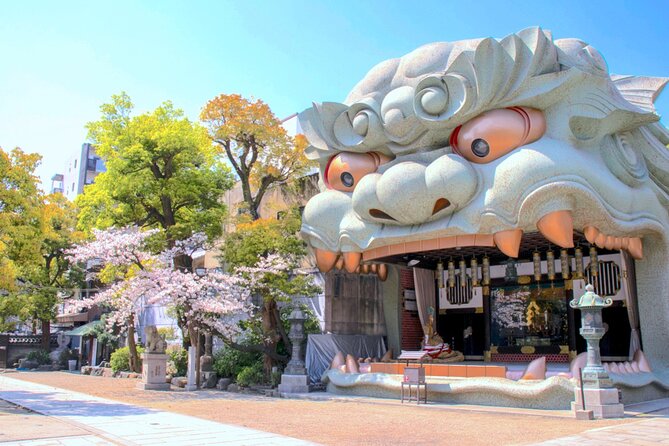
Namba Yasaka Shrine provides the final setting and a strong visual finish. Its origins are connected with Emperor Hanzei and his father, Emperor Nintoku. The shrine originally stood in what is now Kawachi Matsubara City and was later moved to its present site after Toyotomi Hideyoshi began construction of Osaka Castle.
The shrine’s history gives the last puzzle a different tone from the food stops. You finish by looking at Osaka through the lens of belief, imperial tradition, and the city’s changing boundaries.
The endpoint is in Motomachi, at 2-chōme-9-19. Since the route does not return you to Dotonbori, you should think of this as a point-to-point walk. That is useful if you plan to continue in the Naniwa area, but less convenient if you left luggage or a reservation near the starting point.
What $7.85 really gets you
At $7.85 per person, this is a low-cost way to add structure to an Osaka walk. You receive mobile access to the quest, 10 puzzles, a food and history storyline, and the ability to pause and resume.
The price does not cover meals, drinks, transport, admission to performances, or a physical guide. That is important because the word food in the title could lead you to expect tastings. Think of this as a food-themed exploration game, not a food tour with included samples.
I see good value here for solo visitors, couples, and families who want a self-directed activity. A group discount is available, which can make the price even easier to accept for several people sharing the same outing.
The low cost also reduces the risk. If you enjoy interactive sightseeing, you get a full route for less than the price of many short guided activities. If the format is not your style, you have not spent much.
The phone experience deserves a little care
You need a smartphone and the mobile access code. The confirmation is provided at booking, and the quest is available around the clock. Since there is no physical guide, your phone is responsible for the directions, clues, and story content.
The main technical caution comes from one poor experience with a slow app and unclear directions. The operator said the quest itself is only 2.5 MB and disputed the claim that it used 3 GB of data, saying other apps were likely involved. A refund was processed.
I would still prepare before starting. Charge your phone, close apps you do not need, and make sure you know how to access the quest. You will be walking in crowded areas, so stopping safely to read a clue is better than trying to navigate while moving.
The activity is private, meaning only your group participates. That is a real benefit if you dislike being rushed or answering puzzles in front of strangers. It also means you are responsible for finding the stops and solving any problem that comes up.
Who should choose this Osaka quest?
I would recommend it to you if you like:
- Food stories but do not need included tastings
- Short walks with a clear purpose
- Puzzles, scavenger hunts, and phone-based games
- Exploring at your own pace
- Private activities for couples or families
- A first introduction to Dotonbori, Namba, and nearby sights
It is less suitable if you want a guide explaining every detail in person, a set menu of Osaka dishes, or a polished route with guaranteed technical support. It also may not suit you if you dislike using your phone while sightseeing.
The route works especially well for someone with only one day in Osaka. It covers several key areas and gives you a flexible way to see them without committing to a long group tour. Just remember that the route is more than a one-hour food stop if you take time to eat and explore.
Should you book Osaka Food Quest?
Book it if you want a cheap, flexible way to connect Osaka’s famous food scene with temples, theater, markets, and local stories. The best parts are the freedom to pause, the private format, and the route through Dotonbori, Hozenji, Kuromon Market, and Namba Yasaka Shrine.
Skip it if you expect a guide, included food, or a traditional sightseeing commentary. For $7.85, this is a good-value walking game, not a complete culinary tour. Bring a charged phone, leave two to three hours if you want to eat, and treat the puzzles as a reason to look closely at Osaka rather than as a race to the finish.
FAQ
How long does Osaka Food Quest take?
The stated duration is about one hour. You can take longer because the quest allows you to pause and resume. Allowing two to three hours gives you more time for food, photos, and browsing.
Is a physical guide included?
No. The activity is self-guided and uses mobile access to deliver the storyline, directions, and 10 puzzles.
What does the price include?
The $7.85 price includes mobile access to the quest, 10 puzzle-based challenges, food and history story content, and the ability to pause and resume. Food, drinks, transportation, and other admissions are not included.
Where does the quest start and end?
It starts at 1 Chome-6 Dotonbori, Chuo Ward, Osaka. It ends at 2-chōme-9-19 Motomachi, Naniwa Ward, Osaka.
Can I join at any time?
The activity is listed as operating Monday through Sunday, 12:00 AM to 11:59 PM. You receive confirmation at booking, and the mobile format lets you choose your starting time.
Can I cancel for a full refund?
Yes, if you cancel at least 24 hours before the experience start time. Cancellations or changes made within 24 hours are not eligible for a refund.
More Self-Guided Tours in Osaka
- Osaka Castle & Temple Walking Tour with Multilingual Audio Guide
★ 5.0 · 5 reviews
More History Tours in Osaka
- Osaka: Castle History Walking Tour / Castle Tower Admission
★ 4.9 · 230 reviews - Osaka: Osaka Castle & Historical Museum Guided Tour
★ 4.8 · 28 reviews - Osaka Castle & Samurai History Walking Tour
★ 5.0 · 22 reviews - (Ticket Included) Explore Osaka Castle & Museum of History
★ 4.8 · 21 reviews
Just added in Osaka
- Urban Canvas: Osaka Street Art Bike Tour★ 5.0 · 10 reviews
- Anime Cosplay Photshoot-50 Digital Photos Provided★ 5.0 · 8 reviews
- TeamLab Botanical Garden Osaka Ticket★ 3.5 · 6 reviews
- Umeda Sky Building & Kuchu Teien Observatory Ticket in Osaka★ 4.5 · 3 reviews
- Immerse in Judo Martial Arts Class from Japan★ 5.0 · 4 reviews
- Cherry Blossom Buddha and Mt.Yoshino with Strawberry Picking Tour★ 4.5 · 5 reviews
- Traditional Calligraphy Experience near Dotonbori★ 5.0 · 3 reviews
- Discover Osaka’s Iconic Umeda Sky Observation★ 5.0 · 6 reviews
Historical Tours, compared.
Castle History Walking Tour / Castle Tower Admission
Read our review →
Kyoto & Nara & Uji Historical and Scenic One-Day Tour
Read our review →
(Ticket Included) Explore Osaka Castle & Museum of History
Read our review →
Kyoto & Uji Historical Sites and Scenic Delights Tour
Read our review →
Osaka Private Pop Culture Tour: Historic Tenma to Dotonbori
Read our review →Browse the lists this tour appears in