
Reviewed · FOOD
Deep Dive: Osaka Food Markets from Local to Luxurious!
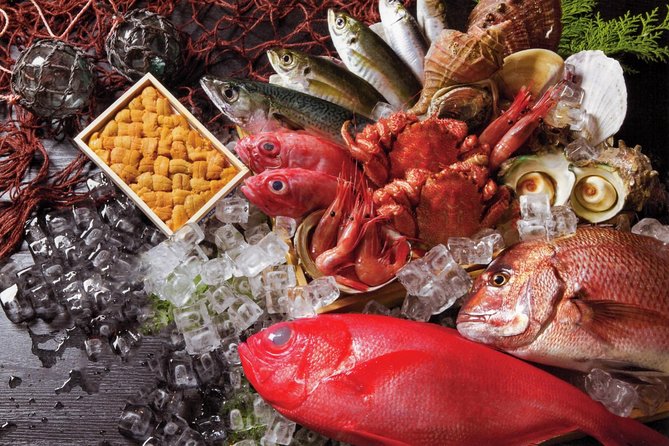
Osaka’s food culture makes the most sense when you see its shopping streets, grocery stalls, department-store counters, and neighborhood markets side by side. This private tour moves through seven food-focused stops, from the polished basement of Takashimaya to Korea Town and the famous Kuromon Market.
I like the contrast between the high-end food displays and ordinary local shopping, and I like the cultural context built into the route. Guides such as Ferdinand, Kevin, Thomas, Lito, Damian, Oshi, and Alejandro have been praised for answering questions, translating, and adjusting the outing to suit families and personal interests. The main caution is price: at $91 per person, food and transport are extra, so this is a guided market walk rather than an all-inclusive eating tour.
Key points to know before booking
- Seven distinct Osaka stops: The route includes Takashimaya’s depachika, Pulala Tenma, Tenjinbashi-suji, Tsuruhashi Korea Town, Kuromon Market, Doguyasuji, and Namba.
- Private guide for your group: You get a native or near-native speaker in your chosen language, rather than joining a large shared group.
- Food is available, not included: You can buy snacks, meals, drinks, and market items, but the advertised price does not cover them.
- A useful local comparison: You see luxury presentation, everyday groceries, specialist stalls, and tourist-oriented shopping in one afternoon or morning.
- Expect plenty of walking: The tour lasts about four hours and uses public transport, which costs about 330 yen per adult.
- Best for curious eaters: It suits people who want to understand ingredients, shopping customs, cultural influences, and ordering more than people seeking a fixed tasting menu.
Osaka food culture, from luxury counters to local stalls
I like this tour because it does not treat Osaka food as a short list of famous dishes. Instead, it shows you the places where people buy ingredients, compare quality, choose gifts, and select ready-to-eat food.
That distinction matters. A restaurant meal tells you what someone has prepared for you. A market tells you what people value before the cooking begins. You see seafood, meat, vegetables, sweets, prepared dishes, kitchen tools, Korean specialties, and grocery-store basics. Your guide explains how those pieces fit into daily life.
The route also gives you a useful contrast. Kuromon Market is famous and visually exciting, but prices there can be high. Pulala Tenma offers a more ordinary local market setting. Takashimaya shows how carefully Japanese department stores present food at the luxury end. By the end, you have seen both the polished display and the practical shopping trip.
The experience is private, so your guide can spend more time on your questions. Past guide assignments have included Ferdinand, Kevin, Thomas, Lito, Damian, Oshi, and Alejandro. The strongest praise centers on their cultural explanations, flexibility, translation help, and willingness to adapt the pace.
More food and drink tours in Osaka:
- Osaka: Shinsekai Food Tour with 13-15 Dishes at 5 Eateries
★ 4.8 · 2,204 reviews - Osaka Food Tour: 13 Dishes at 5 Local Eateries
★ 5.0 · 2,149 reviews - Hungry Osaka Street Food Tour:15 Tastings & 3 Drinks with a Local
★ 5.0 · 1,727 reviews
Takashimaya’s depachika shows Osaka at its most polished
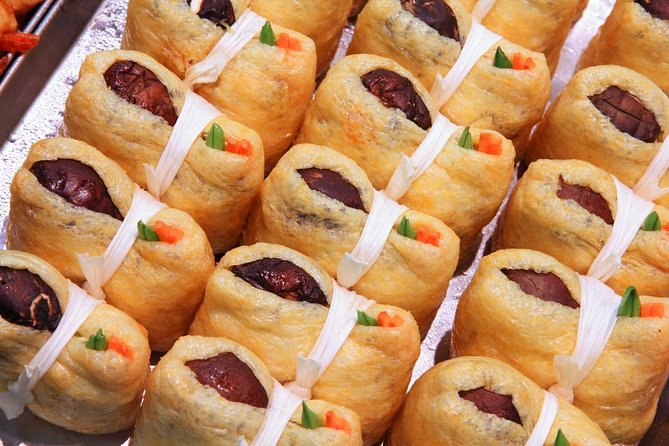
The tour begins at Takashimaya Osaka Store, where your guide introduces you to the depachika, the underground food hall found beneath many Japanese department stores.
This is not a rough market. Expect carefully arranged displays of Japanese sweets, prepared foods, raw ingredients, Western-style foods, and gift items. The presentation is part of the lesson. Food is often chosen with attention to appearance, season, packaging, and quality, and your guide can help explain what you are seeing.
I find this an excellent opening because it gives you a reference point for the rest of the day. You start with the expensive, refined side of food shopping before moving toward local markets and shopping arcades.
The stop lasts about 20 minutes. That is enough for an introduction, but not enough for a leisurely shop. If you see something you want, remember that purchases are your responsibility and may affect the pace.
Pulala Tenma brings you closer to everyday shopping
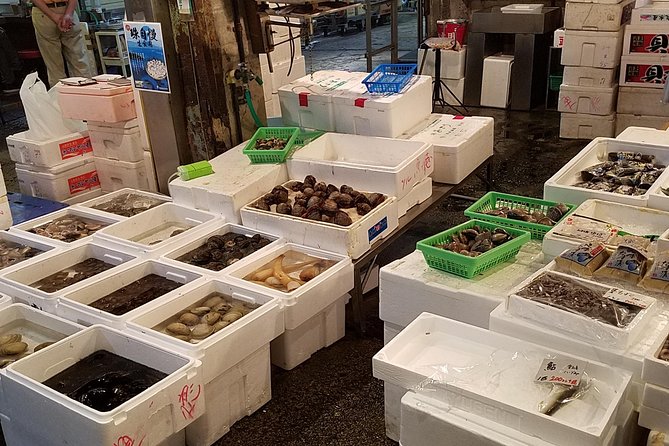
At Pulala Tenma, the mood changes. This local wet market displays seafood, meat, vegetables, and other ingredients in a setting aimed more at residents than sightseers.
Your guide explains how the ingredients are used and how local shopping differs from the department-store experience. This is one of the more useful parts of the route if you want to understand what goes into Osaka cooking rather than simply photograph finished dishes.
The stop lasts around 30 minutes. You may find food to purchase, but the tour price does not include samples or refreshments. That point is important. The description presents the outing as a food experience, yet the practical arrangement is closer to a guided market visit where you choose and pay for anything you eat.
That can be a benefit. You control what you buy and how much you spend. It can also disappoint you if you arrive expecting a set series of tastings.
Tenjinbashi-suji explains Osaka through a shopping street
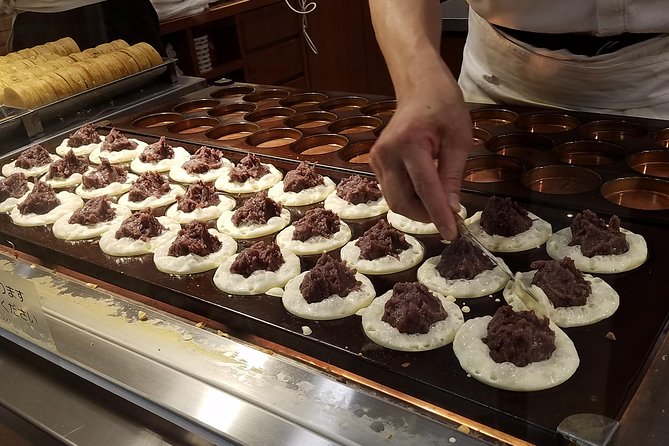
Tenjinbashi-suji Shopping Street is described as Japan’s longest covered shopping arcade. The tour uses the street to explain both its past and its current role in Osaka life.
A covered arcade is a good place to observe the city without moving from one isolated attraction to another. You pass shops, food sellers, and everyday businesses while your guide explains how the street functions. The stop also includes a visit to a local supermarket, giving you another look at ordinary food shopping.
This is where the tour becomes broader than a food walk. You are not only looking for famous dishes. You are seeing how food fits into neighborhood commerce and how Japanese supermarkets differ from the luxury counters at Takashimaya.
Allow about 40 minutes here. The street can be a tempting place to browse, so ask your guide how much time you can spend shopping. If you have a special interest in sweets, ingredients, or household food products, this is a good place to say so.
Same city, a completely different kind of afternoon:
- Osaka Go Karting Tour with Funny Costume
★ 5.0 · 2,658 reviews - Osaka Castle: Museum and Tower Entry Ticket
★ 4.5 · 2,380 reviews - Osaka: Tea Ceremony Experience
★ 4.9 · 1,426 reviews - Osaka Kickstart: Hotspots & Hidden Gems Tour
★ 5.0 · 1,306 reviews
Tsuruhashi Korea Town adds another cultural layer
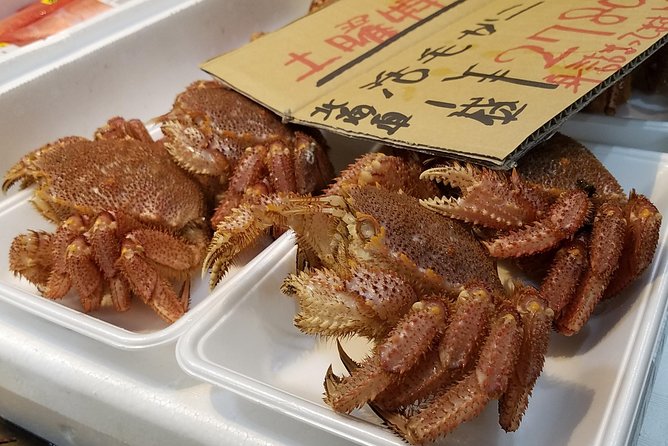
Osaka Tsuruhashi Ichiba introduces Korea Town, one of the most culturally distinctive areas on the route. Food is central, but the area also includes clothing and other goods.
This stop helps explain that Osaka’s food culture has been shaped by more than one tradition. Korean influences are part of the city’s wider social and culinary story, and your guide can place the markets in that context.
You have about 30 minutes. It is a good chance to buy a snack, though again, you pay separately. The area may be especially rewarding if you are interested in Korean food, Japanese-Korean history, or the way cultural communities shape a city’s shopping districts.
Families can also benefit here. One guide adjusted the outing for children interested in mochi and gaming, showing why a private format can work better than a fixed group schedule. Still, tell your guide early if younger children need more stops or a slower pace.
Kuromon Market is famous for good reason, but it costs more
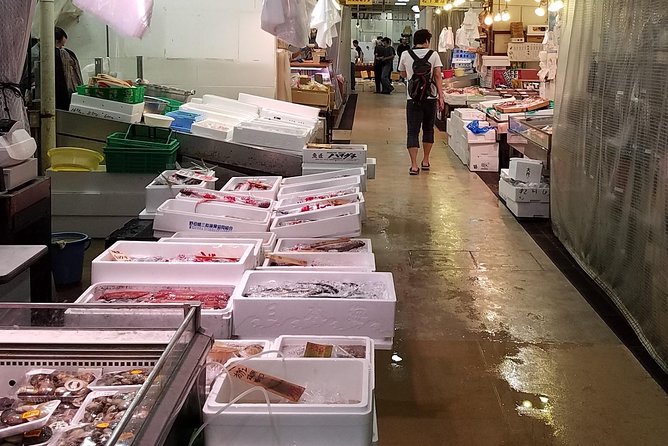
Kuromon Market is the route’s best-known market stop. It is popular with visitors, and your guide is direct about the trade-off: the sights are excellent, the quality can be high, and prices are often higher than at less famous markets.
You will see plenty of food stalls and displays, with opportunities to purchase items along the way. The market is especially useful after the earlier stops because you can now compare it with a department-store food hall and a local wet market.
Your allotted time is about 25 minutes. That is enough for orientation and a purchase or two, but not enough for an unhurried meal at every stall. If you want to eat here, budget both money and time. Food, snacks, and drinks are not included in the $91 tour price.
I would not book this experience solely for Kuromon Market. You can visit it independently. Its value here is the explanation and comparison. Your guide can help you understand what you are seeing, identify specialties, and translate when you want to ask about a dish.
Doguyasuji turns the food tour toward cooking tools
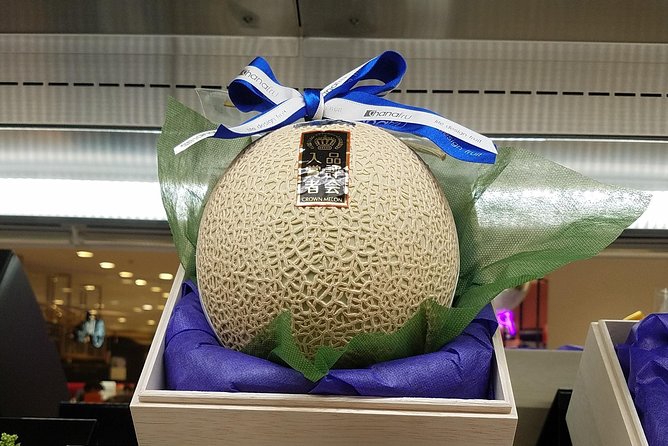
Sennichimae Doguyasuji Shopping Street changes the subject from ingredients to the equipment used to prepare and serve them.
This is a worthwhile stop if you like Japanese kitchenware. Shops carry cooking knives, ceramics, serving dishes, lacquer chopsticks, tea cups, and wax food models. The wax displays are a fun reminder that Japanese restaurants often use realistic food replicas to show a menu outside.
A Japanese cooking knife may be tempting, but this is a purchase that deserves care. Ask your guide about the item, its intended use, and any practical issues connected with taking it home. The tour does not include purchases, and your guide cannot turn every shopping stop into a long buying consultation, so be realistic about time.
The stop lasts about 25 minutes. It adds useful depth to the day. Food culture is not only about eating. It includes tools, presentation, serving customs, and the objects people use in the kitchen.
Namba and Dotonbori finish the route in classic Osaka style
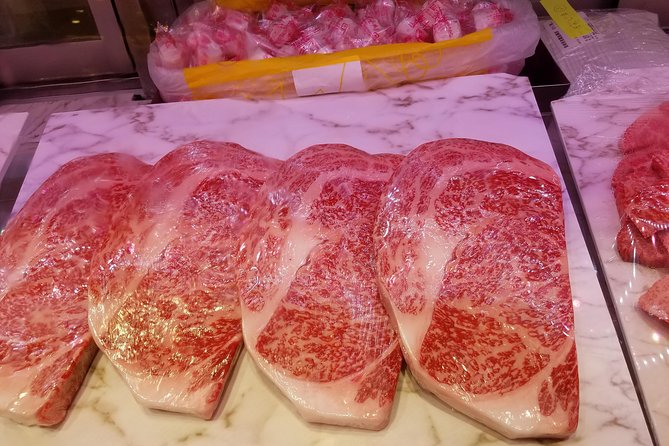
The tour ends around Minami, the Namba and Dotonbori area, with any remaining time used for major sights. The stated endpoint is Ebisu Bridge, a convenient place to continue exploring after the tour.
This final section gives you a lively contrast to the quieter or more practical markets earlier in the day. Your guide may help you connect what you have seen with the better-known food streets and signs of central Osaka.
Because the route ends at Ebisu Bridge, you are well placed for more independent eating. You can use the ordering and shopping advice from the day immediately afterward. That is one of the tour’s most practical benefits: you finish in an area where you can put the lessons to work.
The exact amount of time here depends on how the earlier stops go. If you spend a long time shopping or eating, Namba may receive less attention.
What the $91 price really buys you
At $91 per person, this is not cheap if you measure value only by the amount of food consumed. Samples, snacks, refreshments, souvenirs, and other food items are excluded. Public transport during the tour costs about 330 yen per adult.
The price makes more sense if you want a private guide who can explain markets, translate questions, discuss Japanese, Chinese, and Korean cultural influences, and adjust the route to your interests. That is a different product from a food crawl with ten included tastings.
You should also remember that the tour is private. If you are traveling with several people, that may make the cost easier to justify, especially if your group wants to move at its own pace. Group discounts are offered, though the exact discount is not specified here.
The strongest practical value comes after the tour. You leave better prepared to read market displays, choose unfamiliar foods, understand price differences, and order with less hesitation. If you already know Osaka well and simply want a meal, the cost is harder to defend.
Walking, transport, timing, and the small print
The tour lasts about four hours and offers morning or afternoon departures. That flexibility helps you fit it around a larger Osaka schedule.
You start at the McDonald’s in front of Temma Station and finish at Ebisu Bridge in Dotonbori. Transport between stops is not included, with an estimated cost of 330 yen per adult. Wear comfortable shoes. The route covers several districts, and the walking can feel demanding, especially in hot weather.
Children must be accompanied by an adult. Most people can participate, but the tour involves a moderate amount of walking. If you are bringing young children, consider their stamina and interest in markets before booking.
A mobile ticket is available, pickup is offered, and confirmation arrives at booking. The activity can be canceled for a full refund up to 24 hours before the start time. Changes or cancellations made inside that period are not accepted.
Who will get the most from this market tour
I would choose this experience if you want context, comparison, and help navigating unfamiliar food. It is especially useful early in an Osaka stay, when you can use your guide’s advice for later meals and shopping.
It suits:
- First-time Osaka visitors who want to understand more than the main sightseeing districts
- Food lovers interested in ingredients, markets, kitchen tools, and shopping customs
- Families who want a guide able to adjust the pace and explain unfamiliar foods
- People who enjoy cultural comparisons, including Japanese and Korean influences
- Visitors who prefer a private outing over a fixed group tour
I would hesitate if you want a large number of included tastings. The tour may take you to food, but you must buy your own samples and meals. I would also hesitate if you have limited mobility or dislike long walks, since the route uses several neighborhoods and public transport.
Should you book it?
Book this tour if you want to understand how Osaka shops and eats, not simply check off one famous market. The best feature is the range: luxury depachika, local groceries, a long covered arcade, Korea Town, Kuromon, kitchenware shops, and Namba all appear in one half-day.
The $91 cost is fair for a private guide with strong cultural and translation skills, but only if you value explanation. Bring extra money for food and transport, wear good shoes, and treat the tour as a guided market education rather than an all-inclusive tasting menu.
If that sounds right, it can give you the confidence to return to Osaka’s markets on your own. If your priority is maximum food for your budget, spend the money directly at local eateries instead.
FAQ
How long does the Osaka food market tour last?
The experience lasts approximately four hours.
What markets and shopping areas are included?
The route includes Takashimaya Osaka Store, Pulala Tenma, Tenjinbashi-suji Shopping Street, Osaka Tsuruhashi Ichiba, Kuromon Market, Sennichimae Doguyasuji Shopping Street, and Minami in the Namba and Dotonbori area.
Is food included in the tour price?
No. Snacks, samples, food items, refreshments, and souvenirs are not included. You are responsible for buying anything you want to eat or take home.
How much does transportation cost during the tour?
Transportation is not included. The stated cost is about 330 yen per adult.
Is this a private tour?
Yes. Only your group participates, and the tour includes a native or near-native speaker of your chosen language.
Where does the tour start and finish?
The tour starts at the McDonald’s in front of Temma Station at 4-chōme-12-1 Tenjinbashi. It finishes at Ebisu Bridge in Dotonbori.
Just added in Osaka
- Urban Canvas: Osaka Street Art Bike Tour★ 5.0 · 10 reviews
- Anime Cosplay Photshoot-50 Digital Photos Provided★ 5.0 · 8 reviews
- TeamLab Botanical Garden Osaka Ticket★ 3.5 · 6 reviews
- Umeda Sky Building & Kuchu Teien Observatory Ticket in Osaka★ 4.5 · 3 reviews
- Immerse in Judo Martial Arts Class from Japan★ 5.0 · 4 reviews
- Cherry Blossom Buddha and Mt.Yoshino with Strawberry Picking Tour★ 4.5 · 5 reviews
- Traditional Home cooking Experience in Osaka, Japan★ 5.0 · 14 reviews
- Traditional Calligraphy Experience near Dotonbori★ 5.0 · 3 reviews
Food, compared.
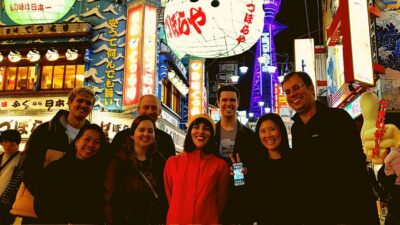
Shinsekai Food Tour with 13-15 Dishes at 5 Eateries
Read our review →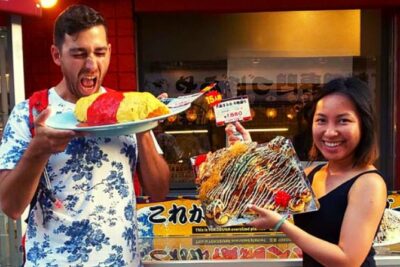
Osaka Food Tour: 13 Dishes at 5 Local Eateries
Read our review →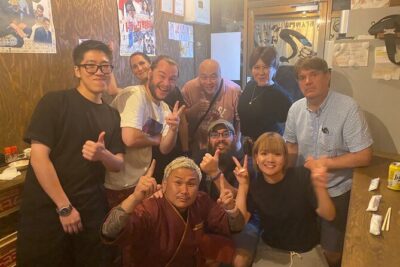
Hungry Osaka Street Food Tour:15 Tastings & 3 Drinks with a Local
Read our review →
Osaka Local Foodie Walking Tour in Dotonbori and Shinsekai
Read our review →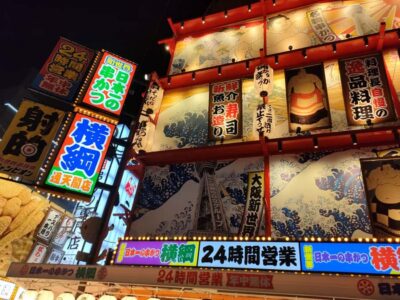
Hungry Osaka Street Food Tour: 15 Dishes & 3 Drinks
Read our review →
Kuromon Market Food Walking Tour in Osaka (6 stops, 6 tastes)
Read our review →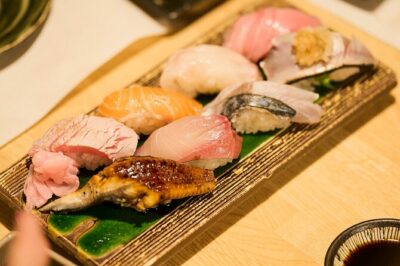
Guided Food Tour with 12 Dishes at 4 Local Eateries
Read our review →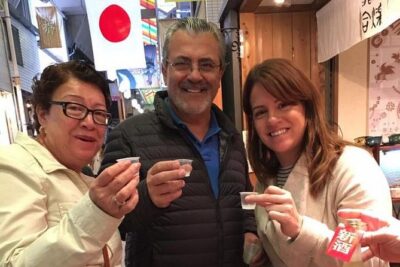
Browse the lists this tour appears in