
Reviewed · OSAKA WALKING TOURS
Osaka: Walking Tour to Local Gems, Food & Culture
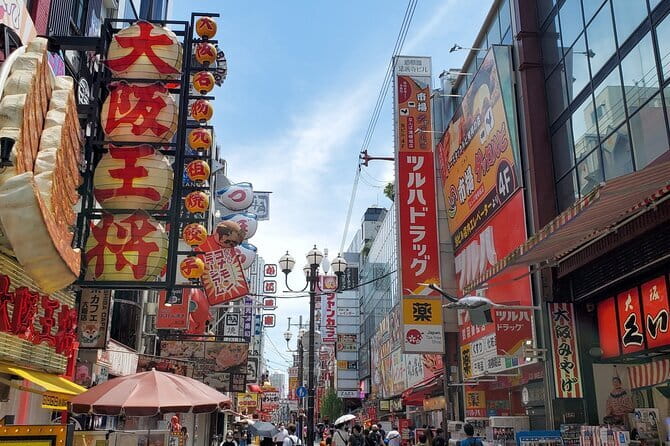
Osaka reveals itself quickly on foot, and this compact route links several of the city’s best-known sights with local stories along the way. I like the way it moves from Dotonbori’s famous photo-stop setting to Hōzenji Temple, Kuromon Ichiba Market, and Nipponbashi Denden Town. You get a useful first look at several central districts without spending half a day on transport.
I also like the $25 price, which includes a licensed English-speaking guide and all fees, and the personal touch reported from guides such as Rico and J. The tradeoff is pace: 150 minutes covers a lot of ground, and food costs extra. The route is also not suitable for wheelchair users.
Key points to know before booking
- Start at Apple Shinsaibashi: Meet your guide outside the Apple store, where the guide will hold a sign.
- See four important Osaka stops: The route includes Dotonbori, Hōzenji Temple, Kuromon Ichiba Market, and Nipponbashi Denden Town.
- Expect useful cultural context: The guide explains Osaka’s past, customs, and local character rather than simply pointing out sights.
- Plan to buy your own food: The tour fee includes taxes and the guide, but meals and snacks are not included.
- Finish near Namba Grand Kagetsu: The ending point leaves you in a central area for continuing your Osaka visit.
- Allow for a walking pace: The tour lasts 150 minutes and is not suitable for wheelchair users.
Why this short Osaka walk works well
Osaka can feel scattered when you first arrive. Shinsaibashi, Dotonbori, Hōzenji, Kuromon, and Nipponbashi are all central, but a first visit does not always make their relationship clear. This walk gives you a simple route through them, with a guide filling in the meaning of each place.
For $25, I see this as a strong orientation tour rather than a full-day cultural program. You are paying for the route, the guide’s explanations, and the ease of having someone lead you through several busy areas. You are not paying for food, entrance tickets to major attractions, or an extended private experience.
The high 4.9 rating from 21 ratings points to a consistently good experience, though the written feedback is brief. The clearest pattern is the guide’s communication. One German-speaking participant highlighted the guide’s strong English, while other comments singled out Rico and J. One account described a slow start that developed into detailed discussion of Osaka culture and small historical points. That is useful to know: the tour may become more rewarding once you ask questions and engage with the guide.
More walking tours in Osaka:
- Osaka Local Foodie Walking Tour in Dotonbori and Shinsekai
★ 5.0 · 985 reviews - Osaka: Deep Backstreets Walking Tour with Dinner Option
★ 4.9 · 902 reviews - Ultimate Osaka Walking Tour: Castle, Dotonbori & Hidden Gems
★ 5.0 · 862 reviews
Meeting at Apple Shinsaibashi
The tour begins at Apple Shinsaibashi. Look for the guide holding a sign in front of the store. This is a practical meeting point because it is easy to identify, but you should still allow time to reach it. The experience depends on starting together, and a central shopping district can be busy.
The opening guided portion lasts 15 minutes. The exact name of this first stop is not provided, so you should expect an introduction to the area rather than a named attraction with a set entrance visit. This part matters because it gives the guide a chance to explain how the walk will unfold and helps you get your bearings before the route reaches its better-known stops.
A useful approach is to arrive ready with one or two questions. J was praised for answering questions about Japanese culture and related subjects, and that suggests the guide may be at their best when the conversation becomes interactive. The tour is in English, so you should be comfortable following spoken explanations while walking.
The early guided stops and the value of context
After the starting point, the tour includes two additional visits, each with about 10 minutes of guided time. Their names are not specified in the available details. I would not book this activity expecting a detailed account of every stop in advance. Instead, think of these short sections as connecting points that help place the main sights within Osaka’s central districts.
Ten minutes is enough for an explanation, a few questions, and a quick look. It is not enough for a long museum visit or a slow study of architecture. That time limit is part of the tour’s design: you keep moving, and the route gives you range.
This is where a live guide adds more value than a self-guided map. A map can show you where to go, but it cannot adjust its explanation when you ask about a custom, a local reference, or an unfamiliar detail. The available comments describe the experience as informative and entertaining, with particular appreciation for English communication. That combination is important on a walking tour, since unclear explanations can make a short visit feel rushed.
Dotonbori in a 20-minute stop
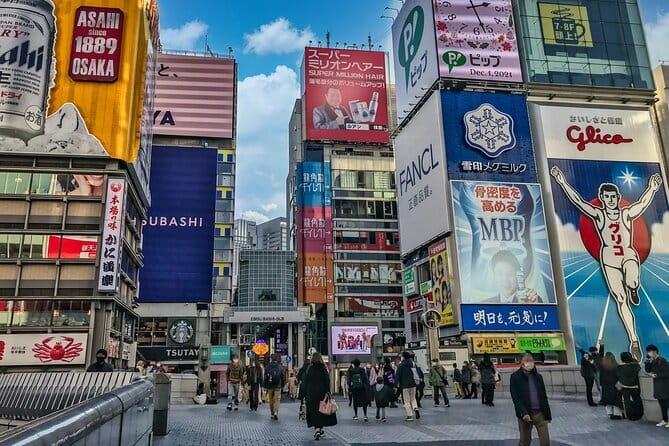
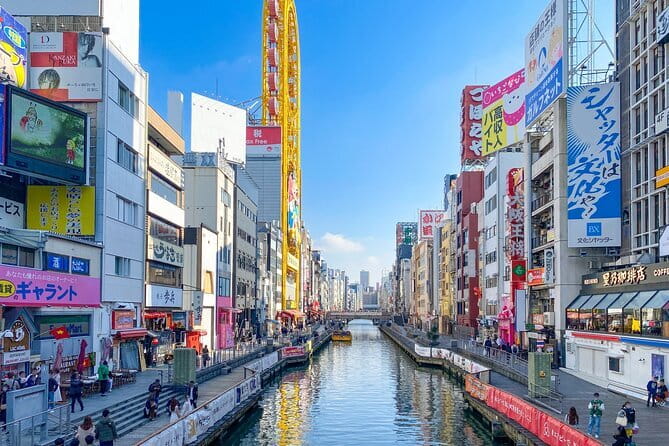
Dotonbori receives the longest named stop, with about 20 minutes for a visit, guided tour, and photo stop. This is a sensible place to pause. It is one of the Osaka sights most visitors want to see, and the guide can give you more than a quick picture before moving on.
You should expect this section to balance looking, photographing, and listening. Twenty minutes will not cover every corner of the area, but it is long enough to understand why Dotonbori is part of Osaka’s public image. The guide’s local stories are likely to matter more here than a list of facts. Ask what makes the district significant to Osaka and how it fits with the other areas on the route.
I like having Dotonbori in the middle of the walk rather than treating it as the entire experience. On its own, the area can be easy to reduce to a photo stop. Within this route, it becomes one chapter in a wider look at Osaka, followed by a much quieter temple visit and a market stop.
The main caution is crowding and pace. The tour provides only 20 minutes, so you should not count on a long meal or extensive shopping here. Keep your camera ready, listen for the meeting instructions, and stay aware of the group.
More food and drink tours in Osaka:
- Osaka: Shinsekai Food Tour with 13-15 Dishes at 5 Eateries
★ 4.8 · 2,204 reviews - Osaka Food Tour: 13 Dishes at 5 Local Eateries
★ 5.0 · 2,149 reviews - Hungry Osaka Street Food Tour:15 Tastings & 3 Drinks with a Local
★ 5.0 · 1,727 reviews - Hungry Osaka Street Food Tour: 15 Dishes & 3 Drinks
★ 4.9 · 694 reviews
Hōzenji Temple and a change of mood
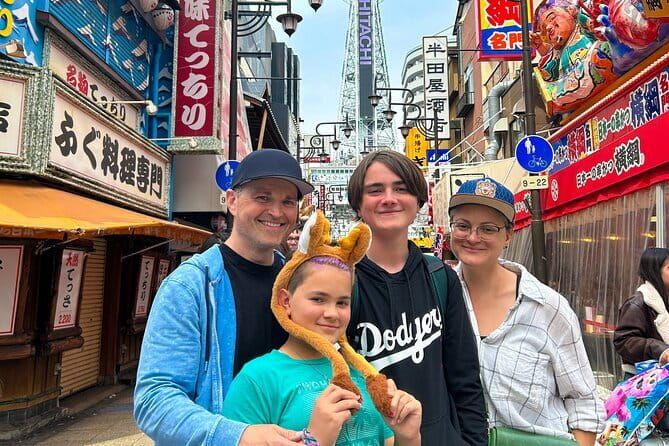
The next stop is Hōzenji Temple, with 10 minutes for a visit and guided explanation. This is one of the most useful contrasts in the route. After the visual energy of Dotonbori, a temple stop gives the guide a chance to discuss a different side of Osaka’s culture and traditions.
The short time allocation means you are getting an introduction, not a full religious or architectural study. Still, ten minutes can be enough to appreciate the setting and hear why the temple belongs on this walk. The guide’s role is especially helpful here because small religious sites can be easy to pass without understanding their place in local life.
I would pay close attention to the transition between Dotonbori and Hōzenji. The route’s strength is not only the individual stops. It is the way the walk places different kinds of Osaka experience close together. You move from a famous entertainment area to a temple, then on to a food market and an electronics district.
Kuromon Ichiba Market with food on your own
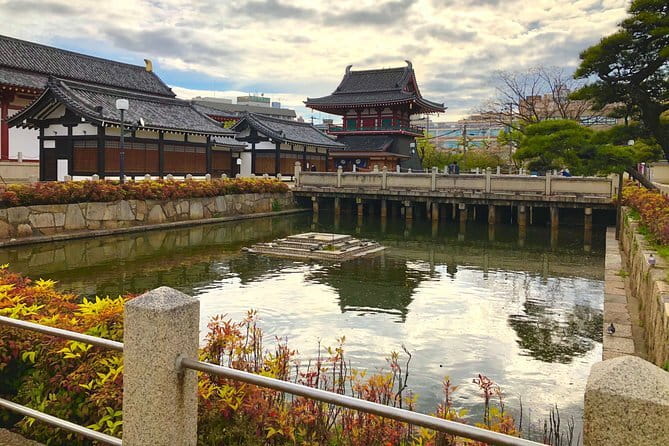
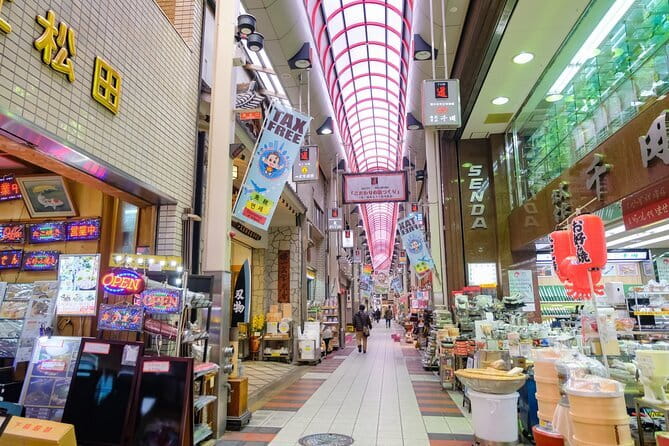
Kuromon Ichiba Market gets 20 minutes, including a visit and guided tour. This is the stop where you should think about food, but remember that food is not included in the $25 price.
The guide can help you understand the market as part of Osaka’s everyday food culture, while you decide whether to buy something. Twenty minutes gives you time to look around and perhaps make a purchase, but it is not a long market meal. If you want to sample several things, keep your expectations modest and have payment ready.
I consider this a good value choice because it lets you control your spending. Some people will prefer to observe and save their appetite for later. Others will want one small snack. Since the tour does not bundle food into the price, you are not forced to pay for items you do not want.
The market stop also keeps the experience grounded. Dotonbori may be the most recognizable stop, but Kuromon gives the walk a practical food and neighborhood focus. Ask the guide about local food customs or what to look for if you plan to return on your own. The available information does not promise tastings, a food allowance, or a meal, so treat any purchase as optional and separate.
Nipponbashi Denden Town in 10 minutes

Nipponbashi Denden Town is next, with 10 minutes for a visit, guided explanation, and photo stop. The stop adds another side of central Osaka to the route and keeps the tour from becoming only a parade of historic sites.
Because the stop is short, you will get an overview rather than a long shopping session. The guide can explain what makes the district notable, while you take a few photos and get a sense of its character. If you are hoping to browse shops in detail, plan to return after the tour instead of trying to do serious shopping during the group walk.
This is a good example of the tour’s efficient format. You see a range of places, but each visit has a clear limit. I like that arrangement for a first afternoon in Osaka, especially if you want orientation before choosing which districts deserve more of your time.
The final unnamed visit and Namba Grand Kagetsu
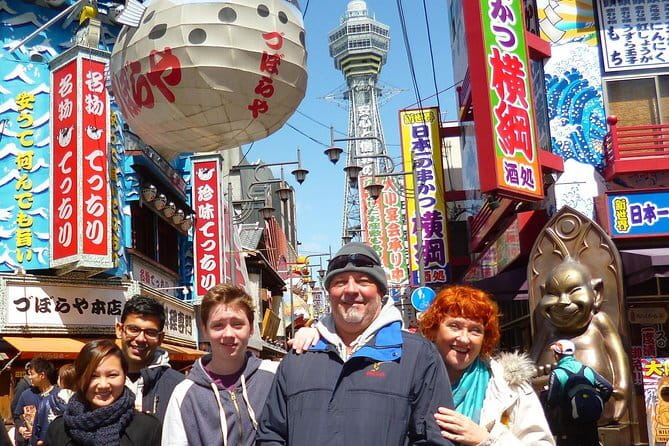
The route includes one more 10-minute guided visit before it finishes at Namba Grand Kagetsu. The name of that final visit is not specified, so you should regard it as another short interpretive stop rather than book around a particular attraction.
Ending at Namba Grand Kagetsu is convenient for continuing your evening in the Namba area. The experience does not include onward transport, so you will be responsible for making your own plans after the walk. That can be an advantage: you are not tied to a group meal or a fixed final activity.
The final stretch also gives the guide a chance to connect the route’s themes. You have seen a major Osaka photo stop, a temple, a market, and a district with a different commercial identity. A good question at this point is how these places fit together in present-day Osaka.
Guide quality and what the feedback tells you
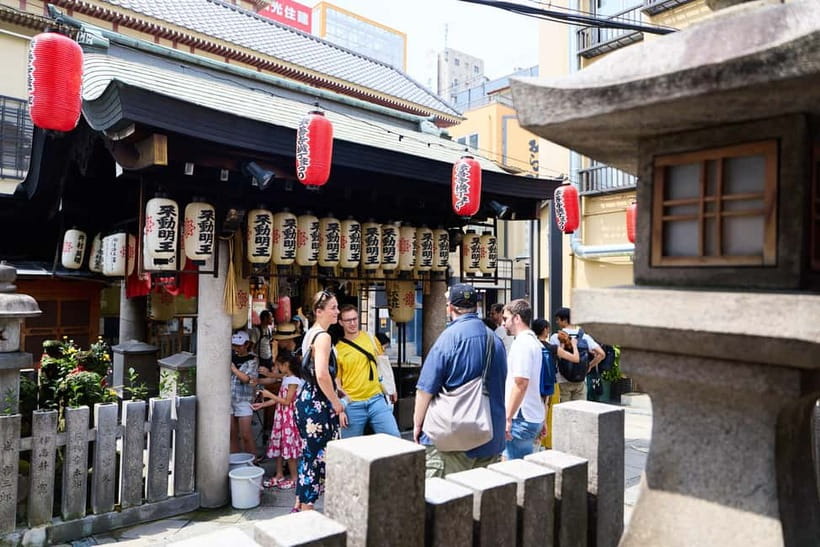
The most praised feature is the guide. The available rating is 4.9 from 21 ratings, and the comments emphasize clear English, useful information, and an entertaining manner. Rico is named as a guide who shared many points of interest, while J is described as especially good at discussing Osaka culture and answering questions.
Those names do not guarantee who will lead your departure. Guides can vary, but they show the kind of experience this activity aims to provide: a live conversation rather than a memorized list of locations.
One account noted a slow start before the tour moved into more detailed cultural discussion. I would treat that as practical advice, not a warning. Give the introduction a little time, and ask questions if you want more depth. The tour seems best suited to people who enjoy listening and participating, not to those who want to rush ahead independently.
Is $25 a fair price for 150 minutes?
Yes, provided you understand what is included. The fee covers a licensed guide and all fees and taxes. At $25, that is a reasonable cost for a two-and-a-half-hour route through several central Osaka sights, especially if you value explanations in English.
The price does not include food. That is worth noting because Kuromon Ichiba Market is part of the route and may tempt you to buy something. Set aside extra money if you want snacks, but you can also complete the walk without purchasing anything.
The tour’s value is strongest as an introduction. It helps you decide where to return, what questions to ask, and how the central districts relate to one another. It is less suitable if you want long visits, extensive shopping time, or a meal included in the booking.
You can cancel up to 24 hours before the start for a full refund, and you can reserve now while paying later. Those terms help if your Osaka schedule is still changing.
Who should book this Osaka walk?
I would recommend it to a first-time Osaka visitor who wants a short, guided route through several major areas. It also suits anyone who prefers cultural explanation to sightseeing without context. The 150-minute length leaves room in your day for a museum, meal, shopping, or another neighborhood.
It is a particularly good match if you want:
- A licensed English-speaking guide
- A quick introduction to central Osaka
- Dotonbori, Hōzenji Temple, Kuromon Ichiba Market, and Denden Town in one walk
- A chance to ask questions about Japanese culture
- Control over how much you spend on food
I would choose another format if you need wheelchair access, want a food tasting included, or prefer to linger at each stop. The activity is explicitly not suitable for wheelchair users, and the short time at each location favors coverage over a slow, detailed visit.
Should you book it?
Book this tour if you want an affordable first look at Osaka with a guide who can explain the city’s culture and connect several central sights. The strongest reasons are the efficient route, the low price, and the reported quality of guides such as Rico and J.
Skip it if you already know these districts well or want a dedicated food tour with included tastings. For most first visits, though, this is a sensible way to get oriented, ask questions, and decide where to spend the rest of your time in Osaka.
FAQ
Where does the Osaka walking tour begin?
The tour begins in front of Apple Shinsaibashi. The guide will be holding a sign.
Where does the tour finish?
The tour finishes at Namba Grand Kagetsu.
How long does the walking tour last?
The tour lasts 150 minutes, or two and a half hours.
What language is the tour conducted in?
The live tour guide speaks English.
Is food included in the price?
No. Food is not included, so any purchases at Kuromon Ichiba Market or elsewhere are paid for separately.
What sights are included?
The route includes Dotonbori, Hōzenji Temple, Kuromon Ichiba Market, and Nipponbashi Denden Town, along with other short guided visits.
Is the tour suitable for wheelchair users?
No. The activity is not suitable for wheelchair users.
Just added in Osaka
- Urban Canvas: Osaka Street Art Bike Tour★ 5.0 · 10 reviews
- Anime Cosplay Photshoot-50 Digital Photos Provided★ 5.0 · 8 reviews
- TeamLab Botanical Garden Osaka Ticket★ 3.5 · 6 reviews
- Cherry Blossom Buddha and Mt.Yoshino with Strawberry Picking Tour★ 4.5 · 5 reviews
- Umeda Sky Building & Kuchu Teien Observatory Ticket in Osaka★ 4.5 · 3 reviews
- Immerse in Judo Martial Arts Class from Japan★ 5.0 · 4 reviews
- Traditional Home cooking Experience in Osaka, Japan★ 5.0 · 14 reviews
- Traditional Calligraphy Experience near Dotonbori★ 5.0 · 3 reviews
Osaka Walking Tours, compared.
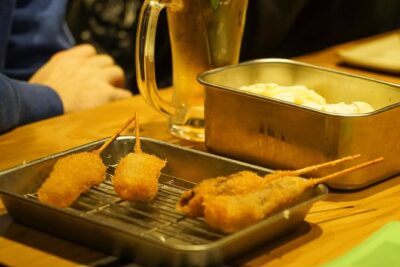
Osaka Local Foodie Walking Tour in Dotonbori and Shinsekai
Read our review →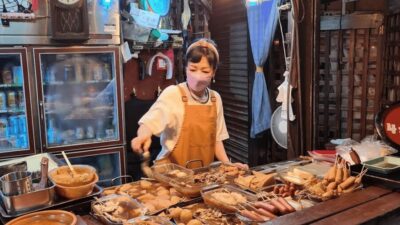
Deep Backstreets Walking Tour with Dinner Option
Read our review →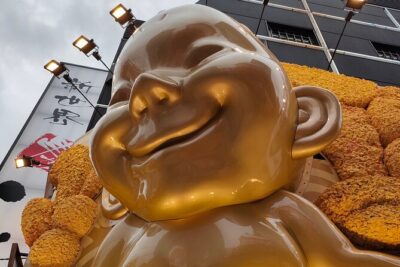
Ultimate Osaka Walking Tour: Castle, Dotonbori & Hidden Gems
Read our review →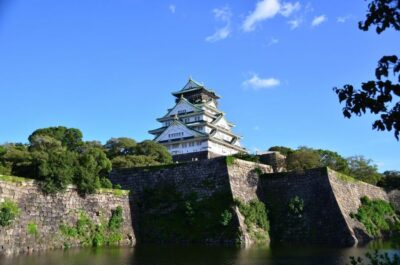
Main Sights and Hidden Spots Guided Walking Tour
Read our review →
Private Osaka Walking Tour: Highlights & Hidden Gems
Read our review →
Osaka Castle Walking Tour and Castle Tower Admission
Read our review →
Kuromon Market Food Walking Tour in Osaka (6 stops, 6 tastes)
Read our review →
Five Must-See Highlights Walking Tour & Ramen Lunch
Read our review →Browse the lists this tour appears in