
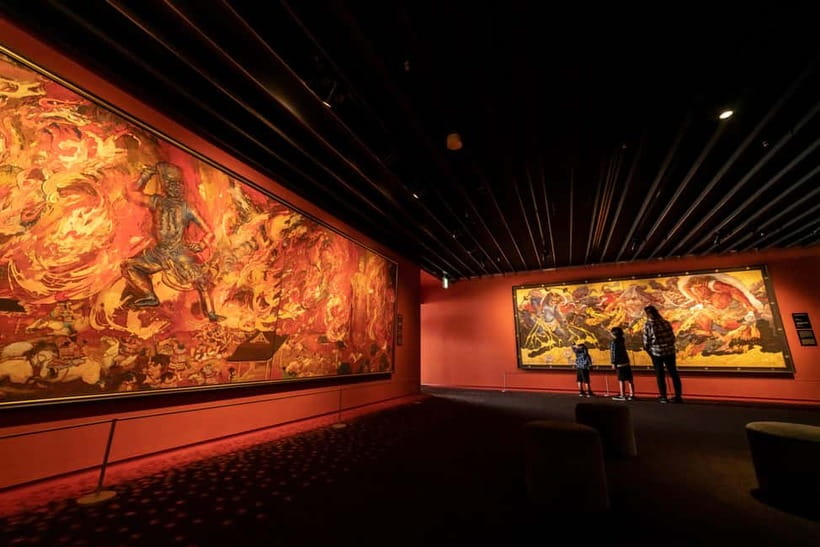
Reviewed · MUSEUMS
Osaka: Koji Kinutani Tenku Art Museum Entry Ticket
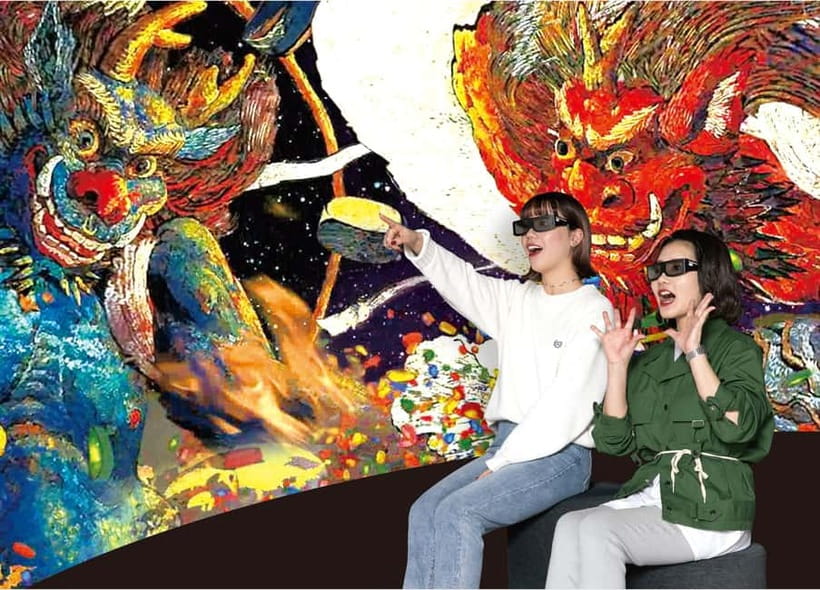
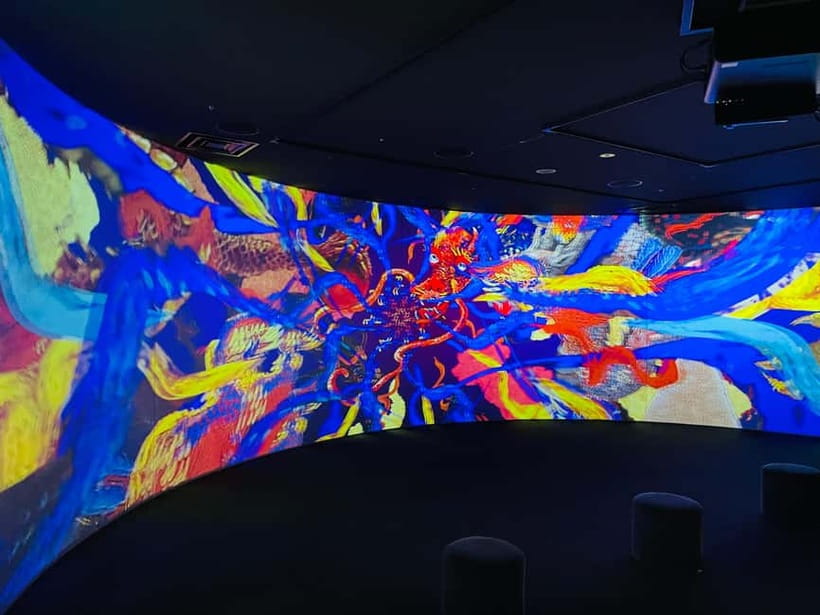
The Koji Kinutani Tenku Art Museum turns a small museum visit into a colorful audio-visual show. The main attraction is a 3-meter by 14-meter round screen where paintings and music combine with powerful 3D images. It feels more like an art theater than a quiet gallery.
I like the blue and red exhibition zones, which give the museum a clear visual shape, and I like the chance to pair modern art with Osaka views from the same building. The main drawback is simple: this is a niche museum, so visitors wanting a large collection of traditional Japanese art may find the visit brief.
The ticket is a good low-cost choice for art lovers, families, and anyone already visiting Umeda Sky Building. You can also select a combo that includes the Floating Garden Observatory, though the museum ticket alone does not cover transportation, café purchases, workshops, or the observatory.
Key points at a glance
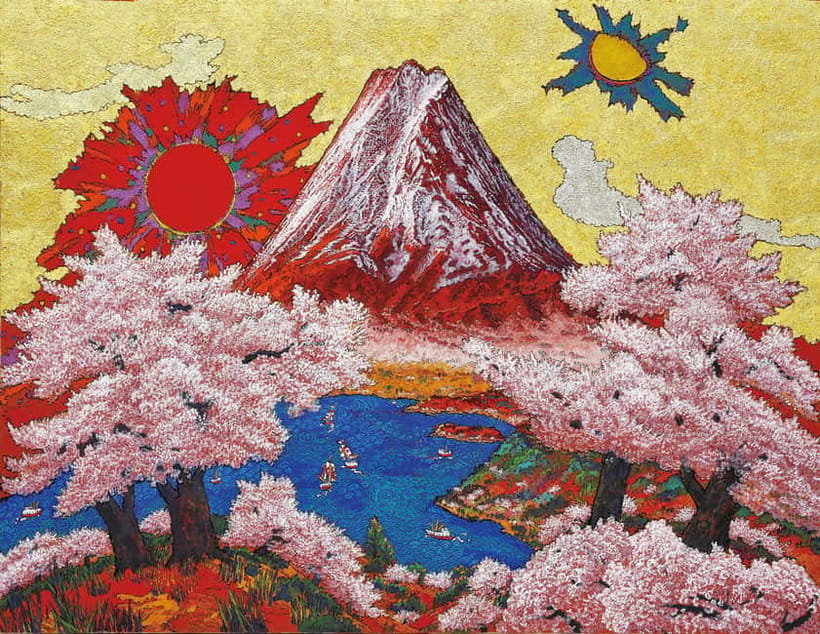
- A giant curved screen brings paintings to life: The 3-meter by 14-meter display combines Kinutani’s art with music and 3D effects.
- Two galleries use color to tell a story: The blue zone recalls the skies of Italy, while the red zone draws on traditional Japanese design.
- The VR program offers unusual access: You can see a museum tour led by Koji Kinutani and a talk filmed in his normally closed Tokyo studio.
- Frescoes reveal the roots of the artist’s work: Classic mural paintings add a more direct connection to Kinutani’s artistic practice.
- The museum sits high above Osaka: The Tenku Gallery offers views toward the Yodogawa River and surrounding city.
- A combo ticket reaches 170 meters above the city: The Floating Garden Observatory adds an open-air skywalk and broad Osaka views.
Arriving at the Umeda Sky Building’s 27th floor
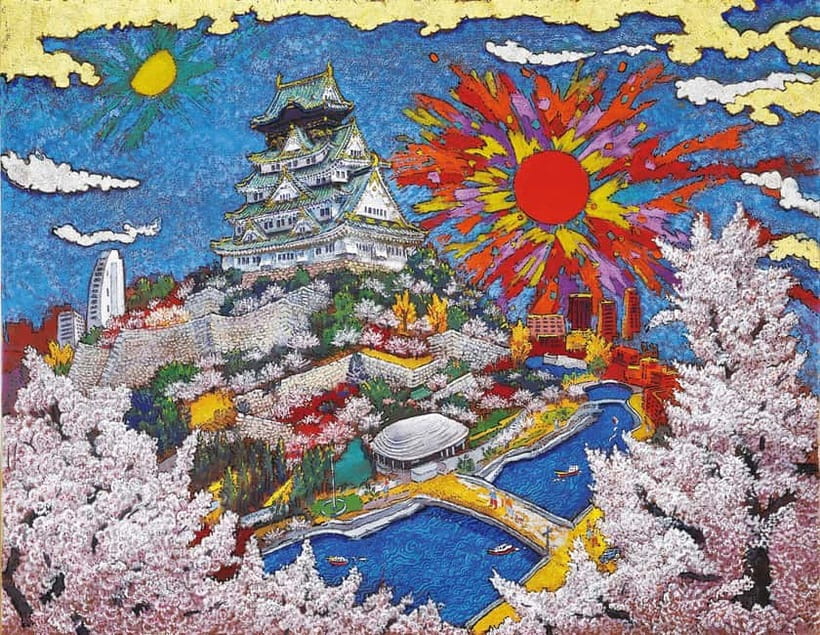
The museum is at Umeda Sky Building Tower West, 27F, in Osaka’s Kita district. From JR Osaka Station, Osaka Metro Umeda Station, or Hankyu Osaka-Umeda Station, allow about nine minutes on foot. From Hanshin Osaka-Umeda Station, the walk is about 13 minutes.
That location makes the museum easy to fit into a day in central Osaka. You can visit before shopping around Umeda, after seeing the nearby towers, or as part of a city-view stop. The building’s parking garage has 160 paid spaces, so driving is possible, though the train stations are more practical for most visitors.
You exchange the ticket at the museum reception desk. Do not head straight to the exhibition floor without checking in first. Admission is accepted until 30 minutes before closing, so leave enough time for the reception process and the galleries.
The museum is open from 10:00 to 18:00 on Mondays, Wednesdays, Thursdays, and Sundays. On Fridays, Saturdays, and the day before a national holiday, it stays open until 20:00. It closes on Tuesdays, except when Tuesday is a national holiday, in which case it closes on the following weekday. It also closes from December 30 through January 3 and during exhibition changes.
More museums and galleries in Osaka:
- Osaka Castle: Museum and Tower Entry Ticket
★ 4.5 · 2,380 reviews - Osaka: Osaka Castle & Historical Museum Guided Tour
★ 4.8 · 28 reviews - (Ticket Included) Explore Osaka Castle & Museum of History
★ 4.8 · 21 reviews
A museum built around sound, color, and motion
Koji Kinutani’s museum does not rely only on framed paintings. The large circular screen gives the visit a theatrical center, with paintings spreading across a wide surface while music and 3D images create movement.
I would make this your first major stop inside the museum. It gives you a quick sense of the artist’s approach: bold color, large-scale imagery, and a close link between painting and spectacle. The theme-park feel is intentional, so do not expect the hushed pace of a traditional picture gallery.
The screen is also useful for families and for anyone with limited time. You can understand the museum’s main idea without studying every wall label. If you prefer subtle, small-format works, the presentation may feel a little forceful, but the scale is part of what makes the museum different from a standard art stop.
The display uses a round screen measuring 3 meters by 14 meters. That unusual shape helps the images wrap around your field of view instead of sitting on one flat wall. The result is less about viewing a single painting and more about watching an art program unfold around you.
The blue and red exhibition zones
The exhibition hall is divided into two main color zones. The blue area recalls the skies of Italy, where Kinutani studied abroad. The red area refers to the spirit of traditional Japan, using red walls and lattice details.
This division gives you an easy way to read the museum. Blue suggests the artist’s connection to Italy and the open sky, while red creates a more grounded Japanese setting. You do not need a long art lecture to notice the contrast.
The galleries also host special exhibitions twice a year. Each show follows a different theme, and the works displayed on the walls change to match that concept. If you return to Osaka later, the museum may feel different from your first visit.
Exhibition changes can affect opening dates, so check the current schedule before setting out. The museum closes during change periods, and the published hours do not guarantee access on those days.
Frescoes and the roots of Kinutani’s art
Alongside the large screen and other works, you can see colorful frescoes, or classic mural paintings. These are important because they connect the museum’s showier presentations to an older form of painting.
Fresco work is made for walls, not just for portable canvases. That makes it a natural fit for a museum built around large surfaces and strong color. I like this part of the visit because it gives you a better sense of the physical side of Kinutani’s art.
The frescoes also help balance the 3D display. The screen is active and technical, while the murals point back to the craft of painting itself. Together, they show two sides of the artist: one interested in spectacle, and another tied to established mural traditions.
A few more Osaka half-days worth pricing up
- Osaka: Umeda Sky Building Official E-Ticket
★ 4.6 · 1,131 reviews - Osaka/Kyoto: Hiroshima Miyajima Bus Tour & Shinkansen Ticket
★ 4.7 · 919 reviews - Osaka: Expo 2025 Admission Ticket
★ 3.6 · 251 reviews - Meet Osaka local Friend & Fun Chat All We Can Drink Party Ticket
★ 5.0 · 201 reviews
VR access to the artist’s working world

The VR program offers a more personal part of the museum. It includes a tour led by Koji Kinutani himself and a talk in his Tokyo studio, a place normally closed to visitors.
That studio segment is likely the most unusual feature for people who want more than a visual show. Instead of only looking at finished works, you get a sense of the artist speaking from his own working space. The experience brings the artist closer without requiring a separate studio visit.
The supplied information does not specify the length of the VR presentation or whether every session follows the same schedule. Ask at reception if this is a priority, especially if you have a fixed plan for the observatory or another Umeda attraction.
The Tenku Gallery and Osaka from above
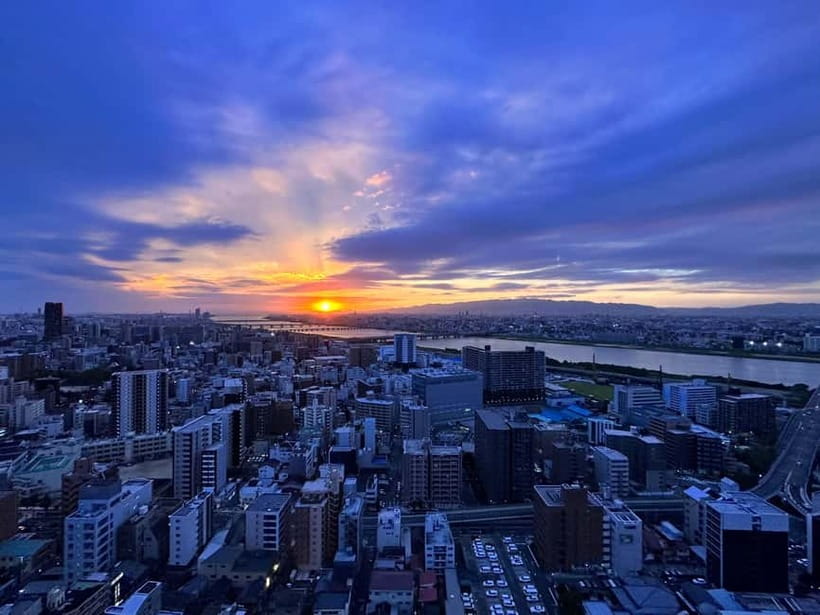
The Tenku Gallery is designed for photographs and views. From this high position, you can look down toward the Yodogawa River as it runs through Osaka’s city center.
This is a useful pause between gallery sections. The museum is not only about looking inward at paintings. Its height gives you a chance to connect the art visit with the real city outside, including the broad river and dense urban setting.
The gallery is also a natural place for a commemorative photo. Food and drinks are not allowed inside the museum, so save your café break for the Tenku Cafe rather than trying to picnic beside the view.
Adding the Floating Garden Observatory
The combo ticket includes museum admission and entry to the Floating Garden Observatory. The observatory is 170 meters above ground and includes an open-air skywalk with a 360-degree view of Osaka.
I would choose the combo if you want one strong city-view stop and do not plan to visit the museum on its own. The observatory adds a very different experience: the museum gives you art, music, and VR, while the skywalk gives you open air and a wide view across the city.
You can visit during daylight for clearer views of the city and river, or later for Osaka’s evening lights. The ticket information does not state a separate duration for the observatory, so allow enough time for both facilities rather than rushing from one to the other.
Both facilities may be unavailable on special business days, including days affected by the Yodogawa Fireworks Festival. Check the operating date carefully before buying if your plans are built around a specific evening.
Café time and the museum shop
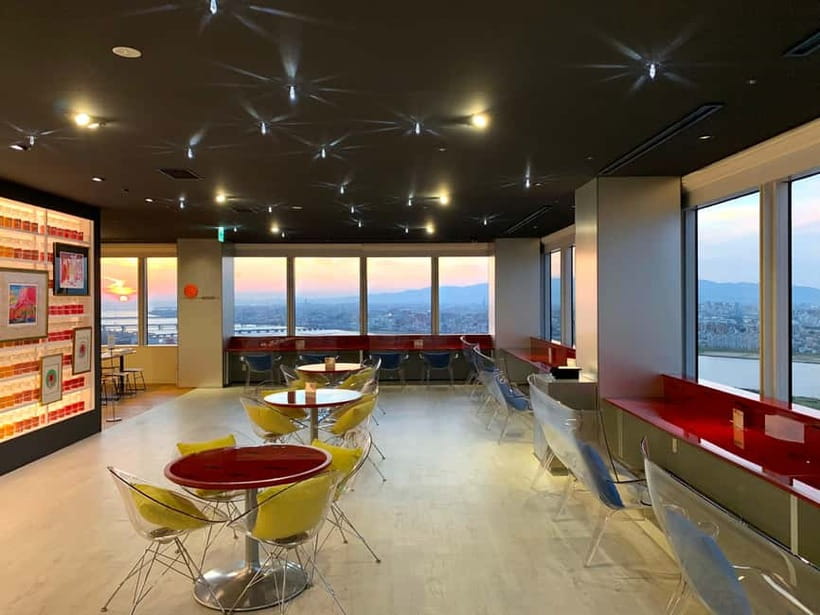
The Tenku Cafe provides a place to rest after the gallery. Its colorful artistic design includes rows of pigment bottles associated with fresco painting, giving the café a visual link to the museum.
Food and drinks are not included in the ticket. That is worth remembering when working out the total cost, especially if you are visiting with children or plan to spend time at the café after the exhibition.
The shop sells goods based on motifs from Kinutani’s works, along with original postcards and other souvenirs. These are practical choices if you want a small gift rather than another large purchase from Osaka’s shopping districts.
Workshops for children and hands-on visitors
The museum offers programs for different age groups, including fresco painting and painting classes with lectures by Koji Kinutani. Workshop reservations are required, and workshop materials cost extra.
This is the part of the experience that needs the most advance planning. A standard admission ticket does not automatically give you a place in a class. If you want a hands-on activity, confirm the program schedule and reserve before arriving.
For families, a workshop can make the museum more active and memorable. For adults who already enjoy painting, it gives useful context about fresco techniques and the artist’s methods. If you are only buying the basic entry ticket, plan on viewing rather than making art.
Is the $8 ticket good value?
At about $8 per person, the museum ticket is inexpensive by major-city attraction standards. The value comes from the range of formats packed into one visit: the large 3D screen, two themed gallery zones, frescoes, VR, a photo gallery, a café, and a shop.
The museum is not a huge institution with hours of galleries. Think of it as a focused art attraction with a strong presentation style. For that reason, the ticket works best as part of a Umeda day rather than as your only Osaka activity.
The combo ticket can offer better value if you already want the Floating Garden Observatory. The exact combo price is not provided here, so compare it with the separate admission prices when booking. Remember that café purchases, workshop materials, and transportation remain extra.
Elementary school students and younger children enter the museum free. Student tickets are available for junior high, high school, and university students, but a student ID is required at entry. Disability discounts are available at both facilities, with a passport and direct ticket purchase required.
Who should book the museum?
I would recommend this experience to you if you like modern art, large visual displays, VR, or unusual museum design. It also suits families who want a short, colorful attraction rather than a long day of reading labels.
The museum makes sense for photographers because of the Tenku Gallery and the city views. It also works for visitors staying near Umeda who want an indoor activity with a clear connection to Osaka’s skyline.
You may want to skip it if your main goal is a large collection of ancient Japanese objects, famous European masterpieces, or a traditional fine-art museum. This is a focused presentation of one artist’s work, with theatrical effects and a strong emphasis on color.
The museum is wheelchair accessible. Pets are not allowed, except for assistance dogs. Free cancellation is available up to 24 hours before the visit, and you can reserve now and pay later, which helps if your Osaka schedule is still changing.
My booking advice
Book the basic museum ticket if you want a low-cost art stop with a large screen, VR, and views from the Umeda Sky Building. Choose the combo when the Floating Garden Observatory is already part of your plans.
I especially like the mix of the blue and red galleries, the frescoes, and the rare studio talk. The verified experience rating supplied for this activity is 3.1 from three reviews, so I would keep expectations realistic: this is a specialized, presentation-driven museum, not a massive national collection.
For the best fit, give yourself time for the exhibition, the Tenku Gallery, and the VR program. Add a café stop or observatory visit if you want to turn the ticket into a broader Umeda outing.
FAQ
Where is the Koji Kinutani Tenku Art Museum?
The museum is on the 27th floor of Umeda Sky Building Tower West at 1-1-30 Oyodonaka, Kita-ku, Osaka 531-0076, Japan.
How far is the museum from Osaka’s main train stations?
It is about a nine-minute walk from JR Osaka Station, Osaka Metro Umeda Station, and Hankyu Osaka-Umeda Station. From Hanshin Osaka-Umeda Station, the walk is about 13 minutes.
What does the standard ticket include?
The standard ticket includes admission to the Koji Kinutani Tenku Art Museum. You exchange the ticket at the museum reception desk.
Does the ticket include the Floating Garden Observatory?
Only the Floating Garden Observatory combo ticket includes admission to both the museum and the observatory. The basic museum ticket does not include the observatory.
What are the museum’s opening hours?
The museum is open from 10:00 to 18:00 on Mondays, Wednesdays, Thursdays, and Sundays. It is open from 10:00 to 20:00 on Fridays, Saturdays, and the day before national holidays.
When is the museum closed?
The museum is closed on Tuesdays, except when Tuesday is a national holiday. In that case, it closes on the following weekday. It also closes from December 30 through January 3 and during exhibition change periods.
Are children and students eligible for reduced admission?
Admission is free for elementary school students and younger children. Student tickets are available for junior high, high school, and university students, and students must show a student ID.
Are workshops included with museum admission?
Workshops are not included. Reservations are required, and workshop materials are an additional cost.
Is the museum wheelchair accessible?
Yes. The museum is wheelchair accessible. Pets are not allowed, except for assistance dogs.
Just added in Osaka
- Urban Canvas: Osaka Street Art Bike Tour★ 5.0 · 10 reviews
- Anime Cosplay Photshoot-50 Digital Photos Provided★ 5.0 · 8 reviews
- TeamLab Botanical Garden Osaka Ticket★ 3.5 · 6 reviews
- Umeda Sky Building & Kuchu Teien Observatory Ticket in Osaka★ 4.5 · 3 reviews
- Immerse in Judo Martial Arts Class from Japan★ 5.0 · 4 reviews
- Cherry Blossom Buddha and Mt.Yoshino with Strawberry Picking Tour★ 4.5 · 5 reviews
- Traditional Home cooking Experience in Osaka, Japan★ 5.0 · 14 reviews
- Traditional Calligraphy Experience near Dotonbori★ 5.0 · 3 reviews
Museums, compared.
(Ticket Included) Explore Osaka Castle & Museum of History
Read our review →
Browse the lists this tour appears in