
Reviewed · OSAKA BUS TOURS
2-Day Bus Tour to Shirakawago & Hida No Sato Winter Illumination
The best part of this two-day trip is the winter light-up at Hida no Sato, where old thatched farmhouses glow after dark. You also get Shirakawago under snow, Takayama’s Edo-era streets, and a hot spring stay without having to plan the long bus connections yourself.
I like the hands-on Omi beef sushi lesson and the well-paced second day in Takayama. The main catch is the long first day and the fact that Day 2 lunch and both dinners are not included, despite the hotel stop mentioning kaiseki cuisine.
Key points to know before booking
- Hida no Sato after dark: The winter illumination is the tour’s special event, with admission included.
- Omi beef sushi lesson: Lunch in Sekigahara includes a practical food-making experience, not just a standard restaurant stop.
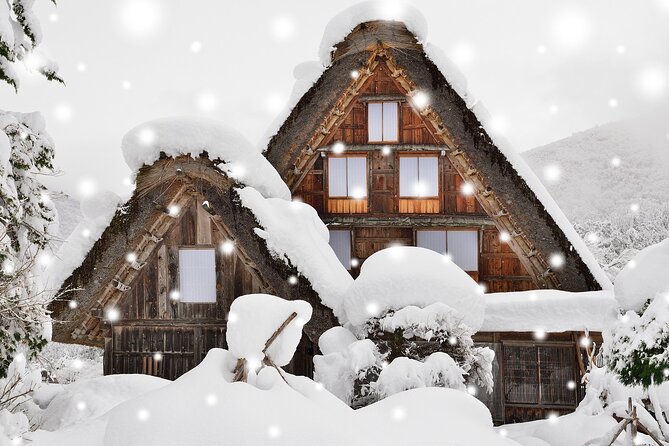
- Snowy Shirakawago: You get 90 minutes at the UNESCO-listed gassho-zukuri village.
- Rooftop hot spring: The hotel is a five-minute walk from JR Takayama Station and has an open-air bath with Alpine views.
- Helpful guide service: Julien and Tamy are named guides associated with friendly, attentive help, including assistance recovering forgotten belongings.
- Small-group possibility: The maximum is 40 people, but one departure had only eight people in a 16-seat vehicle.
Why this winter route works so well
This tour links three of Gifu Prefecture’s best-known sights in a single overnight trip from Osaka. You see rural Shirakawago, the Hida no Sato folk village, and Takayama’s preserved old town, then sleep in the area rather than rushing back to Osaka the same night.
That matters in winter. Snowy mountain roads and limited public transport can make this region awkward to arrange independently. A bus handles the long transfers, while the guide keeps the day moving and helps with the practical bits.
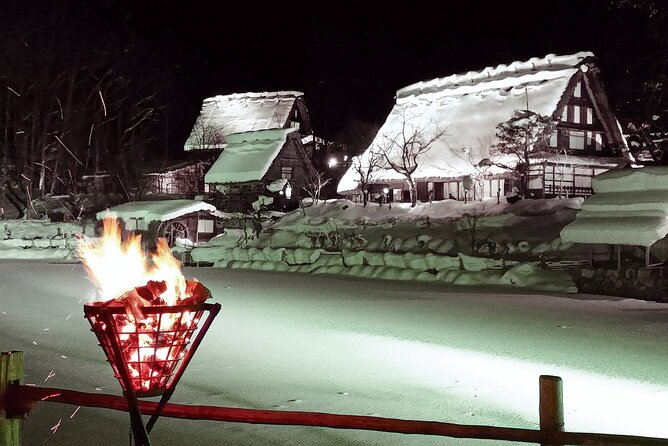
The timing also gives you something a normal day trip cannot: Hida no Sato after sunset. The village’s winter light-up is the main reason to choose this package over a standard Shirakawago excursion. The old houses, snow, and evening lighting create a quieter and more atmospheric visit than a daytime stop alone.
You should still arrive with realistic expectations. This is an efficient sightseeing trip, not a slow rural retreat. Day 1 begins at 8:30 a.m. in Osaka and includes several hours on the road. In exchange, you cover a great deal of ground and avoid arranging transport, accommodation, and timed admissions on your own.
More bus tours in Osaka:
- Osaka/Kyoto: Hiroshima Miyajima Bus Tour & Shinkansen Ticket
★ 4.7 · 919 reviews - From Kyoto/Osaka: Kyoto Top Highlights 1-Day Guided Bus Tour
★ 4.5 · 714 reviews - Hiroshima & Miyajima 1 Day Bus Tour with Bullet Train Tickets
★ 4.5 · 105 reviews
Leaving Osaka for Sekigahara
Meet your guide in front of the Mainichi Newspaper Building in Umeda at 8:30 a.m. The meeting point is near public transportation, but you should be there 15 minutes early. A late arrival would be especially costly on a fixed two-day route.
The bus ride to Gifu takes about two and a half hours. This is useful time to rest, look out at the changing scenery, or listen to the guide’s explanations. The tour uses an air-conditioned vehicle and provides bottled water each day.
Group size can vary. The stated maximum is 40 people, so you should be prepared for a full coach on some dates. One departure used a spacious 16-seat vehicle for only eight people, but that should be treated as a pleasant possibility rather than a promise.
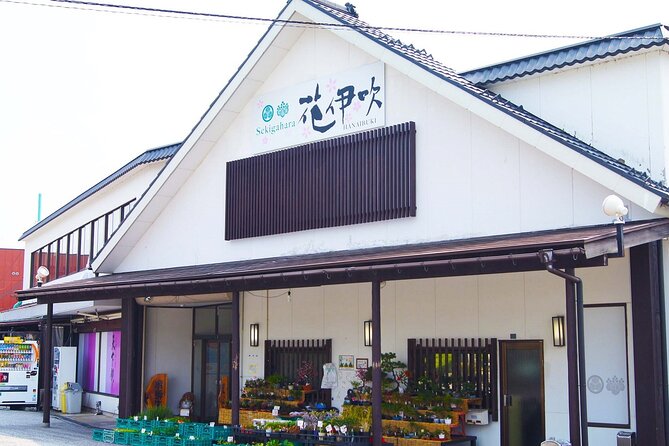
The first proper stop is Sekigahara-cho, where lunch at Sekigahara Hanaibuki includes an Omi beef sushi-making activity. You learn the basic process and then enjoy the result. It is a good change of pace after the morning bus ride, giving you something hands-on rather than another quick photo stop.
Omi beef is one of Japan’s famous regional beef brands, so this meal adds a local food angle to the route. The supplied information does not give the exact menu or preparation details, so anyone with dietary needs should state them when booking. Vegetarian requests and other restrictions can be accommodated.
The two-hour stop appears to include both lunch and the activity. That makes it a substantial break, though people hoping to reach Shirakawago quickly may find the pace a little leisurely.
Snow-covered Shirakawago in 90 minutes
Shirakawago is famous for its gassho-zukuri houses, whose steep thatched roofs resemble hands pressed together in prayer. The design was shaped by heavy snowfall, making the village especially striking in winter.
You have about 90 minutes here. That is enough to walk around the main village streets, study the rooflines, and take photographs, but it is not enough for a long, unhurried exploration of every corner. Wear shoes with a good grip and expect winter walking conditions, though the tour information does not specify the exact snow or ice conditions on a given date.
The short visit is one of the trade-offs of a packed bus tour. You get the visual highlight without spending a whole day in one place. If Shirakawago is your single reason for visiting the region, an overnight stay there or a longer independent visit would give you more freedom.
For this particular route, however, the 90-minute stop makes sense. The tour still needs to reach Hida no Sato before or around the evening illumination, and it has another full day planned in Takayama. Think of Shirakawago as a focused winter visit rather than a complete regional tour.
Hida no Sato after sunset
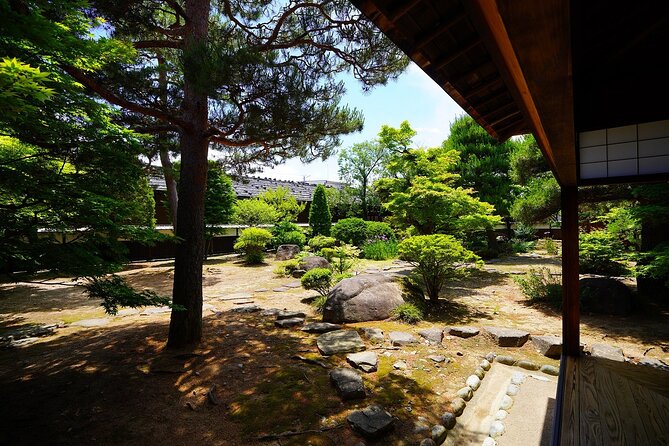
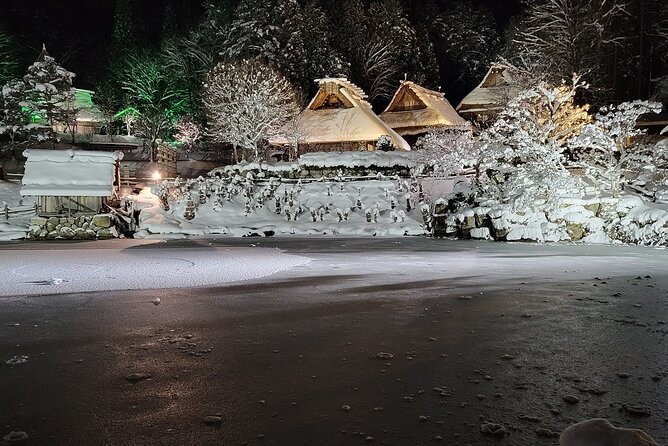
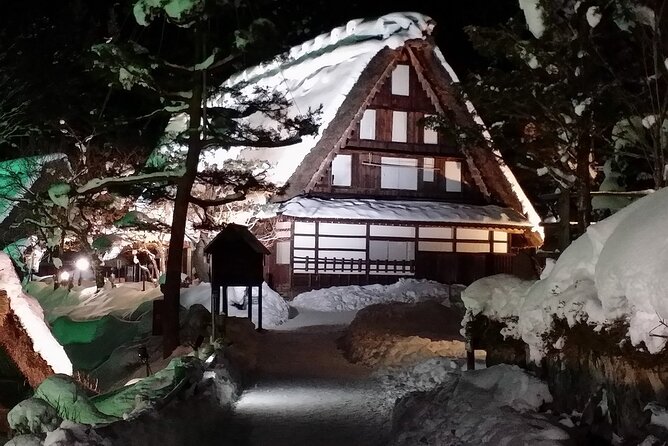
Hida no Sato is an open-air folk village with traditional Hida buildings, including thatched houses. During the winter illumination, the village changes character as lights pick out the roofs, paths, and surrounding snow.
The visit lasts about 45 minutes. That sounds brief, but a night light-up is best approached as a concentrated visual experience. You walk through the illuminated village, pause for photographs, and take in the contrast between dark shadows and warm light.
Admission to the Hida no Sato light-up is included, which is important because this seasonal event is the feature that sets the tour apart. The description identifies December as the period for this special bus-tour visit, so check the exact departure date carefully before booking.
This stop will suit you if you like winter scenery, traditional architecture, and atmospheric evening walks. It may be less satisfying if you want time to enter many buildings or read every display. The route gives you a memorable glimpse rather than a museum-length visit.
Bring warm layers. The tour information does not list clothing or equipment rentals, and you will be outdoors at night. A phone or camera battery can also drain quickly in cold weather, so pack accordingly.
A few more Osaka half-days worth pricing up
- Osaka-Nara: 2-Day Discovery Pass
★ 3.1 · 10 reviews
Hotel, hot spring, and the dinner question
The bus reaches the hotel at about 7:15 p.m. The accommodation is a five-minute walk from JR Takayama Station, a convenient base for the next morning and a useful location if you want to explore near the station on your own.
The hotel has a rooftop open-air hot spring with views toward the Alps. After a day of bus travel and winter walking, this is more than a pleasant extra. It gives you a proper chance to warm up and rest before the next day.
The schedule refers to kaiseki cuisine at the hotel, but the inclusions clearly state that dinner on Day 1 and dinner on Day 2 are not included. Read that distinction carefully. You may be able to arrange or purchase dinner at the hotel, but you should not assume it is covered by the $318.68 price.
Breakfast is included on Day 2. Lunch on Day 1 is included, along with accommodation, the vehicle, bottled water, the licensed guide, Hida no Sato admission, and Takayama Jinya admission.
Morning at Miyagawa Market
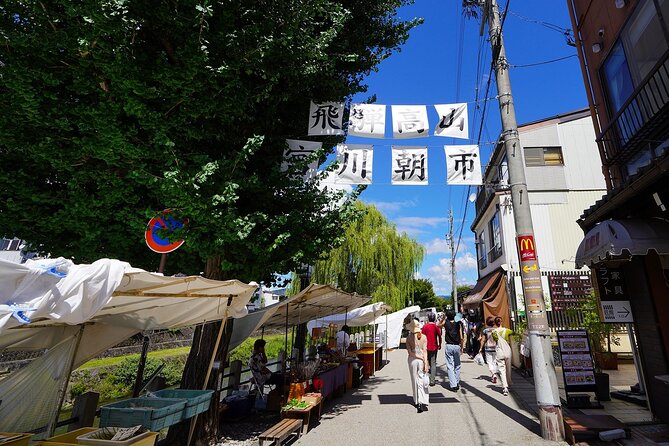
The second morning begins at 9:00 a.m. with a walk to the Hida-Takayama Miyagawa Morning Market. You have about 75 minutes to browse stalls, pick up souvenirs, and interact with local sellers.
A morning market is a useful way to see a more everyday side of Takayama. Instead of only looking at old buildings, you get time to consider regional food, small gifts, and local products at your own pace.
The tour does not specify exactly which stalls will operate on your date, so keep your expectations flexible. The market visit is also not a formal food tour. You are given time to look and buy, while the guide can help keep the group on schedule.
If you want to purchase souvenirs, this is a good place to do it, but remember that your bags must remain manageable for the rest of the day. The route continues on foot through Takayama’s historic center.
Takayama Jinya and the Edo period
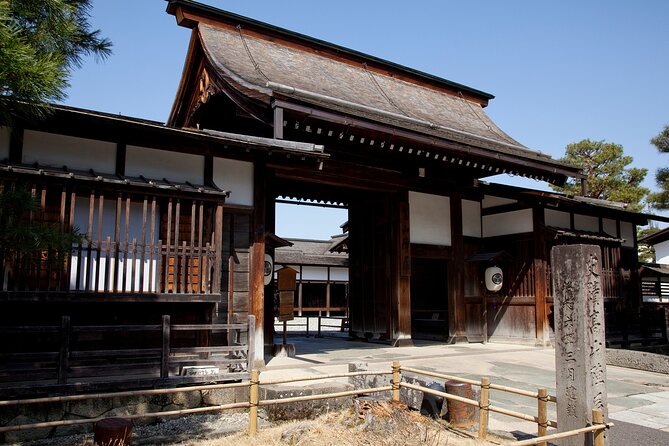
Takayama Jinya is the only surviving main building of a provincial governor and magistrate’s office in Japan. The 30-minute visit gives you a chance to step inside an Edo-period administrative building and see a different side of Japanese history.
Admission is included. The visit is short, so you will not have unlimited time for every room and detail. Still, it adds historical context to the wooden streets outside. You are not simply looking at attractive shopfronts. You are seeing a place tied to the way the region was governed.
If you enjoy historic buildings, this should be one of the more worthwhile stops. If you prefer markets and food to formal heritage sites, the half-hour visit keeps it from taking over the day.
Sanmachi Suji and two hours to eat
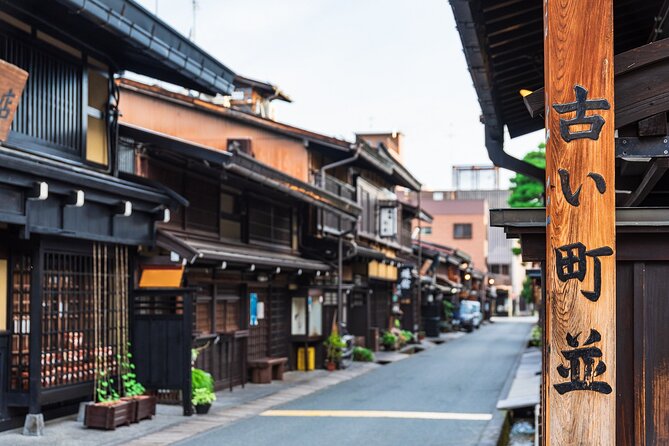
The longest stop on Day 2 is Sanmachi Suji, the old town area of Hida Takayama. You have two hours to walk the preserved streets and choose lunch on your own.
This is where the tour gives you the most personal freedom. You can browse traditional shops, look at the wooden facades, and decide how to spend your meal break. Since lunch is not included, you will need to budget separately and make your own choice.
Two hours is a useful amount of time, though it is not a full free afternoon. You can see the central old town and eat without rushing, but you may need to skip places that are farther away.
I like this arrangement because fixed menus can make a busy day feel even more controlled. Here, you choose what appeals to you. The drawback is that the guide may not be able to provide the same level of structure as at the included meal stop, so keep an eye on the meeting time.
Hida Bussankan for regional crafts
The final stop is Hida Bussankan, where you have about 50 minutes to browse Hida Takayama products and choose gifts or keepsakes. The visit is aimed at people who want to take home something connected to the region.
Because this comes after the old town, you will already have seen the traditional streets and local shops. Hida Bussankan gives you another place to compare products in a more organized setting. It can also be useful if you have not found the right souvenir earlier in the day.
The stop may feel less essential if shopping is not your priority. Still, 50 minutes is not excessive, and it gives the group a clear final activity before returning to Osaka.
What the $318.68 price covers
At $318.68 per person, the value depends on how much you want convenience. You are paying for a two-day air-conditioned bus route from Osaka, a licensed guide, one night of accommodation, breakfast, the first day’s lunch, bottled water, two admission fees, and the seasonal Hida no Sato light-up.
Arranging the same combination independently would mean comparing highway buses or trains, finding a hotel in Takayama, timing the Shirakawago connection, and arranging access to the Hida no Sato event. Winter conditions add another reason to value a guided vehicle.
The price is less attractive if you planned to spend several days in the region or prefer to select your own hotel and restaurants. It is also important to add money for Day 2 lunch and both dinners. The tour covers many expensive planning pieces, but it is not an all-meals package.
The service level appears to be one of its strongest points. Julien is described as approachable and attentive, while Tamy is associated with a well-planned trip and strong help along the way. The guide and driver have also helped recover belongings left behind, which is exactly the sort of practical assistance you want on a complicated route.
Who should book this trip
I would recommend this tour to you if you are visiting Osaka and want a winter taste of the Hida region without arranging several separate connections. It suits couples, families, solo visitors, and friends who value a clear schedule and included transport.
It is also a good fit if you care most about the seasonal Hida no Sato illumination. That event gives the trip a purpose beyond simply ticking off Shirakawago and Takayama.
You may want another option if you dislike long bus rides, need extensive time at each sight, or want total control over meals and hotel choice. The itinerary is full, and Shirakawago receives only 90 minutes.
Book it if you want the hard logistics handled, enjoy snowy architecture and hot springs, and can accept a brisk schedule. Skip it if your ideal Japan trip moves slowly from village to village. For most first-time visitors seeking a practical winter escape from Osaka, the combination of illumination, old towns, local food, and a hot spring makes the price reasonable.
FAQ
Where does the tour start?
It starts at 8:30 a.m. in front of the Mainichi Newspaper Building at 3-chome-4-5 Umeda, Kita Ward, Osaka. You should arrive 15 minutes before departure.
Where does the tour end?
The tour ends back at the original meeting point in Osaka.
Is accommodation included?
Yes. One night of accommodation is included, with the hotel located about a five-minute walk from JR Takayama Station.
Are meals included?
Lunch on Day 1 and breakfast are included. Lunch on Day 2 and dinner on both days are not included.
Is the Hida no Sato light-up admission included?
Yes. Admission to the Hida no Sato winter light-up is included.
Is Takayama Jinya admission included?
Yes. The admission fee for Takayama Jinya is included.
Can dietary restrictions be accommodated?
Yes. Vegetarian and other dietary requirements can be accommodated if you provide the information when booking.
More Winter Activities in Osaka
- Play with Snow Crab Buffet Lunch and Strawberry Picking Bus Tour
★ 5.0 · 88 reviews
Just added in Osaka
- Urban Canvas: Osaka Street Art Bike Tour★ 5.0 · 10 reviews
- Anime Cosplay Photshoot-50 Digital Photos Provided★ 5.0 · 8 reviews
- TeamLab Botanical Garden Osaka Ticket★ 3.5 · 6 reviews
- Umeda Sky Building & Kuchu Teien Observatory Ticket in Osaka★ 4.5 · 3 reviews
- Immerse in Judo Martial Arts Class from Japan★ 5.0 · 4 reviews
- Cherry Blossom Buddha and Mt.Yoshino with Strawberry Picking Tour★ 4.5 · 5 reviews
- Traditional Home cooking Experience in Osaka, Japan★ 5.0 · 14 reviews
- Traditional Calligraphy Experience near Dotonbori★ 5.0 · 3 reviews
Osaka Bus Tours, compared.
Hiroshima Miyajima Bus Tour & Shinkansen Ticket
Read our review →

Hiroshima & Miyajima 1 Day Bus Tour with Bullet Train Tickets
Read our review →
Play with Snow Crab Buffet Lunch and Strawberry Picking Bus Tour
Read our review →
Himeji Castle, Arima Onsen & Mt. Rokko: 1-Day Bus Tour from Osaka
Read our review →
Nara, Todaiji Temple & Kuroshio Market Day BUS Tour from Osaka
Read our review →Browse the lists this tour appears in